The Complete Beef Cuts and Wine Pairing Chart: A Sommelier's Cut-by-Cut Guide
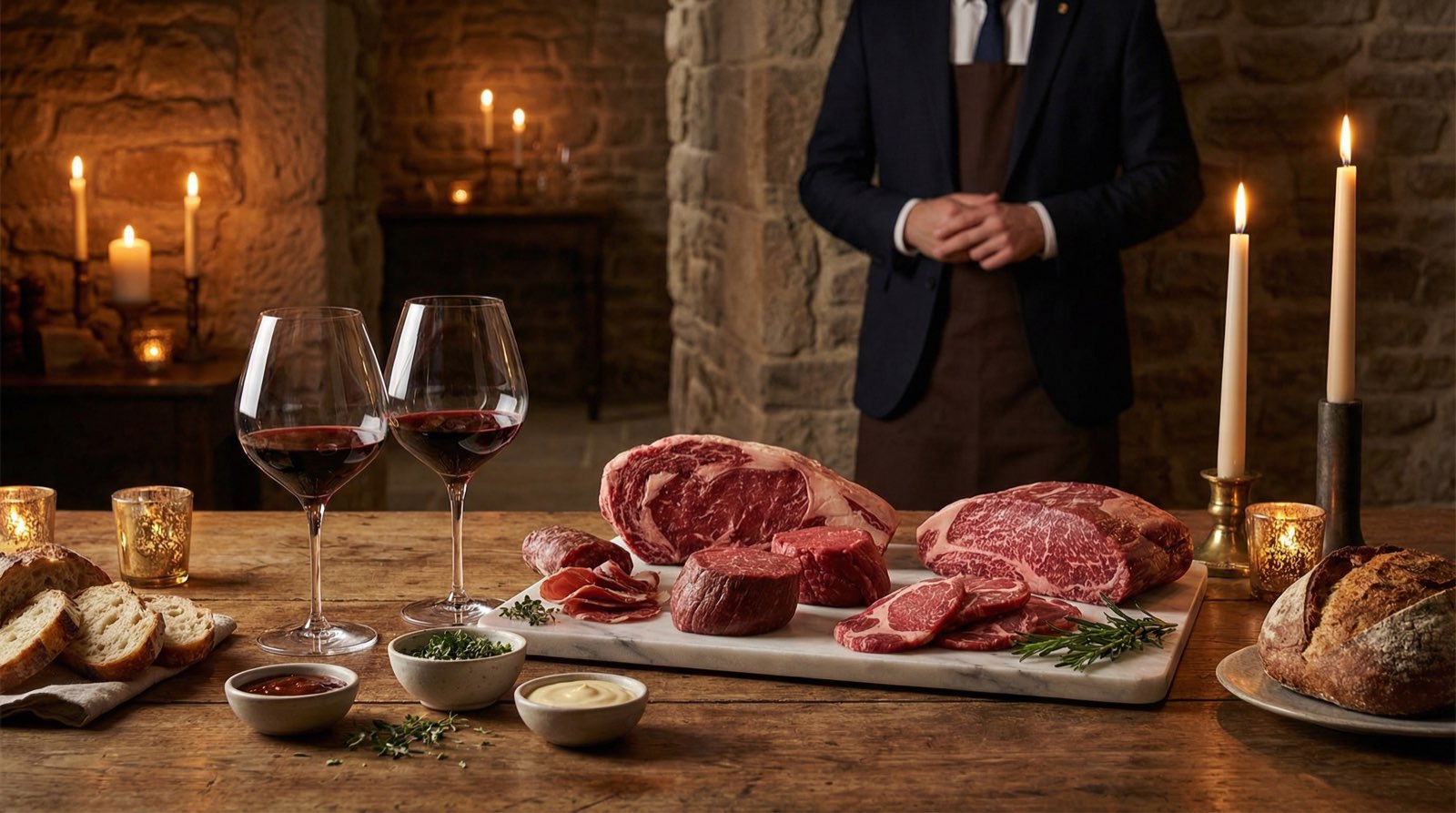
I spend half my week behind a wine bar and the other half consulting for steakhouses. And here's what I've learned: most people pair wine with beef all wrong.
They think "red meat equals red wine" and stop there. They'll drop $80 on a Prime ribeye and pair it with whatever Cabernet is on sale. Or they'll order a delicate filet mignon and drown it with a tannic Barolo that overwhelms every subtle flavor.
The truth is more nuanced. The cut matters as much as the protein. A lean sirloin needs a different wine than a fatty short rib. Grilling demands different pairing logic than braising. And cooking temperature shifts everything.
I've spent fifteen years matching wines to meat — first as a sommelier at a Michelin-starred steakhouse, now as a consultant helping restaurants build pairing programs. This guide represents everything I've learned about pairing wine with beef, organized by cut so you can find exactly what you need.
The Fundamental Principles of Beef and Wine Pairing
Before we dive into specific cuts, let's establish the framework. Every pairing decision comes down to three factors:
1. Fat Content
Fat coats your palate and dampens perception of tannin. High-fat cuts (ribeye, short rib, brisket) can handle bigger, more tannic wines. Lean cuts (tenderloin, sirloin, flank) need softer wines with less aggressive tannin structure.
This is why Cabernet Sauvignon works beautifully with a marbled ribeye but tastes harsh against a lean filet — the fat isn't there to buffer the tannin.
2. Cooking Method & Crust Development
The Maillard reaction — that beautiful brown crust you get from high-heat cooking — creates savory, umami-rich flavors that pair wonderfully with aged, complex wines. A heavily charred steak can support older Bordeaux or mature Barolo.
Conversely, gently cooked beef (sous vide, slow-braised, poached) has softer flavors that pair better with younger, fruit-forward wines.
3. Seasoning & Sauce
A simply salted steak is one pairing scenario. The same steak with peppercorn sauce is completely different. Don't pair the wine to the beef in isolation — pair it to the complete dish.
Rich sauces demand rich wines. Acidic sauces (chimichurri, tomato-based) need wines with matching acidity. Spicy preparations call for fruity wines with lower alcohol.
The Complete Cut-by-Cut Wine Pairing Chart
Now let's get specific. Here's how to pair wine with every major beef cut you'll encounter.
Ribeye (Bone-In or Boneless)
Characteristics: High marbling, rich flavor, substantial fat cap, best cooked medium-rare to medium.
Perfect pairings:
- Cabernet Sauvignon (Napa Valley): The classic pairing. Napa Cab has the structure, tannin, and dark fruit to stand up to ribeye's richness. Look for wines with 3-5 years of age to soften the tannins.
- Malbec (Argentina): Slightly softer than Cabernet but with enough body and dark fruit. The plush texture complements the meat's fattiness without overwhelming it.
- Syrah/Shiraz (Northern Rhône or Barossa): The peppery notes in Syrah echo the char on a grilled ribeye, while the wine's richness matches the marbling.
Avoid: Light-bodied reds (Pinot Noir, Beaujolais) — they'll be overpowered. Very tannic young wines without fruit to balance — ribeye is rich but needs fruit in the pairing, not just structure.
Filet Mignon (Tenderloin)
Characteristics: Extremely tender, lean, mild flavor, best cooked rare to medium-rare.
Perfect pairings:
- Pinot Noir (Burgundy or Oregon): This is the pairing. Pinot's silky texture mirrors the tenderloin's tenderness, and its subtle earthiness complements without overwhelming the delicate beef flavor.
- Merlot (Right Bank Bordeaux - Pomerol or Saint-Émilion): Soft tannins, velvety texture, and red fruit that enhances rather than dominates the meat.
- Sangiovese (Brunello di Montalcino): The earthiness and moderate tannins work beautifully, especially if the filet has a mushroom or truffle preparation.
Avoid: Big, bold wines (heavy Cabernet, Amarone, Petite Sirah) — they'll crush the subtle flavors. You're trying to elevate delicate beef, not compete with it.
New York Strip (Strip Steak)
Characteristics: Moderate marbling, beefy flavor, good balance of tender and chewy, best medium-rare.
Perfect pairings:
- Bordeaux Blend (Left Bank - Pauillac, Saint-Julien): The classic steakhouse pairing. These Cabernet-dominant blends have structure for the beef's density and elegance for its refined character.
- Tempranillo (Ribera del Duero or Rioja Reserva): Earthy, leathery notes complement the beefy flavor, while moderate tannins won't overpower.
- Zinfandel (California): The high fruit and spice work especially well with grilled strip steak. Look for Zins with 14-15% alcohol, not the 16%+ fruit bombs.
Avoid: Overly light wines that can't match the beef's intensity, or excessively tannic wines that fight instead of complement.
T-Bone / Porterhouse
Characteristics: Strip on one side, tenderloin on the other, moderate to high marbling, best medium-rare.
Perfect pairings:
- Super Tuscan (Bolgheri blends): These Cabernet-Merlot-Sangiovese blends have enough complexity to complement both sides of the bone — richness for the strip, elegance for the tenderloin.
- Châteauneuf-du-Pape: The blend of Grenache, Syrah, and Mourvèdre offers layers of flavor that match the dual-cut nature of the steak.
- California Cabernet-Merlot blend: The Merlot softens the Cabernet's tannins while maintaining enough structure for the strip side.
Avoid: Single-varietal wines that lean heavily in one direction — you want balance to match both cuts.
Sirloin (Top Sirloin)
Characteristics: Lean, beefy flavor, less tender than premium cuts, best cooked medium-rare and sliced thin.
Perfect pairings:
- Côtes du Rhône: Affordable, medium-bodied, with enough fruit and spice to complement the beef without requiring the fat content of pricier cuts.
- Chianti Classico: The acidity cuts through the meat, the earthiness enhances the beefy flavor, and the moderate tannins don't overwhelm lean beef.
- Grenache/Garnacha (Spain or Southern Rhône): Fruit-forward with soft tannins, perfect for leaner cuts that can't handle aggressive tannin structures.
Avoid: Heavy, tannic wines designed for fatty cuts — sirloin doesn't have enough marbling to balance them.
Flank Steak
Characteristics: Very lean, strong beefy flavor, tough unless marinated and sliced against grain, best medium-rare.
Perfect pairings:
- Malbec (Argentina): The jammy fruit and soft tannins work well with flank's lean profile, especially in Latin-inspired preparations.
- Tempranillo (Rioja Joven): Young, fruity Tempranillo has enough acidity to cut through marinades while complementing the beef.
- Beaujolais Cru (Morgon, Moulin-à-Vent): These are fuller-bodied Gamay wines with enough structure for flank steak but soft enough for the lean meat.
Avoid: Heavy, extracted wines — flank is often marinated and sliced thin, which changes the texture and intensity. Match the wine to the preparation, not just the raw cut.
Skirt Steak
Characteristics: Loose grain, rich beefy flavor, moderate fat, best cooked hot and fast to medium-rare.
Perfect pairings:
- Malbec (Argentina): The quintessential pairing for grilled skirt steak, especially in Argentine preparations. The wine's fruit and soft tannins enhance the meat's richness.
- Bonarda (Argentina): Often overlooked, Bonarda has great acidity and dark fruit that cuts through skirt steak's fat without overwhelming it.
- Carménère (Chile): The herbal notes complement chimichurri or herb marinades common with skirt steak, while the wine's body matches the meat's richness.
Avoid: Delicate wines — skirt steak has bold flavor that needs a wine with presence.
Hanger Steak (Butcher's Steak)
Characteristics: Intense beefy flavor, moderate marbling, unique mineral/liver notes, best medium-rare.
Perfect pairings:
- Northern Rhône Syrah (Côte-Rôtie, Hermitage): The peppery, savory character matches hanger's intense flavor, and the tannins are refined enough not to clash.
- Cahors (Malbec from Southwest France): These "black wines" have earthy, iron-rich flavors that echo hanger steak's mineral notes.
- Priorat (Spain): Mineral-driven, powerful wines that can stand up to hanger's intensity while complementing its unique character.
Avoid: Fruit-forward, simple wines — hanger has complexity that deserves an equally complex wine.
Short Ribs (Braised)
Characteristics: Extremely rich, high fat content, fall-apart tender, usually braised with aromatics and red wine.
Perfect pairings:
- Barolo or Barbaresco: These powerful Nebbiolo-based wines have the tannin, acidity, and complexity to match the richness of braised short ribs. The earthiness complements the meat beautifully.
- Bordeaux (mature, 8-15 years): Aged Bordeaux has softened tannins and developed tertiary flavors (leather, tobacco, earth) that pair brilliantly with slow-cooked beef.
- Amarone della Valpolicella: The dried-grape richness and high alcohol match short ribs' intensity. This pairing is almost too rich — in the best way.
Avoid: Light-bodied wines — short ribs are among the richest beef preparations and need serious wine to match.
Brisket (Smoked or Braised)
Characteristics: Very fatty, connective tissue breaks down to gelatin, smoky (if smoked) or deeply savory (if braised).
Perfect pairings:
- Zinfandel (California): The smoky, jammy character matches smoked brisket's intensity. Look for old-vine Zinfandel with balanced alcohol.
- Petite Sirah: Huge tannins and dark fruit can handle brisket's fat and smoke. One of the few beef preparations where Petite Sirah shines.
- Syrah/Shiraz (Barossa Valley): The smoky, meaty character in Australian Shiraz mirrors smoked brisket's flavor profile.
Avoid: Delicate or elegant wines — brisket is bold and needs bold wine, especially if it's been smoked.
Prime Rib (Standing Rib Roast)
Characteristics: High marbling, roasted slowly, rich and juicy, often served with au jus or horseradish.
Perfect pairings:
- Cabernet Sauvignon (aged, 8-12 years): This is special-occasion beef that deserves special-occasion wine. Aged Napa or Bordeaux Cabernet brings elegance and developed flavors.
- Burgundy (Grand Cru or Premier Cru Pinot Noir): If you prefer elegance over power, mature Burgundy's silky tannins and complex earth tones complement prime rib beautifully.
- Super Tuscan: The blend of power and elegance matches prime rib's rich but refined character.
Avoid: Young, tannic wines without the fruit to balance — prime rib is a refined preparation that deserves a refined wine.
Chuck Roast (Pot Roast)
Characteristics: Braised with vegetables, becomes tender through long cooking, savory and comforting.
Perfect pairings:
- Côtes du Rhône Villages: Affordable, rustic, with enough body for the beef and earthy notes that complement the vegetables.
- Chianti or Rosso di Montalcino: The acidity cuts through the richness, and the earthy Sangiovese character matches the rustic preparation.
- Rioja Crianza: The oak aging adds vanilla and spice notes that work with pot roast's aromatics (bay leaf, thyme).
Avoid: Expensive or delicate wines — pot roast is comfort food that pairs best with honest, straightforward wine.
Beef Stew
Characteristics: Chunks of chuck or round, vegetables, rich gravy, slow-cooked until tender.
Perfect pairings:
- Burgundy Rouge (Village level): Pinot Noir's acidity and earthiness complement stew's vegetables and rich gravy perfectly.
- Crozes-Hermitage or Saint-Joseph: These Northern Rhône Syrahs have enough structure for the beef and enough savory character for the preparation.
- Zweigelt (Austria): Often overlooked, Zweigelt has bright fruit, soft tannins, and enough acidity for stew — and it's affordable.
Avoid: Big, extracted wines — stew's flavors are already concentrated and need balance, not more power.
Ground Beef (Burgers, Meatballs)
Characteristics: Fat content varies, preparation heavily influences pairing (grilled burger vs. tomato-sauce meatballs).
Perfect pairings:
- For burgers (grilled): Zinfandel, Malbec, or Côtes du Rhône — fruity wines with enough body to match char and fat.
- For meatballs in tomato sauce: Chianti, Barbera, or Montepulciano d'Abruzzo — Italian reds with high acidity to cut through tomato and fat.
- For meatloaf: Merlot or Grenache — soft, approachable wines that match the comfort-food vibe.
Avoid: Expensive or complex wines — ground beef preparations are casual and pair best with straightforward, food-friendly wines.
Beef Carpaccio
Characteristics: Raw, thinly sliced, dressed with olive oil and lemon, often with arugula and Parmesan.
Perfect pairings:
- Valpolicella Classico: Light-bodied, bright cherry fruit, enough acidity to match lemon dressing.
- Bardolino: Delicate, fresh, with subtle tannins that won't overpower raw beef.
- Pinot Nero (Italian Pinot Noir): Lighter style of Pinot with enough acidity and delicacy for raw preparations.
Avoid: Heavy, tannic wines — carpaccio is delicate and requires a delicate wine. Also avoid very oaky wines that clash with the olive oil and lemon.
Beef Tartare
Characteristics: Raw ground beef, egg yolk, capers, onions, often spicy with Worcestershire or hot sauce.
Perfect pairings:
- Champagne (Brut): The acidity and bubbles cut through the egg yolk's richness and cleanse the palate between bites.
- Beaujolais (Fleurie or Morgon): Light, fruity, with enough acidity to balance the raw beef and seasonings.
- Vermentino or Albariño (white wine option): High acidity and citrus notes complement the lemon juice and capers often in tartare.
Avoid: Heavy reds — the preparation is too delicate. Also avoid low-acid wines that can't cut through the egg yolk richness.
Special Considerations: Sauces, Seasonings, and Cooking Methods
The cut is only part of the equation. Here's how other factors influence your wine choice:
Peppercorn Sauce
Pepper amplifies the perception of alcohol and tannin. Choose wines with moderate alcohol (under 14.5%) and ripe, soft tannins. Côte-Rôtie (Syrah with Viognier) is brilliant here — the Viognier adds floral notes that soften the pepper's bite.
Béarnaise or Hollandaise
Rich, buttery sauces need wines with good acidity to cut through the fat. White Burgundy (Chardonnay) is classic with béarnaise. If you prefer red, try Burgundy Rouge — the acidity is key.
Mushroom Sauce
Mushrooms have earthy, umami flavors that pair beautifully with aged wines. Mature Bordeaux, Burgundy, or Barolo all work excellently. The earthiness in the wine echoes the earthiness in the mushrooms.
Chimichurri
Herbal, acidic, and garlicky — chimichurri needs wines with matching acidity and herbal character. Carménère, Cabernet Franc, or Sauvignon Blanc (yes, white can work with beef when the preparation is acidic and herbal).
Blue Cheese Topping
Bold, funky cheese needs a wine that can compete. Sauternes or other sweet wines create a classic sweet-salty pairing. If you prefer red, go big: Amarone, Port, or high-alcohol Zinfandel.
Grilling vs. Pan-Searing
Grilled beef develops char and smoke — pair with wines that have smoky, toasty character (Syrah, Zinfandel, smoked or charred oak-aged wines). Pan-seared beef develops a crust but less smoke — pair with fruit-forward wines that emphasize the Maillard browning (Malbec, Merlot, Cabernet Franc).
Rare vs. Well-Done
Rare beef is softer, more delicate, and tastes more metallic (from the iron in the blood) — pair with lighter reds or wines with good acidity. Well-done beef is firmer, more savory, and less bloody — pair with bigger, bolder wines. Medium-rare is the sweet spot that gives you the most pairing flexibility.
The Wine Pairing Matrix: Quick Reference
| Beef Cut | Fat Content | First Choice Wine | Alternative | Avoid |
|---|---|---|---|---|
| Ribeye | High | Napa Cabernet Sauvignon | Malbec, Syrah/Shiraz | Pinot Noir, Beaujolais |
| Filet Mignon | Low | Burgundy Pinot Noir | Merlot, Brunello | Heavy Cabernet, Amarone |
| Strip Steak | Medium | Bordeaux Blend | Tempranillo, Zinfandel | Light reds, overly tannic wines |
| T-Bone/Porterhouse | Medium-High | Super Tuscan | Châteauneuf-du-Pape | Single-dimension wines |
| Sirloin | Low-Medium | Côtes du Rhône | Chianti, Grenache | Heavy tannic wines |
| Flank Steak | Low | Malbec | Young Tempranillo, Beaujolais Cru | Extracted, heavy wines |
| Skirt Steak | Medium | Argentine Malbec | Bonarda, Carménère | Delicate wines |
| Hanger Steak | Medium | Northern Rhône Syrah | Cahors, Priorat | Simple, fruity wines |
| Short Ribs (Braised) | Very High | Barolo/Barbaresco | Aged Bordeaux, Amarone | Light-bodied wines |
| Brisket | Very High | Zinfandel | Petite Sirah, Barossa Shiraz | Elegant, delicate wines |
| Prime Rib | High | Aged Cabernet Sauvignon | Burgundy, Super Tuscan | Young tannic wines |
| Chuck Roast (Pot Roast) | Medium | Côtes du Rhône Villages | Chianti, Rioja Crianza | Expensive/delicate wines |
| Beef Stew | Medium | Burgundy Rouge | Crozes-Hermitage, Zweigelt | Big extracted wines |
| Burgers | High | Zinfandel | Malbec, Côtes du Rhône | Complex/expensive wines |
| Carpaccio | Low (raw) | Valpolicella | Bardolino, Pinot Nero | Heavy tannic reds, oaky wines |
| Tartare | Low (raw) | Champagne Brut | Beaujolais, Vermentino | Heavy reds, low-acid wines |
Common Pairing Mistakes (And How to Fix Them)
I've watched thousands of people pair wine with beef. Here are the mistakes I see most often:
Mistake #1: Pairing Only by Color
"Red meat needs red wine" is a starting point, not a rule. Raw beef preparations (carpaccio, tartare) often pair better with white wine or Champagne. Conversely, some white wines (oaked Chardonnay) can work with certain beef preparations (beef with béarnaise sauce).
Mistake #2: Ignoring Fat Content
The single biggest factor in beef-wine pairing is fat content. High-fat cuts need wines with structure to cut through the richness. Lean cuts need gentler wines that won't overpower. Match the wine's body to the meat's fat content.
Mistake #3: Serving Wine Too Warm
Most people serve red wine way too warm. The ideal temperature for red wine with beef is 60-65°F, not room temperature (which is often 70-72°F). Warm wine tastes flabby and alcoholic, which kills the pairing. Put your red wine in the refrigerator for 15 minutes before serving.
Mistake #4: Choosing Wine Based on Price
Expensive doesn't mean good pairing. A $200 Barolo will taste terrible with a lean sirloin, while a $15 Côtes du Rhône will be perfect. The best pairing is the one that makes both the food and wine taste better, regardless of cost.
Mistake #5: Forgetting About the Sauce
A steak with blue cheese sauce requires a completely different wine than the same steak with peppercorn sauce. Always pair with the complete dish, not just the protein in isolation.
Beyond the Basics: Advanced Pairing Strategies
Once you've mastered the fundamentals, here are some advanced techniques:
Regional Pairing
Match the wine's origin to the dish's preparation. Argentine beef with Malbec, Italian beef with Sangiovese, French beef with Bordeaux. There's usually a reason regional pairings evolved — the local wines naturally complement local cooking methods and seasonings.
Vintage Consideration
Cooler vintages produce wines with higher acidity and lighter body — better for leaner cuts. Warmer vintages produce riper, fuller wines — better for fattier cuts. Check vintage charts before important pairings.
Decanting Strategy
Young, tannic wines benefit from decanting to soften and open. Old, delicate wines can be fragile — decant carefully or not at all. For beef pairings, decant young Cabernet, Barolo, or Bordeaux at least 1-2 hours before serving.
Temperature Contrast
Hot beef with slightly cool wine creates a pleasant contrast. Serve your red wine at 60-62°F when pairing with steak fresh off the grill. The temperature difference refreshes the palate between bites.
The Bottom Line: Trust Your Palate
After fifteen years of professional pairing, here's my ultimate advice: these guidelines work 90% of the time, but your personal preference matters more than any rule.
If you love Pinot Noir with ribeye, drink Pinot Noir with ribeye. If you prefer white wine with your steak, drink white wine. The "rules" are frameworks for exploration, not laws to follow blindly.
That said, if you're spending serious money on beef or wine, it's worth following the framework. A $80 Prime ribeye deserves better than random wine selection. And a $150 bottle of aged Bordeaux deserves better than pairing with the wrong cut.
Use this guide as your foundation. Experiment from there. Take notes on what works for you. Build your own pairing instincts.
And most importantly: enjoy the process. The perfect pairing isn't about following rules — it's about creating a moment where both the wine and the beef taste better together than they would apart.
That's the magic we're chasing. And with the right knowledge, you'll find it every time.
Frequently Asked Questions
What is the best wine to pair with ribeye steak?
Napa Valley Cabernet Sauvignon is the classic pairing for ribeye. The wine's structure, tannins, and dark fruit character can stand up to ribeye's high marbling and rich flavor. Look for wines with 3-5 years of age to soften the tannins. Alternatives include Argentine Malbec (slightly softer but still full-bodied) or Syrah/Shiraz from Northern Rhône or Barossa Valley (peppery notes complement grilled ribeye's char).
Should you pair red or white wine with beef?
Red wine is the standard pairing for most beef preparations, but it's not absolute. Raw beef dishes like carpaccio and tartare often pair better with lighter reds (Valpolicella, Beaujolais) or even white wines and Champagne due to their delicate flavor and acidic dressings. Beef with rich, buttery sauces like béarnaise can pair excellently with white Burgundy (Chardonnay). The key is matching the wine to the complete dish — including cooking method, sauce, and seasoning — not just the protein color.
What wine goes best with filet mignon?
Pinot Noir from Burgundy or Oregon is the ideal pairing for filet mignon. Tenderloin is extremely lean and has delicate flavor, so it needs a wine with silky texture and subtle earthiness that complements rather than overwhelms. Alternatives include Merlot from Right Bank Bordeaux (Pomerol or Saint-Émilion) for its soft tannins and velvety texture, or Brunello di Montalcino (Sangiovese) especially if the filet has mushroom or truffle preparations. Avoid big, bold wines like heavy Cabernet or Amarone — they will crush the meat's subtle flavors.
How does fat content in beef affect wine pairing?
Fat content is the single most important factor in beef-wine pairing. Fat coats your palate and dampens the perception of tannin, so high-fat cuts (ribeye, short ribs, brisket) can handle bigger, more tannic wines like Cabernet Sauvignon, Barolo, or Petite Sirah. Lean cuts (tenderloin, sirloin, flank) need softer wines with gentler tannin structures like Pinot Noir, Merlot, or Grenache. Matching the wine's body and tannin level to the meat's fat content ensures balance — too tannic a wine with lean beef tastes harsh, while too light a wine with fatty beef gets overpowered.
What wine should I pair with grilled steak versus braised beef?
Grilling develops char and smoke, which pairs beautifully with wines that have smoky, toasty character — Syrah, Zinfandel, or oak-aged wines. The Maillard reaction from high heat creates savory, umami-rich flavors that work with aged, complex wines. Braised beef (short ribs, pot roast, beef stew) becomes fall-apart tender with deeply savory flavors, requiring rich, structured wines like Barolo, aged Bordeaux, or Amarone. Braised preparations can handle older wines with developed tertiary flavors (leather, tobacco, earth) that would be wasted on quickly grilled meat.
Can you pair the same wine with different beef cuts?
While some versatile wines work across multiple cuts, optimal pairing requires matching the wine to the specific cut's characteristics. For example, Cabernet Sauvignon is excellent with ribeye (high fat) but too tannic for filet mignon (lean and delicate). Malbec works well with both skirt steak and flank steak due to their similar lean profiles, but would be overwhelmed by heavily marbled short ribs. The cut's fat content, natural flavor intensity, and typical cooking method determine wine compatibility. It's more effective to understand the principles (fat content, cooking method, seasoning) than to memorize rigid pairings.
What temperature should red wine be when serving with beef?
Red wine should be served at 60-65°F (15-18°C) when pairing with beef, not room temperature which is often 70-72°F. Wine served too warm tastes flabby, overly alcoholic, and loses its structural definition, which kills the pairing. Put your red wine in the refrigerator for 15 minutes before serving. The slight coolness creates a pleasant temperature contrast with hot beef and helps the wine maintain its acidity and freshness throughout the meal. This is especially important for high-alcohol wines (14.5%+) which can taste hot and unbalanced when served too warm.
How do sauces and seasonings change beef and wine pairing?
Sauces and seasonings can completely transform the pairing. Peppercorn sauce amplifies perception of alcohol and tannin, requiring wines with moderate alcohol and ripe tannins (avoid high-alcohol, aggressive wines). Béarnaise or hollandaise need high-acid wines to cut through butter and fat — white Burgundy or red Burgundy work excellently. Mushroom sauces pair with earthy, aged wines (mature Bordeaux, Barolo). Chimichurri's herbal acidity demands wines with matching acidity and herbal character (Carménère, Cabernet Franc). Blue cheese topping needs bold wines that can compete (Amarone, Port, Sauternes). Always pair the wine to the complete dish, not the protein in isolation.
More Pairing Guides
Best Bourbon for Pork Ribs vs Beef Ribs: Complete Pairing Guide
Pork ribs and beef ribs aren't interchangeable when it comes to bourbon pairing. Fat content, smoke intensity, and flavor depth determine which bottle works best. Here's the complete breakdown.
12 min readBest Bourbon for BBQ Ribs: 7 Perfect Pairings (Tasted & Ranked)
Not every bourbon works with every style of ribs. Here are 7 bourbon pairings ranked by rib type, sauce style, and smoke profile — with specific bottles tested against real BBQ.
10 min readBest Wine with Tri-Tip: Expert Pairing Guide
Tri-tip demands wines with enough structure to match its intensity while complementing its smoky, savory profile.