Beef Primal Cuts Chart: The Ultimate Butcher's Guide
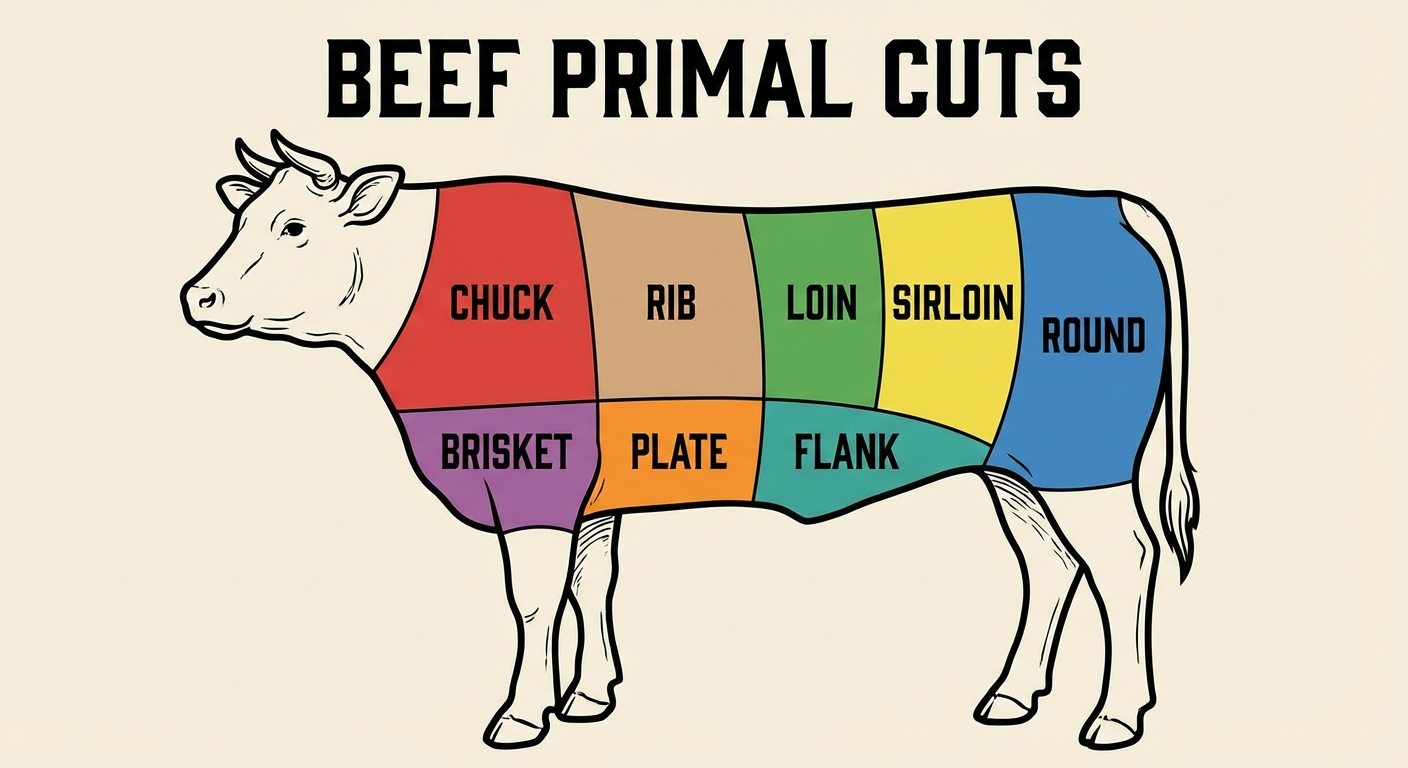
Most people only know beef by the steak names: Ribeye, Filet Mignon, Sirloin. But if you want to really understand what you're cooking — and stop wasting money on the wrong cuts — you need to understand the anatomy. You need to know the Primal Cuts.
A steer isn't just a collection of steaks. It's a machine made of muscle. Understanding how that machine works tells you exactly how to cook every piece of it. Muscles that work hard (like the leg and shoulder) are tough and flavorful. Muscles that do nothing (like the loin) are tender and mild.
Here are the 8 Primal Cuts of beef, broken down by a butcher.
1. The Chuck (Shoulder)
Location: The shoulder area. The cow uses these muscles to walk, so they are tough and loaded with connective tissue.
Flavor Profile: Deep, beefy, rich. High fat content.
Key Retail Cuts: Chuck Roast, Flat Iron Steak, Denver Steak, Short Ribs.
How to Cook: Slow cooking (braising, smoking) is king here. But the Flat Iron and Denver are exceptions — they are tender enough to grill.
2. The Rib
Location: Behind the shoulder, covering ribs 6 through 12. These muscles don't do much heavy lifting.
Flavor Profile: The perfect balance of tenderness and fat. This is the money section.
Key Retail Cuts: Prime Rib, Ribeye Steak, Rib Cap (Spinalis).
How to Cook: Dry heat. Roasting, grilling, searing. Don't you dare braise a ribeye.
3. The Loin (Short Loin & Sirloin)
Location: Behind the rib, along the spine. This is the laziest part of the cow.
Flavor Profile: Extremely tender, but milder flavor than the Chuck or Rib.
Key Retail Cuts: Filet Mignon (Tenderloin), NY Strip, T-Bone, Porterhouse.
How to Cook: High, fast heat. Grill or pan-sear. Do not overcook.
4. The Round (Rear Leg)
Location: The back leg and hip. This is the engine of the cow. Very tough, lean muscle.
Flavor Profile: Lean, mild to strong iron flavor.
Key Retail Cuts: Top Round, Bottom Round, Eye of Round.
How to Cook: Roast rare and slice thin (roast beef), or braise until falling apart.
5. The Flank
Location: The abdominal muscles underneath the loin.
Flavor Profile: Intense beef flavor, distinct grain structure.
Key Retail Cuts: Flank Steak.
How to Cook: Marinate and grill quickly, then slice AGAINST the grain.
6. The Short Plate
Location: Under the rib section.
Flavor Profile: Very fatty, very rich.
Key Retail Cuts: Skirt Steak, Short Ribs (Plate ribs).
How to Cook: Skirt steak needs screaming high heat. Short ribs need low and slow braising.
7. The Brisket (Breast)
Location: The chest muscles.
Flavor Profile: Tough, fatty, full of collagen.
Key Retail Cuts: Brisket Flat, Brisket Point.
How to Cook: Smoke it. Braise it. Corn it. It needs time (12+ hours) to break down.
8. The Shank
Location: The upper leg portion of the front and back legs.
Flavor Profile: Extremely tough, full of marrow and tendon.
Key Retail Cuts: Cross-cut Shank (Osso Buco).
How to Cook: Braise in liquid for hours. The marrow melts and creates an incredible sauce.
When you stand at the meat counter, look at the label. It will usually tell you the primal ("Beef Chuck Roast"). Now you know exactly what to do with it. And for cuts you can't find locally — like Japanese A5 or American wagyu — The Meatery ships nationwide with full cut and grade details on every product.
Frequently Asked Questions
Which primal cut is the most tender?
The Loin (specifically the Tenderloin) is the most tender muscle because it does almost no work. However, it also has the least fat flavor. The Rib is the best balance of tender and flavorful.
What is the cheapest primal cut?
The Chuck and the Round are typically the most affordable. Chuck offers better flavor for pot roasts; Round is leaner and cheaper but can be dry if overcooked.
Where does ground beef come from?
Ground beef can come from any primal, but it is most commonly made from the trimmings of the Chuck (Ground Chuck) and the Round (Ground Round). Chuck (80/20) is best for burgers; Round (90/10) is better for tacos or sauce.
More Pairing Guides
Best Bourbon for Pork Ribs vs Beef Ribs: Complete Pairing Guide
Pork ribs and beef ribs aren't interchangeable when it comes to bourbon pairing. Fat content, smoke intensity, and flavor depth determine which bottle works best. Here's the complete breakdown.
12 min readBest Bourbon for BBQ Ribs: 7 Perfect Pairings (Tasted & Ranked)
Not every bourbon works with every style of ribs. Here are 7 bourbon pairings ranked by rib type, sauce style, and smoke profile — with specific bottles tested against real BBQ.
10 min readBest Wine with Tri-Tip: Expert Pairing Guide
Tri-tip demands wines with enough structure to match its intensity while complementing its smoky, savory profile.