Beer with Ribeye: The Ultimate Pairing Guide for Steak Lovers
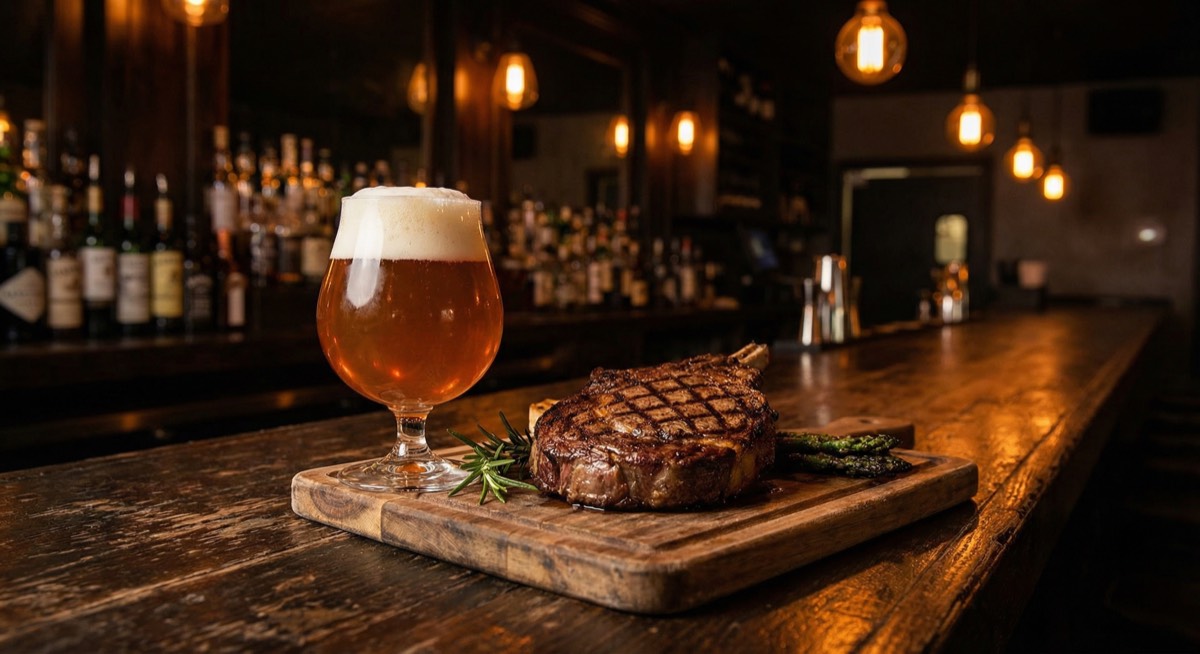
There's something deeply satisfying about cracking open a cold beer alongside a perfectly cooked ribeye steak. While wine often dominates steak pairing conversations, beer offers an equally compelling—and arguably more versatile—companion to this beloved cut. The carbonation, bitterness, and malt complexity of craft beer can elevate your ribeye experience in ways that might surprise even seasoned food enthusiasts.
In this guide, we'll explore why beer and ribeye make such an exceptional pairing, dive deep into the best beer styles for different preparations, and help you create the perfect tasting experience whether you're hosting a backyard barbecue or enjoying a quiet dinner at home.
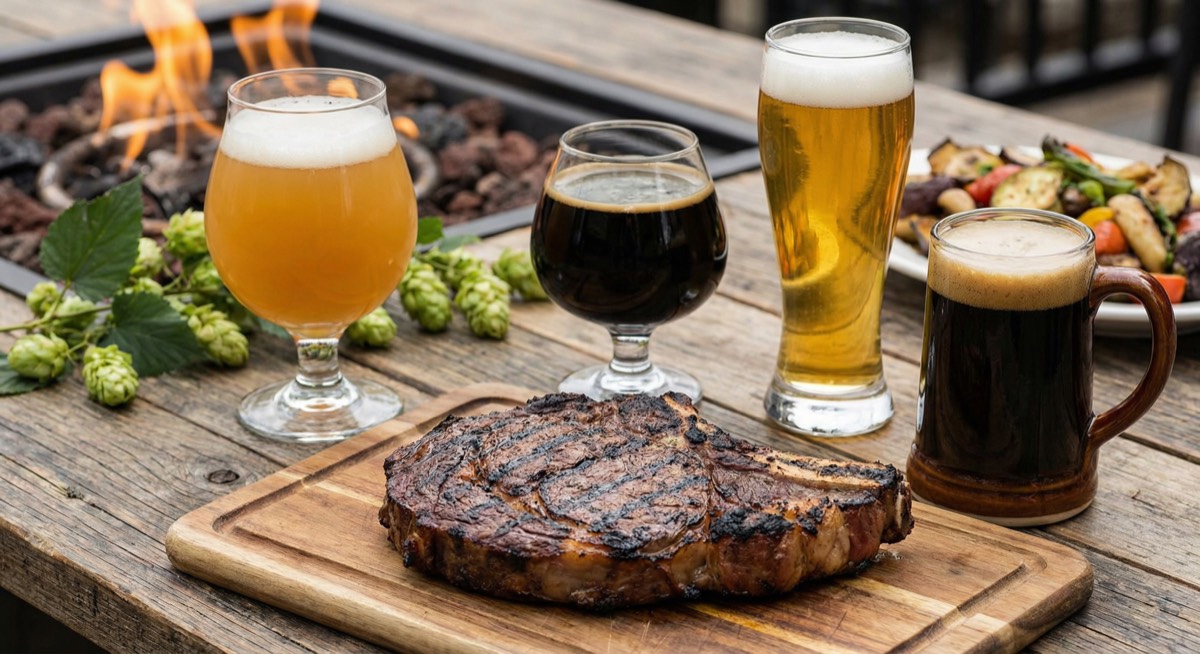
Why Beer Works So Well with Ribeye
Ribeye is one of the most flavorful and well-marbled cuts of beef, featuring generous intramuscular fat that delivers rich, buttery notes with every bite. This intensity requires a beverage that can stand up to—and complement—those bold flavors without being overwhelmed.
Beer accomplishes this through several mechanisms:
- Carbonation cuts through fat: The effervescence in beer acts as a palate cleanser, cutting through the ribeye's rich marbling and preparing your taste buds for the next bite.
- Bitterness balances richness: The hop bitterness in many beer styles provides a counterpoint to the steak's fatty richness, creating a harmonious balance.
- Malt complements char: Roasted and caramelized malt flavors echo the Maillard reaction that occurs when searing a ribeye, creating flavor bridges between food and drink.
- Temperature contrast: A cold beer against a hot-off-the-grill steak creates a refreshing sensory experience that wine simply cannot replicate.
The Best Beer Styles for Ribeye Steak
Not all beers are created equal when it comes to ribeye pairing. Here are the styles that consistently deliver exceptional results:
India Pale Ale (IPA)
The bold hop character of an IPA makes it a natural partner for ribeye. West Coast IPAs with their citrus and pine notes work particularly well with grilled ribeye, as the bitterness cuts through the fat while the aromatic hops complement any char or seasoning. For a charcoal-grilled ribeye with simple salt and pepper, a well-crafted IPA is hard to beat.
The key is matching intensity: a heavily marbled ribeye can handle a more aggressive, bitter IPA, while leaner cuts might pair better with a juicier, less bitter New England-style IPA.
Stout
Rich, roasty stouts create a symphony of flavors with ribeye. The coffee and chocolate notes found in most stouts complement the caramelized crust of a seared steak beautifully. Dry Irish stouts offer a lighter touch, while imperial stouts bring enough heft to stand up to the most intensely flavored aged ribeyes.
For special occasions featuring premium cuts like American Wagyu ribeye, an aged imperial stout can match the meat's complexity note for note.
Brown Ale
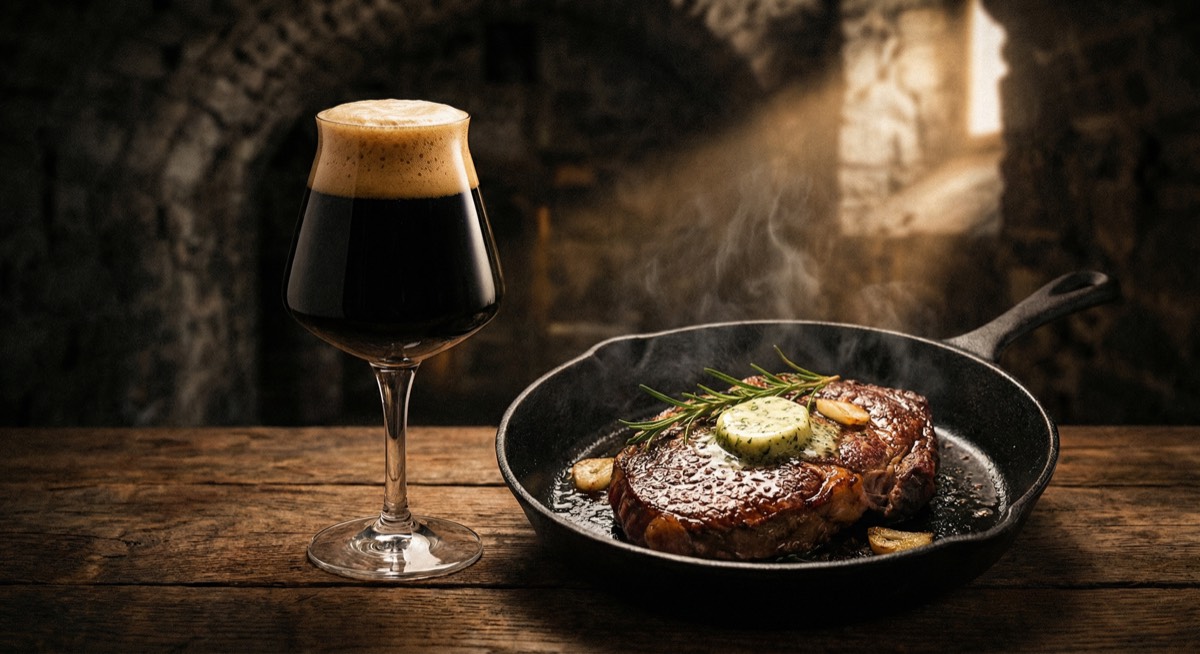
Often overlooked, brown ales offer a versatile pairing that works across multiple ribeye preparations. Their nutty, caramel, and subtle chocolate notes complement beef without competing for attention. American brown ales tend to have a slight hop presence that adds interest, while English brown ales lean into maltier, more biscuit-like flavors.
Brown ale is particularly excellent with ribeyes cooked in cast iron with butter and herbs, as the beer's malty sweetness mirrors the browned butter flavors.
Belgian Dubbel
For those seeking sophistication, Belgian dubbels offer dark fruit, caramel, and subtle spice notes that elevate ribeye to fine dining territory. The style's higher carbonation provides excellent fat-cutting ability, while its complex flavor profile rewards thoughtful sipping alongside each bite.
Dubbels shine with pepper-crusted ribeyes or preparations featuring compound butters with herbs like thyme and rosemary.
Porter
Sitting between brown ale and stout on the flavor spectrum, porters offer chocolate, coffee, and caramel notes with a smoother, more approachable body than many stouts. Robust porters with their deeper roast character work well with heavily seasoned ribeyes, while Baltic porters—with their lager-like cleanliness—complement more delicately prepared steaks.
Amber Ale
When you want the beer to support rather than star, amber ales deliver. Their balanced malt profile with moderate hop character makes them excellent food beers. The caramel and toffee notes in most amber ales create a pleasant echo of the ribeye's fat rendering and crust development.
Amber ales are particularly forgiving, making them a safe choice when you're unsure of your guests' preferences or when the ribeye's exact preparation is variable.
Pairing by Cooking Method
How you cook your ribeye significantly impacts which beer will pair best. Different cooking methods create different flavor compounds, and matching your beer to these specific flavors takes your pairing from good to exceptional.
Grilled Ribeye
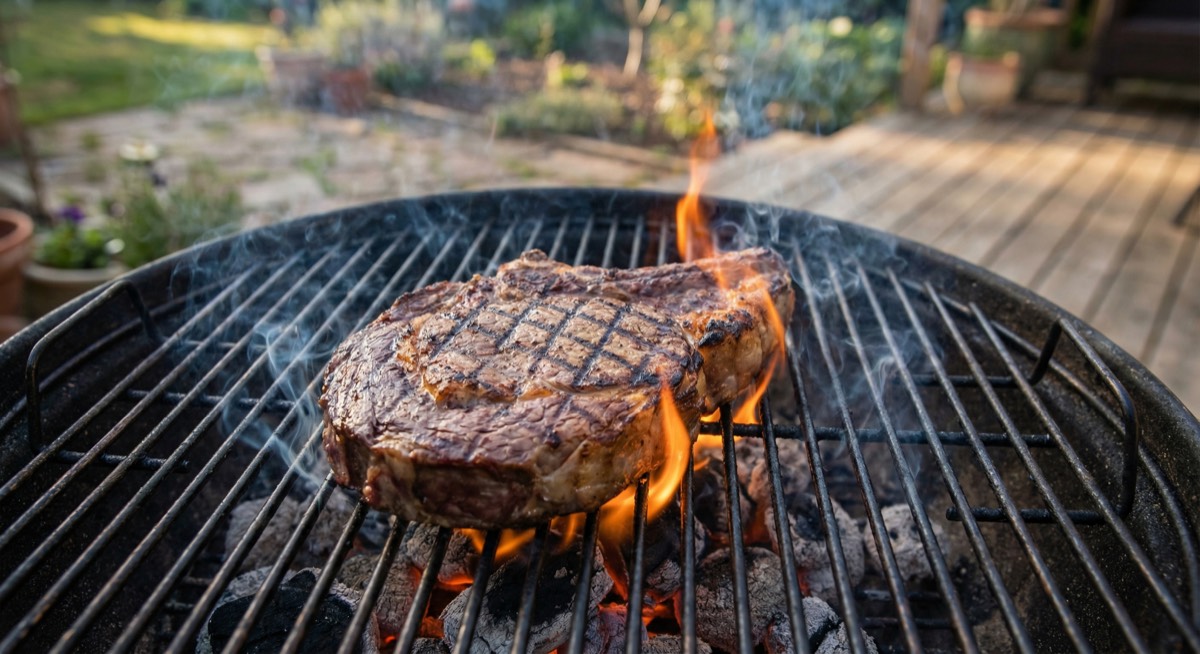
Grilling—whether over charcoal, gas, or wood—imparts smoky, charred flavors that call for beers with complementary characteristics. The high heat creates an intense Maillard crust while the fat drips onto the heat source, creating smoke that flavors the meat.
Best beer choices:
- West Coast IPA (citrus and pine complement char)
- Rauchbier (smoke meets smoke)
- American Porter (roast echoes grill marks)
- Amber Lager (clean and refreshing counterpoint)
For charcoal-grilled ribeyes specifically, try a smoked porter or rauchbier to create a cohesive smoky experience, or choose a crisp pilsner to provide contrast and refreshment.
Pan-Seared Ribeye
Pan-searing in cast iron or stainless steel creates an intense, even crust and often involves basting with butter, garlic, and herbs. This cooking method produces rich, almost nutty flavors from the browned butter and a uniformly caramelized exterior.
Best beer choices:
- Brown Ale (nutty notes complement browned butter)
- Belgian Dubbel (complexity matches elevated preparation)
- Oatmeal Stout (smooth body mirrors butter basting)
- Bock (malty sweetness with clean finish)
The richness of a butter-basted ribeye practically demands a beer with some malt backbone. Save the aggressive IPAs for the grill and reach for something rounder here.
Smoked Ribeye
Low-and-slow smoking transforms ribeye into something extraordinary, with deep smoke penetration and rendered fat creating unparalleled richness. This preparation requires beers that can handle intense flavors while providing refreshment.
Best beer choices:
- Imperial Stout (matches intensity)
- Smoked Porter (amplifies smoke theme)
- Double IPA (bold enough to compete)
- Belgian Strong Dark (complex and complementary)
Don't be afraid to go big with smoked ribeye—the meat's intensity can handle powerful beers that might overwhelm other preparations.
Specific Brand Recommendations
While local craft breweries often produce excellent options, here are some widely available beers that consistently perform well with ribeye:
For Grilled Ribeye
- Lagunitas IPA: A balanced West Coast IPA with enough bitterness to cut through fat without overwhelming
- Sierra Nevada Pale Ale: A classic that provides hop character with broader appeal
- Schlenkerla Rauchbier Märzen: For smoke lovers seeking an authentic smoked beer experience
For Pan-Seared Ribeye
- Newcastle Brown Ale: Nutty and approachable with excellent food compatibility
- Chimay Red (Première): A Belgian dubbel with the complexity to match elevated preparations
- Samuel Smith's Oatmeal Stout: Silky smooth with chocolate notes that complement butter-basted steak
For Smoked Ribeye
- Founders Breakfast Stout: Coffee and chocolate with enough body to match smoked meat
- Stone Smoked Porter: Purpose-built for barbecue and smoked meats
- Russian River Pliny the Elder: A double IPA bold enough to complement intense smoke
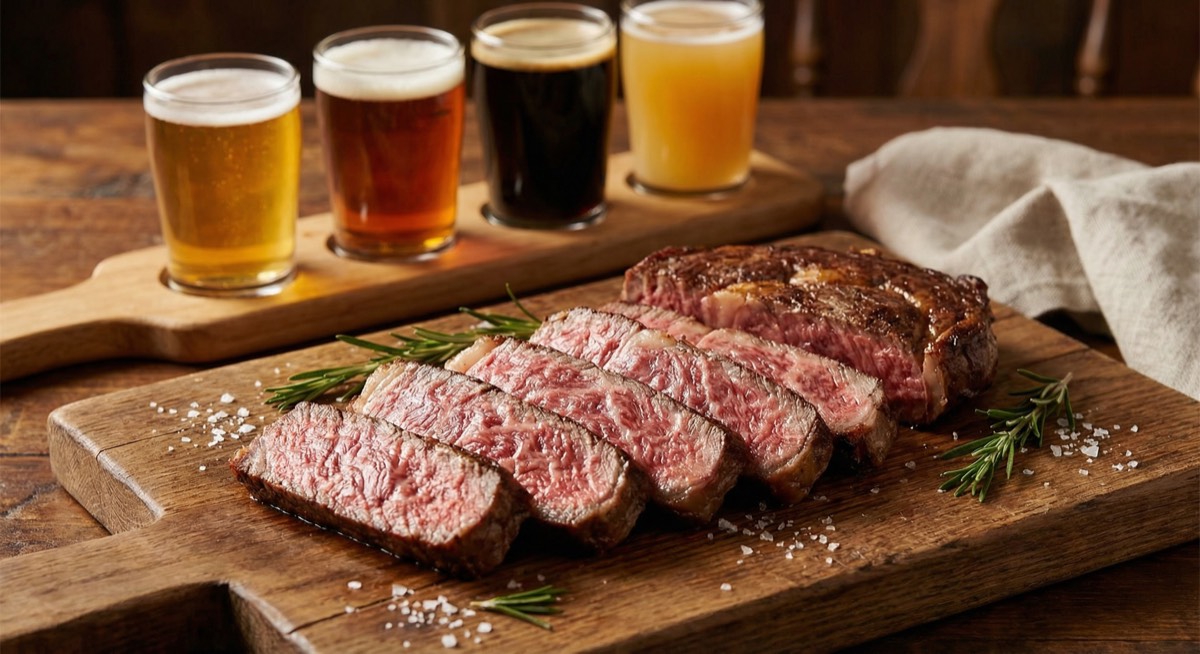
Beer and Wagyu Ribeye Pairing
Wagyu ribeye, with its exceptional marbling and buttery texture, deserves special consideration. The higher fat content and more delicate beef flavor profile require a thoughtful approach to beer pairing.
When pairing beer with premium American Wagyu ribeye, consider these principles:
- Prioritize carbonation: The elevated fat content benefits even more from beer's palate-cleansing bubbles. Higher carbonation styles like Belgian ales and German lagers excel here.
- Moderate the bitterness: Wagyu's delicate flavor can be overwhelmed by aggressive hop bitterness. Choose balanced IPAs or lean toward malt-forward styles.
- Match the elegance: A premium cut deserves a premium beer. This is the time to open that special bottle you've been saving.
Top picks for Wagyu ribeye:
- Belgian Tripel (high carbonation, complex but not heavy)
- German Doppelbock (rich maltiness with clean finish)
- Barrel-Aged Imperial Stout (special occasion worthy)
- Hazy IPA (fruity and less bitter than West Coast styles)
Creating a Beer and Ribeye Tasting Flight
For the ultimate experience, consider serving multiple beers alongside your ribeye in a structured tasting flight. This approach allows you to explore different pairings and discover your personal preferences.
The Classic Flight (4 Beers)
Arrange these from lightest to most intense:
- Amber Lager: Start clean and refreshing to appreciate the ribeye's natural flavor
- Brown Ale: Introduce malt complexity that complements the meat
- IPA: Experience how hop bitterness transforms the pairing
- Stout: Finish with roasted richness that echoes the steak's char
The Adventurous Flight (6 Beers)
For serious enthusiasts willing to explore:
- Pilsner: Crisp baseline
- Belgian Dubbel: Introduce complexity
- West Coast IPA: Explore bitterness
- Porter: Bridge to darker styles
- Rauchbier: Introduce smoke element
- Barrel-Aged Stout: Grand finale
Pour 3-4 ounces of each beer and take notes on which combinations you prefer. You may be surprised by what works best for your palate.
Tips for the Perfect Beer and Ribeye Experience
Beyond selecting the right beer, a few practical tips will enhance your pairing:
- Temperature matters: Most craft beers show better flavor slightly warmer than refrigerator temperature. Pull your beers out 10-15 minutes before serving, especially stouts and Belgian styles.
- Use proper glassware: A tulip glass or snifter concentrates aromas and enhances the tasting experience. Save the pint glass for casual sessions.
- Rest your ribeye: While the steak rests (5-10 minutes for optimal juice redistribution), pour your beer and let both reach their ideal serving state together.
- Season thoughtfully: Heavy spice rubs can compete with nuanced beers. For a tasting flight, keep seasoning simple with salt and pepper.
- Consider the sides: Your beer also needs to work with accompaniments. Roasted vegetables and potatoes pair broadly, while strong blue cheese might require a bolder beer.
Final Thoughts
The marriage of beer and ribeye offers endless possibilities for exploration. Whether you prefer the refreshing cut of an IPA through rich marbling or the harmonious depth of a stout alongside charred crust, there's a perfect pairing waiting for you.
Start with the recommendations in this guide, but don't be afraid to experiment. The best pairing is ultimately the one that brings you the most enjoyment. Grab your favorite craft beer, fire up the grill, and discover why beer and ribeye is a combination that rivals any wine pairing tradition.
Frequently Asked Questions
What is the best beer style to pair with ribeye steak?
The best beer style depends on your preparation method and personal preference. For grilled ribeye, West Coast IPAs and porters excel. For pan-seared ribeye with butter, brown ales and Belgian dubbels shine. Stouts are versatile and work well across all preparations. Start with a brown ale or amber ale if you're new to beer and steak pairings.
Should I drink light or dark beer with ribeye?
Both can work excellently with ribeye. Dark beers like stouts and porters complement the charred crust and rich marbling with their roasted flavors. Lighter beers like IPAs and amber lagers provide refreshing contrast and palate-cleansing carbonation. Consider your cooking method: grilled steaks pair well with either, while butter-basted preparations often benefit from darker, maltier beers.
Does the quality of ribeye affect beer pairing?
Yes, premium ribeye like American Wagyu has more delicate flavors and higher fat content that benefits from beers with good carbonation and moderate bitterness. Choose elegant styles like Belgian tripels or balanced IPAs rather than aggressively bitter beers. Standard USDA Choice ribeye can handle bolder, more bitter beers without the flavor being overwhelmed.
Can I pair IPA with ribeye steak?
Absolutely! IPA is one of the most popular and successful ribeye pairings. The hop bitterness cuts through the steak's rich fat, while citrus and pine aromatics complement grilled or charred flavors. West Coast IPAs work best with grilled preparations, while juicier New England-style IPAs pair well with pan-seared ribeye.
What temperature should beer be served with steak?
Most craft beers pair better with ribeye when served slightly warmer than refrigerator temperature (45-55°F rather than 38°F). Pull your beers out 10-15 minutes before serving. This is especially important for stouts, porters, and Belgian styles, where warmer temperatures allow complex flavors to emerge. Lighter lagers and IPAs can be served colder.
How do I create a beer flight for a ribeye dinner?
Arrange 4-6 beers from lightest to most intense, pouring 3-4 ounces of each. A classic flight might include: amber lager, brown ale, IPA, and stout. Taste each with bites of ribeye and note your preferences. This approach lets you experience how different styles interact with the meat's fat, char, and seasoning.
More Pairing Guides
Best Bourbon for Pork Ribs vs Beef Ribs: Complete Pairing Guide
Pork ribs and beef ribs aren't interchangeable when it comes to bourbon pairing. Fat content, smoke intensity, and flavor depth determine which bottle works best. Here's the complete breakdown.
12 min readBest Bourbon for BBQ Ribs: 7 Perfect Pairings (Tasted & Ranked)
Not every bourbon works with every style of ribs. Here are 7 bourbon pairings ranked by rib type, sauce style, and smoke profile — with specific bottles tested against real BBQ.
10 min readBest Wine with Tri-Tip: Expert Pairing Guide
Tri-tip demands wines with enough structure to match its intensity while complementing its smoky, savory profile.