Best Beer for Steak: The Complete Cut-by-Cut Pairing Guide
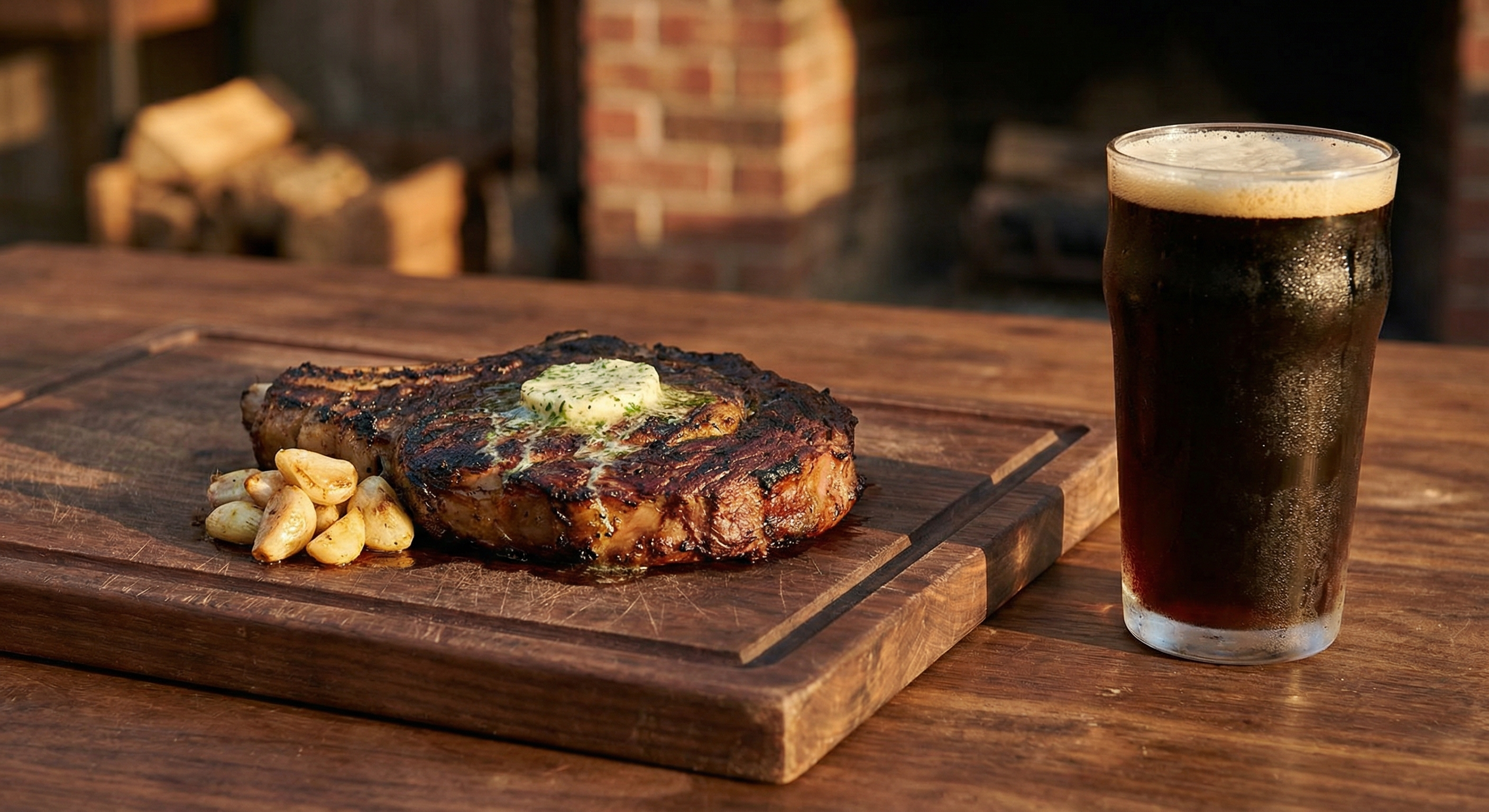
Steak and beer is one of those combinations that feels so natural, most people never stop to think about whether they're doing it right. You grab whatever's in the fridge, crack it open, and cut into your steak. It works — but it could work so much better.
The truth is, beer has structural advantages over wine when it comes to steak pairing. Carbonation physically scrubs fat from your palate. Malt shares flavor compounds with seared beef. And the sheer diversity of beer styles means there's a precision match for every cut, from a fatty ribeye to a delicate filet mignon.
This guide goes cut by cut, matching specific beer styles to specific steaks based on how flavor, fat content, and texture interact. No generic advice — just pairings that actually make both the beer and the beef taste better.
Why Beer Works With Steak: The Science
Before diving into specific pairings, it helps to understand why beer and steak are such natural partners. Three mechanisms drive successful beer-steak pairing:
Carbonation as a palate cleanser. Steak — especially well-marbled cuts — coats your mouth with rendered fat. CO₂ bubbles in beer physically lift that fat off your tongue and palate, resetting your taste buds for the next bite. This is something still wine simply cannot do. The more marbled the cut, the more you benefit from higher carbonation.
Maillard reaction overlap. When you sear steak, you create hundreds of flavor compounds through the Maillard reaction — the same chemical process that happens when barley malt is kilned for beer. Roasted, toasted, and caramelized notes in malt literally share molecular structures with the crust on your steak. A malty amber ale and a well-seared strip steak are speaking the same chemical language.
Bitterness as a counterweight. Fat and salt in steak amplify sweetness and dull bitterness, which means a beer that tastes quite bitter on its own becomes beautifully balanced alongside a rich cut. This is why IPAs work with fatty steaks despite seeming like an odd match on paper — the steak tames the hops.
Understanding these three mechanisms lets you improvise pairings confidently. High fat? Reach for carbonation and bitterness. Heavy sear? Look for malty beers. Lean cut? Choose something lighter that won't overpower the beef.
Best Beer for Ribeye
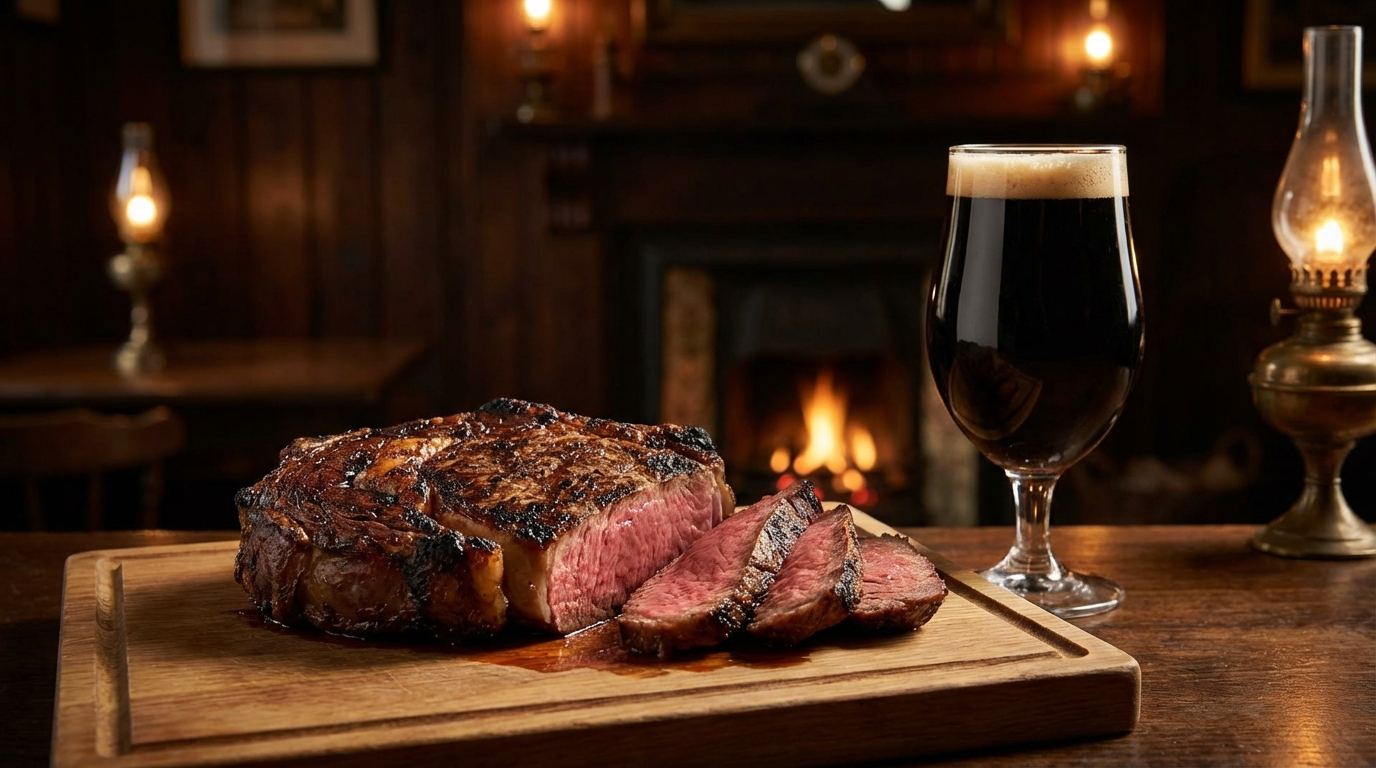
Ribeye is the most flavorful steak cut, loaded with intramuscular fat that melts during cooking and creates an incredibly rich, beefy experience. It needs a beer that can stand alongside all that flavor without being drowned out.
Imperial Stout — The Perfect Match
Imperial stout is the ribeye of the beer world — big, bold, and unapologetically intense. The roasted barley creates dark chocolate, espresso, and charred flavors that mirror the caramelized crust on a well-seared ribeye. At 8-12% ABV, imperial stout has the body and alcohol warmth to stand up to the richest marbling. The thick, creamy mouthfeel creates a luxurious pairing where neither element backs down.
Try: Founders Breakfast Stout, North Coast Old Rasputin, or any local imperial stout with coffee or chocolate notes.
Brown Ale — The Approachable Option
If imperial stout feels like too much, brown ale offers ribeye-compatible maltiness in a more sessionable package. Nutty, caramel, and toffee notes complement the beef without overwhelming your palate. Brown ales typically run 4.5-6% ABV, making them ideal for a longer dinner where you want more than one glass. The moderate carbonation provides steady palate cleansing without aggressive fizz.
Scotch Ale (Wee Heavy)
Scotch ales bring deep caramel and toffee sweetness with a smooth, warming finish. They pair especially well with ribeye that's been finished with butter or compound herb butter — the beer's sweetness bridges the gap between the rich fat and the savory sear. Look for versions in the 6-8% range for optimal balance.
Best Beer for New York Strip
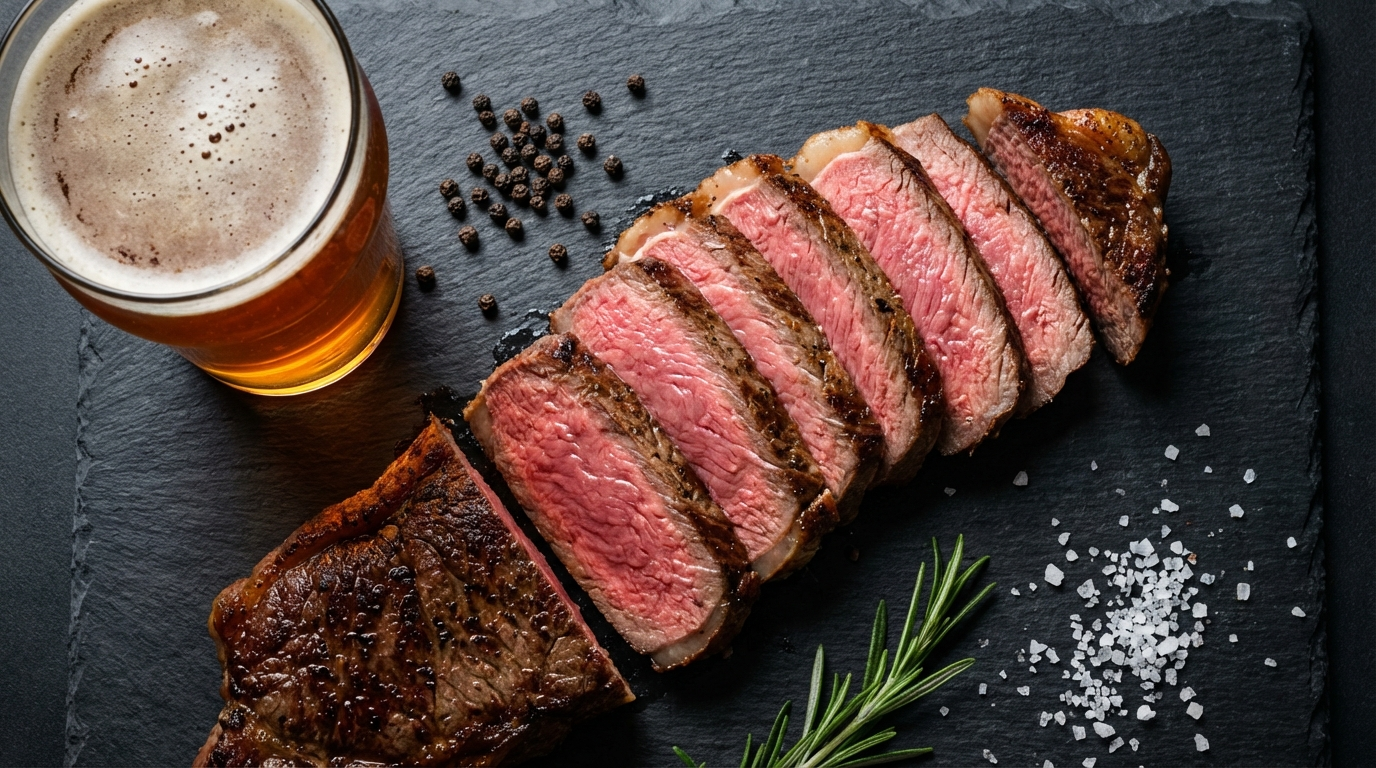
The New York strip sits in a sweet spot — less fatty than ribeye but more flavorful than filet. It has a firm texture, a pronounced beefy taste, and that gorgeous fat cap along one edge. This balanced cut rewards a balanced beer.
American Amber Ale — The Natural Pairing
Amber ale might be the single best beer style for steak, period. Its caramel malt backbone mirrors Maillard flavors on the sear. Moderate hop bitterness cuts through fat without dominating. The medium body and moderate carbonation feel like they were engineered for chewing and sipping together. At 4.5-6% ABV, amber ale is sessionable enough for a full dinner. Sierra Nevada Hop Bullet and Fat Tire are both excellent starting points.
West Coast IPA
If you like hoppy beer, a West Coast IPA can be brilliant with strip steak. The aggressive bitterness is mellowed by the meat's fat and salt, revealing citrus and pine notes that add a bright counterpoint to the savory beef. The key is making sure the IPA has enough malt backbone — all-hop, no-malt IPAs taste thin and harsh against steak. Look for versions that balance their bitterness with a solid amber malt base.
Vienna Lager
For something more refined, Vienna lager brings toasted bread and light caramel flavors with pristine drinkability. The clean lager finish refreshes your palate completely between bites, and the subtle malt sweetness enhances the strip's natural beef flavor. This is the pairing for a weeknight strip steak when you want elegance without effort.
Best Beer for Filet Mignon
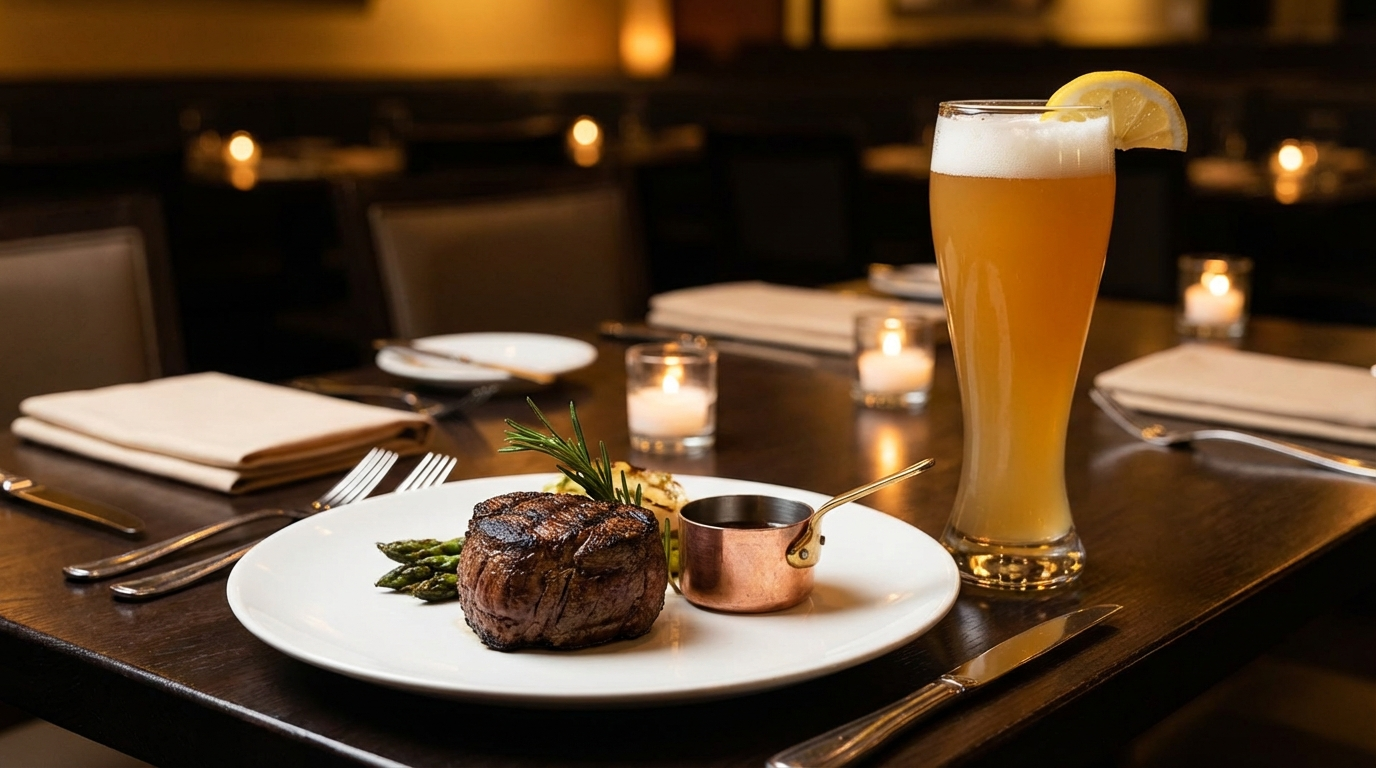
Filet mignon is the trickiest steak to pair with beer. It's incredibly tender but relatively lean and mild-flavored compared to fattier cuts. A beer that's too bold will steamroll the delicate beef; one that's too light won't add anything meaningful. The sweet spot is medium-bodied beers with nuance.
Belgian Dubbel
Belgian dubbel is the gold standard for filet mignon. Its dark fruit flavors — plum, raisin, fig — add a sweet complexity that enhances filet's buttery texture without competing with its mild beef flavor. The characteristic Belgian yeast spiciness (clove, pepper) acts like a subtle seasoning. At 6-8% ABV with soft carbonation, dubbel has enough presence to be noticed but enough restraint to let the steak shine.
Hefeweizen
The banana and clove esters in a great hefeweizen create an unexpected but delightful pairing with filet mignon. The wheat beer's pillowy body and gentle carbonation match the tenderness of the cut, while the fruity yeast character adds interest to the mild beef flavor. This pairing works especially well with filet served with a mushroom sauce or truffle butter, where the wheat beer's earthiness finds additional footholds.
Czech Pilsner
When filet is prepared simply — just salt, pepper, and a hard sear — a Czech pilsner can be ideal. The floral Saaz hop character and biscuity malt provide a clean backdrop that showcases the steak itself. Czech pilsners like Pilsner Urquell have more body and malt depth than their American counterparts, giving them enough substance for filet without overwhelming it.
Best Beer for T-Bone and Porterhouse
T-bone and porterhouse steaks present a unique challenge: you're eating two different cuts on one bone. The strip side is beefy and moderately fatty; the tenderloin side is lean and delicate. Your beer needs to work with both.
American Pale Ale
Pale ale's moderate profile makes it the diplomatic choice for T-bone. It has enough hop character to cut through the strip side's fat and enough malt body to complement the tenderloin's subtlety. Think of it as the beer equivalent of "goes with everything" — not because it's boring, but because it's genuinely balanced. Sierra Nevada Pale Ale remains the benchmark for a reason.
Märzen / Oktoberfest
German Märzen is essentially liquid bread — toasty, malty, and deeply satisfying. Its rich malt character plays beautifully with the seared crust on both sides of the T-bone, while its clean lager finish prevents palate fatigue. This is the pairing for a fall dinner when you want everything to feel warm and hearty. Bonus: Märzen's slightly sweet finish bridges the gap between the fatty strip and lean tenderloin seamlessly.
English Bitter
A cask-conditioned English bitter — if you can find one — is a revelation with a porterhouse. The low carbonation, earthy hop character, and biscuity malt create an old-world pairing that feels timeless. At 3.5-4.5% ABV, bitter is the most sessionable option on this list, which matters when you're working through a 24-ounce porterhouse over the course of an hour.
Best Beer for Wagyu Steak
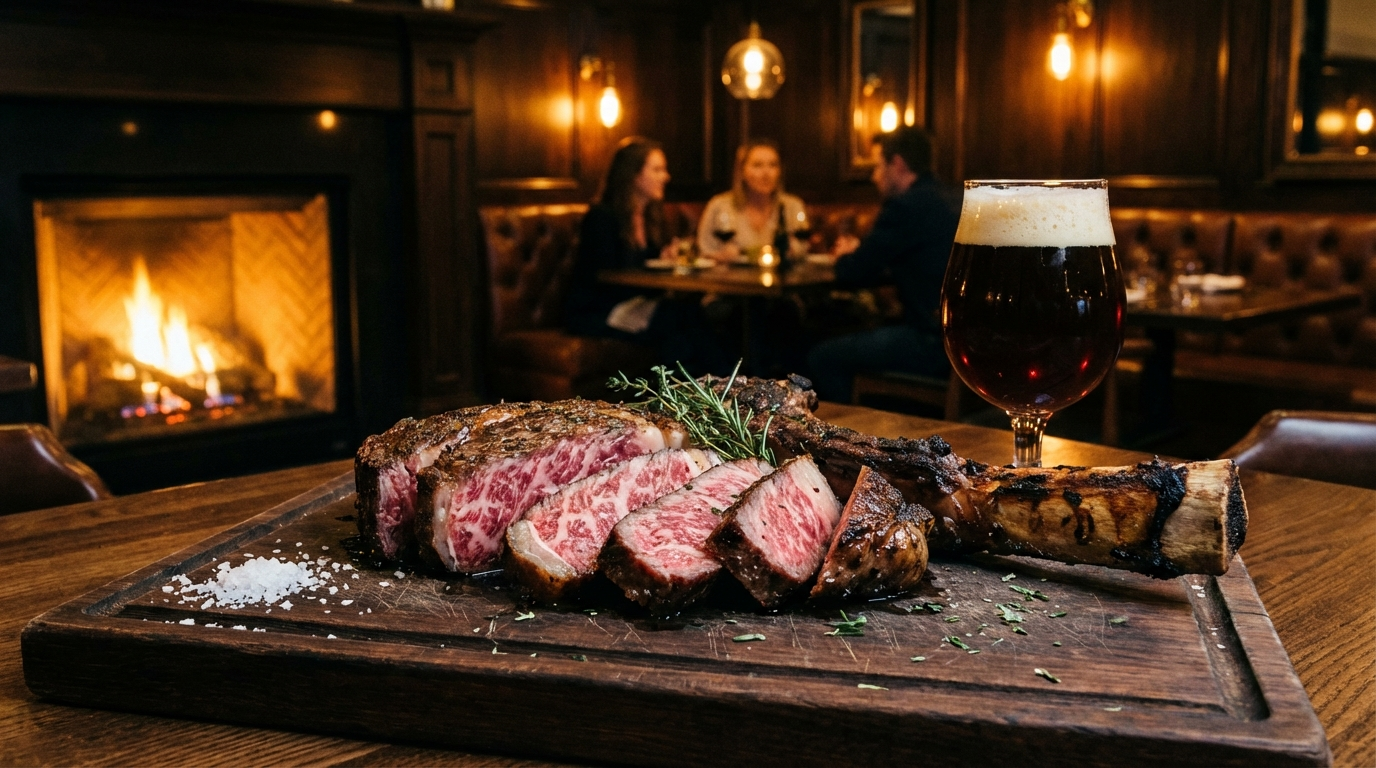
Wagyu — especially Japanese A5 — is an entirely different pairing challenge than conventional steak. The fat content can exceed 40%, creating an intensely rich, buttery experience that's more about umami and melt-in-your-mouth texture than traditional beef flavor. You eat less of it (3-5 ounces vs. 12-16), which changes the pairing dynamic.
Belgian Tripel
Belgian tripel is the best beer match for high-grade wagyu. Its aggressive carbonation provides the intense palate cleansing that 40%+ fat demands. The fruity esters (pear, apple) add brightness that cuts through the richness. At 8-10% ABV, tripel has the intensity to stand alongside wagyu's extraordinary flavor without being pushed aside. The dry finish is crucial — it prevents the cumulative fattiness that can make wagyu feel overwhelming by the fourth bite.
German Pilsner
Sometimes the best pairing for the most complex ingredient is the simplest beer. A bone-dry German pilsner with aggressive carbonation acts like a palate reset button between bites of wagyu. This is actually how many Japanese yakiniku restaurants approach the pairing — with clean, crisp lagers that let the beef be the star. Bitburger, Warsteiner, or any well-made German pils will work beautifully.
Saison / Farmhouse Ale
Saison's peppery yeast character, high carbonation, and bone-dry finish make it a sommelier's secret weapon for rich foods. With wagyu, saison acts like a seasoning — the black pepper and citrus notes from the yeast add flavor dimensions that enhance the beef's complexity. This pairing works especially well when wagyu is served with simple accompaniments like flaky salt and wasabi.
Temperature and Serving Tips
How you serve the beer matters almost as much as which beer you choose. A few guidelines that make a real difference:
- Serve darker beers slightly warmer (50-55°F). Stouts, brown ales, and Belgian dubbels reveal more flavor complexity when they're not ice cold. Pull them from the fridge 15-20 minutes before serving.
- Serve lighter beers cold (38-45°F). Pilsners, pale ales, and lagers benefit from the crispness that cold temperatures provide. Their palate-cleansing power depends partly on that refreshing chill.
- Use proper glassware. A tulip glass concentrates aromas for Belgian ales and stouts. A standard pint works for pale ales and ambers. A pilsner flute maintains carbonation for lagers. The glass shapes how aromas reach your nose, which changes how you perceive the pairing.
- Pour with a proper head. That foam isn't just aesthetic — it releases CO₂ gradually as you drink, maintaining carbonation throughout the meal. A half-inch head is ideal.
- Match beer intensity to steak doneness. Rare and medium-rare steaks are more subtle in flavor than well-done. If you're eating your steak rare, dial back the beer intensity accordingly.
Quick Reference: Beer and Steak Pairing Chart
Use this as a cheat sheet the next time you're standing in the beer aisle wondering what to grab for steak night:
- Ribeye → Imperial stout, brown ale, Scotch ale
- New York Strip → Amber ale, West Coast IPA, Vienna lager
- Filet Mignon → Belgian dubbel, hefeweizen, Czech pilsner
- T-Bone / Porterhouse → American pale ale, Märzen, English bitter
- Wagyu → Belgian tripel, German pilsner, saison
- Flank / Skirt → Mexican lager, amber ale, pale ale
- Tomahawk → Imperial stout, barleywine, doppelbock
Remember the three principles: carbonation cleans fat, malt mirrors sear, and bitterness balances richness. Master those concepts, and you'll never grab the wrong beer for steak again.
Frequently Asked Questions
What is the best beer to drink with steak?
The best all-around beer for steak is an American amber ale. Its caramel malt flavors mirror the seared crust, moderate hops cut through fat, and medium body works with virtually every cut. For specific cuts, imperial stout pairs best with ribeye, Belgian dubbel with filet mignon, and Belgian tripel with wagyu.
Is beer or wine better with steak?
Both work well, but beer has structural advantages: carbonation physically cleanses fat from your palate (still wine cannot), malt shares Maillard reaction compounds with seared beef, and the wider range of beer styles offers more precise pairing options. Wine excels with lean cuts; beer excels with rich, well-marbled steaks.
What beer goes with ribeye steak?
Imperial stout is the top choice for ribeye — its roasted barley flavors of dark chocolate and espresso complement the rich marbling and caramelized crust. Brown ale and Scotch ale are excellent alternatives if you prefer something less intense.
Can you pair IPA with steak?
Yes — West Coast IPAs pair particularly well with New York strip and other moderately fatty cuts. The fat and salt in the steak tame the hop bitterness, revealing citrus and pine notes. Choose an IPA with solid malt backbone rather than an all-hops style for the best results.
What beer pairs best with wagyu beef?
Belgian tripel is the best beer for wagyu. Its aggressive carbonation provides the intense palate cleansing that wagyu's 40%+ fat content demands, while fruity esters add brightness. German pilsner and saison are also excellent choices, following the Japanese approach of pairing rich beef with crisp, clean beers.
Should beer be served cold or warm with steak?
It depends on the style. Serve lighter beers (pilsners, lagers, pale ales) cold at 38-45°F for maximum refreshment and palate cleansing. Serve darker beers (stouts, brown ales, Belgian styles) slightly warmer at 50-55°F to reveal their full flavor complexity.
More Pairing Guides
Best Bourbon for Pork Ribs vs Beef Ribs: Complete Pairing Guide
Pork ribs and beef ribs aren't interchangeable when it comes to bourbon pairing. Fat content, smoke intensity, and flavor depth determine which bottle works best. Here's the complete breakdown.
12 min readBest Bourbon for BBQ Ribs: 7 Perfect Pairings (Tasted & Ranked)
Not every bourbon works with every style of ribs. Here are 7 bourbon pairings ranked by rib type, sauce style, and smoke profile — with specific bottles tested against real BBQ.
10 min readBest Wine with Tri-Tip: Expert Pairing Guide
Tri-tip demands wines with enough structure to match its intensity while complementing its smoky, savory profile.