Best Beer With Brisket: A Pitmaster's Pairing Guide
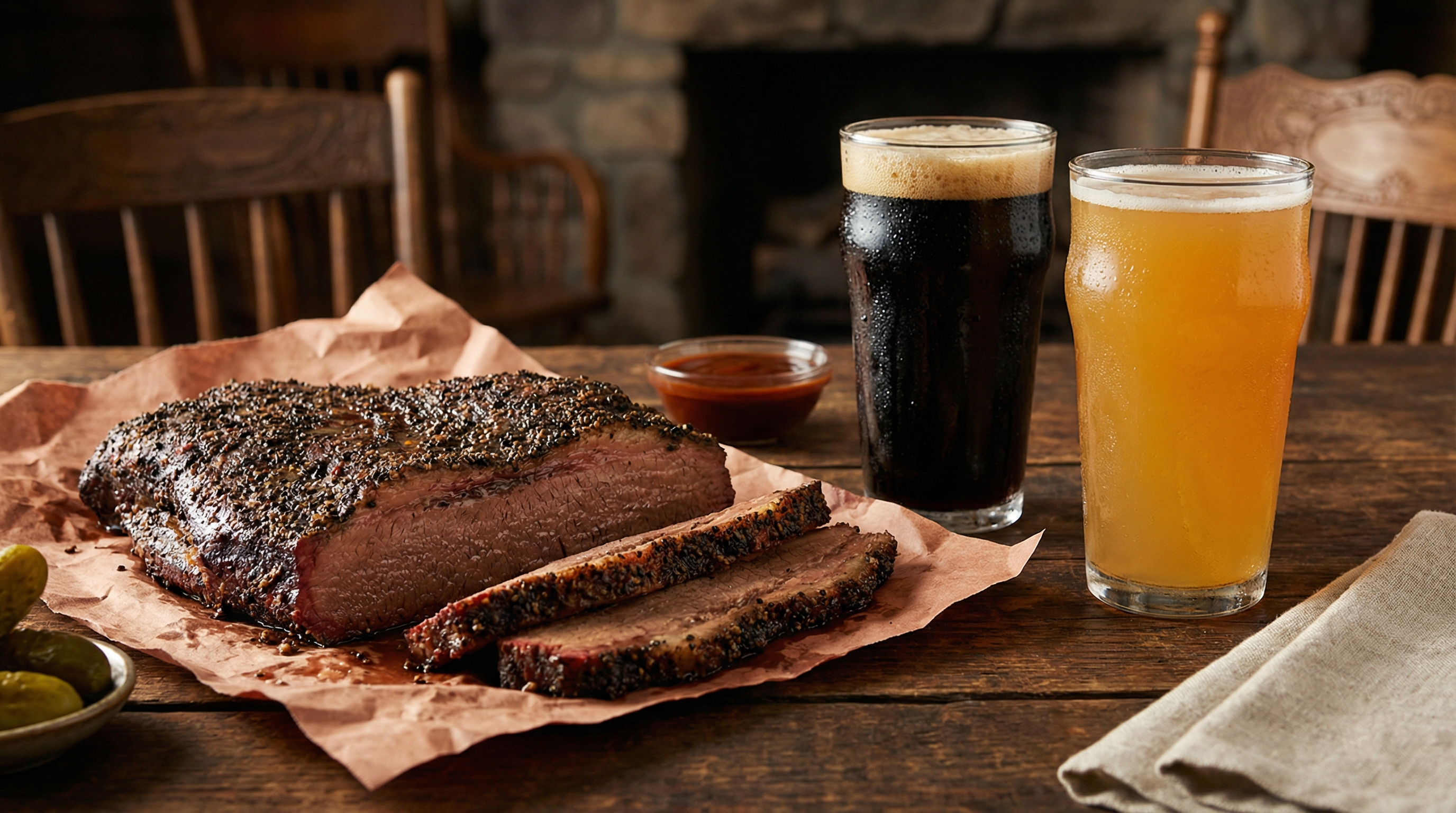
Brisket is the king of smoked meats, and it deserves a beer that treats it like royalty. But not just any beer — the wrong pairing either washes out the smoke or gets bulldozed by the fat. The right one amplifies everything you spent 12 hours building in that smoker.
The trick is understanding that brisket isn't one thing. The point is rich, fatty, and intensely beefy. The flat is leaner, more textured, with concentrated bark flavor. Burnt ends are caramelized sugar bombs. Each demands a different beer style.
This guide breaks down the best beer for every part of the brisket — with specific style recommendations, the science behind each pairing, and bottles worth seeking out.
Why Beer and Brisket Work: The Flavor Science
Beer and brisket is one of the most natural food-and-drink pairings in existence. Three mechanisms explain the chemistry behind it.
Carbonation cuts fat. The CO₂ in beer physically scrubs your palate between bites of fatty brisket. Those tiny bubbles lift rendered beef fat off your tongue, resetting your taste buds so every bite tastes as good as the first. This is why flat soda or still wine can feel heavy alongside brisket — you lose the palate-cleansing effect that carbonation provides for free.
Maillard flavor bridging. Smoked brisket bark is a masterwork of the Maillard reaction — hundreds of caramel, nutty, and toasted flavor compounds formed during the long cook. Dark beers like porters, stouts, and brown ales develop nearly identical compounds from roasted and kilned malts. When you pair them together, your brain perceives harmony instead of competition. The beer's roasted malt character reads as the same flavor family as the brisket's bark.
Hop bitterness balances richness. Bitterness is the natural counterpoint to fat and sweetness. Hops provide calibrated bitterness that prevents palate fatigue during a heavy brisket meal. Too little bitterness and everything blurs together. Too much and it fights the meat. The best pairings hit a sweet spot where the hops refresh without overwhelming the smoke.
Smoke affinity. Many beer styles — rauchbiers, smoked porters, peated scotch ales — literally contain smoke flavor from kilned malts. Even beers without deliberate smoke character often carry toasted, charred notes from dark malt roasting. These flavors dovetail with brisket's smoke ring and bark rather than clashing with it, which is a problem wines frequently encounter with heavily smoked meats.
Best Beer for Brisket Point (The Fatty Side)
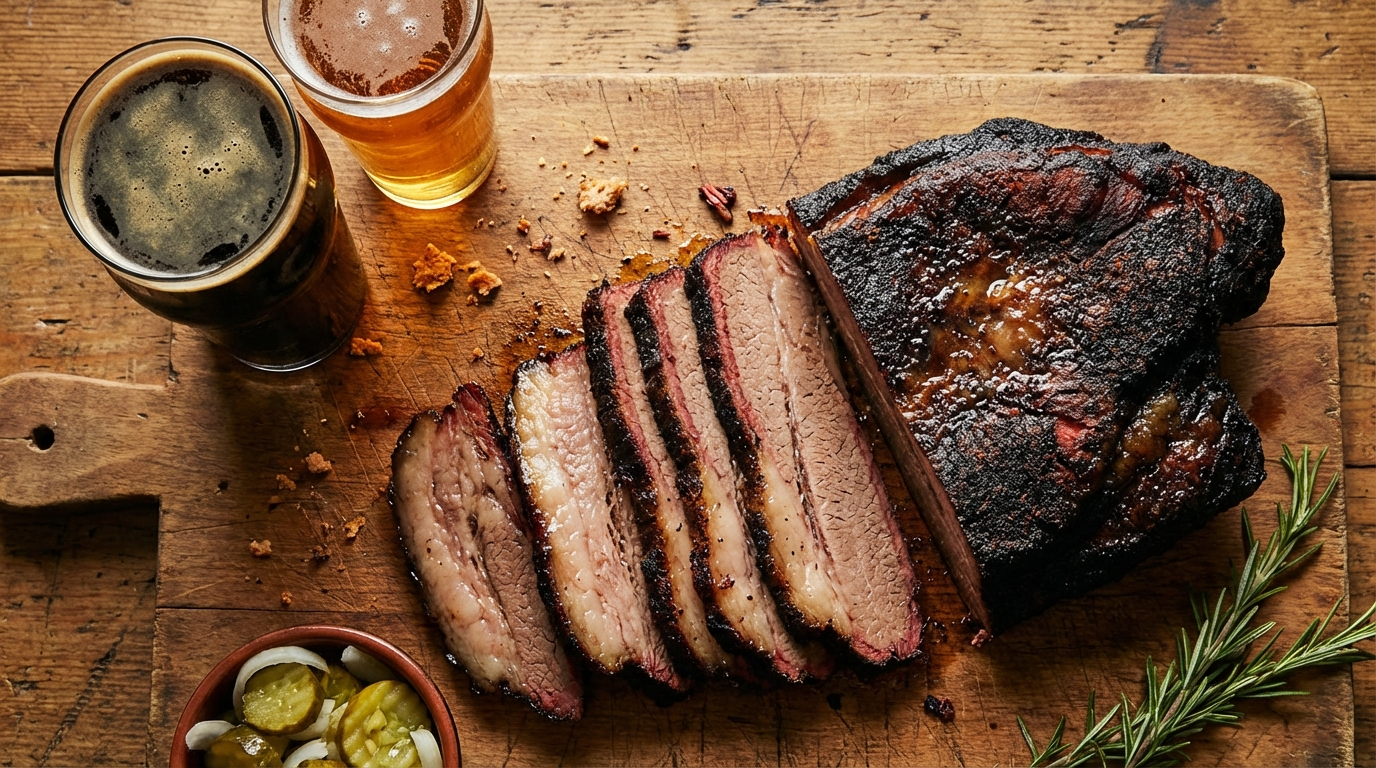
The point is the deckle — the thicker, fattier end of the brisket with rich intramuscular marbling. When smoked properly, the fat renders into the meat, creating an almost buttery texture with intense beefy flavor. This is the part that melts on your tongue.
You need a beer with enough body to match that richness, enough carbonation to cut the fat, and enough roasted or caramel malt character to complement the bark. Light lagers will get steamrolled. Here's what works:
Porter — The Best All-Around Match
A robust porter is the single best beer style for fatty brisket point. The roasted malt delivers chocolate, coffee, and caramel notes that mirror the Maillard compounds in the bark. The medium body matches the meat's richness without being as heavy as a stout. And the moderate carbonation — typically higher than stouts — keeps cutting through the fat bite after bite.
Try: Founders Porter, Deschutes Black Butte Porter, or Anchor Porter. All three are widely available, reasonably priced, and built for food pairing. Founders Porter specifically has a bittersweet chocolate character that pairs beautifully with peppery brisket bark.
Stout — The Bold Choice
If you want a bigger, bolder match, go with an oatmeal stout or dry Irish stout. The roasted barley in stouts produces deeper coffee and dark chocolate flavors that amplify the bark's charred notes. Oatmeal stouts add a silky body that mirrors the brisket's fatty texture, creating a luxurious mouthfeel combination.
Try: Guinness Draught (the low carbonation is a weakness here, so pour it more aggressively), Samuel Smith Oatmeal Stout, or Left Hand Milk Stout. Avoid imperial stouts over 8% ABV — the alcohol heat competes with the brisket's flavor rather than complementing it.
What to Avoid With Point
Skip light lagers, pilsners, and wheat beers. They lack the malt backbone to stand next to rendered beef fat. Also avoid heavily hopped IPAs — the aggressive bitterness creates a metallic clash with the fat rather than complementing it. Save the IPAs for the flat.
Best Beer for Brisket Flat (The Lean Side)
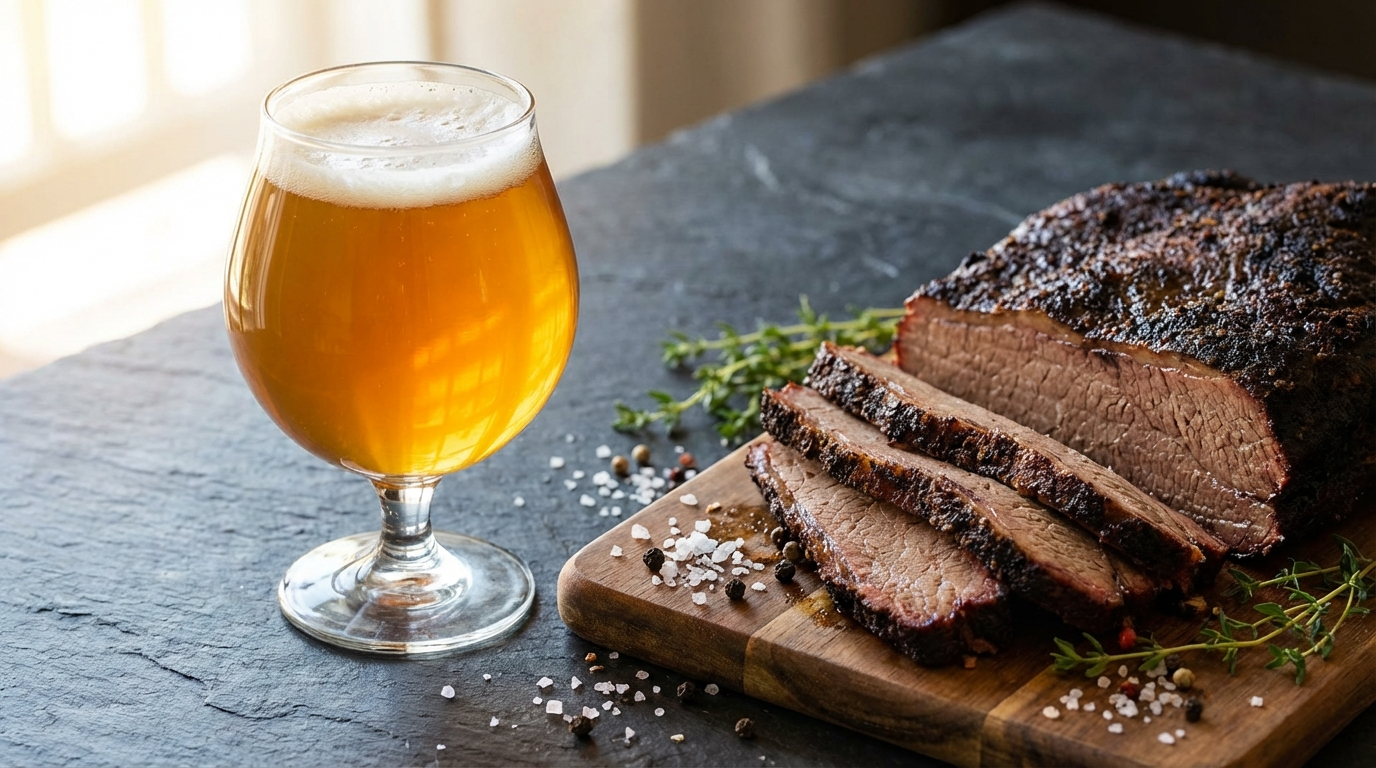
The flat is the leaner, thinner portion of the brisket. It has less intramuscular fat, a firmer bite, and more concentrated bark-to-meat ratio per slice. The flavor profile skews toward smoky, peppery, and savory rather than rich and buttery.
Because there's less fat to fight through, you have more flexibility with beer styles. Hop-forward beers actually work well here because the bitterness enhances rather than clashes with the lean meat's savory character. You want something that highlights the smoke and pepper rather than covering them up.
Amber Ale — The Natural Pairing
Amber ales are arguably the most versatile brisket beer across both point and flat, but they truly shine with the flat. The caramel malt backbone complements the bark's sweetness while the moderate hop bitterness (typically 25-40 IBU) provides enough contrast to keep the palate engaged without overpowering the smoke.
Try: Fat Tire Amber Ale, Bell's Amber Ale, or Tröegs Nugget Nectar (seasonal but worth stocking). Fat Tire in particular has a toasty, biscuity malt character that reads like a milder version of brisket bark.
IPA — The Surprising Match
Most pairing guides tell you to avoid IPAs with smoked meats. They're wrong — at least for brisket flat. The lean meat doesn't have enough fat to create the metallic bitterness clash you get with fatty cuts. Instead, the IPA's hop bitterness acts like a squeeze of lemon on fish — it brightens and lifts the smoky, savory flavors.
The key is choosing the right IPA style. West Coast IPAs with their pine and resin hop profiles work better than New England hazy IPAs. The resinous bitterness mirrors the wood smoke in the bark. Hazy IPAs are too soft and juicy — they get lost against the meat rather than enhancing it.
Try: Lagunitas IPA, Sierra Nevada Torpedo, or Firestone Walker Union Jack. All three are West Coast-style with clean bitterness and enough malt presence to not taste hollow alongside meat.
Märzen/Oktoberfest — The Dark Horse
Märzen lagers are criminally underrated as brisket beers. Their toasty, bready malt profile with subtle sweetness and clean lager crispness works beautifully with smoked brisket flat. The style was literally designed to be drunk alongside roasted and smoked meats at German festivals. The clean lager finish prevents palate fatigue better than ales, making it ideal for long barbecue meals.
Try: Ayinger Oktober Fest-Märzen, Sam Adams Oktoberfest, or Paulaner Märzen.
Best Beer for Burnt Ends
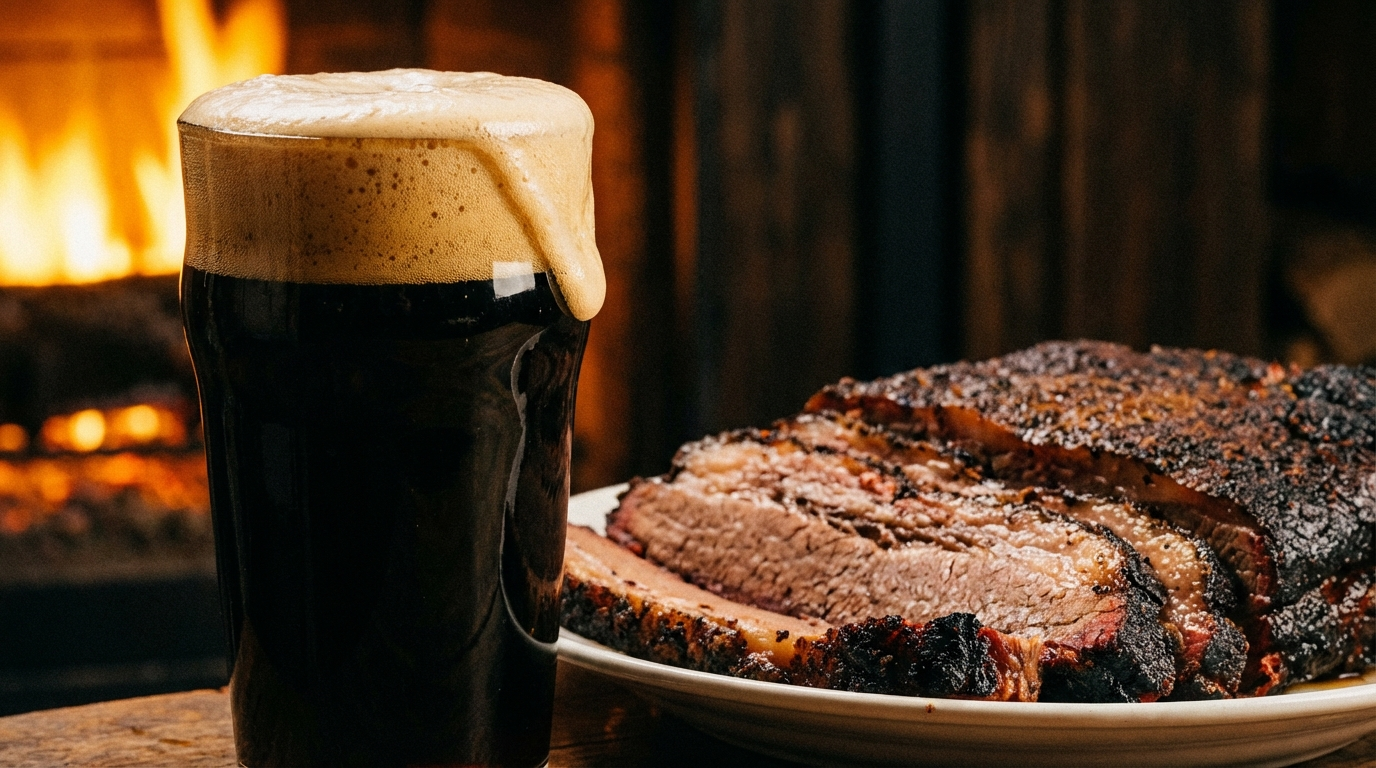
Burnt ends are the candied, caramelized cubes cut from the point after a second cook with sauce or rub. They're the most intensely flavored part of the entire brisket — sweet, sticky, smoky, charred, and fatty all at once. They need a beer that can handle that flavor density without either disappearing or creating chaos.
Brown Ale — Sweet Meets Sweet
English-style brown ales have a nutty, toffee-like sweetness that mirrors the caramelized sugar glaze on burnt ends. The lower carbonation and smooth body create a velvety mouthfeel that lets the burnt ends' complex flavors come through. The subtle roast character bridges the charred exterior without duplicating it.
Try: Newcastle Brown Ale, Samuel Smith's Nut Brown Ale, or Big Sky Moose Drool.
Smoked Beer (Rauchbier) — Smoke on Smoke
This is the expert pairing. Rauchbiers are German lagers brewed with beechwood-smoked malts that taste literally like liquid smoke. Conventional wisdom says don't pair smoke with smoke. Conventional wisdom is wrong — when both smoke sources are real (not liquid smoke), they create a layered smoke complexity rather than a one-note blast. The brisket's oak or hickory smoke sits on a different frequency than the beer's beechwood smoke, creating depth.
Try: Schlenkerla Märzen Rauchbier (the benchmark), Aecht Schlenkerla Urbock, or Alaskan Smoked Porter. Start with Schlenkerla — if you don't like it, smoked beer isn't for you, and that's fine. Pair it with sauced burnt ends for maximum effect.
Scotch Ale / Wee Heavy — The Rich Match
Scotch ales bring intense caramel, toffee, and dried fruit sweetness with a full, almost syrupy body. They match burnt ends' richness punch for punch. The low hop bitterness means nothing fights the sweet-smoky flavor profile. At 6.5-10% ABV, they also bring enough alcohol warmth to stand up to the most intensely flavored burnt ends.
Try: Oskar Blues Old Chub, Founders Dirty Bastard, or Belhaven Wee Heavy.
The Complete Brisket Beer Pairing Chart
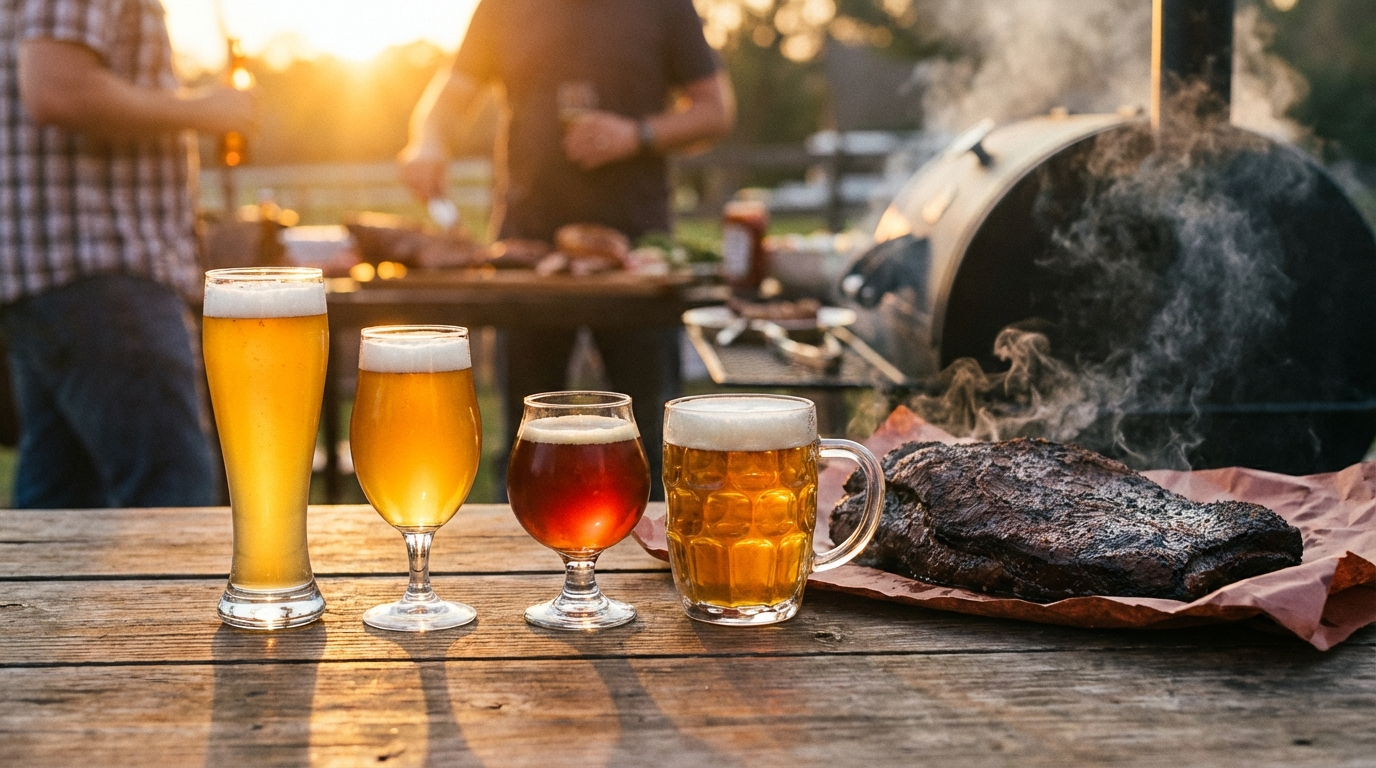
Here's the quick reference for matching every brisket component to its ideal beer style, organized by how well each pairing works:
Brisket Point (fatty): Porter ★★★★★ · Oatmeal Stout ★★★★ · Brown Ale ★★★★ · Amber Ale ★★★ · Märzen ★★★
Brisket Flat (lean): Amber Ale ★★★★★ · Märzen ★★★★★ · West Coast IPA ★★★★ · Porter ★★★ · Pilsner ★★★
Burnt Ends (caramelized): Brown Ale ★★★★★ · Scotch Ale ★★★★★ · Rauchbier ★★★★ · Porter ★★★★ · Stout ★★★
Brisket with Sauce: Amber Ale ★★★★★ · Brown Ale ★★★★ · Märzen ★★★★ · IPA ★★★ (vinegar-based sauce) · Stout ★★★ (sweet sauce)
Beer Styles to Avoid With Brisket
Not every beer belongs at a brisket table. A few styles consistently create bad pairings regardless of the cut:
Belgian witbier and hefeweizen. The banana and clove yeast esters in wheat beers clash with smoke flavor. The combination produces an unpleasant sour-smoke note that neither the beer nor the brisket deserves. The light body also can't stand up to any brisket cut.
Sour ales and gose. The acidity in sours creates a jarring contrast with smoked meat's savory richness. You end up tasting neither the beer nor the brisket properly — just a confused, acidic mess. The one exception is a very mild Berliner Weisse with heavily sauced burnt ends, where the acidity can cut through sweet sauce. But it's a niche pairing at best.
Imperial IPAs and double IPAs. Above 7% ABV and 70+ IBU, hop bitterness goes from refreshing to aggressive alongside brisket. The alcohol heat amplifies the bitterness, and the combination overwhelms smoked meat's nuanced flavors. Regular IPAs work with flat; imperials don't work with anything.
Light lagers (Bud Light, Miller Lite, Coors Light). There's nothing wrong with drinking light beer at a barbecue — but don't call it a pairing. Light lagers have almost no malt character to interact with the brisket. They function as a palate rinse, not a complement. If you're going to drink light, at least upgrade to a Mexican lager like Modelo Especial, which has enough malt character to qualify as a pairing.
How to Set Up a Brisket and Beer Tasting
The best way to experience these pairings is side by side. Here's how to set up a tasting at your next cookout that'll make you look like a genius without much effort:
The three-beer minimum. Offer at least three beer styles: one dark (porter or stout), one amber (amber ale or Märzen), and one hoppy (IPA or pale ale). Slice the brisket into point, flat, and burnt ends if available. Let guests try each cut with each beer and decide their own favorites. The conversations this generates are half the fun.
Serving temperature matters. Serve porters and stouts at cellar temperature (50-55°F), not refrigerator cold. Cold suppresses the roasted malt flavors you're trying to pair with the bark. Amber ales at 45-50°F. IPAs at 40-45°F — slightly colder highlights their hop bitterness and refreshing qualities.
Glassware is optional but helps. If you're pouring from bottles or cans, a simple pint glass lets the aromatics open up more than drinking from the container. Tulip glasses are even better for dark beers. But if you're at a backyard cookout with paper plates, a can is fine — the food is the star.
Order of tasting. Start with the flat and lighter beers, then move to the point with darker beers, and finish with burnt ends and the richest beer you have. Going from lean to fatty, light to dark prevents palate fatigue and builds to a climax. Provide water and plain bread or crackers between major pairings to reset.
Regional BBQ Styles and Their Best Beers
Different barbecue regions cook brisket differently, which changes the ideal beer pairing. Here's how to adjust:
Central Texas (salt and pepper only). Texas brisket lets the beef and smoke speak for themselves. The minimal seasoning means the beer pairing is the most critical — there's no sauce or heavy rub to bridge flavors. Best beers: porter, amber ale, or Märzen. The clean bark showcases Maillard flavor bridging at its best.
Kansas City (sweet, thick sauce). KC-style brisket is sauced with a tomato-molasses-based sauce that adds sweetness and tanginess. This changes the pairing calculus — you need something that can handle the sugar. Best beers: brown ale, Scotch ale, or amber ale. The malt sweetness in these styles harmonizes with the sauce rather than fighting it. Avoid very bitter IPAs — bitterness plus sweet sauce equals cough syrup.
Carolina-influenced (vinegar-based sauce). Vinegar-based sauces add acidity that most beers can't match. Surprisingly, this is where IPAs shine brightest — the hop bitterness complements the vinegar's tanginess instead of clashing. Best beers: IPA, pale ale, or pilsner. The crisp, bitter beer plus tangy sauce creates a refreshing contrast to the rich meat.
Memphis (dry rub focus). Memphis brisket relies on complex spice rubs heavy on paprika, garlic, and cayenne. The spice heat needs a beer with enough body to absorb it without amplifying it. Best beers: amber ale, Märzen, or Vienna lager. Malty sweetness tames spice heat while toasty character complements the paprika. Avoid high-carbonation beers with heavily spiced brisket — the CO₂ amplifies capsaicin burn.
FAQ
What is the single best beer to buy for a brisket cookout?
If you can only buy one style, go with an amber ale. It's the most versatile — works respectably with point, flat, burnt ends, and sauced brisket. Fat Tire or Bell's Amber Ale are crowd-pleasers that won't alienate guests who don't like dark beer. For a slightly more interesting pick, grab a Märzen if it's fall or an amber lager like Yuengling year-round.
Does the type of wood smoke affect the beer pairing?
Yes, meaningfully. Hickory-smoked brisket has a stronger, more assertive smoke character that pairs best with equally bold beers — porters and stouts. Oak-smoked brisket (the Texas standard) is mellower and works with a wider range of styles including amber ales and IPAs. Mesquite-smoked brisket is the most intense and is best with the richest dark beers that can match its intensity. Cherry or apple wood smoked brisket has a subtle sweetness that pairs beautifully with brown ales and Scotch ales.
Should I pair beer with brisket sandwiches differently?
Slightly. Brisket sandwiches add bread (which absorbs fat and adds starch) plus typically pickles and onions. The bread changes the mouthfeel enough that lighter beers work better than with naked slices. A pilsner or pale ale works well with a brisket sandwich where they'd fail with plain brisket slices. The pickles and onions also add acidity that makes hop-forward beers more compatible.
Can I pair non-alcoholic beer with brisket?
Absolutely. The two most important pairing mechanisms — carbonation and malt character — are both present in quality NA beers. Athletic Brewing's All Out Extra Dark and Guinness 0.0 both have enough roasted malt character to pair properly with brisket point. Bravus Oatmeal Dark and Athletic's Run Wild IPA work with flat. The alcohol itself contributes warmth but isn't essential to the flavor pairing.
Frequently Asked Questions
What is the single best beer to buy for a brisket cookout?
An amber ale is the most versatile single choice — it works with point, flat, burnt ends, and sauced brisket. Fat Tire or Bell's Amber Ale are crowd-pleasers that pair well across all brisket cuts.
Does the type of wood smoke affect the beer pairing?
Yes. Hickory-smoked brisket pairs best with bold porters and stouts. Oak-smoked works with a wider range including ambers and IPAs. Mesquite needs rich dark beers. Cherry or apple wood pairs beautifully with brown ales and Scotch ales.
Should I pair beer with brisket sandwiches differently?
Slightly — the bread absorbs fat and adds starch, making lighter beers like pilsners and pale ales work better than with plain slices. Pickles and onions also make hop-forward beers more compatible.
Can I pair non-alcoholic beer with brisket?
Yes. Carbonation and malt character — both present in quality NA beers — are the key pairing mechanisms. Athletic Brewing's All Out Extra Dark and Guinness 0.0 work well with brisket.
More Pairing Guides
Best Bourbon for Pork Ribs vs Beef Ribs: Complete Pairing Guide
Pork ribs and beef ribs aren't interchangeable when it comes to bourbon pairing. Fat content, smoke intensity, and flavor depth determine which bottle works best. Here's the complete breakdown.
12 min readBest Bourbon for BBQ Ribs: 7 Perfect Pairings (Tasted & Ranked)
Not every bourbon works with every style of ribs. Here are 7 bourbon pairings ranked by rib type, sauce style, and smoke profile — with specific bottles tested against real BBQ.
10 min readBest Wine with Tri-Tip: Expert Pairing Guide
Tri-tip demands wines with enough structure to match its intensity while complementing its smoky, savory profile.