Best Beer With Ribs: Style-by-Style Pairing Guide
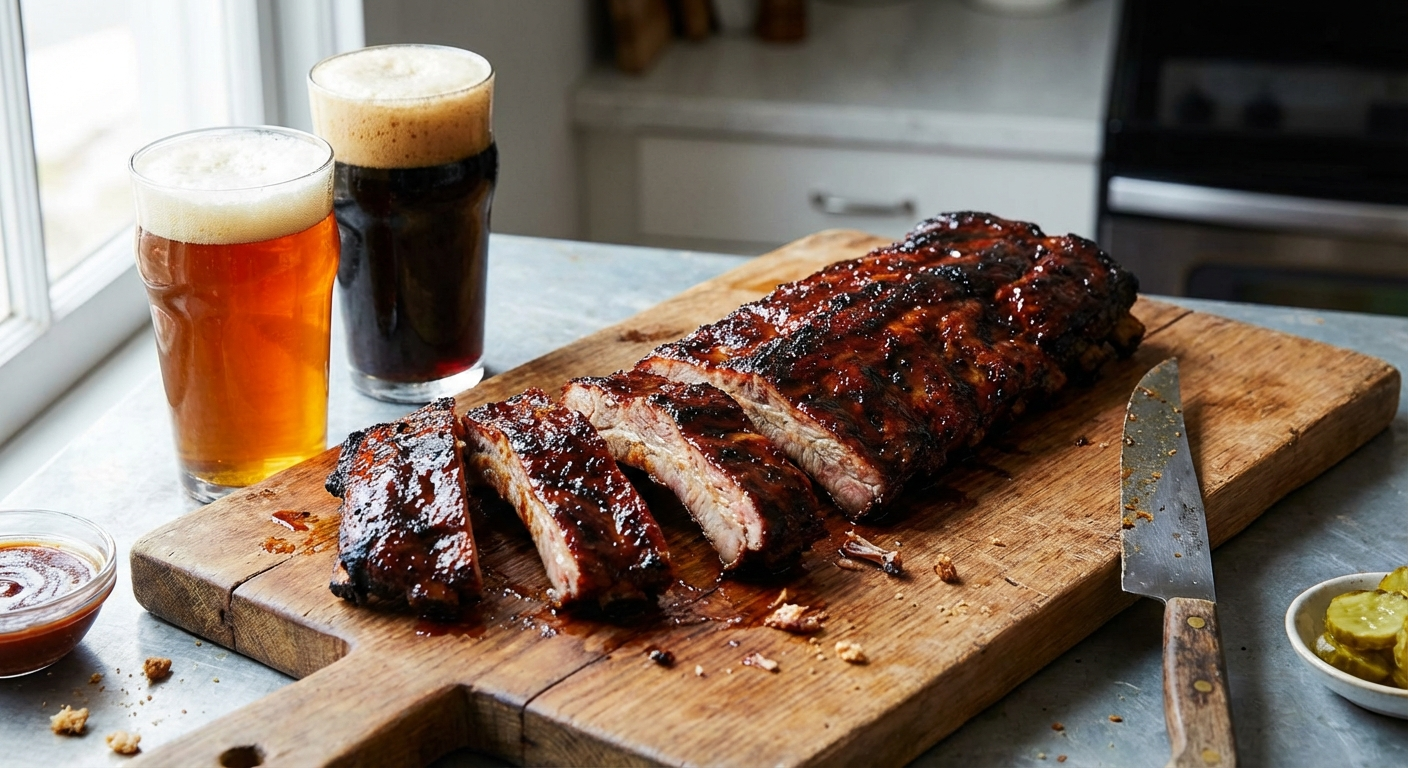
Ribs and beer belong together like smoke and fire. But "grab a cold one" isn't a pairing strategy — it's a missed opportunity. The difference between the right beer and the wrong one is the difference between a meal you remember and one that just fills you up.
The challenge with ribs is that they're not one flavor profile. Baby backs are lean and tender with concentrated smoke. Spare ribs are fattier and meatier. St. Louis cut splits the difference. Beef ribs are rich, beefy monsters that dwarf everything else on the plate. And then there's the sauce — sweet Kansas City, vinegar-forward Carolina, mustard-based South Carolina, dry-rubbed Texas. Each combination demands a different beer.
This guide breaks down the best beer for every type of rib, every regional sauce style, and every cooking method — with specific bottles worth buying and the flavor science behind each match.
Why Beer and Ribs Work: The Pairing Mechanics
Beer and ribs aren't just tradition — there's real chemistry behind why this pairing works better than almost any other meat-and-drink combination.
Carbonation resets your palate. Ribs are rich, fatty, and coated in sticky sauce. Each bite layers more flavor on your tongue. Carbonation physically lifts that fat and sugar residue, scrubbing your palate clean so every bite tastes as intense as the first. This is why flat drinks feel heavy alongside ribs — you lose the reset mechanism that keeps the meal exciting through the entire rack.
Malt bridges smoke flavor. Roasted malts in dark beers — porters, stouts, brown ales — develop the same Maillard compounds found in smoked meat bark. When you drink a porter with smoked ribs, your brain reads the flavors as harmonious rather than competing. The beer's caramel and coffee notes slot in alongside the bark's charred sweetness like puzzle pieces.
Hops cut sweetness. BBQ sauce can be aggressively sweet, especially Kansas City style. Hop bitterness is the natural counterbalance. A moderately hopped pale ale or IPA cuts through that sugar glaze the way a squeeze of lemon cuts through butter. Without bitterness, sweet sauce plus malty beer creates a cloying feedback loop that fatigues your palate fast.
Wheat and yeast complement spice rubs. Wheat beers and Belgian-style ales produce fruity esters and spicy phenols from their yeast. These flavors complement the cumin, paprika, garlic, and chili in rib dry rubs without fighting them. A hefeweizen's banana and clove character, for example, reads as "spice harmony" when paired with a well-seasoned rack.
Best Beer for Baby Back Ribs
Baby backs are the leanest, most tender pork rib. Cut from the top of the rib cage near the spine, they have less fat than spare ribs and a more delicate pork flavor. They cook faster, absorb smoke cleanly, and are usually the canvas for sweeter, thicker sauces. The beer needs to complement without overwhelming their lighter character.
Amber Ale — The Perfect Match
Amber ale is the single best beer style for baby back ribs. The caramel malt backbone mirrors the caramelized sugars in BBQ glaze. The moderate hop bitterness (typically 25-40 IBU) cuts sauce sweetness without steamrolling the delicate pork. And the medium body matches baby backs' lighter texture — you won't feel like you're drinking a meal on top of a meal.
Try: Fat Tire Amber Ale, Bell's Amber Ale, or New Belgium Amber. Fat Tire specifically has a biscuity, toasty character that echoes the smoky bark on baby backs. It's widely available, affordable, and built for exactly this kind of food pairing.
Hefeweizen — The Underrated Choice
A German hefeweizen brings banana, clove, and bubblegum esters from the yeast that create surprising harmony with sweet BBQ sauce. The high carbonation cuts through sauce glaze aggressively, and the wheat body adds enough substance to match the meat without heaviness. This is the unexpected pick that impresses at cookouts.
Try: Weihenstephaner Hefeweissbier, Paulaner Hefe-Weizen, or Ayinger Bräu-Weisse. The Weihenstephaner is arguably the best hefeweizen in the world and its clean banana ester pairs beautifully with honey-glazed baby backs.
What to Avoid With Baby Backs
Skip imperial stouts and barleywines — they'll bulldoze the delicate pork flavor. Also avoid very bitter West Coast IPAs over 70 IBU. The aggressive bitterness creates a harsh clash with sweet sauce rather than a clean cut. If you want hops, stay in the pale ale range.
Best Beer for Spare Ribs
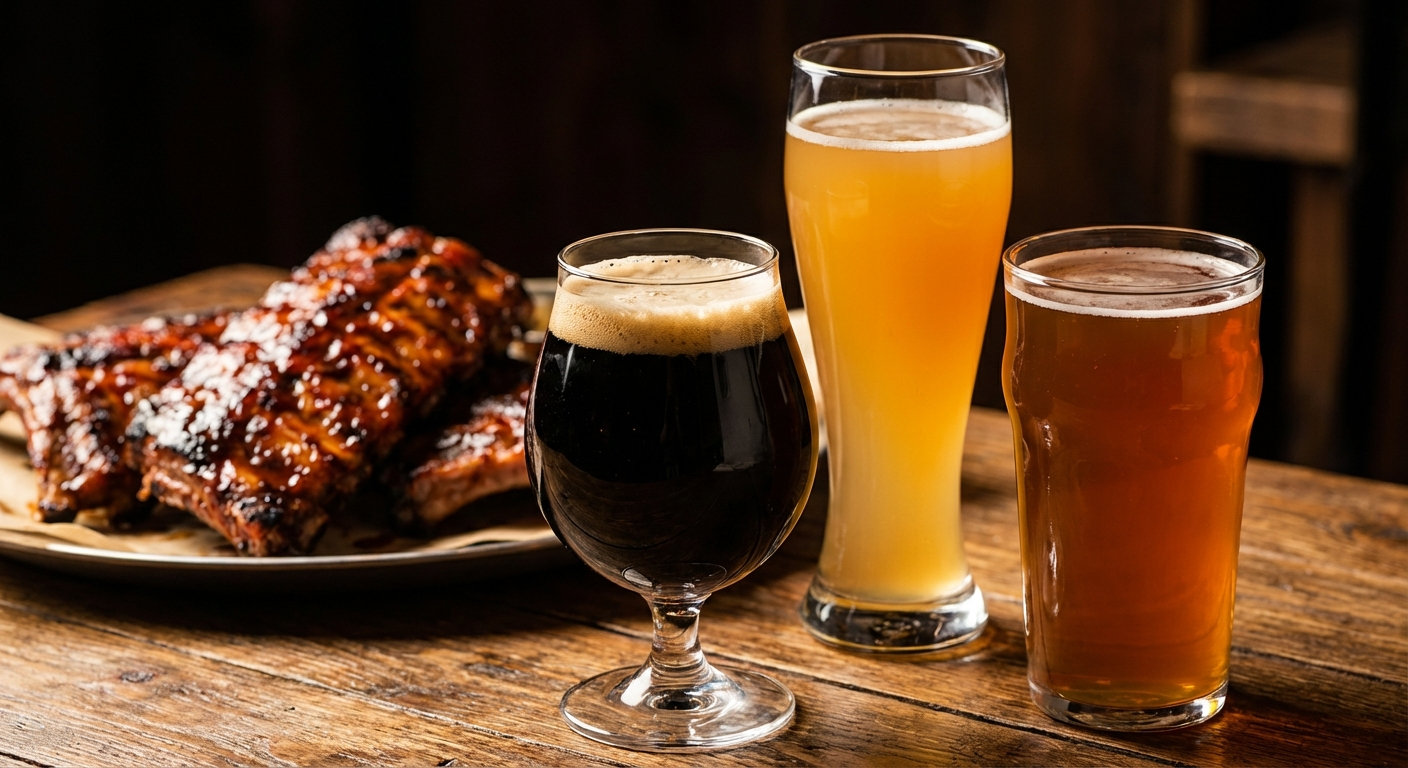
Spare ribs come from the belly side of the rib cage. They're meatier, fattier, and more flavorful than baby backs, with more connective tissue that renders into gelatin during the long cook. The larger surface area means more bark, more rub absorption, and a bigger overall flavor profile. Your beer needs to match that intensity.
Brown Ale — The Ideal Complement
English-style brown ale is the sweet spot for spare ribs. The nutty, toffee malt character complements rendered pork fat beautifully. The moderate body (not too light, not too heavy) matches spare ribs' middle-ground richness. And the low bitterness (15-25 IBU) lets the meat's natural flavor stay front and center while the malt provides a warm, toasty backdrop.
Try: Newcastle Brown Ale, Samuel Smith's Nut Brown Ale, or Brooklyn Brown Ale. Samuel Smith's version has a hazelnut character that pairs remarkably well with hickory-smoked spare ribs — the nut and smoke flavors reinforce each other.
Porter — The Bold Upgrade
When spare ribs have a thick bark and heavy smoke, step up to a porter. The roasted malt brings chocolate and coffee notes that bridge the gap between sweet glaze and smoky char. Porters have enough body to stand next to the fattier spare rib without getting lost, and their moderate carbonation keeps cutting through the rendered fat throughout the meal.
Try: Founders Porter, Deschutes Black Butte Porter, or Great Lakes Edmund Fitzgerald Porter. The Edmund Fitzgerald has a slightly bitter, roasty edge that works particularly well with Memphis-style dry-rubbed spare ribs where there's no sauce to compete with.
What to Avoid With Spare Ribs
Light lagers and pilsners will disappear next to spare ribs' big flavor. They don't have enough malt backbone to complement the meat and the thin body feels out of place. Save those for lighter fare. Also skip sour beers — the acidity fights the fat in an unpleasant way, creating a metallic, greasy mouthfeel.
Best Beer for St. Louis Cut Ribs
St. Louis cut ribs are spare ribs trimmed into a uniform rectangle by removing the sternum bone, cartilage, and rib tips. This gives you a cleaner presentation with more consistent meat-to-bone ratio. The flavor profile sits between baby backs and full spare ribs — moderately fatty, great bark-to-meat ratio, and extremely versatile with sauces.
Pale Ale — The Versatile Winner
American pale ale is the most versatile beer for St. Louis cut ribs. The moderate hop character (30-45 IBU) handles both sweet and tangy sauces equally well. The light-to-medium body matches the trimmed rib's cleaner eating experience. And the citrusy hop notes — grapefruit, orange, pine — add a brightness that lifts the entire plate.
Try: Sierra Nevada Pale Ale, Oskar Blues Dale's Pale Ale, or Firestone Walker Pale 31. Sierra Nevada is the archetype — its Cascade hop character brings floral, citrus notes that complement both tomato-based and mustard-based sauces on St. Louis ribs.
Märzen / Oktoberfest — The Seasonal Pick
If you're grilling St. Louis ribs in fall, reach for a Märzen. This amber lager has rich, bready malt character with a clean finish that lets the rub and smoke shine. The moderate sweetness echoes the caramelized drippings without adding actual sugar. And the smooth lager character means high drinkability across a full rack.
Try: Paulaner Oktoberfest Märzen, Ayinger Oktoberfest-Märzen, or Sam Adams Octoberfest. The Paulaner is textbook — bready, lightly sweet, with enough body to stand next to a sauced rib without fading.
Best Beer for Beef Ribs
Beef ribs are a different animal entirely — literally. Plate ribs (the dinosaur-sized short ribs from the brisket area) are intensely beefy, supremely fatty, and carry heavy smoke. They're essentially brisket on a bone. Your beer needs the same intensity you'd pair with the richest cuts of smoked beef.
Stout — The Only Real Option
A robust American stout or oatmeal stout is the definitive pairing for beef ribs. The deep roasted malt — dark chocolate, espresso, burnt caramel — stands toe-to-toe with beef ribs' intense flavor without flinching. The thick, creamy body matches the meat's luxurious fat content. And the carbonation, while lower than lighter styles, still provides enough palate cleansing between bites of what is essentially the most decadent cut on the smoker.
Try: Founders Breakfast Stout, North Coast Old Rasputin, or Left Hand Milk Stout Nitro. The Left Hand Nitro pour creates a creamy, smooth texture that mirrors the silky rendered fat in a properly smoked beef rib. It's an experience-level pairing that elevates both the beer and the meat.
Smoked Porter — The Adventurous Pick
A smoked porter or rauchbier doubles down on smoke. The beer's beechwood or cherry wood smoke character harmonizes with the meat's post oak or hickory smoke, creating a unified smoke profile rather than competing layers. This is a pairing for smoke lovers who want the entire experience to be wrapped in that campfire character.
Try: Alaskan Smoked Porter, Schlenkerla Rauchbier Märzen, or Stone Smoked Porter. The Alaskan Smoked Porter is brewed with malt smoked over alder wood — the same wood used for Pacific Northwest salmon smoking — and it creates an unexpectedly beautiful bridge with hickory-smoked beef ribs.
Pairing by Sauce Style
The sauce on your ribs often matters more than the cut when choosing a beer. Here's the cheat sheet:
Kansas City (sweet, thick, tomato-based): IPA or pale ale. The hop bitterness cuts through the sugar and molasses. Without that bitterness counterpoint, the sweetness becomes overwhelming. A good IPA resets your palate so you taste the meat under the glaze, not just the sauce.
Carolina vinegar (thin, tangy, pepper flakes): Pilsner or lager. The clean, crisp profile complements the vinegar's acidity without adding competing flavors. The light body matches the thin sauce's lighter touch. A Czech pilsner like Pilsner Urquell is ideal — its Saaz hop bitterness and bright carbonation are built for acidic foods.
South Carolina mustard (tangy, slightly sweet): Wheat beer or kölsch. The soft body and subtle fruitiness of wheat beer complement mustard's tang without fighting it. A kölsch's clean, slightly fruity character also works beautifully — its subtle sweetness echoes the mustard sauce's honey component.
Memphis dry rub (no sauce, heavy spice): Brown ale or amber lager. When there's no sauce, the beer interacts directly with the bark, spice, and smoke. Malty styles that complement rather than compete with spice rubs work best. Avoid hoppy styles that can amplify pepper heat into unpleasant bitterness.
Alabama white sauce (mayo-based, tangy): Saison or Belgian blonde. The unusual creaminess of white sauce pairs surprisingly well with Belgian yeast character. The peppery, fruity esters in a saison cut through the mayo richness while complementing the vinegar and horseradish notes in the sauce.
Temperature and Serving Tips
How you serve the beer matters almost as much as which beer you choose.
Serve darker beers at 50-55°F, not ice cold. Stouts, porters, and brown ales develop their full flavor complexity in the cellar temperature range. Ice cold kills the roasted malt character you're paying for. Pull them from the fridge 15 minutes before serving with ribs. You'll taste more chocolate, more coffee, more caramel — all the flavors that make the pairing work.
Serve lighter beers at 38-45°F. Pilsners, pale ales, and wheat beers benefit from cold serving temperatures that emphasize crispness and carbonation. These styles work by contrast — cold beer, hot ribs — and the temperature difference enhances the palate-cleansing effect.
Use appropriate glassware. A shaker pint is fine for casual cookouts, but a tulip glass for stouts or a weizen glass for hefeweizens concentrates aromas that add to the pairing experience. You don't need to be precious about it, but the right glass genuinely makes the beer taste better next to ribs.
Have water between styles. If you're trying multiple beer pairings across different rib courses (and you should), drink plain water between styles to reset. Jumping from a porter straight to an IPA without a palate cleanser means the IPA's hop character hits differently than it would with a clean start.
Quick Reference: Beer and Rib Pairing Chart
Use this cheat sheet at your next cookout:
Baby back ribs + sweet sauce: Amber ale, hefeweizen
Baby back ribs + dry rub: Pale ale, kölsch
Spare ribs + heavy smoke: Porter, brown ale
Spare ribs + vinegar sauce: Pilsner, Czech lager
St. Louis cut + any sauce: Pale ale, Märzen
Beef ribs: Stout, smoked porter
Competition ribs (sweet glaze): IPA, amber ale
When in doubt, grab an amber ale. It's the Swiss Army knife of rib beers — handles every cut, every sauce, every cooking method with competence. It won't be the perfect pairing for any single style, but it'll never embarrass you either.
FAQ
What is the single best beer to buy for a rib cookout?
An amber ale handles the widest range of rib styles. Fat Tire or Bell's Amber Ale are crowd-pleasers that pair respectably with baby backs, spare ribs, and St. Louis cut regardless of sauce. For a slightly more adventurous pick, a brown ale like Newcastle covers similar ground with a nuttier character that adds interest.
Does the smoking wood affect which beer to pair?
Yes. Hickory smoke is bold and assertive — match it with equally bold porters and stouts. Fruit woods like apple and cherry produce sweeter, lighter smoke that pairs better with wheat beers and amber ales. Mesquite is the most intense and needs big, dark beers that won't get overwhelmed. Oak falls in the middle and works with the broadest range of styles.
Can I pair light beer with ribs?
You can, but you're missing out. Light lagers quench thirst but don't engage with the meat's flavor. If guests insist on light beer, a Mexican lager like Modelo Especial or Pacifico at least has enough malt character to nod in the direction of a real pairing. Mass-market American light lagers will just taste like cold water next to well-smoked ribs.
Should I change beers between rib courses?
Absolutely. Progressing from lighter to darker beers across a rib meal mirrors the classic wine progression. Start with a pilsner or pale ale alongside lighter baby backs, move to an amber or brown ale with spare ribs, and finish with a stout if serving beef ribs. This progression keeps your palate engaged and prevents fatigue from drinking the same style all day.
Do non-alcoholic beers work with ribs?
Quality NA beers work well. The two key pairing mechanisms — carbonation and malt character — are both present in good NA options. Athletic Brewing's All Out Extra Dark pairs well with smoked spare ribs, and their Free Wave Hazy IPA handles sweet sauces. Guinness 0.0 works with beef ribs. The alcohol itself contributes warmth but isn't essential to the flavor pairing.
Frequently Asked Questions
What is the single best beer to buy for a rib cookout?
An amber ale handles the widest range of rib styles. Fat Tire or Bell's Amber Ale are crowd-pleasers that pair respectably with baby backs, spare ribs, and St. Louis cut regardless of sauce style.
Does the smoking wood affect which beer to pair?
Yes. Hickory smoke matches bold porters and stouts. Fruit woods like apple and cherry pair with wheat beers and amber ales. Mesquite needs big, dark beers. Oak falls in the middle and works with the broadest range of styles.
Can I pair light beer with ribs?
You can, but you're missing out. Light lagers quench thirst but don't engage with the meat's flavor. If guests prefer light beer, a Mexican lager like Modelo Especial has enough malt character for a basic pairing.
Should I change beers between rib courses?
Yes — progress from lighter to darker beers across a rib meal. Start with a pilsner or pale ale for baby backs, move to amber or brown ale for spare ribs, and finish with a stout for beef ribs.
Do non-alcoholic beers work with ribs?
Quality NA beers work well. Athletic Brewing's All Out Extra Dark pairs with smoked spare ribs, and Guinness 0.0 works with beef ribs. Carbonation and malt character — both present in good NA beers — are the key pairing mechanisms.
More Pairing Guides
Best Bourbon for Pork Ribs vs Beef Ribs: Complete Pairing Guide
Pork ribs and beef ribs aren't interchangeable when it comes to bourbon pairing. Fat content, smoke intensity, and flavor depth determine which bottle works best. Here's the complete breakdown.
12 min readBest Bourbon for BBQ Ribs: 7 Perfect Pairings (Tasted & Ranked)
Not every bourbon works with every style of ribs. Here are 7 bourbon pairings ranked by rib type, sauce style, and smoke profile — with specific bottles tested against real BBQ.
10 min readBest Wine with Tri-Tip: Expert Pairing Guide
Tri-tip demands wines with enough structure to match its intensity while complementing its smoky, savory profile.