Best Bourbon for Pork Ribs vs Beef Ribs: Complete Pairing Guide
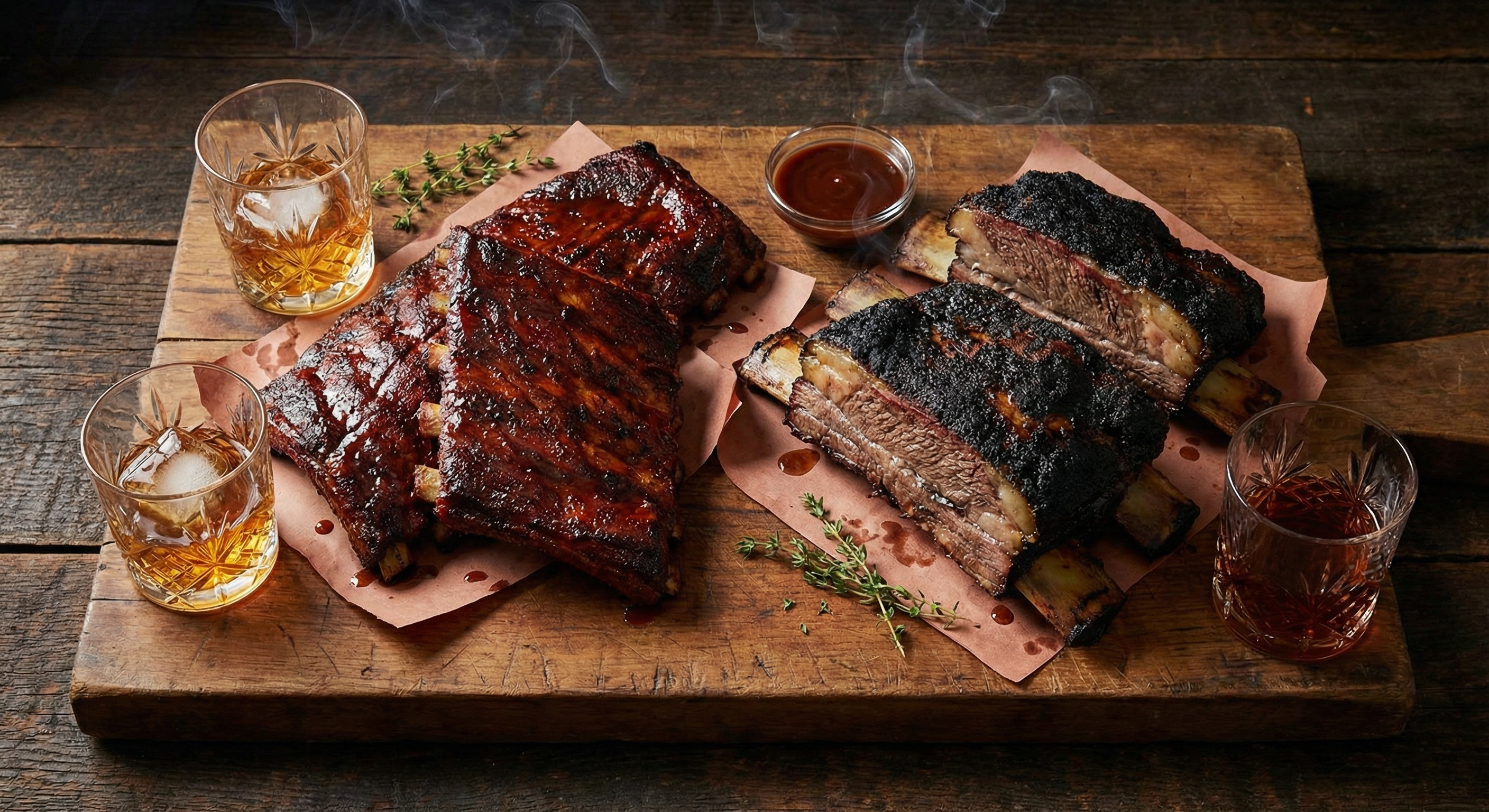
Walk into any BBQ joint and order "ribs," and you'll get a question back: pork or beef? It's not just a menu formality — it's a flavor decision that shifts everything downstream, including which bourbon you should pour.
Pork ribs and beef ribs demand different bourbon pairings. Beef ribs are bigger, fattier, more intensely flavored, and taste like concentrated beef funk layered with char. Pork ribs are leaner (especially baby backs), sweeter, and more forgiving — they play well with a wider range of bourbons. The difference isn't subtle. It's the difference between a delicate wheated bourbon and a 100-proof bruiser that tastes like charred oak and leather.
This guide breaks down exactly which bourbons work best with pork ribs versus beef ribs, why the matches differ, and how to choose the right pour based on fat content, smoke wood, and sauce style. No generic advice — just specific bottles, real chemistry, and the flavor logic behind each pairing.
Why Pork Ribs and Beef Ribs Need Different Bourbons
Before we get to specific bottles, it helps to understand why these two rib types shift the bourbon pairing so dramatically.
Fat Content Drives Proof Choice
Beef ribs — especially plate ribs (dino ribs) — contain significantly more intramuscular fat than pork ribs. When you cook them low-and-slow, that fat renders into the meat and creates a rich, greasy mouthfeel. High-proof bourbon (100+ proof) cuts through that fat and cleanses your palate between bites. Lower-proof bourbon (90 or below) gets buried by the richness.
Pork ribs, especially baby backs, are leaner. There's less fat to cut through, so mid-range proof bourbon (90-94 proof) works beautifully without tasting harsh or overpowering the pork.
Flavor Intensity Requires Different Bourbon Profiles
Beef ribs taste like concentrated beef — deep, funky, almost gamey. They need a bourbon with enough oak, age, and complexity to stand up to that intensity. Delicate wheated bourbons or fruit-forward pours get buried.
Pork ribs are milder and sweeter. They pair well with balanced bourbons that bring caramel and vanilla without overwhelming the pork's natural flavor. You have more flexibility with pork — you can go wheated, high-rye, or balanced, and all three can work depending on your sauce.
Smoke Profile Shifts the Match
Beef ribs are almost always smoked with bold woods like post oak, hickory, or mesquite — woods that produce heavy, assertive smoke. That smoke needs a bourbon with barrel char and age to match the intensity.
Pork ribs work well with milder fruit woods (apple, cherry) or medium woods (hickory, pecan). These lighter smoke profiles pair better with softer bourbons that won't bury the delicate smoke.
Best Bourbons for Pork Ribs (By Style)
Pork ribs come in several distinct styles, and each style shifts the bourbon pairing. Here's how to match bourbon to the most common pork rib preparations.
Kansas City-Style Spare Ribs (Sweet Tomato Sauce)
Best Bourbon: Buffalo Trace (90 proof, $30)
Why It Works: Kansas City ribs are all about thick, sweet, tomato-based sauce. Buffalo Trace brings balanced caramel and vanilla that mirror the glaze without adding competing sweetness. The 90 proof cuts through pork fat without burning off the sauce flavors. This is the safest, most crowd-pleasing pairing for classic BBQ ribs.
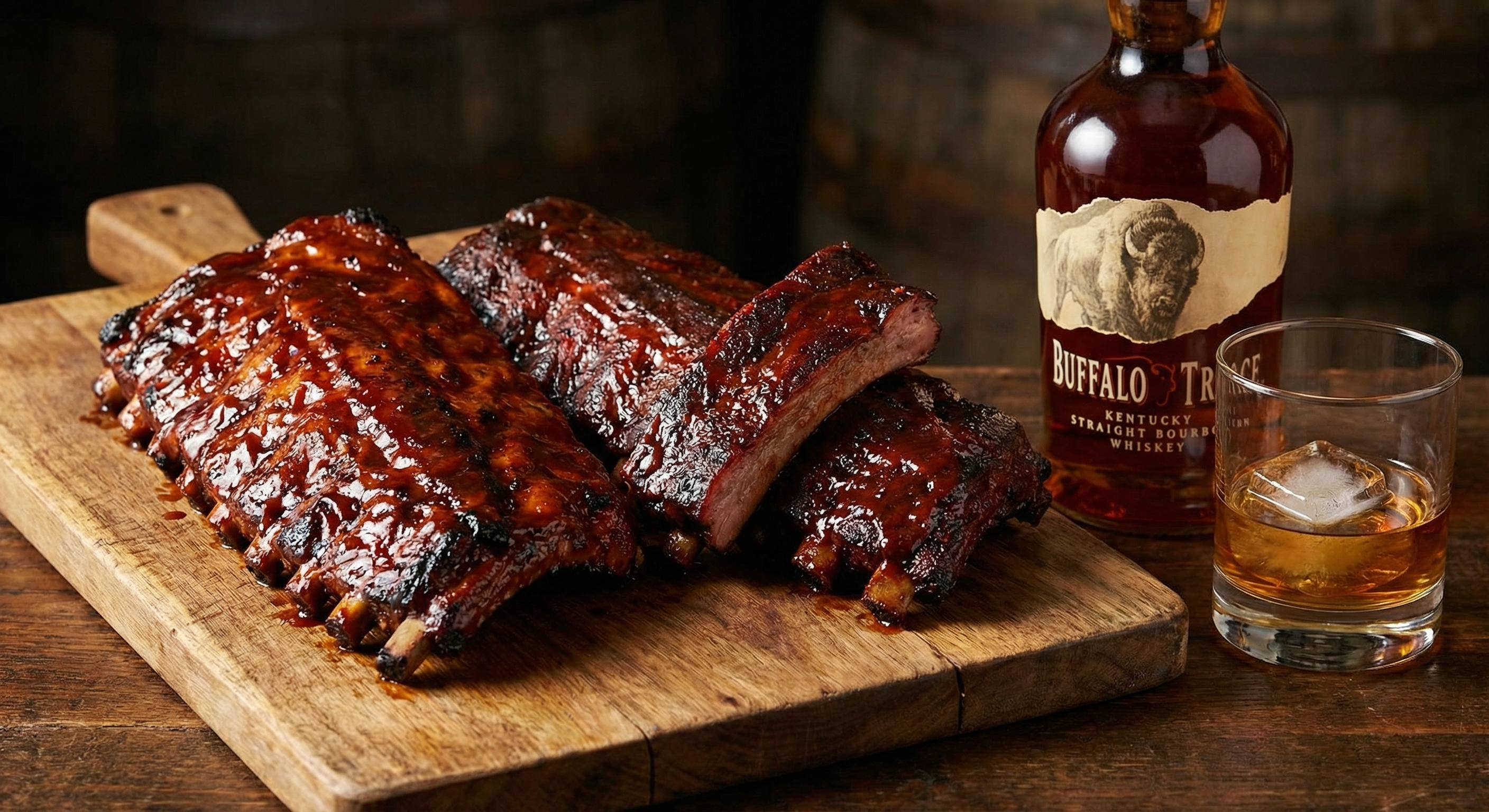
Rib Specs: St. Louis-cut spare ribs, 3-2-1 method, hickory smoke, sauce brushed on during the last 30 minutes.
Flavor Match: Caramel bark + caramel bourbon. Tomato sauce acidity + oak tannins. Rendered pork fat + 90 proof ethanol cut.
Memphis Dry-Rubbed Baby Backs
Best Bourbon: Wild Turkey 101 (101 proof, $25)
Why It Works: Memphis ribs are served dry — no sauce, just rub and smoke. That means there's nothing to cushion a delicate bourbon. Wild Turkey 101's high-rye spice (cinnamon, black pepper, oak char) mirrors the black pepper and cayenne in the dry rub. The 101 proof keeps the pairing bold and direct. This is the pairing for people who hate sweet sauce.
Rib Specs: Baby back ribs, dry rub (paprika, black pepper, cayenne, garlic), cherry wood, no wrap, no sauce.
Flavor Match: Dry rub spice + high-rye bourbon spice. Cherry smoke + barrel char. Lean baby backs + high proof (no fat to dilute the intensity).
Baby Backs with Honey Glaze
Best Bourbon: Maker's Mark (90 proof, $30)
Why It Works: Wheated bourbons like Maker's Mark swap rye for wheat, creating a softer, sweeter profile with honey and vanilla notes. When paired with honey-glazed baby backs, you get doubled-down sweetness that actually works. The wheat brings bready, almost pastry-like notes that taste like honey cornbread alongside sweet pork.
Rib Specs: Baby back ribs, light rub, apple wood, honey glaze (honey, apple cider vinegar, butter) brushed on at the end.
Flavor Match: Honey glaze + wheat sweetness. Apple wood smoke + soft vanilla. Lean baby backs + 90 proof (just enough cut, not too aggressive).
Carolina Mustard Pork Ribs
Best Bourbon: Elijah Craig Small Batch (94 proof, $30)
Why It Works: South Carolina mustard sauce is tangy, sharp, and vinegar-forward. It needs a bourbon that can handle acidity without tasting thin. Elijah Craig's oak backbone and subtle fruit notes (dried apricot) play off the mustard's vinegar bite. The 94 proof cuts through pork fat while the oak tannins complement the mustard's sharpness.
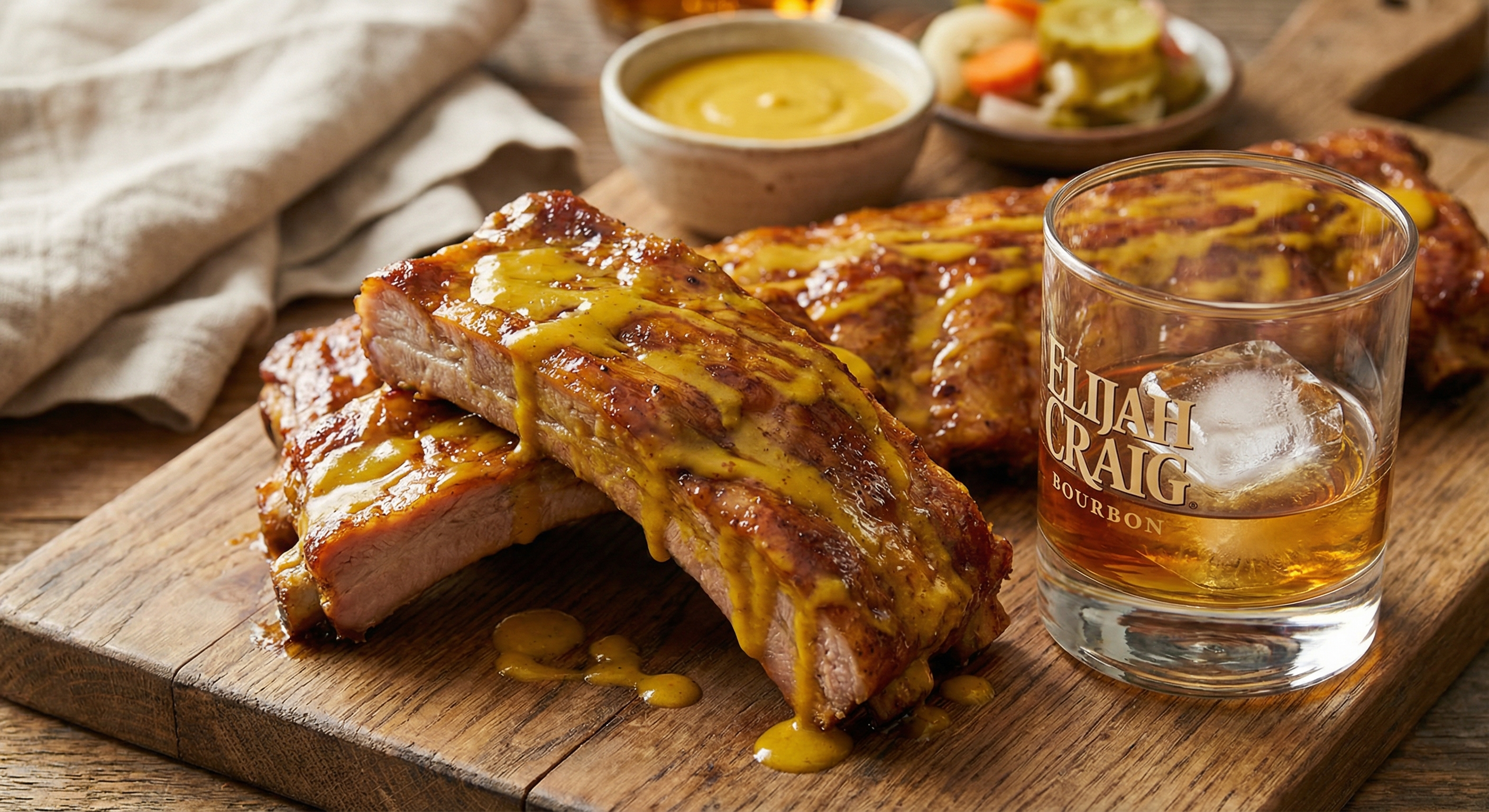
Rib Specs: Spare ribs, hickory smoke, South Carolina mustard sauce (yellow mustard, vinegar, brown sugar, spices).
Flavor Match: Mustard tang + bourbon oak tannins. Vinegar acidity + fruit notes. Pork fat + 94 proof balance.
Best Bourbons for Beef Ribs (Texas-Style and Beyond)
Beef ribs are a different beast entirely. They're bigger, richer, more intensely flavored, and almost always cooked Texas-style with minimal seasoning and heavy smoke. Here's how to pair bourbon with beef ribs.
Texas-Style Beef Plate Ribs (Salt-and-Pepper)
Best Bourbon: Knob Creek 9 Year (100 proof, $35)
Why It Works: Beef plate ribs (dino ribs) are massive, fatty, and intensely flavored. They need a bourbon with enough age, oak, and proof to stand up to that beef funk without getting buried. Knob Creek's 9-year aging brings deep oak, leather, and tobacco notes that match the char and rendered beef fat. The 100 proof cuts through the richness and resets your palate between bites.
Rib Specs: Beef plate ribs (3-bone or 4-bone), salt-and-pepper rub, post oak smoke, no wrap, no sauce. Heavy bark, massive fat cap, pure beef flavor.
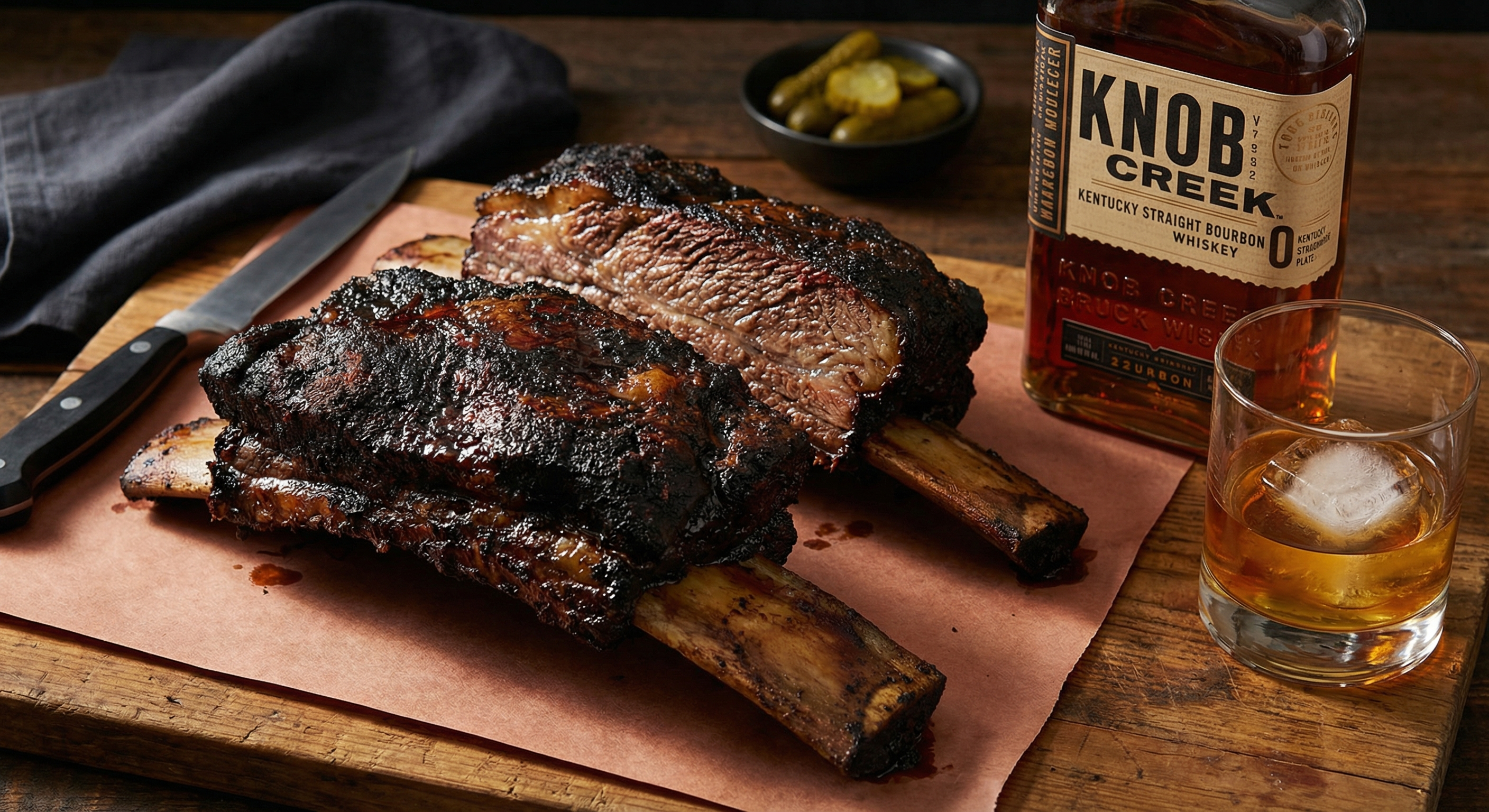
Flavor Match: Beef char + aged oak. Rendered beef fat + 100 proof cut. Post oak smoke + barrel char. Salt-and-pepper simplicity + bourbon complexity.
Beef Short Ribs (Asian Glaze)
Best Bourbon: Four Roses Single Barrel (100 proof, $45)
Why It Works: Asian-glazed beef short ribs (Korean galbi-style or soy-honey glaze) bring sweet, salty, and umami flavors. Four Roses' floral and fruity profile (cherry, plum) echoes the sweetness without overwhelming it. The 100 proof cuts through the beef fat and soy glaze's richness. This pairing works when you want something more refined than classic BBQ.
Rib Specs: Beef short ribs, soy-honey-ginger glaze, charcoal or oak smoke, grilled or slow-cooked.
Flavor Match: Soy-honey glaze + floral bourbon esters. Beef richness + 100 proof structure. Charcoal char + barrel char.
Beef Back Ribs (Dry Rub)
Best Bourbon: Old Forester 1920 Prohibition Style (115 proof, $60)
Why It Works: Beef back ribs are leaner than plate ribs but still intensely beefy. When cooked with a dry rub and no sauce, they need a bourbon that can match that bold, direct flavor. Old Forester 1920's high proof and spice-forward profile (cinnamon, clove, oak char) complement the dry rub without adding sweetness. This is for serious BBQ enthusiasts who want maximum intensity.
Rib Specs: Beef back ribs, dry rub (black pepper, garlic, paprika, chili powder), mesquite or oak smoke, no sauce.
Flavor Match: Dry rub spice + high-proof bourbon spice. Mesquite smoke + barrel char. Beef intensity + 115 proof (aggressive but purposeful).
Pork vs Beef Ribs: Pairing Comparison Chart
| Factor | Pork Ribs | Beef Ribs |
|---|---|---|
| Fat Content | Lower (especially baby backs) | Higher (plate ribs are 40%+ fat) |
| Ideal Proof Range | 90-94 proof (mid-range) | 100-115 proof (high proof to cut fat) |
| Bourbon Style | Balanced, wheated, or high-rye (versatile) | Age-forward, high-proof, oak-heavy |
| Smoke Woods | Apple, cherry, hickory, pecan (mild to medium) | Post oak, mesquite, hickory (bold) |
| Sauce Flexibility | Works with sweet, tangy, or dry styles | Usually served dry or with minimal sauce |
| Best Budget Bourbon | Buffalo Trace ($30) | Old Forester 100 ($25) |
| Best Premium Bourbon | Four Roses Single Barrel ($45) | Knob Creek 9 Year ($35) or Booker's ($70) |
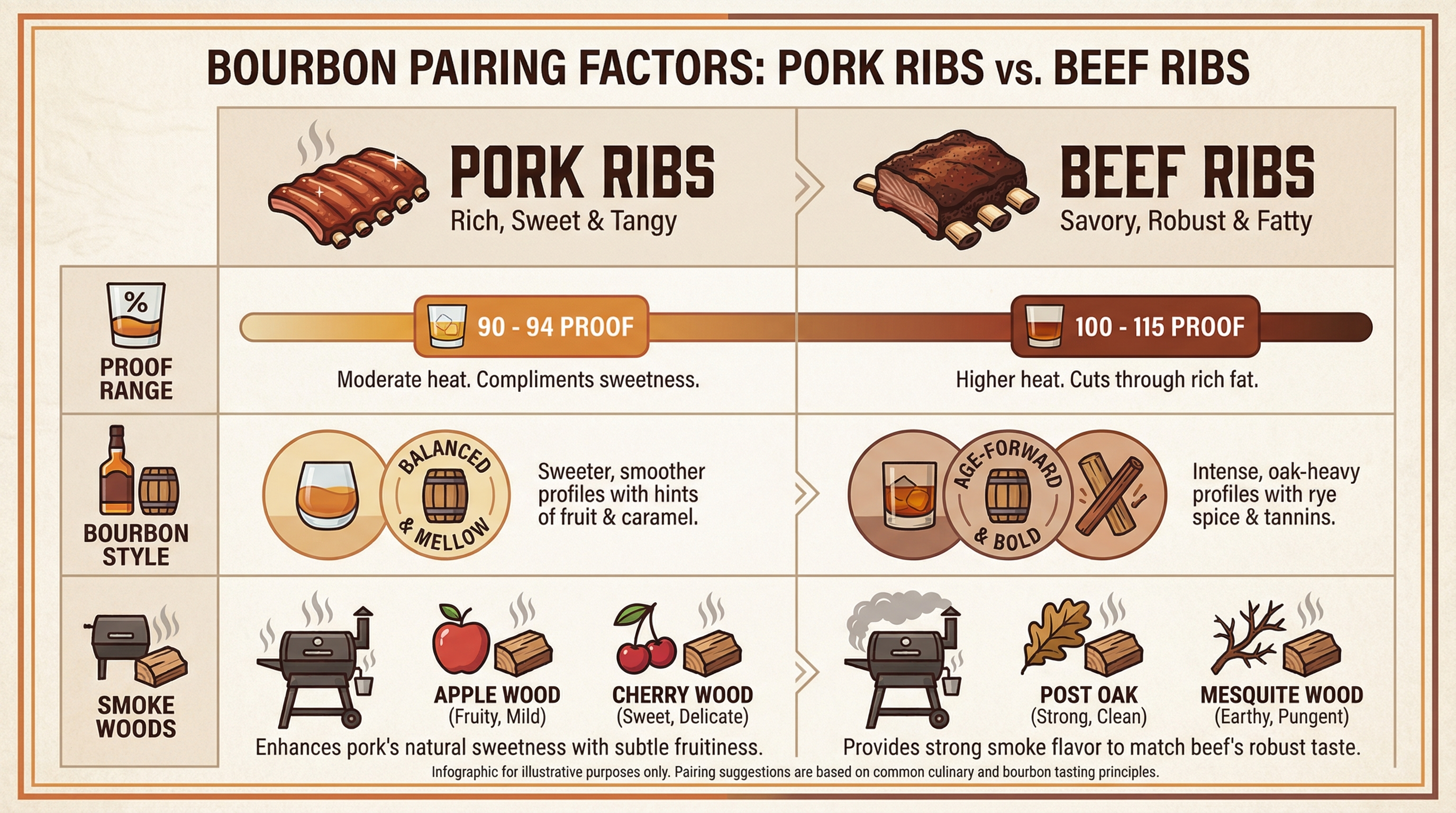
The Fat Cut Principle: Why Proof Matters
The single most important factor in pork-versus-beef bourbon pairing is fat content — and how alcohol content interacts with that fat.
The science: Ethanol is a solvent. It breaks down fat molecules on your tongue, which is why higher-proof bourbon tastes "cleaner" next to fatty meats. When you eat a bite of fatty beef rib and sip 100-proof bourbon, the alcohol dissolves the grease, resets your palate, and prevents flavor fatigue. If you drink low-proof bourbon (80-86 proof) with fatty beef ribs, the fat coats your tongue and the bourbon can't cut through it. You end up with a heavy, greasy mouthfeel and muted flavors.
With pork ribs (especially baby backs): There's less fat to dissolve, so high-proof bourbon tastes harsh and overpowering. A 90-94 proof bourbon provides just enough ethanol to cleanse your palate without burning off the delicate pork and smoke flavors.
The rule: Match bourbon proof to fat content. Leaner ribs = lower proof. Fattier ribs = higher proof. This isn't preference — it's chemistry.
Smoke Wood Matching: Bourbon Char Levels and BBQ Wood
Another overlooked pairing factor: matching the wood you use in your smoker to the char level and aging profile of your bourbon.
Pork Ribs + Fruit Woods + Wheated Bourbon
Apple and cherry wood produce mild, slightly sweet smoke. Pair them with wheated bourbons (Maker's Mark, Larceny) or fruit-forward bourbons (Four Roses) that won't bury the delicate smoke flavor.
Beef Ribs + Post Oak + Aged Bourbon
Post oak is the traditional wood for Texas beef ribs — clean, subtle, slightly nutty. It works best with age-forward bourbons (Knob Creek 9 Year, Elijah Craig 12 Year) that have picked up deep oak and leather notes from extended barrel aging. The oak in the glass matches the oak in the smoke.
Dry-Rubbed Ribs + Hickory + Char #4 Bourbon
Hickory is the boldest smoking wood — strong, assertive, almost bacony. It pairs best with bourbons aged in heavily charred barrels (char level #4), like Buffalo Trace or Elijah Craig. The deep barrel char mirrors hickory's intensity.
Beef Ribs + Mesquite + High-Rye Bourbon
Mesquite is the most aggressive smoking wood — almost piney, with a sharp bite. Pair it with high-rye bourbons (Wild Turkey 101, Old Forester 100) that bring enough spice and pepper to stand up to mesquite's intensity.
Common Pairing Mistakes (And How to Avoid Them)
Mistake #1: Using the Same Bourbon for Pork and Beef Ribs
A bourbon that works beautifully with pork baby backs will taste thin and underwhelming next to fatty beef plate ribs. And a bourbon that pairs perfectly with beef ribs will overpower delicate pork. Always adjust bourbon proof and profile based on which rib type you're serving.
Mistake #2: Serving High-Proof Bourbon with Sweet Sauce
High-proof bourbon (110+ proof) tastes aggressive next to sweet tomato or honey glaze. The alcohol burns off the sweetness and leaves a harsh finish. If you're serving Kansas City-style pork ribs, stay in the 90-100 proof range. Save cask-strength bourbon for dry-rubbed or salt-and-pepper beef ribs.
Mistake #3: Pairing Delicate Bourbon with Beef Ribs
Wheated bourbons and low-proof pours get buried by the intensity of beef ribs. If you're serving Texas-style beef plate ribs, reach for age-forward, high-proof bourbon (Knob Creek, Booker's, Old Forester 1920). Leave the soft, sweet bourbons for pork.
Mistake #4: Ignoring the Sauce
The sauce (or lack of sauce) drives the pairing more than the meat itself. A dry-rubbed pork rib and a dry-rubbed beef rib both pair well with high-proof, spicy bourbon — even though one is pork and one is beef. Always match the bourbon to the sauce first, then the fat content second.
Decision Framework: Choosing Bourbon by Rib Type
Use this framework to guide your bourbon-and-rib pairing decisions:
Step 1: Identify the Rib Type
Pork baby backs: Lean, mild, sweet → 90-94 proof, balanced or wheated bourbon
Pork spare ribs: Moderate fat, versatile → 90-100 proof, balanced bourbon
Beef plate ribs: Very fatty, intense → 100-115 proof, age-forward bourbon
Beef short ribs: Rich, slightly less fatty → 100 proof, fruit-forward or balanced bourbon
Step 2: Match the Sauce
Sweet sauce (Kansas City, honey): Balanced bourbon (Buffalo Trace, Elijah Craig)
Dry rub or no sauce: High-proof, high-rye bourbon (Wild Turkey 101, Old Forester 100)
Tangy sauce (mustard, vinegar): Fruit or citrus-forward bourbon (Elijah Craig, Four Roses)
Step 3: Consider the Smoke Wood
Mild smoke (apple, cherry): Wheated or fruit-forward bourbon
Medium smoke (hickory, pecan): Balanced bourbon with moderate char
Bold smoke (post oak, mesquite): Age-forward or high-char bourbon
Serving Tips: How to Present Bourbon with Ribs
Glassware
Use a Glencairn glass for neat pours (concentrates aromas) or a rocks glass with one large ice cube for higher-proof bourbon. BBQ is casual — your glassware should match.
Temperature
Serve bourbon at room temperature (65-70°F) or slightly chilled. Too cold and you lose the aromatics. Too warm and the alcohol burns. One large ice cube is the perfect middle ground for most pairings.
Tasting Order
Taste the bourbon first (before the ribs) to establish a baseline. Then take a bite of ribs. Then sip the bourbon again. This is when you'll notice how the flavors interact — the caramel reinforcing, the smoke layering, the fat cutting.
Water on the Side
Always have water available. Bourbon and BBQ are both intense, and water resets your palate between rounds. A few sips of water between rib-and-bourbon cycles will keep the pairing fresh and prevent palate fatigue.
Frequently Asked Questions
Can I use the same bourbon for pork and beef ribs at the same meal?
Yes, but choose a versatile mid-range bourbon like Buffalo Trace (90 proof) or Elijah Craig Small Batch (94 proof). These bourbons are balanced enough to work with pork but have enough proof to handle moderate beef fat. They won't be perfect for both, but they'll be good enough.
What if I only have low-proof bourbon (80-86 proof)?
Stick with pork ribs — preferably baby backs or ribs with sweet sauce. Low-proof bourbon will taste thin and get buried by beef ribs or heavily smoked pork spare ribs.
Can I pair rye whiskey instead of bourbon?
Rye whiskey works well with dry-rubbed ribs (pork or beef) because the spice complements the rub. But rye's sharpness doesn't match sweet sauce as cleanly as bourbon's caramel does. If you're serving Kansas City-style ribs, stick with bourbon.
Should I use bourbon in the sauce or rub?
Bourbon adds depth to BBQ sauces and can be used in marinades or mop sauces. Just remember that cooking burns off the alcohol, so the bourbon you cook with doesn't need to be the same bourbon you drink. Save the good stuff for your glass.
What's the best bourbon for a rib cookoff where I'm serving both pork and beef?
Buffalo Trace (90 proof) or Elijah Craig Small Batch (94 proof). Both are versatile enough to pair with sweet pork ribs and hold their own next to beef ribs. They're crowd-pleasers that won't offend anyone.
Final Thoughts: Know Your Ribs, Know Your Pour
The difference between pork ribs and beef ribs isn't just meat — it's fat, smoke, flavor intensity, and how all three interact with bourbon. A bottle that makes pork baby backs sing will get buried by beef plate ribs. A bourbon that cuts through beef fat will overpower delicate pork.
The best pairing isn't about finding the "perfect" bourbon. It's about understanding the chemistry — how proof cuts fat, how smoke mirrors char, how sweetness reinforces or clashes. Once you understand those principles, you can pair bourbon with any style of rib and make both taste better together.
Now grab a rack (pork or beef), pour yourself a glass, and taste the difference.
More Pairing Guides
Best Bourbon for BBQ Ribs: 7 Perfect Pairings (Tasted & Ranked)
Not every bourbon works with every style of ribs. Here are 7 bourbon pairings ranked by rib type, sauce style, and smoke profile — with specific bottles tested against real BBQ.
10 min readBest Wine with Tri-Tip: Expert Pairing Guide
Tri-tip demands wines with enough structure to match its intensity while complementing its smoky, savory profile.
16 min readBest Bourbon to Pair with Steak: Expert Guide
Bourbon and steak is one of America's great culinary pairings. Learn which bourbon styles complement each cut's unique flavor profile for the perfect meal.