Best Bourbon with BBQ Ribs: Smoky, Sweet, and Barrel-Aged Pairings
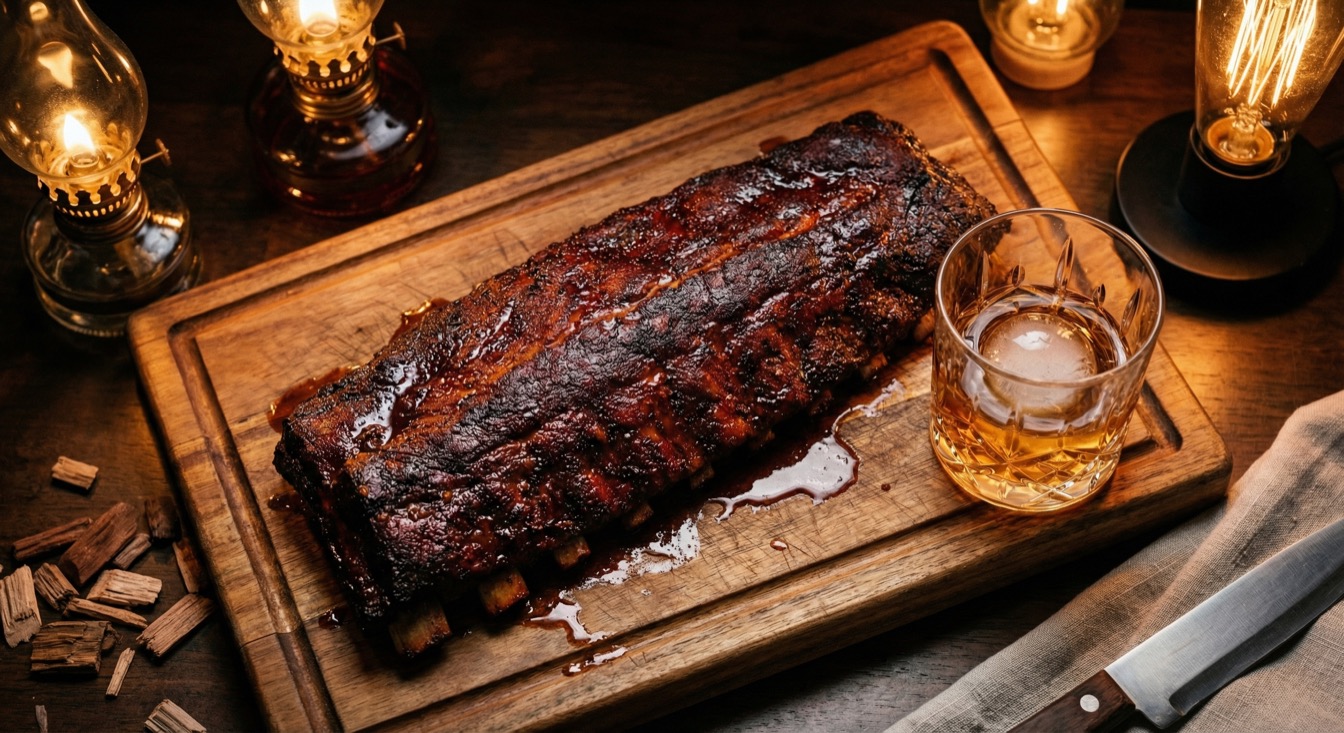
There is no more natural pairing in American food culture than a rack of BBQ ribs and a glass of bourbon. Both demand patience — ribs need hours of low-and-slow smoke, bourbon needs years of barrel aging. Both reward that patience with deep layers of caramel, char, and warmth that no shortcut can replicate.
But not every bourbon works with every style of ribs. A vinegar-sauced Carolina rack needs a different pour than a Kansas City rib slathered in sweet tomato glaze. The smoke wood matters. The fat content matters. The sauce changes everything.
This guide breaks down the best bourbon pairings for every major rib style — with specific bottle recommendations and the flavor logic behind each match.
Why Bourbon and Ribs Work Together
Bourbon and smoked ribs share an unusual number of flavor compounds, which is why the pairing feels instinctive rather than learned.
Shared smoke chemistry. Charred oak barrel aging produces guaiacol and syringol — the same phenolic compounds created when wood smoke hits meat during low-and-slow cooking. When you sip bourbon alongside ribs, your palate reads both as part of the same flavor family. The smoke in the glass reinforces the smoke on the plate.
Caramel bridging. The caramelized bark on ribs (the result of sugar in the rub reacting with heat over hours) mirrors the caramel notes bourbon picks up from charred oak. This shared sweetness creates a bridge between protein and spirit, making each taste more complete alongside the other.
Fat-cutting power. Ribs are rich — especially spare ribs and beef ribs. Bourbon's ethanol content cuts through rendered fat, cleansing the palate between bites and preventing flavor fatigue. Higher proof bourbon does this more aggressively, which matters when pairing with fattier cuts.
Vanilla and spice harmony. Bourbon's signature vanilla (from oak lignin breakdown) and baking spice notes (cinnamon, nutmeg, clove from the barrel char) complement common rib rub ingredients. Many rubs include brown sugar, paprika, black pepper, and cumin — flavors that live in the same warm-spice neighborhood as bourbon.
Baby Back Ribs: Lean, Tender, and Versatile
Baby backs are the most approachable rib cut — leaner than spare ribs, more tender, with a mild pork flavor that absorbs rub and smoke without becoming heavy. Their relative delicacy means they pair best with bourbons that complement rather than overwhelm.
Best bourbon style: Wheated, 86-95 proof
Wheated bourbons replace rye grain with wheat in the mash bill, producing a softer, sweeter spirit with less spice bite. This gentleness matches baby backs perfectly — neither the bourbon nor the ribs dominate. The wheat-driven notes of honey, vanilla, and bread complement the mild pork without masking it.
Top picks:
- Maker's Mark (90 proof) — The benchmark wheated bourbon. Soft caramel and vanilla with zero harshness. A natural partner for baby backs with a simple salt-and-pepper rub.
- Larceny Small Batch (92 proof) — Slightly more complex than Maker's, with honeysuckle and butterscotch notes that mirror a honey-glaze finish on baby backs.
- Weller Special Reserve (90 proof) — Wheated, approachable, with gentle oak and caramel. Excellent with baby backs smoked over fruitwood (apple or cherry).
The fruitwood connection
Baby backs are often smoked with apple or cherry wood, which adds subtle sweetness and a fruity edge to the meat. Wheated bourbons enhance this — their inherent softness lets the fruitwood smoke character shine through. A rye-forward bourbon would steamroll those delicate fruit notes.
St. Louis Spare Ribs: Rich, Fatty, and Bold
St. Louis cut spare ribs are the trimmed, rectangular version of a full spare rib rack. They carry significantly more fat than baby backs, with a richer, more intensely porky flavor and chewier texture. This richness demands a bourbon with more muscle.
Best bourbon style: High-rye, 100-110 proof
High-rye bourbons bring spice and structure — black pepper, cinnamon, and a drying finish that cuts through spare rib fat like a knife. The higher proof amplifies the palate-cleansing effect, and the rye spice creates a pleasant contrast to the rib's richness instead of adding more sweetness on top of already-sweet meat.
Top picks:
- Wild Turkey 101 (101 proof) — A classic for a reason. Bold rye spice, caramel, and enough proof to handle the fattiest spare ribs. Arguably the single best all-around bourbon for BBQ.
- Four Roses Single Barrel (100 proof) — Floral and spicy with a long finish. The complexity matches slow-smoked spare ribs cooked competition-style with a layered rub.
- Knob Creek 9 Year (100 proof) — Dense, oaky, with a pronounced nutty character. The extended aging gives it the weight to stand alongside heavily seasoned spare ribs.
Sauce considerations
Kansas City-style sweet tomato sauce on spare ribs increases the sugar load significantly. When pairing with sauced spare ribs, lean toward the spicier end of the bourbon spectrum — the rye bite counterbalances the sauce's sweetness. Wild Turkey 101 excels here because its natural spice prevents the pairing from becoming cloying.
Beef Ribs: The Ultimate Big-Flavor Pairing
Beef short ribs — especially plate ribs (the "brisket on a bone") — are the richest, most intensely flavored rib cut. A single bone can weigh over a pound. The beef fat renders differently than pork fat, creating a heavier, more unctuous mouthfeel that requires the most assertive bourbon pairing.
Best bourbon style: Barrel-proof or high-proof, 115+ proof
This is where you unleash the heavy hitters. Barrel-proof bourbon — bottled directly from the barrel without water dilution — has the intensity to match beef ribs bite for bite. The concentrated flavors of dark caramel, charred oak, leather, and tobacco stand up to the deep beefy richness without flinching.
Top picks:
- Booker's (125-130 proof) — Uncut, unfiltered, and unapologetic. Massive caramel and oak with a long, warming finish. This is the bourbon equivalent of a plate rib — bold, confident, and not for the faint of heart.
- Elijah Craig Barrel Proof (120-135 proof) — Rich dark chocolate, cherry, and charred oak. The batch variation keeps things interesting, but every release has the intensity needed for beef ribs.
- Rare Breed (116.8 proof) — Wild Turkey's barrel-proof expression. Funky, spicy, with deep caramel. More approachable than Booker's but still powerful enough for beef ribs.
Why barrel proof matters here
Beef fat coats the palate more aggressively than pork fat. Lower-proof bourbon gets lost — the alcohol cannot cut through the richness fast enough, and the flavors get muffled under a layer of rendered tallow. Barrel-proof bourbon's higher ethanol concentration acts as a solvent, dissolving that fat layer with each sip and resetting your palate for the next bite. It sounds aggressive, but in practice, it creates a rhythm: bite, sip, reset. The beef rib stays exciting from first bone to last.
Carolina-Style Ribs: Vinegar, Mustard, and Spice
Carolina BBQ is defined by its sauces — thin vinegar-based in Eastern NC, mustard-based in South Carolina. Both are acidic, tangy, and intentionally not sweet. This acidity changes the bourbon pairing equation completely.
Best bourbon style: Smooth, balanced, 90-100 proof
Vinegar and mustard sauces amplify perceived heat and sharpness in high-proof spirits. You want a bourbon with enough character to be interesting but enough smoothness to avoid clashing with the acid. Medium-proof, well-aged bourbons with a mellow oak character work best.
Top picks:
- Woodford Reserve (90.4 proof) — Exceptionally balanced with dried fruit, vanilla, and a silky texture. The refined character complements the sharp tang of Carolina vinegar sauce without fighting it.
- Buffalo Trace (90 proof) — Caramel, vanilla, and a clean finish. Versatile enough to work with both vinegar and mustard sauces. The slight sweetness softens the sauce's edge.
- 1792 Small Batch (93.7 proof) — Spice-forward but not aggressive, with caramel and orange peel. The citrus notes actually harmonize with mustard-based South Carolina sauce.
Dry-Rubbed Ribs: Let the Bourbon Shine
Dry-rubbed ribs — served without sauce — are the purist's choice and the most bourbon-friendly rib preparation. Without sauce masking the meat, you taste pure pork (or beef), smoke, and seasoning. This transparency lets the bourbon pairing be the star.
Best bourbon style: Single barrel or small batch, any proof
This is where you reach for your best bottles. Complex, layered bourbons with distinct character reward attention when paired with unsauced ribs. The simplicity of the food creates space for the bourbon's nuances to express themselves.
Top picks:
- Blanton's Single Barrel (93 proof) — Citrus, caramel, and a distinctive spice profile unique to each barrel. The single-barrel variation pairs beautifully with the honest simplicity of dry-rubbed ribs.
- Russell's Reserve 10 Year (90 proof) — Deep, contemplative bourbon with vanilla, toffee, and leather. The decade of aging produces complexity that matches the depth of a well-developed bark on dry-rubbed ribs.
- Eagle Rare 10 Year (90 proof) — Cherry, toffee, and gentle oak. Elegant enough that the pairing feels elevated — more upscale steakhouse than backyard cookout, even if you're eating with your hands.
Smoke Wood and Bourbon: A Matching Guide
The smoke wood you use changes the bourbon pairing as much as the rib style. Different woods produce different flavor compounds, and some bourbon styles harmonize with specific woods better than others.
Hickory smoke + high-rye bourbon. Hickory is the most assertive common smoking wood — strong, bacon-like, with a sharp bite. High-rye bourbons like Wild Turkey 101 or Bulleit (95 proof) match hickory's intensity with their own spice.
Oak smoke + aged bourbon. Post oak (the Texas standard) produces a clean, medium smoke that emphasizes the meat rather than the wood. Well-aged bourbons like Russell's Reserve 10 Year or Eagle Rare mirror this approach — the oak in the barrel echoes the oak in the smoker.
Fruitwood smoke + wheated bourbon. Apple and cherry wood add subtle sweetness and a fruity dimension. Wheated bourbons like Maker's Mark or Larceny complement this softness. The pairing is gentle, elegant, and approachable.
Mesquite smoke + barrel-proof bourbon. Mesquite is the most intense smoking wood — earthy, aggressive, and slightly bitter when overdone. Only barrel-proof bourbons have the flavor concentration to stand next to mesquite without being overwhelmed. Booker's and Elijah Craig Barrel Proof are natural partners.
Bourbon Cocktails That Work With Ribs
Neat bourbon is the classic pairing, but certain cocktails enhance the rib experience in ways a straight pour cannot.
Old Fashioned. The brown sugar and bitters add layers that mirror rib rub ingredients (sugar, spice, bitters). An Old Fashioned made with a high-rye bourbon is perhaps the single best cocktail-and-food pairing in American cuisine. Keep the orange peel garnish — the citrus oil lifts the smoke.
Bourbon and ginger ale. The ginger's spice and effervescence cut through rib fat beautifully. This is the backyard BBQ move — unpretentious, effective, and endlessly refreshing on a hot day. Use a bourbon with some bite (Wild Turkey 101 or Evan Williams Bottled-in-Bond) so it doesn't get lost under the ginger.
Mint Julep. The crushed ice and fresh mint provide a cooling counterpoint to smoky, spicy ribs. This works best with sweet Kansas City-style ribs — the mint cuts through the sauce's sugar while the bourbon provides warmth underneath.
Bourbon Smash. Muddled lemon, mint, simple syrup, and bourbon over crushed ice. The acidity and freshness make this an ideal companion for fatty spare ribs or beef ribs. It functions as both a palate cleanser and a pairing.
Common Mistakes to Avoid
Going too sweet with sweet sauce. If your ribs are already glazed in a brown sugar-based Kansas City sauce, a sweet wheated bourbon on top creates sugar overload. Match sweet ribs with spicy bourbon, not more sweetness.
Underproofing for beef ribs. An 80-proof bourbon with a plate rib is like bringing a water gun to a five-alarm fire. The beef fat will bury any bourbon under 100 proof. Go bold or switch to a cocktail that adds structure.
Overcomplicating the pour. Ribs are hands-on, messy, casual food. You don't need a $200 bottle. The best rib bourbons are the ones you can pour freely without worrying about the cost. Wild Turkey 101 and Buffalo Trace exist precisely for this purpose.
Ignoring temperature. Serve bourbon at room temperature or with a single large ice cube. Avoid multiple small ice cubes that dilute too fast — you want the bourbon to maintain its character through the entire meal, which with ribs can take a while.
The Quick-Reference Pairing Chart
When in doubt, use this simplified matching guide:
- Baby back ribs → Wheated bourbon, 86-95 proof (Maker's Mark, Larceny)
- St. Louis spare ribs → High-rye bourbon, 100-110 proof (Wild Turkey 101, Four Roses SiB)
- Beef short ribs → Barrel-proof bourbon, 115+ proof (Booker's, Elijah Craig BP)
- Carolina vinegar ribs → Balanced bourbon, 90-100 proof (Woodford Reserve, Buffalo Trace)
- Dry-rubbed ribs → Your best single barrel (Blanton's, Eagle Rare, Russell's Reserve)
- Sweet-sauced ribs → Spicy high-rye bourbon (Wild Turkey 101, Bulleit)
Final Thoughts
Ribs and bourbon is one of those pairings that works on instinct — you don't need a sommelier to tell you they belong together. But matching the right bourbon to the right rib style takes the pairing from good to transcendent. Pay attention to three variables: the rib's fat content, the sauce profile (or lack thereof), and the smoke wood. Match those to the bourbon's proof, mash bill, and flavor profile, and every bite and every sip will be better for the company.
Start with what you have and what you like. If you only keep one bourbon for BBQ, make it Wild Turkey 101 — it handles more rib styles competently than any other bottle at its price point. From there, explore. The whiskey and BBQ guide covers broader spirit options, and our beer and BBQ pairings offer excellent alternatives when the weather calls for something cold and carbonated.
For premium ribs worth pairing with your best bourbon, browse The Meatery's pork selection and beef ribs — sourced from heritage breeds and craft producers who take their meat as seriously as Kentucky takes its bourbon.
Frequently Asked Questions
What is the best bourbon for BBQ ribs?
Wild Turkey 101 is the most versatile bourbon for BBQ ribs. Its 101 proof cuts through rib fat, the high-rye mash bill provides spice that balances sweet sauces, and the bold caramel-oak character stands up to heavy smoke. It works with baby backs, spare ribs, and beef ribs alike.
Should you drink bourbon neat or on the rocks with ribs?
Either works. Neat lets you taste the bourbon's full character, while a single large ice cube adds a slight chill and opens up aromatics. For hot-weather backyard BBQ, a large ice cube is ideal — it keeps the bourbon refreshing without diluting too fast. Avoid crushed ice or multiple small cubes.
Does the BBQ sauce change which bourbon to pair?
Yes, significantly. Sweet tomato-based Kansas City sauce pairs best with spicy high-rye bourbons that counterbalance the sugar. Vinegar-based Carolina sauce needs smoother, balanced bourbons that won't clash with the acidity. Dry-rubbed ribs without sauce give you the most flexibility to showcase complex single-barrel bourbons.
Is bourbon or beer better with ribs?
Both work, but they serve different roles. Beer's carbonation is a more aggressive palate cleanser, making it ideal for extremely fatty or heavily sauced ribs. Bourbon provides deeper flavor interaction — its shared smoke and caramel compounds create harmony with the meat. For a leisurely meal where you want to savor each bite, bourbon wins. For high-volume casual eating, beer might be more practical.
What proof bourbon is best for beef ribs?
Aim for 115 proof or higher. Beef ribs are the fattiest rib cut, and their rendered tallow coats the palate aggressively. Lower-proof bourbon gets buried under that fat. Barrel-proof options like Booker's (125-130 proof) or Elijah Craig Barrel Proof (120-135 proof) have the intensity to cut through and create a satisfying bite-sip rhythm.
More Pairing Guides
Best Bourbon for Pork Ribs vs Beef Ribs: Complete Pairing Guide
Pork ribs and beef ribs aren't interchangeable when it comes to bourbon pairing. Fat content, smoke intensity, and flavor depth determine which bottle works best. Here's the complete breakdown.
12 min readBest Bourbon for BBQ Ribs: 7 Perfect Pairings (Tasted & Ranked)
Not every bourbon works with every style of ribs. Here are 7 bourbon pairings ranked by rib type, sauce style, and smoke profile — with specific bottles tested against real BBQ.
10 min readBest Wine with Tri-Tip: Expert Pairing Guide
Tri-tip demands wines with enough structure to match its intensity while complementing its smoky, savory profile.