Best Bourbon with Pulled Pork: A Pitmaster's Pairing Guide
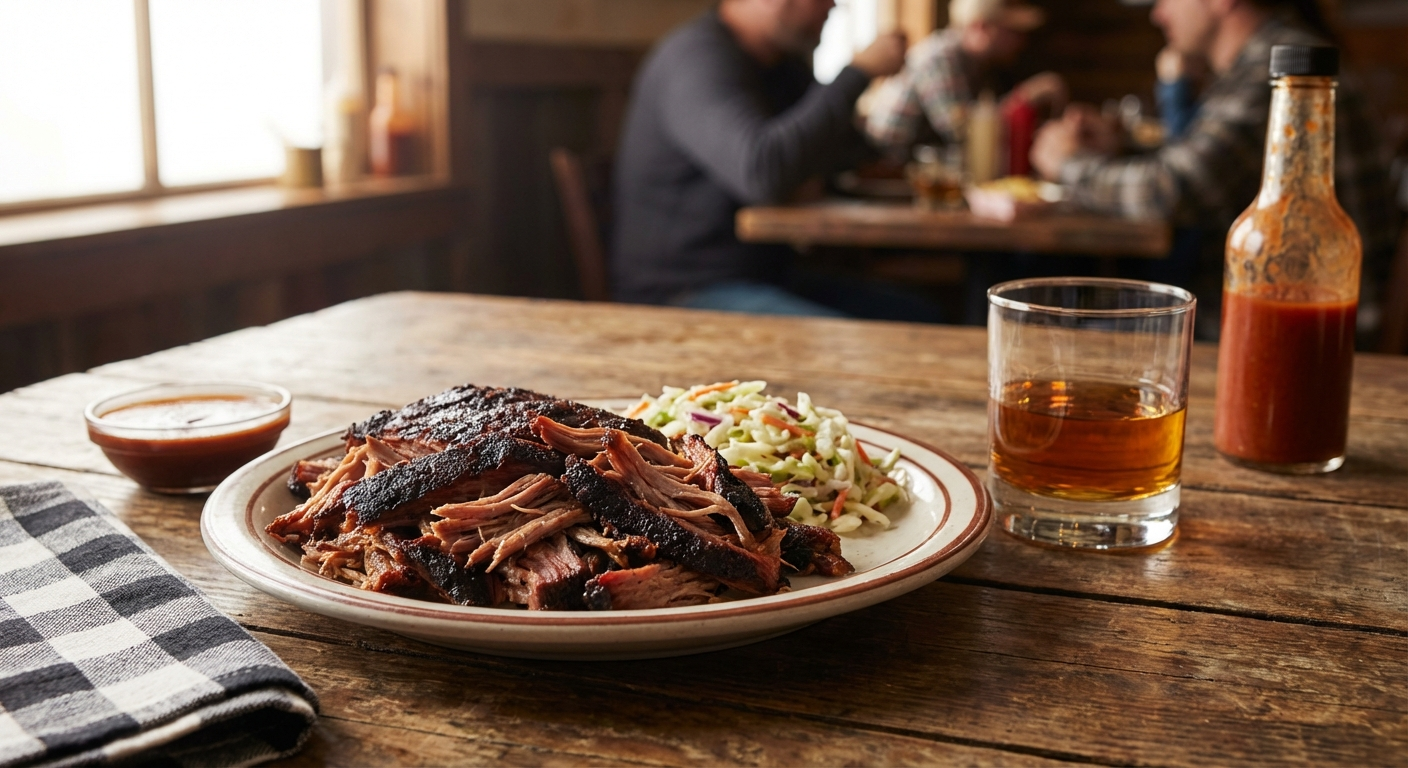
Pulled pork is the most forgiving and the most varied cut in American barbecue. A pork shoulder can smoke for 12 to 16 hours and emerge as anything from delicate, vinegar-dressed Eastern Carolina to sweet, saucy Kansas City — and every regional variation in between. Bourbon, with its own spectrum from soft wheated pours to high-rye firecrackers, has a match for every one of them.
But the pairing isn't automatic. The wrong bourbon turns a great plate of pulled pork into a muddled experience where sweetness piles on sweetness or heat fights heat. The right bourbon creates a conversation — smoke answering smoke, spice cutting richness, barrel char meeting bark.
This guide breaks down the best bourbon pairings for every major pulled pork style — with specific bottle recommendations, proof guidelines, and the flavor logic that makes each pairing work.
Why Bourbon and Pulled Pork Are Natural Partners
Pulled pork and bourbon connect at a molecular level. Understanding the chemistry explains why this pairing feels instinctive to anyone who has experienced it.
Shared smoke compounds. Pork shoulders are most commonly smoked over hickory, oak, or fruitwoods. Bourbon ages in charred new American oak barrels. Both processes produce guaiacol and syringol — phenolic compounds responsible for the smoky character in each. Your palate reads the smoke in the glass and the smoke on the plate as part of the same family.
Sweet meets sweet (but differently). The Maillard reaction on pork bark creates caramelized sugars. Bourbon's barrel aging breaks down lignin in the oak into vanillin and caramel compounds. These parallel sweetness pathways complement each other without competing — the meat's sweetness is savory-leaning while the bourbon's sweetness is wood-driven.
Fat management. Pork shoulder is approximately 20-30% fat by weight, and that rendered fat coats your palate aggressively. Bourbon's ethanol acts as a solvent, dissolving the fat film and resetting your taste buds between bites. This is why a sip of bourbon after a forkful of pulled pork makes the next bite taste as vivid as the first.
Time symmetry. A pork shoulder needs 12-16 hours in the smoker. Bourbon needs years in the barrel. Both are products of patience — the opposite of shortcuts. There's a philosophical kinship between a pitmaster tending a fire at 3 AM and a distiller waiting four years to taste what the barrel has done. That shared commitment shows up in the complexity of both products.
Eastern Carolina Pulled Pork: Vinegar, Pepper, and Simplicity
Eastern North Carolina pulled pork is the purest expression of the craft. Whole hog or pork shoulder, smoked over hardwood, then dressed with nothing more than vinegar, red pepper flakes, salt, and black pepper. No tomato. No sugar. No hiding behind sauce. The vinegar cuts through the pork fat and amplifies the smoke — it's acid as a flavor tool, not a condiment.
This style demands a bourbon that respects its austerity. You need something with enough sweetness to counterbalance the acidity without burying the clean smoke-and-vinegar character.
Best bourbon style: Wheated, 86-95 proof
Wheated bourbons — those made with wheat instead of rye in the grain bill — produce a softer, sweeter spirit with minimal spice. That softness is exactly what vinegar-dressed pork needs. The bourbon provides the honey and caramel that the sauce deliberately omits, creating a complete flavor picture where neither the glass nor the plate could achieve alone.
Top picks:
- Maker's Mark (90 proof) — Soft caramel, red winter wheat sweetness, and a gentle finish. The honeyed quality bridges the gap between tangy vinegar pork and the glass without adding harshness. This is the default recommendation for a reason.
- Larceny Small Batch (92 proof) — Butterscotch and honeysuckle notes that act as a natural foil to vinegar's sharpness. Slightly more complexity than Maker's, which rewards attention during a slow meal.
- Weller Special Reserve (90 proof) — Gentle, approachable, with vanilla and light caramel. The easy-drinking character matches Eastern Carolina's philosophy — let the ingredients speak, don't complicate things.
Why rye bourbon fails here
High-rye bourbons bring black pepper, cinnamon, and a drying spice finish. Combined with the acidity of vinegar sauce and the heat from red pepper flakes, the result is sensory overload — too much sharpness from too many directions. The palate gets fatigued fast. Wheated bourbon absorbs the acid instead of amplifying it.
Western Carolina (Lexington) Pulled Pork: The Tomato-Vinegar Balance
Move west across North Carolina and the sauce picks up tomato — not the thick, sweet tomato of Kansas City, but a thin, tangy ketchup-and-vinegar blend called "dip." Lexington-style uses pork shoulder only (no whole hog) and the sauce has a slight sweetness from the tomato that softens the vinegar edge.
This middle-ground sauce creates a middle-ground pairing opportunity. You can use wheated bourbons here too, but the tomato's added sweetness opens the door to something with slightly more structure.
Best bourbon style: Traditional, 90-100 proof
A classic bourbon mash bill — corn, rye, and malted barley in standard proportions — provides enough spice to complement the tomato element while the corn-driven sweetness matches the vinegar-tomato balance.
Top picks:
- Buffalo Trace (90 proof) — Caramel, vanilla, and a touch of dark fruit. The clean profile matches the sauce's middle-road character — not too sweet, not too sharp. The most versatile bourbon for pulled pork overall.
- Woodford Reserve (90.4 proof) — Dried fruit, chocolate, and a silky mouthfeel. The refinement pairs well with the slight sophistication that tomato adds to Carolina sauce. A step up from Buffalo Trace when you want something more layered.
- Eagle Rare 10 Year (90 proof) — Cherry, toffee, and a long oak finish. The decade of aging adds a depth that matches the complexity of a well-made Lexington dip — both have more going on than they first appear.
South Carolina Mustard Sauce: Tang Meets Spice
South Carolina's mustard-based BBQ sauce — the famous "Carolina Gold" — is built on yellow mustard, vinegar, brown sugar, and spices. It's tangy, mildly sweet, and carries a distinctive mustard heat that's sharper than pepper but less aggressive than chili. The sauce is divisive if you didn't grow up with it, but when it works, it creates a pulled pork experience unlike anything else.
Mustard sauce presents a unique pairing challenge. Its sharpness and tang can clash with the wrong bourbon, creating a metallic bitterness. But the right match transforms both.
Best bourbon style: High-rye, 95-105 proof
This is where rye-forward bourbons finally shine. Mustard's tangy sharpness pairs beautifully with rye's peppery spice — they're both bold, assertive flavors that meet as equals. The rye's cinnamon and clove notes complement the warm spices in a good mustard sauce, while the higher proof cuts through the sauce's viscous coating on the pork.
Top picks:
- Four Roses Single Barrel (100 proof) — Floral, spicy, with a complex rye character that dances with mustard's tang. The botanicals in Four Roses add an herbal dimension that elevates the pairing beyond the obvious. This is the best bourbon for mustard-sauced pulled pork, full stop.
- Bulleit Bourbon (90 proof) — High rye content (28%) gives it an aggressive spice profile that stands toe-to-toe with mustard. Approachable price point for a weeknight BBQ.
- Old Grand-Dad Bonded (100 proof) — Bold rye spice, raw honey, and cinnamon. The bonded proof and assertive character create a forceful counterpart to Carolina Gold. Underrated and excellent value.
The mustard-bourbon bridge
Yellow mustard contains turmeric, which has earthy, slightly bitter notes. Bourbon's oak-driven tannins share a similar earthiness. This hidden connection creates a flavor bridge that makes the pairing feel cohesive even when the individual components seem like they shouldn't work together. Trust the chemistry — rye bourbon with mustard-sauced pork is a revelation.
Kansas City Pulled Pork: Sweet, Thick, and Sticky
Kansas City BBQ sauce is the one most Americans picture when they hear "barbecue sauce" — thick, sweet, tomato-based, with molasses, brown sugar, and a long list of spices. When slathered on pulled pork and returned to the smoker to set, it creates a sticky, caramelized glaze that changes the entire pairing equation.
The dominant flavor here is sweetness. Molasses, brown sugar, ketchup — sugar from multiple directions. This means your bourbon needs to provide contrast, not more of the same.
Best bourbon style: High-rye, 100-115 proof
Sweet-on-sweet is the trap, and most people fall into it by reaching for a wheated bourbon with KC sauce. Don't. You need rye spice and high proof to cut through the sugar bomb. The pepper and cinnamon in a high-rye bourbon create a counterpoint that keeps the sweetness from becoming cloying, while the proof burns through the thick sauce's palate coating.
Top picks:
- Wild Turkey 101 (101 proof) — The undisputed king of KC BBQ bourbon pairings. Bold rye spice, deep caramel, and enough heat to slice through the heaviest sauce. If you have one bottle for BBQ season, this is it.
- Knob Creek 9 Year (100 proof) — Dense, nutty, and oaky with a drying finish that counterbalances sweet sauce. The extended aging gives it a tannic backbone that acts like a palate cleanser.
- Elijah Craig Small Batch (94 proof) — Balanced with enough char and oak to avoid getting lost in KC sweetness. More approachable than Wild Turkey 101 for people who find high-rye bourbons aggressive, while still providing the necessary counterweight.
Avoid the sweetness spiral
Pairing a wheated bourbon (Maker's Mark, Weller) with Kansas City sauce is the most common mistake in BBQ bourbon pairing. Both are sweet. Both are soft. Together they create a monotone sweetness that flattens both the food and the drink. You lose the sauce's complexity, you lose the bourbon's nuance, and you end up with sugar fatigue before you finish the plate. Let the sauce be sweet. Let the bourbon be the counterpoint.
Alabama White Sauce: Creamy, Tangy, and Unexpected
Alabama white sauce — a mayonnaise-based sauce with vinegar, horseradish, black pepper, and lemon — is the wildcard of American BBQ. Traditionally served with smoked chicken, it has increasingly found its way onto pulled pork, especially at progressive BBQ joints. Its creamy tang and subtle heat create a completely different pairing challenge than any tomato or vinegar-based sauce.
Best bourbon style: Wheated or traditional, 86-95 proof
White sauce is rich and creamy, but its acidity and horseradish give it an edge. You want a bourbon soft enough to complement the creaminess but with enough vanilla and caramel character to play off the tang. Avoid barrel-proof here — the heat will clash with the horseradish.
Top picks:
- Maker's Mark (90 proof) — The soft wheat character cradles the creamy sauce while its caramel stands up to the vinegar. A safe, excellent choice for this unconventional pairing.
- Buffalo Trace (90 proof) — Versatile enough to handle white sauce's complexity. The vanilla notes soften the horseradish edge without suppressing it.
- Evan Williams Single Barrel (86.6 proof) — Light, approachable, with honey and fruit notes. The low proof ensures the bourbon doesn't overwhelm a sauce that's already doing a lot on the palate.
Smoke Wood and Bourbon: The Hidden Variable
The wood you use to smoke the pork shoulder matters as much for bourbon pairing as the sauce does. Different woods produce different smoke compounds, and those compounds interact with bourbon in distinct ways.
Hickory (the standard)
Hickory is the most common smoke wood for pulled pork — assertive, slightly sweet, with a bacon-like quality. Its boldness pairs naturally with medium- to high-proof bourbons. The hickory smoke amplifies bourbon's oak character, since hickory and bourbon barrel white oak share overlapping phenolic profiles.
Best bourbon match: Wild Turkey 101, Knob Creek. Bourbons with their own assertive char character that can stand alongside hickory's intensity.
Fruitwood (apple, cherry, peach)
Fruitwood smoke is subtler — sweeter, milder, with a delicate fruity undertone. This gentler smoke profile calls for a gentler bourbon. Wheated and lower-proof options let the fruitwood character shine through instead of burying it under barrel heat.
Best bourbon match: Maker's Mark, Larceny, Weller. Soft wheated bourbons that complement rather than compete with fruitwood's delicacy.
Oak (Texas tradition)
Post oak produces a clean, medium-intensity smoke that's the backbone of Central Texas BBQ. Since bourbon barrels are also oak, this creates the most direct flavor bridge between plate and glass. The guaiacol overlap is at its maximum here — your bourbon and your pork are essentially speaking the same language.
Best bourbon match: Woodford Reserve, Buffalo Trace, Eagle Rare. Well-balanced bourbons where the oak aging is prominent — they amplify the wood connection rather than introducing competing flavors.
Mesquite (use carefully)
Mesquite is the most intense smoke wood — earthy, aggressive, almost bitter in excess. It's more common in Texas for beef than pork, but when used for pulled pork, it demands bourbon with the weight to handle it. Light wheated bourbons get steamrolled.
Best bourbon match: Booker's, Stagg Jr., Old Grand-Dad 114. Barrel-proof or high-proof options with the intensity to match mesquite's aggression.
Proof Matters: A Temperature Guide
Bourbon proof isn't just about alcohol strength — it determines how the bourbon interacts with pulled pork's fat, sauce, and smoke. Think of proof as a dial that adjusts the bourbon's assertiveness.
80-90 proof: Gentle. Best for lean pulled pork, vinegar sauces, and fruitwood smoke. These bourbons complement without cutting. Good for long meals where you'll drink multiple pours alongside steady eating.
90-100 proof: The sweet spot for most pulled pork preparations. Enough ethanol to cut through moderate fat and sauce, but smooth enough to sip comfortably. This is the range where bourbon and pulled pork most often find perfect balance.
100-110 proof: Assertive. Necessary for heavily sauced, Kansas City-style preparations where sugar and fat are both high. The spice and heat provide counterbalance. Works best with smaller sips alongside generous bites.
110+ proof (barrel strength): Reserve for the fattiest, most intensely flavored preparations — heavily smoked, double-sauced, or mesquite-smoked pork with aggressive bark. A drop of water opens these up without reducing their fat-cutting power. Not for every meal, but transformative when the intensity matches.
Building a Bourbon Flight for a Pulled Pork Spread
If you're hosting a pulled pork cookout with multiple sauce options, setting up a bourbon flight lets guests discover their own pairings. Here's a four-bourbon spread that covers every major style:
- Maker's Mark (90 proof) — The gentle option. Pairs best with vinegar sauce and fruitwood-smoked pork. Start here for guests who are new to bourbon pairing.
- Buffalo Trace (90 proof) — The versatile middle. Works with almost everything and offends nothing. The safety net of the flight.
- Four Roses Single Barrel (100 proof) — The spicy one. Shines with mustard sauce and shows guests how rye character changes the equation.
- Wild Turkey 101 (101 proof) — The bold closer. Pair with KC-style sweet sauce to demonstrate how high-rye bourbon can cut through sugar. The "aha moment" of the flight for most people.
Pour 1-ounce portions of each. Provide a glass of water for palate cleansing between bourbons. Label each glass clearly. The flight structure turns dinner into an experience — and it costs less than a single bottle of allocated bourbon from the secondary market.
Common Mistakes to Avoid
Matching sweet with sweet. Wheated bourbon with Kansas City sauce is the most common error. Both are sweet. Neither has anything to push against. The result is a one-dimensional sugar experience that wastes both the bourbon and the sauce.
Ignoring the sauce entirely. People often pick their "favorite bourbon" and pair it with everything. But the sauce changes the pairing equation dramatically. A bourbon that sings with vinegar pork falls flat with mustard sauce. Adjust the pour to the preparation, not to your default preference.
Serving bourbon too cold. Cold numbs flavor compounds in both bourbon and pulled pork. Serve bourbon at room temperature or slightly cool — never over ice when you're pairing. Ice dilutes the ethanol that cuts through fat, and the cold suppresses the vanillin and caramel notes that create the flavor bridge. A single large ice cube is acceptable if you prefer it, but neat is optimal for pairing.
Overthinking it. The best bourbon with pulled pork is the one you enjoy drinking while eating pulled pork. These guidelines optimize the experience, but a "wrong" pairing won't ruin your meal. Start with the recommendations, then adjust based on your own palate. Bourbon and pulled pork is one of the most forgiving pairings in food — the floor is high and the ceiling is higher.
Frequently Asked Questions
What is the best bourbon to pair with pulled pork?
The best bourbon depends on the sauce style. For vinegar-based Carolina, use wheated bourbon like Maker's Mark (90 proof). For mustard sauce, try Four Roses Single Barrel (100 proof). For sweet Kansas City sauce, Wild Turkey 101 cuts through the sugar. Buffalo Trace (90 proof) is the most versatile option that works with any pulled pork preparation.
Should I drink bourbon neat or on the rocks with pulled pork?
Neat is the optimal choice for pairing. Ice dilutes the ethanol that cuts through pork fat and suppresses the vanilla and caramel notes that bridge bourbon and smoked meat flavors. If you prefer some chill, a single large ice cube is acceptable — it melts slowly enough to maintain the bourbon's pairing character throughout the meal.
What proof bourbon works best with BBQ pulled pork?
The 90-100 proof range is the sweet spot for most pulled pork preparations. Go lower (86-90 proof) for vinegar-based and lightly smoked pork, and higher (100-110 proof) for heavily sauced Kansas City-style preparations where you need more spice and ethanol to cut through sugar and fat.
Can you pair wheated bourbon with pulled pork?
Yes — wheated bourbon excels with vinegar-dressed Carolina pulled pork and fruitwood-smoked preparations. The soft sweetness of wheated bourbon counterbalances vinegar's acidity. However, avoid wheated bourbon with sweet Kansas City sauce, as the combination creates excessive sweetness that flattens both flavors.
Does the smoke wood affect bourbon pairing with pulled pork?
Absolutely. Hickory-smoked pork pairs best with bold, high-proof bourbon like Wild Turkey 101. Fruitwood-smoked pork matches gentler wheated bourbons like Maker's Mark. Oak-smoked pork has the strongest natural connection to bourbon since both share oak-derived flavor compounds, making balanced options like Buffalo Trace or Woodford Reserve ideal.
More Pairing Guides
Best Bourbon for Pork Ribs vs Beef Ribs: Complete Pairing Guide
Pork ribs and beef ribs aren't interchangeable when it comes to bourbon pairing. Fat content, smoke intensity, and flavor depth determine which bottle works best. Here's the complete breakdown.
12 min readBest Bourbon for BBQ Ribs: 7 Perfect Pairings (Tasted & Ranked)
Not every bourbon works with every style of ribs. Here are 7 bourbon pairings ranked by rib type, sauce style, and smoke profile — with specific bottles tested against real BBQ.
10 min readBest Wine with Tri-Tip: Expert Pairing Guide
Tri-tip demands wines with enough structure to match its intensity while complementing its smoky, savory profile.