Best Champagne with Steak: The Surprising Pairing That Works
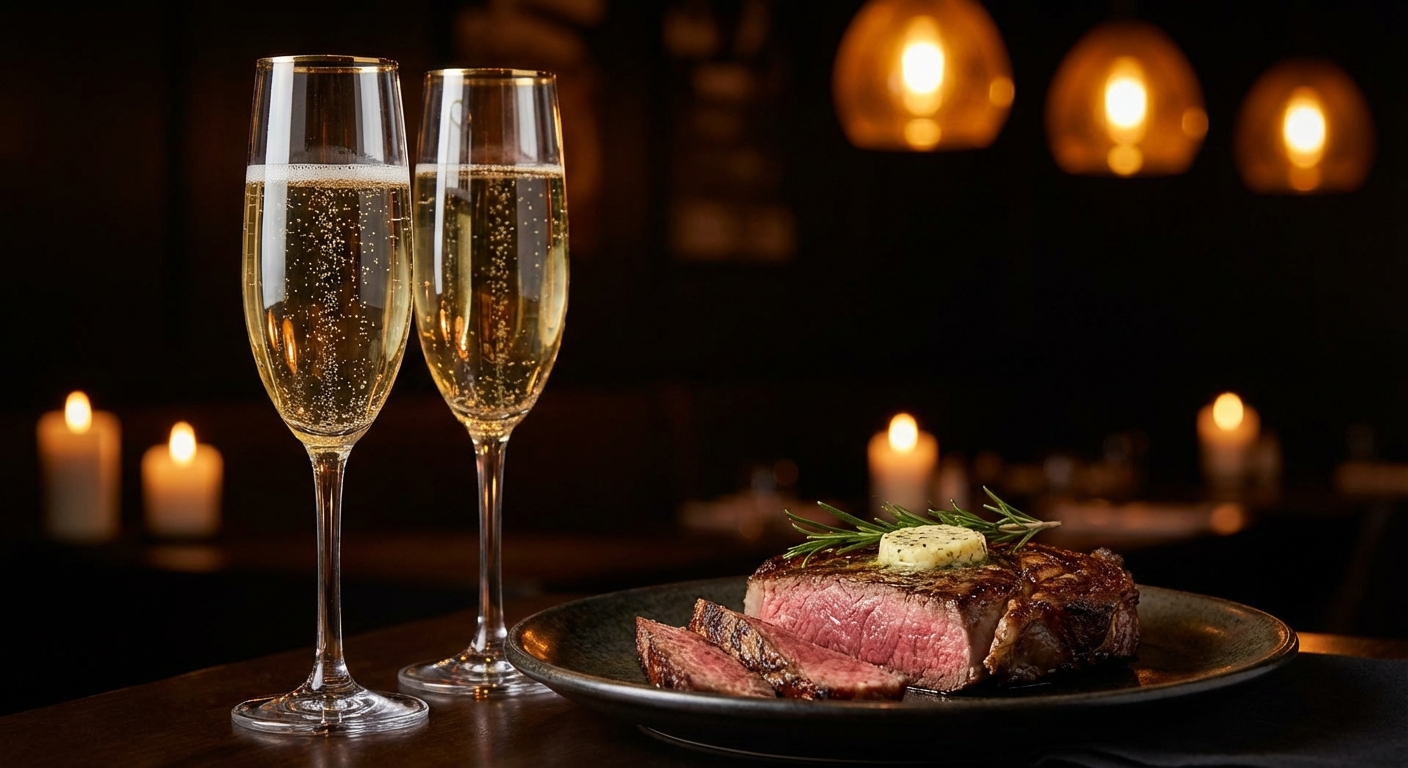
Ask any sommelier what to drink with steak, and you'll hear Cabernet Sauvignon before the question is finished. Ask a great sommelier — one who's spent years pushing boundaries at the table — and you might get a different answer: Champagne.
It sounds counterintuitive. Champagne is for celebrations, aperitifs, brunch. Steak demands weight, tannin, body. But the pairing works — brilliantly — and the science behind it explains why top restaurants in Paris, Tokyo, and New York have been serving bubbles with beef for decades.
This guide breaks down exactly why champagne and steak pair so well, which styles match which cuts, and how to build a steak dinner around France's most iconic wine.
Why Champagne and Steak Actually Work
Acidity Cuts Through Fat
Champagne is one of the highest-acidity wines in the world. Grown in France's northernmost major wine region, the grapes retain sharp malic and tartaric acid that most warmer-climate wines lose. This acidity acts like a culinary knife, slicing through beef fat and marbling the way a squeeze of lemon brightens rich fish. Every sip resets your palate, making the next bite of steak taste as vibrant as the first.
This is the same principle behind pairing steak with red wine — tannin cuts fat. But champagne does it differently. Instead of the drying, gripping sensation of tannin, you get bright, lifting acidity combined with effervescence. The experience is cleaner, more refreshing, and arguably more effective at palate cleansing than even the boldest Cabernet.
Bubbles Amplify Flavor
Carbonation isn't just about texture. The CO2 in champagne physically scrubs your palate, dislodging fat molecules from your tongue and palate coating. Each bubble carries aroma compounds directly to your olfactory receptors, amplifying both the wine's and the food's flavors. Studies in sensory science have shown that carbonated beverages increase perceived flavor intensity in food pairings — you literally taste the steak more vividly between sips of champagne.
Autolytic Depth Matches Beef
What separates champagne from ordinary sparkling wine is extended aging on the lees — dead yeast cells that break down over months or years, releasing amino acids, proteins, and umami compounds into the wine. This process, called autolysis, gives aged champagne its characteristic brioche, toast, biscuit, and nutty flavors. These savory, umami-rich notes create a direct bridge to beef's own umami depth. A well-aged champagne and a seared steak are speaking the same flavor language.
Pinot Noir Is Already a Steak Grape
Most champagne is made primarily from Pinot Noir and Pinot Meunier — red grapes. Blanc de Noirs champagne, made entirely from red grapes pressed without skin contact, carries the structure, weight, and red fruit character of Pinot Noir in a sparkling format. You're essentially drinking a Burgundy with bubbles. And Burgundy with steak has been a classic pairing for centuries.
Champagne Styles Explained for Steak Lovers
Not all champagne is created equal, and the style you choose matters enormously for steak pairing. Here's what you need to know:
Blanc de Noirs: Made from 100% red grapes (Pinot Noir and/or Pinot Meunier). Fuller body, richer texture, notes of red apple, strawberry, and brioche. The most steak-friendly champagne style by a wide margin. Think of it as red wine's sparkling cousin.
Vintage/Prestige Cuvée: Made only in exceptional years, aged longer on lees (often 5-10+ years). More complexity, depth, toast, and autolytic character. These wines have the weight and intensity to match high-end cuts. Dom Pérignon, Krug, Bollinger R.D., and Taittinger Comtes de Champagne fall here.
Non-Vintage Brut: The standard style, a blend of multiple vintages for consistency. Lighter, fresher, more approachable. Works with lighter preparations and thinner cuts. Veuve Clicquot Yellow Label, Moët Impérial, and Pol Roger Brut Reserve are examples.
Blanc de Blancs: Made from 100% Chardonnay. Leaner, more mineral, citrus-driven. Beautiful wine, but generally too delicate for rich steaks. Better as an aperitif or with seafood. Exceptions exist in aged vintage Blanc de Blancs that develop enough weight.
Rosé: Made by adding a small amount of still red wine (usually Pinot Noir) to the blend. More berry character, slightly more body and color than white champagne. A strong middle-ground option for steak — the added Pinot Noir complexity helps bridge the gap to beef.
Dosage levels: For steak, stick to Brut (under 12g/L sugar) or Extra Brut (under 6g/L). Drier styles let the champagne's natural acidity and autolytic character work with the meat without sweetness interfering. Avoid Demi-Sec or Sec for savory meat pairings.
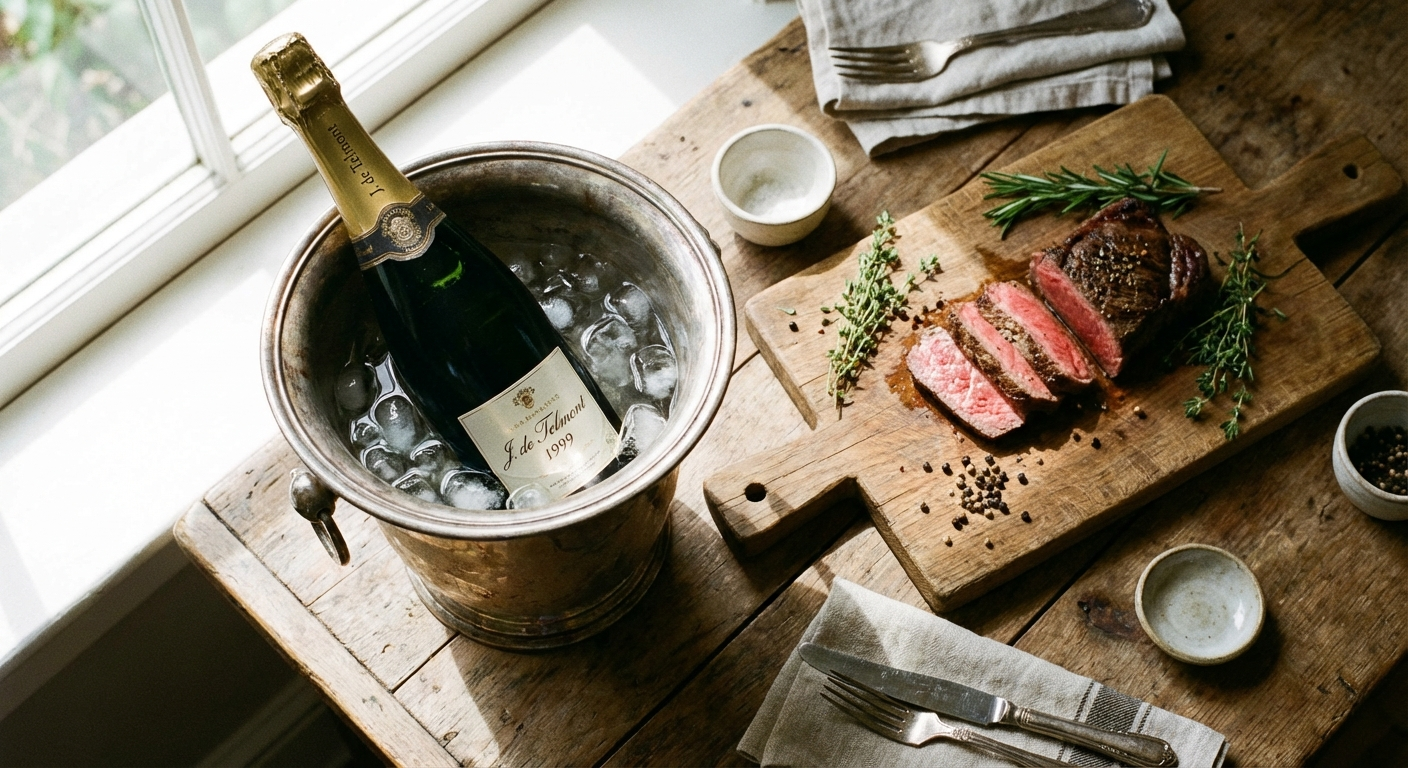
Best Champagne for Every Steak Cut
Ribeye → Blanc de Noirs or Vintage Rosé
The ribeye is the richest, most heavily marbled standard steak cut. Its buttery fat and intense beef flavor need champagne with enough body and character to match — this is not the place for a delicate Blanc de Blancs.
Why it works: Blanc de Noirs' Pinot Noir backbone gives it the structure to stand up to ribeye's richness. The wine's red fruit character (strawberry, cherry, red apple) creates a complementary contrast to charred beef, while champagne's acidity and bubbles continuously cut through the marbling. Vintage rosé adds another layer of red fruit depth and tannin grip that mirrors a light red wine.
Top picks: Bollinger Special Cuvée (Pinot Noir-dominant, rich and toasty — the James Bond champagne pairs like it was made for ribeye), Billecart-Salmon Brut Rosé (elegant berry character with enough weight), Krug Grande Cuvée (multi-vintage blend with extraordinary depth and toast — arguably the single best champagne for steak), Philipponnat Royale Réserve Brut (underrated, single-vineyard intensity).
How to serve: Slightly warmer than typical champagne — around 50-54°F (10-12°C) rather than ice-cold. This lets the wine's body and complexity emerge. Too cold and you lose the toast and fruit that make the pairing work. Use a white wine glass rather than a flute for better aroma access.
Filet Mignon → Vintage Blanc de Blancs or Prestige Cuvée
The filet's lean tenderness and subtle beef flavor call for champagne that enhances rather than overwhelms. This is where aged, complex champagnes shine.
Why it works: A vintage Blanc de Blancs like Salon or aged Comtes de Champagne develops enough weight through extended lees aging to match filet's delicate richness. The Chardonnay's mineral backbone frames the meat's clean flavors, while autolytic toast and hazelnut notes add layers of complexity. Prestige cuvées work similarly — their depth and nuance pair with the filet's refinement.
Top picks: Taittinger Comtes de Champagne Blanc de Blancs (honeyed, toasty, elegant — stunning with butter-basted filet), Dom Pérignon (the balance and length here match filet's delicacy perfectly), Ruinart Blanc de Blancs (more accessible price, beautiful citrus and cream character), Pol Roger Cuvée Sir Winston Churchill (rich, powerful Pinot-dominant cuvée that works with both lean and rich cuts).
How to serve: Standard champagne temperature, 46-50°F (8-10°C). The lighter body of these wines works at cooler temperatures. Filet's lower fat content doesn't need the aggressive palate-cleansing that ribeye demands, so the champagne can be cooler and crisper.
New York Strip → Non-Vintage Brut or Rosé
The strip sits right in the middle — moderate marbling, strong beefy flavor, a fat cap on one side for richness contrast. It's the most versatile steak cut for champagne pairing.
Why it works: A well-made non-vintage Brut has exactly the right balance of fruit, acid, and toast to complement a strip steak without competing. The strip's fat cap gives the champagne's acidity something to work against, while the leaner center of the cut lets the wine's fruit and toast flavors come through. Rosé adds a touch more body and berry character that plays well with the strip's bold beef flavor.
Top picks: Veuve Clicquot Yellow Label (reliable, toasty, Pinot-forward — a great starter pairing for skeptics), Charles Heidsieck Brut Réserve (one of the most underrated NV champagnes — incredible depth for the price), Laurent-Perrier Cuvée Rosé (the benchmark rosé champagne, elegant berry and spice), Pierre Gimonnet Cuvée Gastronome (grower champagne designed specifically for food pairing).
How to serve: 48-52°F (9-11°C). The strip's balanced profile gives you flexibility. If your strip is heavily charred with a thick crust, lean toward the warmer end to bring out more champagne weight. For a cleaner, pan-seared preparation, cooler is fine.
Wagyu → Aged Prestige Cuvée
A5 wagyu's extreme marbling and rich, almost buttery fat profile is the ultimate test for any beverage pairing. The fat coats your palate completely, muting flavors and demanding something with serious cutting power.
Why it works: Aged prestige cuvées combine champagne's natural acidity and effervescence with the weight and complexity needed to match wagyu's intensity. Years of autolysis produce a wine with enough body to feel substantial alongside beef that's essentially 50% intramuscular fat. The bubbles physically scrub fat from your palate in a way still wines simply cannot match. This is arguably where champagne outperforms red wine most dramatically.
Top picks: Krug Grande Cuvée (the depth, toast, and power here are unmatched — many chefs' desert-island champagne for wagyu), Bollinger R.D. (recently disgorged, maximum autolytic complexity with aged richness), Louis Roederer Cristal (precise, structured, mineral — cuts through wagyu with surgical accuracy), Jacques Selosse Initial (natural, oxidative style with incredible umami — a sommeliers' favorite for rich beef).
How to serve: Slightly warmer, 50-54°F (10-12°C), in a wide white wine glass or even a Burgundy glass. You need the champagne's full aromatic and textural expression to stand alongside wagyu. Ice-cold flutes will not work here — the wine needs room to breathe and enough warmth to show its complexity. Serve in small pours between small bites of wagyu for maximum effect.
T-Bone or Porterhouse → Rosé Champagne
These cuts give you two steaks in one — strip on one side, tenderloin on the other — which means you need champagne that bridges both lean and rich profiles.
Why it works: Rosé champagne's dual nature — the acidity and freshness of white champagne combined with the body and fruit of added still Pinot Noir — makes it uniquely suited to the T-bone's split personality. Sip it alongside the strip side for its richness, then switch to the tender filet side where its elegance shines. The rosé is the bridge wine.
Top picks: Ruinart Rosé (one of the oldest champagne houses, beautiful balance of freshness and depth), Dom Pérignon Rosé (serious, structured, with enough intensity for both sides of the T-bone), Billecart-Salmon Brut Rosé (consistently one of the best rosé champagnes produced — pure, precise, food-friendly), Gosset Grand Rosé (no malolactic fermentation gives it extra acidity for fat-cutting power).
How to serve: 48-52°F (9-11°C). Let the glass warm slightly as you eat. Start with the filet side and cooler champagne, then work toward the strip side as the wine gains body at warmer temperature. This natural progression across the meal enhances both sides of the pairing.
How to Serve Champagne with Steak
Temperature Matters More Than You Think
The standard advice — serve champagne ice-cold — is wrong for steak pairing. At 40°F (4°C), champagne's aromas are suppressed, its body feels thin, and the bubbles dominate flavor. For food pairing, especially with rich beef, you want champagne between 48-54°F (9-12°C). This lets the wine's fruit, toast, and autolytic complexity emerge without losing its refreshing effervescence. Pull the bottle from the fridge 15-20 minutes before serving, or use a wine bucket with minimal ice.
Ditch the Flute
Champagne flutes look elegant but they're terrible for food pairing. The narrow opening concentrates bubbles but restricts aromas — and aroma is critical when you're matching wine with food. Use a white wine glass or even a Burgundy glass for steak pairing. The wider bowl lets you swirl, smell, and experience the champagne's full complexity. Top champagne bars in Paris switched to wine glasses years ago for exactly this reason.
Steak Preparation Tips
To maximize the champagne pairing, consider your steak preparation:
Best preparations: Simple salt-and-pepper seasoning lets the champagne interact directly with beef flavors. Butter-basting (especially with thyme and garlic) creates caramelized, nutty flavors that mirror champagne's autolytic character. A clean sear with minimal sauce puts the pairing front and center.
Avoid: Heavy chimichurri, bold BBQ glazes, or very spicy rubs. These powerful flavors will overwhelm champagne's more delicate expression. If you want bold seasoning, reach for Blanc de Noirs or vintage rosé — the fullest-bodied champagne styles.
Side dishes that help: Truffle fries (earthy notes amplify champagne's mushroom-like autolytic character), creamed spinach (cream and champagne are natural allies), roasted bone marrow (fat + umami + champagne acidity = perfection), Parmesan-crusted potatoes (salty, nutty, crispy — champagne loves all three).
Budget Champagne Options for Steak Night
You don't need Krug to pair champagne with steak. Several excellent options deliver the body, acidity, and autolytic complexity needed for beef at reasonable price points.
Under $50: Charles Heidsieck Brut Réserve ($45 — extraordinary value, regularly outperforms champagnes twice its price in blind tastings), Laherte Frères Ultradition ($42 — grower champagne with depth and character), Nicolas Feuillatte Réserve Exclusive Brut ($35 — surprisingly good for the price, clean and food-friendly).
Under $75: Bollinger Special Cuvée ($65 — the gold standard for rich, Pinot-dominant NV champagne), Pol Roger Brut Réserve ($55 — Winston Churchill's favorite house, elegant and toasty), Henriot Brut Souverain ($50 — underrated, balanced, beautiful with food).
Sparkling alternatives: If champagne's price is prohibitive, look to English sparkling wine (Nyetimber, Gusbourne) which uses the same grapes and method with similar acidity. Franciacorta from Italy (Bellavista, Ca' del Bosco) offers champagne-method sparklers at lower prices. Crémant de Bourgogne from Burgundy provides Pinot Noir and Chardonnay sparklers at one-third the cost of champagne.
Common Mistakes to Avoid
Serving too cold: The number one mistake. Ice-cold champagne has no body and can't stand up to beef. Let it warm up.
Choosing Blanc de Blancs for rich cuts: Chardonnay-only champagne is beautiful, but it generally lacks the body for fatty steaks. Save Blanc de Blancs for filet mignon or as an aperitif before the steak course.
Using Demi-Sec or sweet styles: Sugar and steak don't mix well. The sweetness clashes with beef's savory umami. Stick to Brut or drier.
Drinking from a flute: You need to smell the champagne to pair it properly. Use a real wine glass.
Ordering the cheapest option: Very cheap sparkling wine lacks the autolytic depth that makes champagne work with steak. If you can't afford good champagne, order a good red wine instead. The pairing only works when the champagne has genuine complexity.
Ignoring the cooking method: A charcoal-grilled steak with heavy char needs more champagne weight (Blanc de Noirs, vintage) than a gently pan-seared steak (NV Brut works fine). Match the champagne's intensity to both the cut and the preparation.
Frequently Asked Questions
Can you really drink champagne with steak?
Absolutely. Champagne's high acidity and effervescence cut through beef fat more effectively than many red wines. Blanc de Noirs and vintage champagnes have enough body and complexity to match steak's richness. Top restaurants worldwide serve this pairing regularly.
What is the best champagne for steak?
Krug Grande Cuvée, Bollinger Special Cuvée, and Billecart-Salmon Brut Rosé are among the best all-around steak champagnes. For rich cuts like ribeye, choose Blanc de Noirs. For lean cuts like filet mignon, aged Blanc de Blancs or prestige cuvées work beautifully.
Should champagne be served cold with steak?
Slightly warmer than usual — around 48-54°F (9-12°C) rather than ice-cold. Too cold and the champagne's body and aromas are suppressed, making it feel thin next to rich beef. Pull the bottle from the fridge 15-20 minutes before serving with steak.
Is Blanc de Noirs or Blanc de Blancs better for steak?
Blanc de Noirs (made from Pinot Noir and/or Pinot Meunier) is generally better for steak due to its fuller body and red fruit character. Blanc de Blancs (100% Chardonnay) can work with lean cuts like filet mignon, especially when well-aged, but typically lacks the weight for rich, marbled cuts.
What steak cuts pair best with champagne?
All cuts work, but the pairing shines brightest with ribeye (Blanc de Noirs cuts through the fat beautifully), wagyu (bubbles reset the palate between bites of intense marbling), and filet mignon (aged champagne's elegance complements the tender, subtle cut). T-bone with rosé champagne is also excellent.
More Pairing Guides
Best Bourbon for Pork Ribs vs Beef Ribs: Complete Pairing Guide
Pork ribs and beef ribs aren't interchangeable when it comes to bourbon pairing. Fat content, smoke intensity, and flavor depth determine which bottle works best. Here's the complete breakdown.
12 min readBest Bourbon for BBQ Ribs: 7 Perfect Pairings (Tasted & Ranked)
Not every bourbon works with every style of ribs. Here are 7 bourbon pairings ranked by rib type, sauce style, and smoke profile — with specific bottles tested against real BBQ.
10 min readBest Wine with Tri-Tip: Expert Pairing Guide
Tri-tip demands wines with enough structure to match its intensity while complementing its smoky, savory profile.