Best Port Wine With Steak: A Complete Pairing Guide
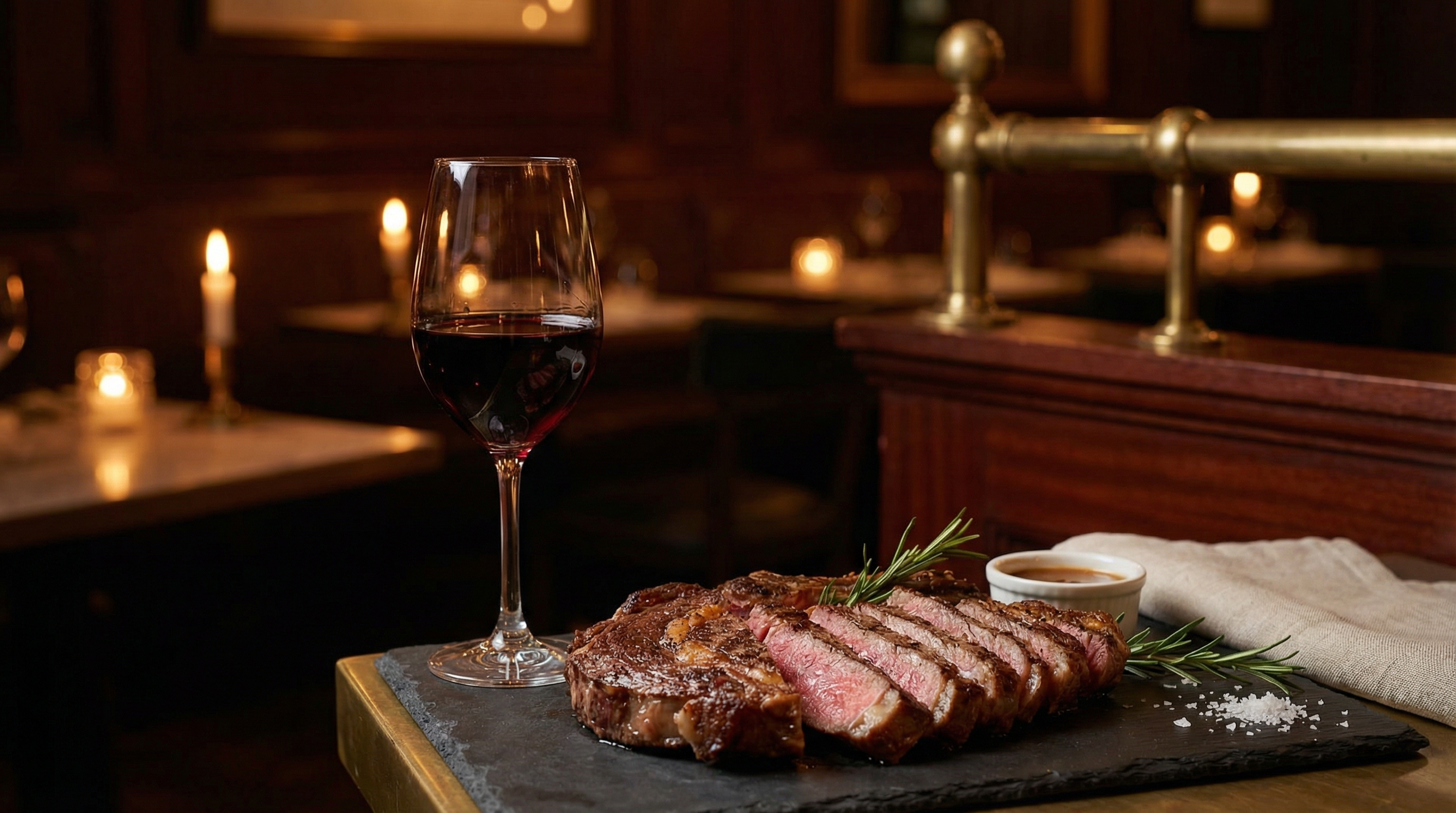
When steak lovers think about wine pairing, they reach for Cabernet Sauvignon or Malbec. Port wine rarely enters the conversation — and that's a mistake. Port's combination of concentrated fruit, structured tannins, and subtle sweetness creates pairings with beef that dry wines simply cannot replicate.
Port was never meant to be a dessert-only drink. In Portugal, where port originated, it has accompanied rich meat dishes for centuries. The Douro Valley's indigenous grape varieties — Touriga Nacional, Tinta Roriz, Touriga Franca — were bred for intensity, producing wines with the backbone to stand up to the richest cuts of beef.
This guide covers exactly which port styles pair with which steak cuts, the science behind why port and beef work together, and specific bottles worth seeking out. No generic advice — specific pairings tested against real cuts and cooking methods.
Why Port Wine Works With Steak
The case for port with steak comes down to three structural advantages that set it apart from table wines.
Residual sugar tames charred bitterness. When you sear a steak at high heat, the Maillard reaction creates hundreds of bitter and savory flavor compounds on the crust. Dry red wines amplify that bitterness — their own tannins stack on top. Port's residual sugar (typically 90–120 grams per liter) acts as a counterbalance, smoothing out the char while letting the savory depth shine through. It's the same principle behind barbecue sauce on grilled meat: sweetness and char are natural complements.
Higher alcohol carries flavor further. Port is fortified to 19–22% ABV, roughly double the alcohol of a typical Cabernet. Alcohol is a flavor solvent — it extracts and carries aromatic compounds across your palate more effectively than lower-proof wines. When you sip port alongside a bite of well-marbled steak, the flavors linger and evolve rather than washing away.
Concentrated fruit matches concentrated beef. Port grapes are grown in the harsh, sun-baked Douro Valley, producing tiny berries with intense flavor concentration. A single glass of port contains the fruit intensity of two or three glasses of dry red wine. This matters because steak — especially a thick-cut, dry-aged ribeye — is itself an intensely concentrated food. A light Pinot Noir gets steamrolled by a fatty ribeye. Port meets it as an equal.
There's also a textural dimension. Port's viscosity — that slight syrupy weight on the palate — mirrors the mouthfeel of rendered intramuscular fat. Where a crisp Sauvignon Blanc creates contrast, port creates harmony. Both approaches have merit, but port's harmonious approach often feels more satisfying with premium cuts where you want nothing to compete with the beef's natural richness.
Understanding Port Wine Styles
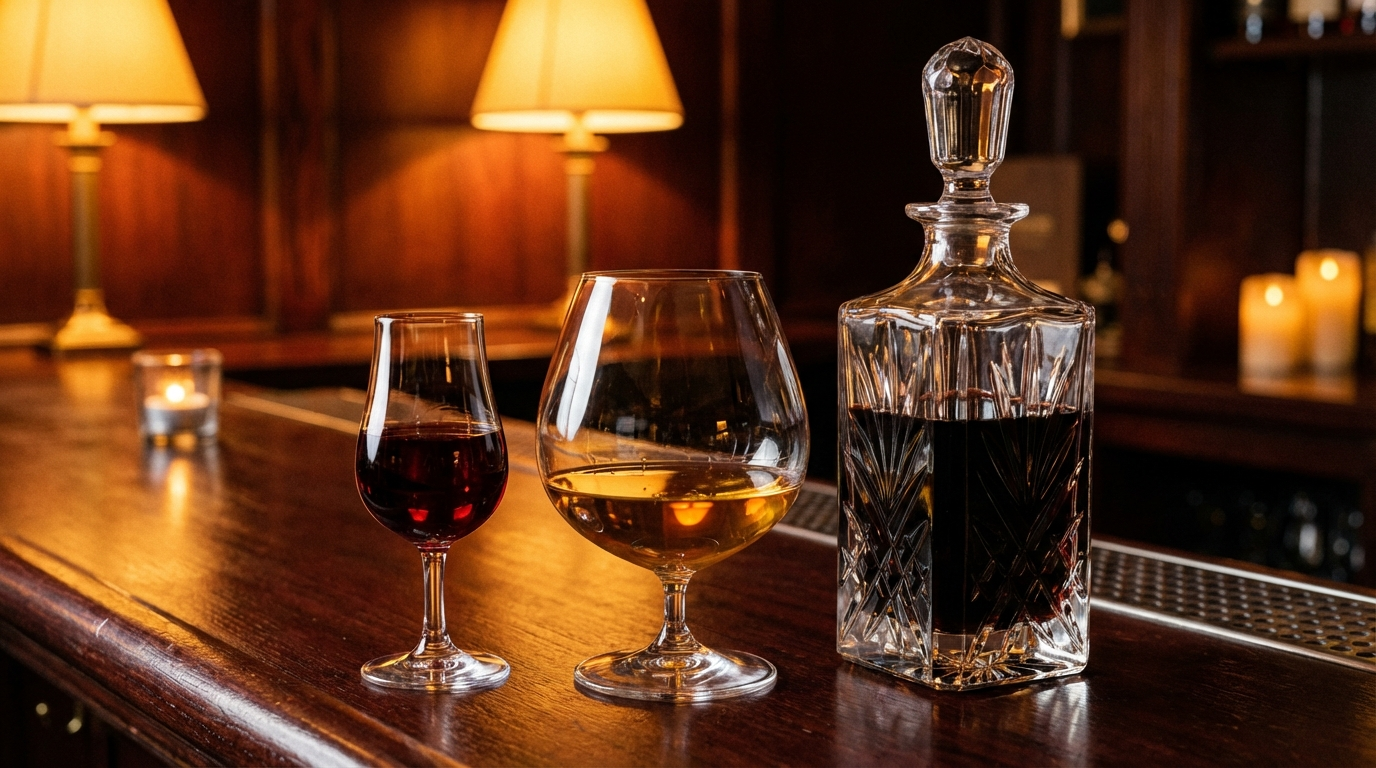
Before matching port to steak, you need to understand the four major categories and what makes each one distinct at the table.
Ruby Port is the youngest and most fruit-forward style. Aged in large vats for two to three years, it retains bright cherry, raspberry, and plum flavors with firm tannins. Think of ruby port as the Cabernet Sauvignon of the port world — bold, structured, and direct. Ruby port pairs best with richly marbled cuts where its fruit intensity can match the beef's fat content. Price range: $10–20 per bottle, making it the most accessible entry point.
Tawny Port is aged in small oak barrels (called pipes) for extended periods, typically 10, 20, 30, or 40+ years. Oxidative aging transforms fresh fruit into caramel, butterscotch, roasted nuts, and dried fig. The color shifts from deep ruby to amber-brown. Tawny port is more nuanced and delicate than ruby — it pairs best with leaner cuts where subtlety matters, and with preparations that include nutty or caramelized elements. Price range: $15–80+ depending on age designation.
Vintage Port (Vintage and Vintage) comes from a single exceptional harvest, declared only two or three times per decade. It's bottled young and aged in bottle for decades, developing extraordinary complexity — dark fruit, leather, tobacco, earth, and mineral notes. Vintage port is the most tannic and structured style when young, but opens into something transcendent after 15–20 years. Reserve these for the best steaks you'll ever cook. Price range: $40–200+.
Late Bottled Vintage (LBV) offers a middle ground between ruby and vintage port. It's from a single year, aged four to six years in barrel before bottling. LBV delivers more complexity than ruby without vintage port's price tag or required cellaring time. This is the sweet spot for regular steak dinners — serious enough to elevate the meal, accessible enough not to intimidate. Price range: $15–30.
One critical rule: serve port slightly cooler than room temperature (60–65°F / 16–18°C). Too warm and the alcohol becomes aggressive; too cold and the flavors close down. Ten minutes in the refrigerator before serving usually does the trick.
Best Port for Ribeye Steak
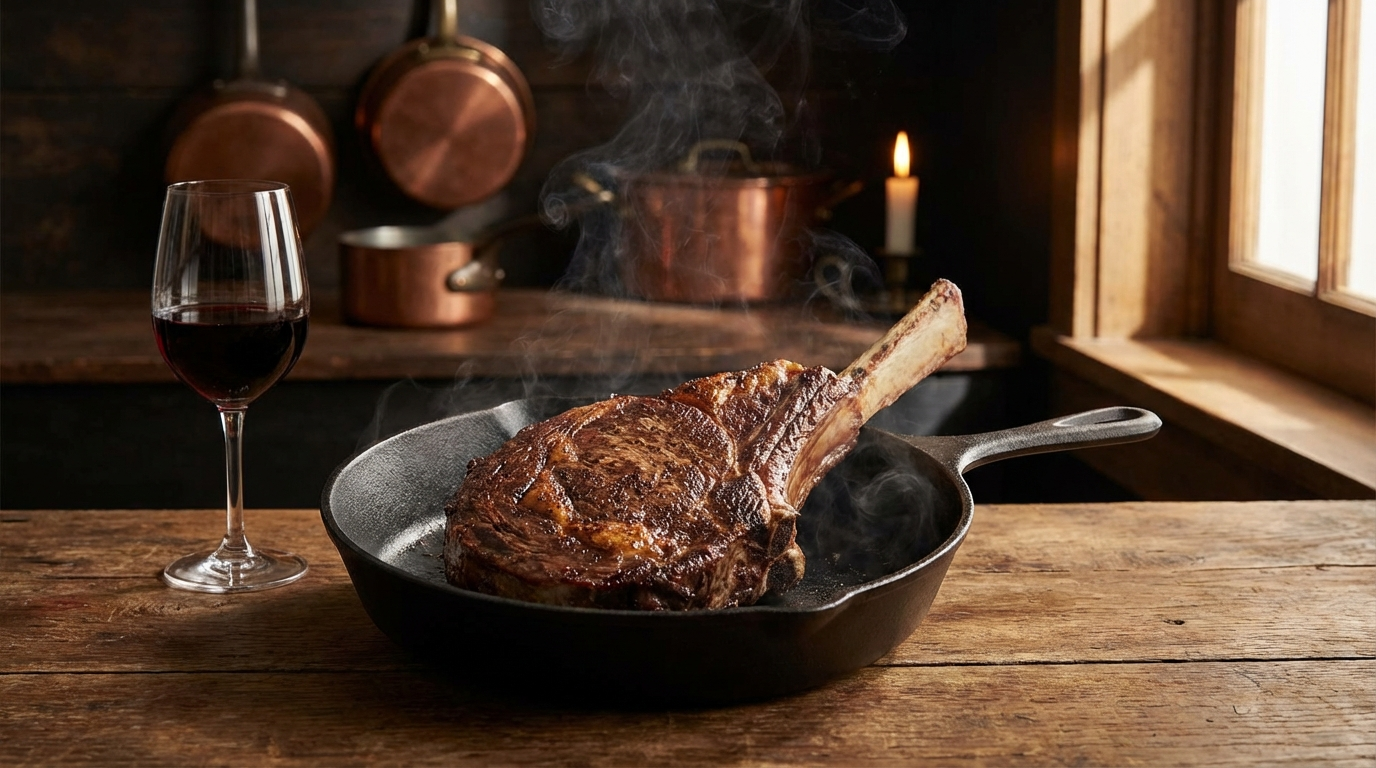
Ribeye is the ultimate test of a pairing partner. With its heavy marbling, pronounced beefy flavor, and rendered fat cap, ribeye needs a wine that won't get lost. This is where port excels over many dry reds.
Top pick: Late Bottled Vintage (LBV) Port. An LBV's combination of concentrated dark fruit, moderate tannin, and structured sweetness is practically designed for ribeye. The sweetness counterbalances the richness of the fat, while the fruit intensity matches the beef's deep flavor. Specific bottles to seek: Graham's LBV, Warre's LBV, or Quinta do Noval LBV.
Runner-up: Reserve Ruby Port. If you're grilling the ribeye and want a more casual pairing, a reserve ruby port like Fonseca Bin 27 or Taylor's First Estate works beautifully. The brighter fruit and firmer tannins cut through the char from the grill, and the higher fruit concentration keeps pace with a bone-in cut.
For dry-aged ribeye specifically, consider a 10-year tawny port. Dry aging develops nutty, funky, concentrated flavors that mirror what oxidative aging does to tawny port. The caramel and toasted almond notes in a 10-year tawny (like Dow's 10 Year or Taylor's 10 Year) echo the dry-aged flavors, creating a pairing that feels intentional rather than accidental.
Serving note: Pour two to three ounces of port per person — about half the pour of a dry wine. Port's intensity means a little goes a long way, and smaller portions prevent palate fatigue across a multi-course meal.
Best Port for Filet Mignon
Filet mignon presents the opposite challenge from ribeye. It's tender and mild, with minimal marbling and subtle, clean beef flavor. An aggressive ruby port would overwhelm it. This is where tawny port shines.
Top pick: 20-Year Tawny Port. A 20-year tawny has enough complexity — dried fruit, caramel, orange peel, hazelnut — to add dimension to filet's mild profile without burying it. The delicacy matches. Try Graham's 20 Year, Sandeman's 20 Year, or Taylor's 20 Year Tawny.
Runner-up: White Port. This is an unconventional call, but dry white port (like Niepoort Dry White) paired with a filet wrapped in bacon offers a striking contrast. The white port's citrus acidity cuts through the bacon fat while the filet's clean flavor stays front and center. It works especially well as a summer pairing served over ice with a twist of lemon — essentially a port-and-tonic alongside your steak.
If the filet is served with a peppercorn sauce or béarnaise, shift back toward ruby port. The sauce adds enough richness and flavor complexity that the filet can now support a bolder port. A standard ruby or young LBV matches perfectly with sauced preparations.
For filet topped with blue cheese (a classic steakhouse preparation), the pairing becomes exceptional. Port and blue cheese is one of the all-time great food and wine combinations — Stilton with vintage port is a British institution. Add a tender filet underneath and you have three elements in perfect balance: mild beef, pungent cheese, sweet-tannic wine.
Best Port for New York Strip
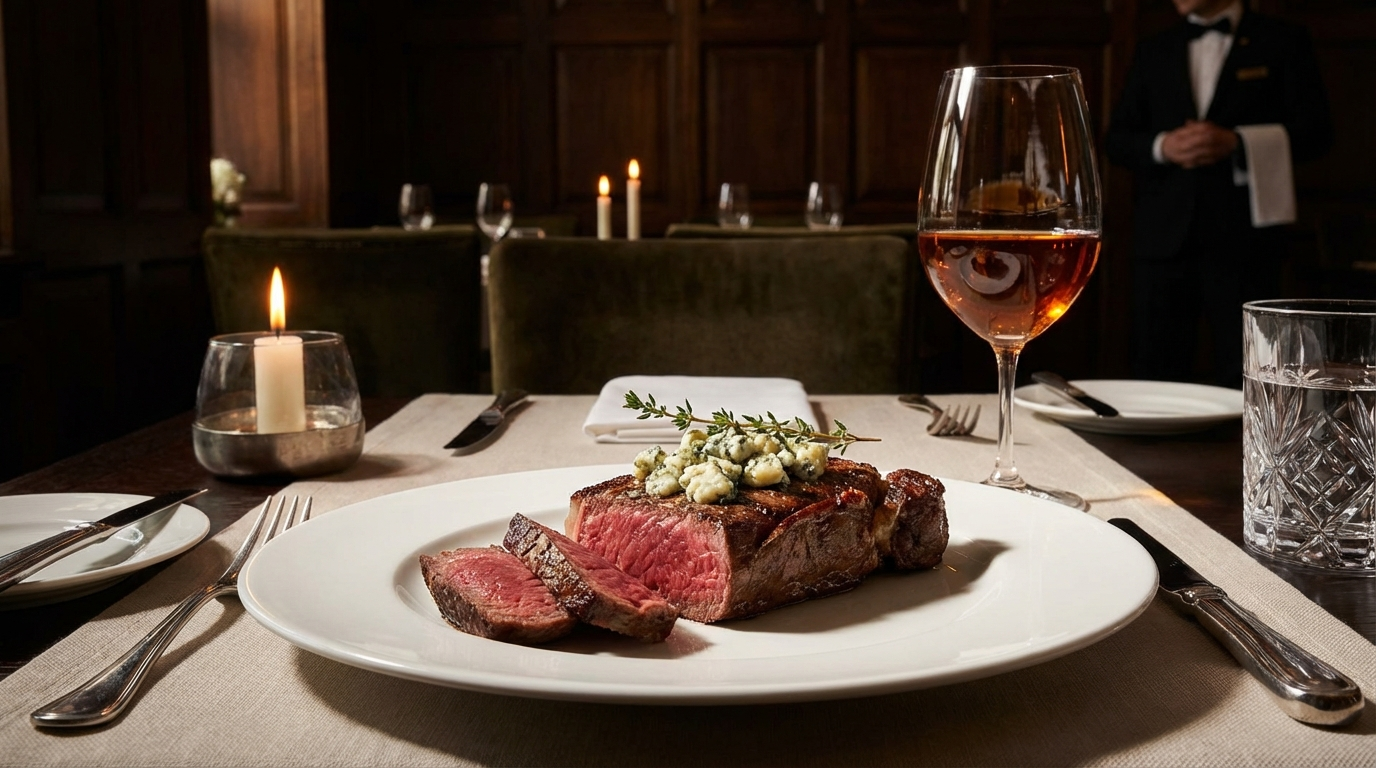
New York strip sits in the sweet spot between ribeye's richness and filet's leanness. It has a fat cap on one side but a relatively lean center, with a firm texture and pronounced beefy flavor. This versatility means nearly any port style works — the question is which works best.
Top pick: Reserve Ruby Port or LBV. The strip's moderate fat content and strong beef flavor pair naturally with port's middle range. Reserve ruby (like Fonseca Bin 27) delivers enough fruit and sweetness to complement the beef without the intensity that a bone-in ribeye demands. LBV adds a layer of complexity that rewards attention.
For pan-seared strip: When you sear a strip in butter and herbs (the classic Thomas Keller method), a 10-year tawny port creates an outstanding pairing. The butter and thyme from the pan echo the tawny's caramel and spice notes. It's a pairing where cooking method drives the port selection more than the cut itself.
For grilled strip with chimichurri: Ruby port with its bright fruit notes works here because chimichurri's acidity and herbaceousness need a port that can keep up. The parsley, oregano, and vinegar in chimichurri bridge beautifully between the grilled beef and the ruby port's cherry-plum fruit.
New York strip is also the best cut for experimenting with port-based pan sauces. After searing your strip, deglaze the pan with two ounces of ruby port, add a tablespoon of butter, a sprig of thyme, and reduce by half. The result is a glossy, intensely flavored sauce that turns a simple strip steak into a steakhouse-quality dish — and the same port you used in the sauce becomes the perfect glass alongside it.
Best Port for T-Bone and Porterhouse
T-bone and porterhouse steaks present a unique pairing challenge: they contain two different muscles separated by the T-shaped bone. On one side is the strip loin (beefy, moderate fat). On the other is the tenderloin (mild, lean). You need a port that satisfies both sides.
Top pick: LBV Port. Late Bottled Vintage is the Goldilocks port for composite cuts. It has enough fruit and structure to match the strip side, enough finesse not to overwhelm the tenderloin side, and enough complexity to make the pairing interesting across both textures. Try Ramos Pinto LBV or Smith Woodhouse LBV.
Alternative approach: Two ports. If you're feeling ambitious (and this works beautifully at a dinner party), serve a small glass of 20-year tawny alongside a small glass of reserve ruby. Let your guests alternate between the two as they move from tenderloin bites to strip bites. It sounds fussy, but it demonstrates the principle behind all port and steak pairing: matching intensity to intensity.
For a bone-in porterhouse specifically — a larger cut with more fat adjacent to the bone — lean toward the ruby end of the spectrum. The bone releases collagen-rich flavor as it cooks, adding a savory richness that benefits from ruby port's forward fruit. The bone-adjacent meat is always the most flavorful, and ruby port meets that intensity.
Port and Steak Cheese Board Pairing
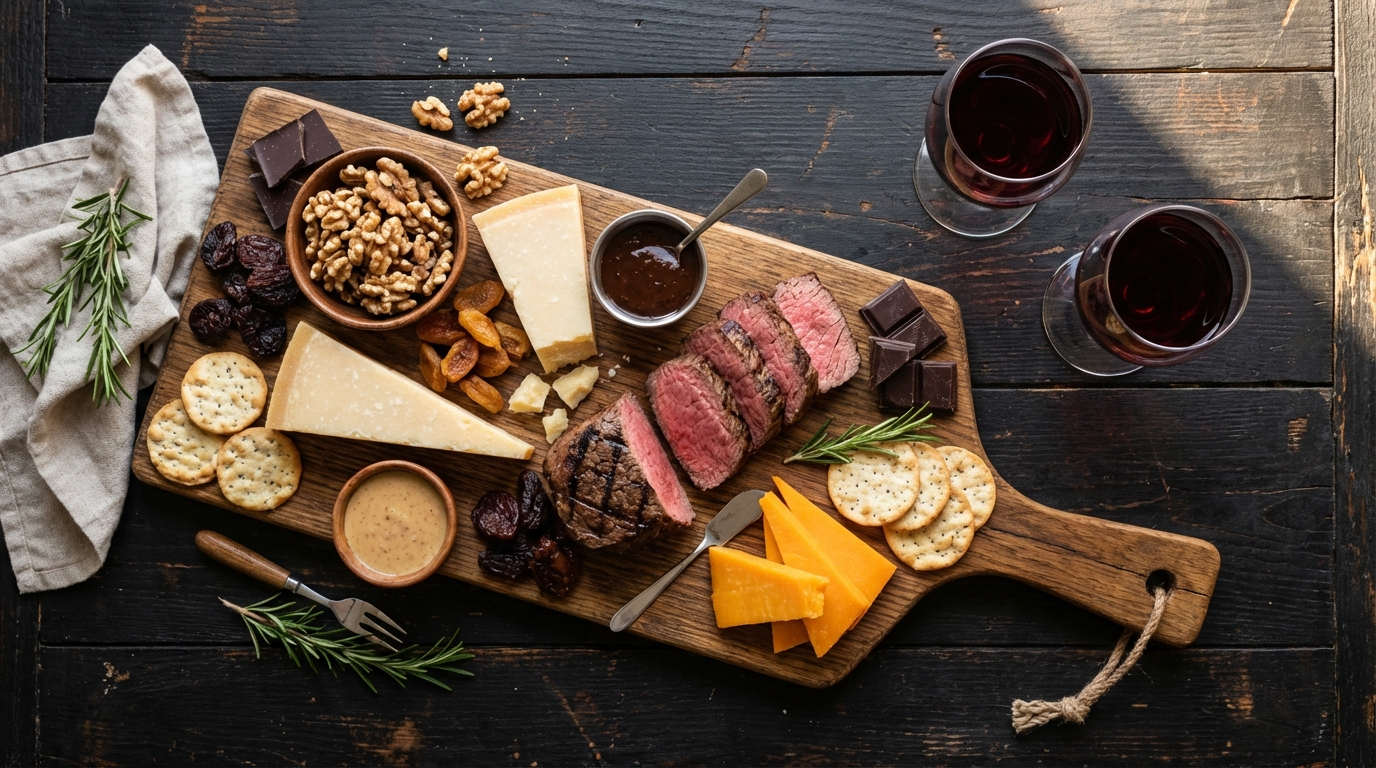
One of port wine's greatest strengths is its affinity for cheese, and combining steak, cheese, and port into a single course creates something greater than the sum of its parts. This is how to build a port-friendly steak board.
The anchor: Stilton + Tawny Port + Cold Sliced Filet. Stilton's creamy, sharp blue veining bridges the gap between cold rare filet and aged tawny port. The port's sweetness tempers Stilton's bite, the Stilton's salt enhances the beef, and the beef's protein grounds everything. It's a triangle of flavors where each element improves the other two.
The crowd-pleaser: Aged Cheddar + Ruby Port + Sliced Ribeye. Sharp, crystalline aged cheddar (18+ months) has an umami intensity that matches both rich ribeye and fruit-forward ruby port. This combination is less refined than the Stilton pairing but more immediately satisfying — it's the one guests reach for repeatedly.
The wildcard: Manchego + White Port + Carpaccio. Paper-thin raw beef carpaccio with shaved Manchego, a drizzle of olive oil, and chilled dry white port. This is a warm-weather pairing that works as a starter before grilled steaks. The Manchego's nutty, sheepy flavor adds a savory complexity that white port's citrus notes frame beautifully.
Add dark chocolate (70%+), Marcona almonds, and dried figs to the board. All three have traditional affinities with port, and they provide textural contrast and palate-cleansing moments between bites of rich beef and cheese. A well-built port and steak board can replace dessert entirely — which is exactly how the Portuguese would have it.
Cooking With Port Wine for Steak
Port isn't just for the glass. It's one of the most effective deglazing liquids for steak, and it makes pan sauces that dry wines can only approximate.
Classic port reduction sauce: After searing your steak, remove it to rest. In the same pan over medium heat, add one minced shallot and cook 30 seconds. Pour in four ounces of ruby port and scrape the fond. Add two tablespoons of beef stock, a sprig of thyme, and reduce by half (about three minutes). Swirl in one tablespoon of cold butter and season with black pepper. The result is a glossy, deeply savory sauce with a hint of fruit sweetness — the kind of sauce that makes people ask for the recipe.
Port and blue cheese butter: Reduce two ounces of tawny port to a syrup (about one tablespoon). Mix into four tablespoons of softened butter with two tablespoons of crumbled Roquefort, a pinch of black pepper, and a teaspoon of chopped chives. Roll into a log, chill, and slice a coin to melt over your finished steak. The tawny port adds caramel depth to the sharp cheese, creating a compound butter that elevates any cut.
Port-marinated steak: This works best with flank or skirt steak — thinner cuts that absorb marinades effectively. Combine one cup of ruby port with two tablespoons of soy sauce, three crushed garlic cloves, one tablespoon of olive oil, and a teaspoon of cracked black pepper. Marinate for four to six hours (not longer — port's acidity will start breaking down the meat's surface). Grill over high heat. The port sugars caramelize into a dark, complex crust that you can't achieve with wine-based marinades.
Port as a finishing drizzle: Reduce half a cup of vintage-quality ruby port to two tablespoons of thick syrup. Drizzle over a sliced steak alongside a sprinkle of flaky sea salt. This technique adds a burst of concentrated fruit that works particularly well with dry-aged cuts, where the syrup's sweetness contrasts with the beef's funky, intense flavors.
Best Port Wine Bottles for Steak Pairing
Here are specific bottles organized by category and price point, all tested alongside various steak preparations.
Best everyday ruby ($10–15): Taylor's Fine Ruby or Sandeman Founders Reserve. Both deliver reliable cherry-plum fruit with enough structure for weeknight grilling. Taylor's has slightly more tannin; Sandeman is rounder and softer.
Best reserve ruby ($15–25): Fonseca Bin 27. This is the workhorse of steak-friendly ports — dark, concentrated, and complex enough to pair with premium cuts. It's the bottle to keep on hand at all times.
Best LBV ($18–30): Graham's LBV or Warre's LBV. Both come from top-tier producers and offer vintage-port complexity at a fraction of the price. Graham's is slightly sweeter; Warre's has more tannin and structure.
Best 10-year tawny ($18–30): Dow's 10 Year or Taylor's 10 Year. For dry-aged steaks and butter-basted preparations, these deliver caramel, nut, and dried fruit complexity that echoes the cooking method. Taylor's is more elegant; Dow's is richer.
Best 20-year tawny ($35–60): Graham's 20 Year. The benchmark for aged tawny port — layers of butterscotch, orange peel, roasted hazelnut, and subtle spice. Save this for filet mignon or special occasions.
Best vintage port for a special steak dinner ($50–150): Graham's, Fonseca, or Taylor's from a declared year. If you can find a vintage with 15–20 years of age (2003, 2007, or 2011 are drinking beautifully now), you'll experience the pinnacle of the port-and-steak pairing. Dark fruit, leather, tobacco, earth — flavors that transform a great steak into an unforgettable meal.
Best white port ($12–18): Niepoort Dry White or Churchill's Dry White. These are the picks for filet carpaccio, warm-weather steak salads, or bacon-wrapped filet. Serve over ice with a twist of lemon.
Common Mistakes to Avoid
Port and steak pairing is forgiving, but there are a few pitfalls that can derail an otherwise excellent combination.
Serving port too warm. At room temperature (especially in warm kitchens), port's 20% alcohol becomes aggressive and the sweetness turns cloying. Chill it to 60–65°F. Ten minutes in the fridge or two minutes in an ice bucket makes a dramatic difference.
Pouring too much. Port is not table wine. A two-to-three-ounce pour is a full serving. Over-pouring leads to palate fatigue by the third bite of steak, and the sweetness that initially complements the beef starts to overwhelm it. Smaller pours, sipped slowly, keep the pairing in balance throughout the meal.
Choosing the wrong port for the cooking method. A common mistake is reaching for a fine aged tawny to pair with a charcoal-grilled steak slathered in barbecue rub. The smoke, char, and spice will bulldoze the tawny's delicate nuances. Match intensity to intensity: bold cooking methods get ruby port, gentle methods get tawny port.
Ignoring the sauce. If your steak has a sauce (peppercorn, béarnaise, chimichurri, mushroom), pair to the sauce, not the cut. A creamy peppercorn sauce shifts the pairing toward tawny. A bright chimichurri stays with ruby. The sauce is the dominant flavor the port will interact with, not the underlying beef.
Treating port as dessert only. The biggest mistake is not trying the pairing at all because of the assumption that port belongs after dinner. In Portugal, port accompanies savory courses regularly — especially rich, fatty meats. Give yourself permission to pour port with your steak, and you'll discover a pairing that rivals any Cabernet you've ever had alongside beef.
Frequently Asked Questions
Is port wine good with steak?
Port wine is excellent with steak. Its concentrated fruit, moderate sweetness, and structured tannins complement beef's rich, savory flavors. The residual sugar in port balances the charred bitterness from searing, while its higher alcohol content carries and amplifies beef flavors across the palate. Ruby port works best with richly marbled cuts like ribeye, while tawny port pairs beautifully with leaner cuts like filet mignon.
What type of port wine pairs best with ribeye?
Late Bottled Vintage (LBV) port is the best match for ribeye. Its concentrated dark fruit, moderate tannin, and structured sweetness counterbalance ribeye's heavy marbling. Reserve ruby port (like Fonseca Bin 27) is an excellent runner-up for grilled ribeye, and 10-year tawny port pairs especially well with dry-aged ribeye, where the nutty aging flavors complement each other.
Should port wine be served cold or warm with steak?
Port should be served slightly below room temperature — around 60–65°F (16–18°C). This is cooler than most people serve it. At true room temperature, port's 20% alcohol becomes aggressive and the sweetness can overwhelm the steak. Ten minutes in the refrigerator before serving is usually sufficient to reach the ideal temperature.
How much port wine should you pour with steak?
Pour two to three ounces of port per person — roughly half the pour of a dry table wine. Port's higher alcohol (19–22% ABV) and flavor intensity mean a smaller amount delivers more impact. Over-pouring leads to palate fatigue, where the sweetness starts to compete with rather than complement the beef.
Can you cook steak with port wine?
Port wine makes an excellent cooking ingredient for steak. Use it to deglaze a pan after searing for a rich, glossy reduction sauce. Ruby port works best for cooking — its bold fruit and sweetness caramelize beautifully. You can also make port and blue cheese compound butter, port-based marinades for flank steak, or reduce port to a syrup for drizzling over sliced dry-aged beef.
What is the difference between ruby and tawny port for steak?
Ruby port is young, fruit-forward, and bold — best with richly marbled cuts like ribeye and grilled preparations where its cherry-plum intensity matches the beef's fat. Tawny port is barrel-aged, developing caramel, butterscotch, and nutty flavors — best with leaner cuts like filet mignon and butter-basted preparations where its delicacy complements subtle beef flavors.
More Pairing Guides
Best Bourbon for Pork Ribs vs Beef Ribs: Complete Pairing Guide
Pork ribs and beef ribs aren't interchangeable when it comes to bourbon pairing. Fat content, smoke intensity, and flavor depth determine which bottle works best. Here's the complete breakdown.
12 min readBest Bourbon for BBQ Ribs: 7 Perfect Pairings (Tasted & Ranked)
Not every bourbon works with every style of ribs. Here are 7 bourbon pairings ranked by rib type, sauce style, and smoke profile — with specific bottles tested against real BBQ.
10 min readBest Wine with Tri-Tip: Expert Pairing Guide
Tri-tip demands wines with enough structure to match its intensity while complementing its smoky, savory profile.