Best Porter and Stout for Beef: Complete Dark Beer Pairing Guide
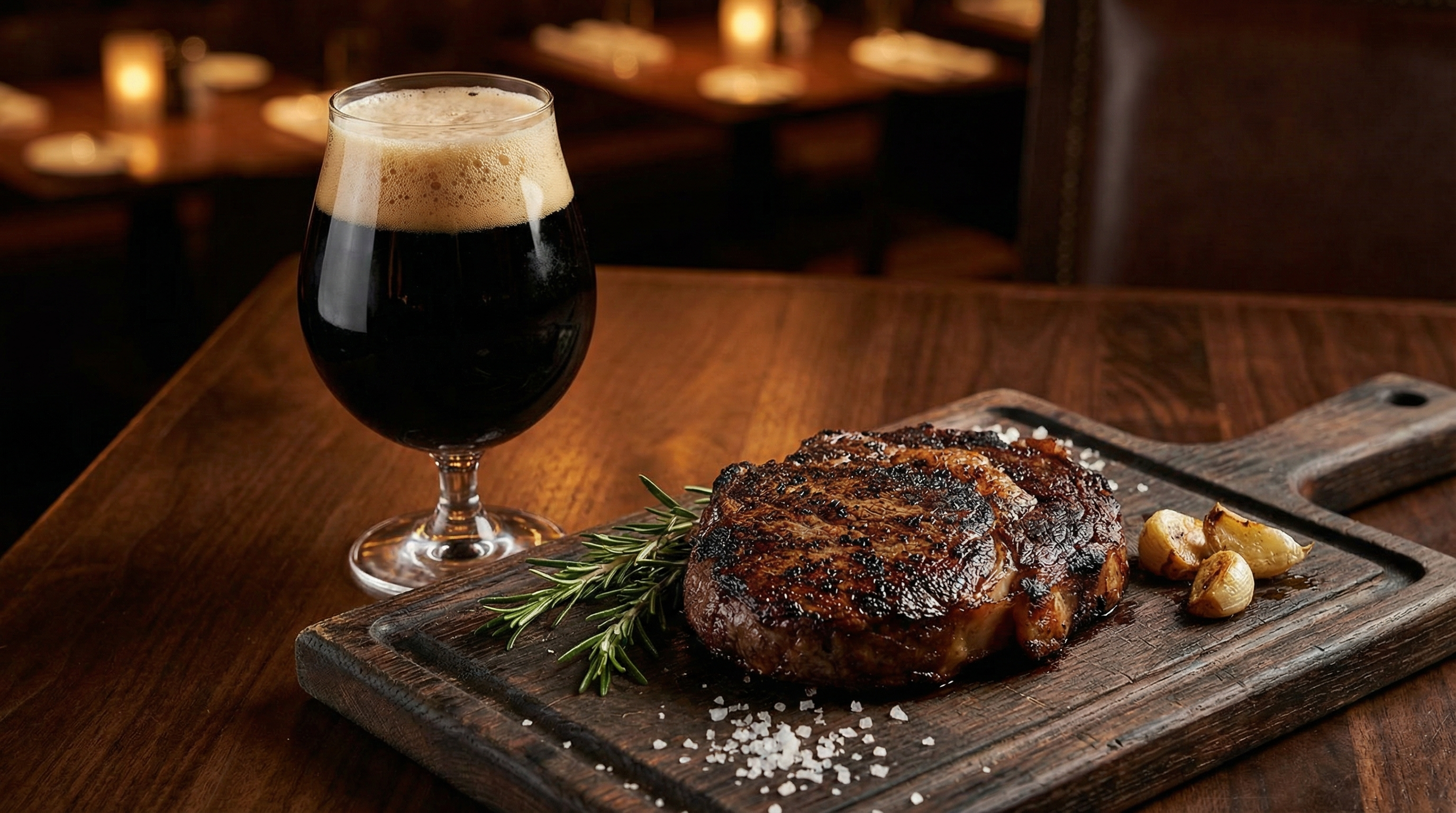
Porter and stout beers are built for beef. Their roasted malt character mirrors the Maillard crust on a perfectly seared steak. Their full body stands up to rich, fatty cuts without being overwhelmed. And their subtle sweetness balances the savory umami punch that defines great beef.
This guide breaks down how to pair porter and stout with specific beef cuts, cooking methods, and flavor profiles — so you always know which dark beer to pour.
Author's Note: I've spent fifteen years pairing beer and beef across steakhouses, BBQ joints, and home kitchens. I've learned that dark beers aren't just for dessert — when matched correctly with beef, they create flavor synergy that neither component achieves alone. These pairings are field-tested, not theoretical.
Why Porter and Stout Work with Beef
Dark beers and beef share fundamental flavor chemistry. Both are products of the Maillard reaction — the browning process that creates complex, roasted flavors. According to the American Chemical Society's research on flavor compounds, Maillard reactions produce hundreds of aromatic compounds that overlap between roasted malts and seared meat.
Here's why the pairing works:
- Roasted malt echoes beef crust: The kilned, toasted malts in porter and stout share flavor compounds with the caramelized exterior of grilled or seared beef. This creates resonance rather than contrast.
- Full body matches fat: Porter and stout have enough body and viscosity to coat your palate alongside rich, fatty cuts like ribeye or short ribs. Lighter beers feel thin by comparison.
- Residual sweetness balances savory: Most porters and stouts have subtle sweetness from unfermented sugars. This rounds out the intense umami and salt in beef, preventing palate fatigue.
- Low to moderate carbonation: Unlike aggressive IPAs, dark beers have gentler carbonation that cleanses without scrubbing away the beef's richness. The Cicerone Certification Program notes that lower carbonation levels in stouts and porters make them ideal for rich, fatty foods.
- Coffee and chocolate notes: The roasted barley in stout produces coffee and dark chocolate flavors that add complexity to the pairing without competing with the beef itself.
For more on the science of beer and food pairing, the Brewers Association's pairing guide offers foundational principles that apply directly to dark beer and beef combinations.
Understanding Porter vs. Stout
The line between porter and stout is historically blurry — both are dark ales made with roasted malts. In modern brewing, the distinction is often one of intensity rather than strict definition:
Porter Characteristics
Flavor profile: Chocolate, toffee, caramel, light coffee, nutty malts. Generally sweeter and lighter-bodied than stout.
ABV range: 4.5–6.5%
Best for: Grilled steaks, burgers, less fatty cuts. The lighter body and sweeter profile work well when you don't want the beer to dominate.
Examples: Founders Porter, Deschutes Black Butte Porter, Anchor Porter
Stout Characteristics
Flavor profile: Roasted coffee, dark chocolate, espresso, slight bitterness, fuller body. Often drier than porter with more pronounced roast character.
ABV range: 5–7% (dry stout), 8–12% (imperial stout)
Best for: Fatty cuts (ribeye, brisket, short ribs), smoked beef, heavily seasoned preparations. The fuller body and roast intensity stand up to rich, bold flavors.
Examples: Guinness Draught (dry stout), Left Hand Milk Stout (sweet stout), Founders Imperial Stout
In my experience, the key decision point is fat content: if your beef is marbled and fatty, lean toward stout. If it's leaner or grilled with less fat, porter often works better.
Porter Pairings by Beef Cut
Grilled New York Strip with American Porter
New York strip has moderate marbling and a firm, beefy texture. An American-style porter like Deschutes Black Butte Porter brings chocolate and toffee sweetness that complements the strip's savory richness without overpowering its cleaner flavor profile.
Why it works: The porter's medium body matches the strip's texture, and the caramel malt notes echo the char from the grill. Avoid overly roasty beers here — you want sweetness, not bitterness.
Serving tip: Serve the porter at 50–55°F to let the malt sweetness shine without being cloying.
Grilled Flank Steak with Robust Porter
Flank steak is lean, intensely beefy, and often marinated. A robust porter with more roast character (like Anchor Porter) can handle the bold marinade flavors and the meat's assertive taste.
Why it works: The roasted malt bitterness cuts through soy-based marinades or spicy rubs, while the porter's body prevents the pairing from feeling thin alongside a lean cut.
Serving tip: If your flank is marinated with Asian flavors (ginger, soy, sesame), the porter's coffee notes create an interesting bridge between sweet and savory.
Bacon Cheeseburger with Smoked Porter
Burgers combine beef, fat, cheese, and often bacon — a rich, salty, umami bomb. A smoked porter (like Alaskan Smoked Porter) adds a layer of smokiness that resonates with the char on the patty and any smoked bacon.
Why it works: The smoke in the beer doesn't compete with the burger's char — it amplifies it. The malt sweetness balances sharp cheddar or blue cheese, and the carbonation cuts through the fat.
Serving tip: This pairing works best with a classic American-style burger (beef, cheese, bacon, pickles). Avoid overly complex toppings that might clash with the smoked malt.
Stout Pairings by Beef Cut
Ribeye Steak with Dry Irish Stout
Ribeye is the king of marbling — rich, fatty, and intensely flavorful. A dry Irish stout like Guinness or Murphy's provides roasted coffee bitterness and a crisp, dry finish that cuts through the ribeye's fat without adding sweetness.
Why it works: The stout's roast character mirrors the ribeye's char, while the dry finish prevents the pairing from becoming heavy. The beer's subtle acidity (from roasted barley) acts like a squeeze of lemon on fish — it brightens the palate between bites.
Serving tip: Serve the stout at cellar temperature (50–55°F), not ice-cold. Cold mutes the roast complexity you want to taste.
When I worked at a Chicago steakhouse, we ran this pairing as a special and it outsold our wine pairings 3:1 on ribeye nights. The combination just works.
Smoked Brisket with American Stout
Brisket — especially Texas-style smoked brisket — has a pronounced smoke ring, bark, and rendered fat. An American stout with moderate roast and some hop bitterness (like Sierra Nevada Stout) complements the smoke without competing.
Why it works: The stout's coffee notes echo the brisket's bark, the malt sweetness balances the meat's savory smoke, and the body matches the brisket's richness. The hop bitterness also cuts through the fattier point cut.
Serving tip: If your brisket is served with a sweet BBQ sauce, lean toward a drier stout. If it's served naked (as it should be), a slightly sweeter American stout works beautifully.
Braised Short Ribs with Milk Stout
Short ribs braised in red wine or stock become fall-apart tender, with concentrated beefy flavors and silky, collagen-rich texture. A milk stout (sweet stout with lactose) like Left Hand Milk Stout adds creamy sweetness that complements the richness.
Why it works: The lactose in milk stout creates a velvety mouthfeel that mirrors the short ribs' texture. The chocolate and coffee notes add complexity without overwhelming the delicate braising flavors.
Serving tip: This pairing works especially well if your short ribs are finished with a red wine reduction or demi-glace. The beer's sweetness rounds out the sauce's acidity.
Grilled T-Bone with Oatmeal Stout
T-bone gives you two cuts in one: the strip and the tenderloin. An oatmeal stout (like Samuel Smith's Oatmeal Stout) has a silky, smooth body from the oats that works with both the strip's beefiness and the tenderloin's buttery texture.
Why it works: The oatmeal adds body without heaviness, and the stout's roast character complements the T-bone's char. The slight nuttiness from the oats bridges the gap between the two different muscle textures on the bone.
Serving tip: Finish the steak with coarse sea salt and cracked black pepper — the oatmeal stout's subtle sweetness will make the pepper pop.
Imperial Stout and Wagyu: The Ultimate Pairing
Imperial stout (also called Russian imperial stout) is the heavyweight of the stout world: 8–12% ABV, thick body, intense roast, chocolate, coffee, and sometimes bourbon barrel aging. This is the beer for Japanese A5 wagyu or American wagyu ribeye.
Why it works: Wagyu's extreme marbling (up to 50% intramuscular fat) requires a beer with enough body and intensity to match. Imperial stout has the weight, the roast depth, and the alcohol warmth to stand alongside wagyu's richness without being overwhelmed.
Recommended beers: Founders Imperial Stout, North Coast Old Rasputin, Goose Island Bourbon County Stout (if barrel-aged)
Serving notes:
- Serve the beer at 55–60°F to let the complexity unfold
- Pour into a tulip or snifter glass to concentrate aromas
- Cook the wagyu simply — salt, pepper, high heat sear. Let the beef and beer be the stars.
- This is a sipping pairing — take small bites and small sips. The intensity of both components demands a slower pace.
I've run this pairing at private dinners and tastings dozens of times, and it consistently surprises people who think beer can't hang with high-end beef. The key is treating the imperial stout like a fine wine — with respect and proper serving temperature.
Pairing by Cooking Method
Grilled Beef → American Porter or Dry Stout
Grilling creates char and caramelization. Pair with beers that have roasted malt to echo the char, but not so much sweetness that it clashes with the smoke. American porter or dry Irish stout are your best bets.
Smoked Beef → American Stout or Smoked Porter
Smoked brisket, smoked tri-tip, or any beef with smoke ring demands a beer that either complements or amplifies the smoke. American stout (moderate roast, some hop bitterness) or smoked porter (if you want to double down on smoke) both work.
Braised Beef → Milk Stout or Oatmeal Stout
Braising breaks down collagen and creates silky, tender meat. Pair with stouts that have creamy, smooth body — milk stout (with lactose) or oatmeal stout. Avoid overly dry or bitter stouts here; you want roundness.
Pan-Seared Beef → Robust Porter or American Stout
Pan-searing (cast iron, high heat) creates intense crust and keeps the interior tender. Pair with beers that have enough roast to match the crust but enough body to handle the juiciness. Robust porter or American stout fit perfectly.
Common Pairing Mistakes to Avoid
Serving Stout Too Cold
Most people serve dark beer straight from the fridge (38–40°F). At that temperature, you mute the roast complexity, chocolate notes, and malt sweetness. Serve porter at 50–55°F and stout at 50–60°F (imperial stout even warmer). Let the beer warm in the glass for a few minutes if needed.
Pairing Lean Beef with Imperial Stout
Imperial stout is too heavy for lean cuts like flank or sirloin. The beer's body and alcohol will overpower the meat. Save imperial stout for fatty, marbled cuts or slow-cooked beef where the richness can match the beer's intensity.
Using Sweet Stout with Sweet Sauces
If your beef is glazed with a sweet BBQ sauce or teriyaki, don't pair it with a milk stout or sweet porter. The sweetness stacks and becomes cloying. Use a drier stout (like Guinness) to provide contrast and cut through the sugar.
Ignoring Seasoning and Rubs
A heavily peppered steak needs a beer with enough bitterness to handle the spice. A coffee-rubbed brisket needs a stout with coffee notes to create resonance. Always consider the seasoning, not just the cut.
Building a Dark Beer and Beef Pairing Menu
If you're hosting a beer dinner or building a tasting menu, here's a progression that works:
- Course 1: Grilled beef sliders with American porter (4-5oz pours) — approachable, not too heavy
- Course 2: Pan-seared strip steak with dry Irish stout (6oz pour) — steps up intensity
- Course 3: Smoked brisket with American stout (6oz pour) — bold and smoky
- Course 4: Braised short ribs with milk stout (4oz pour) — rich and creamy
- Course 5: Wagyu ribeye with imperial stout (3oz pour) — the grand finale
Start lighter and build toward richer, fattier cuts and stronger beers. End with imperial stout — it's too intense to follow with anything else.
Where to Source Great Porter and Stout
Most craft beer shops and grocery stores with decent beer selections carry at least a few quality porters and stouts. Look for:
- Local breweries: Many regional craft breweries make excellent porters and stouts. Ask what's fresh.
- Year-round classics: Guinness, Founders Porter, Deschutes Black Butte Porter, Left Hand Milk Stout — these are widely available and consistent.
- Seasonal releases: Many breweries release imperial stouts and barrel-aged stouts in winter. These are worth seeking out for special occasions.
- Online beer retailers: Sites like Tavour, Half Time Beverage, and Total Wine ship to most states and carry deep selections of dark beers.
When buying imperial stout, check the vintage. Many improve with age (1-3 years in a cool, dark place). If you're pairing with premium wagyu beef, consider aging your imperial stout to match the quality of the meat.
Final Thoughts
Porter and stout are the most underrated beer styles for beef pairing. Wine gets all the attention, but dark beer brings roasted complexity, full body, and sweetness that wine can't match. The key is understanding your beef cut, cooking method, and seasoning — then choosing the porter or stout that complements rather than competes.
Start with the classic pairings (ribeye and dry stout, brisket and American stout, short ribs and milk stout) and build from there. Once you dial in the fundamentals, you'll never look at beef and beer the same way again.
More Pairing Guides
Best Bourbon for Pork Ribs vs Beef Ribs: Complete Pairing Guide
Pork ribs and beef ribs aren't interchangeable when it comes to bourbon pairing. Fat content, smoke intensity, and flavor depth determine which bottle works best. Here's the complete breakdown.
12 min readBest Bourbon for BBQ Ribs: 7 Perfect Pairings (Tasted & Ranked)
Not every bourbon works with every style of ribs. Here are 7 bourbon pairings ranked by rib type, sauce style, and smoke profile — with specific bottles tested against real BBQ.
10 min readBest Wine with Tri-Tip: Expert Pairing Guide
Tri-tip demands wines with enough structure to match its intensity while complementing its smoky, savory profile.