Best Red Wine with Steak: The Definitive Cut-by-Cut Pairing Guide
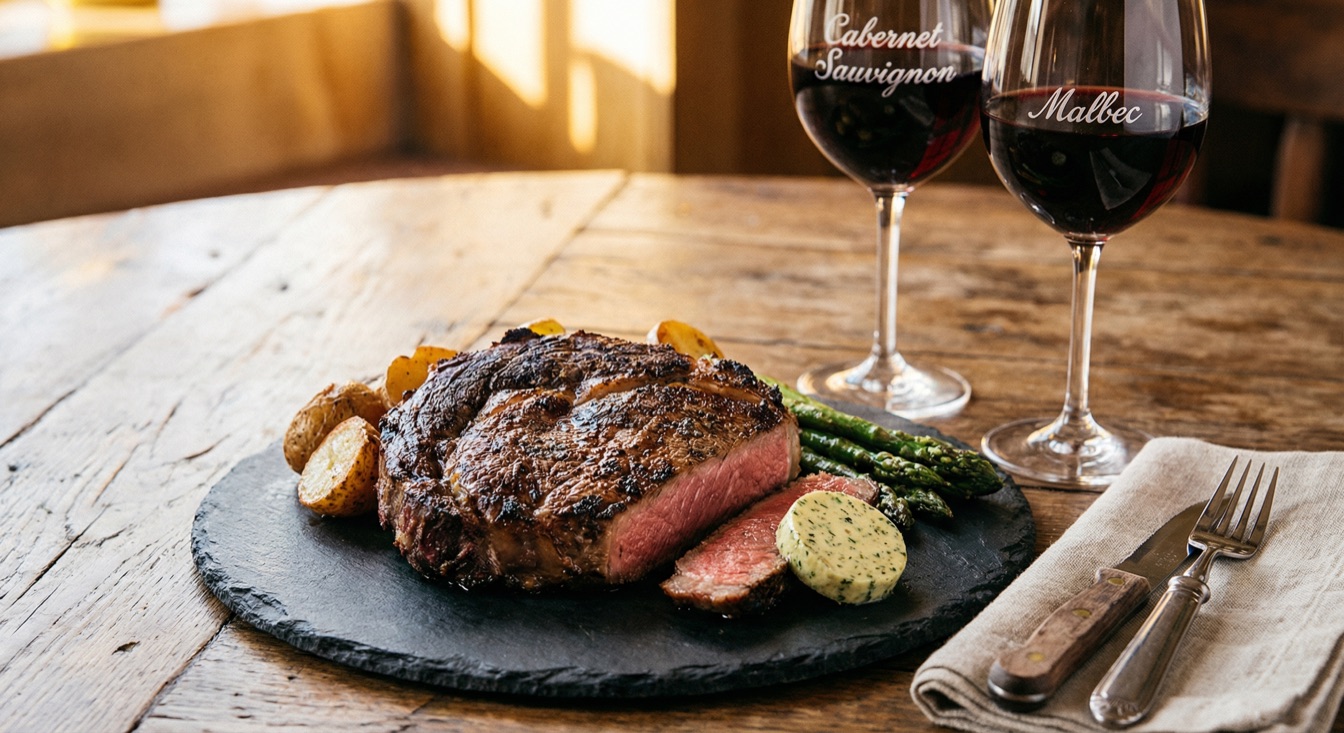
The idea that "any red wine goes with steak" is one of the most persistent myths in food and wine pairing. While it is true that red wine and beef share a natural affinity — tannins bind to proteins and fat, acidity cuts through richness — the specific pairing matters enormously. A bold Cabernet that sings alongside a marbled ribeye will bulldoze a delicate filet mignon. A light Pinot Noir that elevates tenderloin becomes invisible next to a charred tomahawk.
After testing hundreds of steak and wine combinations across every major cut, cooking method, and price point, I have built this guide from the ground up. No recycled sommelier talking points — just honest results from actual pairings that either worked brilliantly or failed memorably.
The Science Behind Steak and Red Wine
Before diving into specific pairings, understanding why red wine and steak work together will help you improvise when you do not have this guide handy.
Three mechanisms drive the pairing:
- Tannin-protein binding: Tannins in red wine are polyphenols that bind to the proteins and fats in steak. This interaction softens the wine's astringency while simultaneously cleansing your palate of residual fat. The fattier the steak, the more tannin it can absorb — which is why rich, marbled cuts pair best with bold, tannic reds.
- Acidity as a palate cleanser: Wine acidity functions like a squeeze of lemon on rich food. It cuts through the heaviness of beef fat, resetting your palate between bites and preventing flavor fatigue over a long meal.
- Umami amplification: Both aged beef and aged red wine develop glutamate compounds — the building blocks of umami. When you combine them, the umami effect multiplies rather than simply adding together, creating a depth of flavor that neither component achieves alone.
This is why the pairing has endured for centuries. The chemistry is deeply complementary.
Ribeye: Cabernet Sauvignon Is King
The ribeye is the most richly marbled of the mainstream steak cuts. That generous intramuscular fat delivers extraordinary flavor and juiciness, but it also demands a wine with enough structure to stand up to all that richness.
Why Cabernet Sauvignon works: Napa Valley Cabernet Sauvignon — or a Left Bank Bordeaux — brings firm tannins, concentrated dark fruit, and often a touch of oak-driven vanilla and cedar. Those tannins latch onto the ribeye's abundant fat, taming the wine's grip while cutting through the steak's richness. The result is a pairing where both elements improve each other.
Best picks for ribeye:
- Napa Valley Cabernet Sauvignon: The classic American pairing. Ripe cassis, structured tannins, and generous body match the ribeye's intensity pound for pound. Look for producers like Jordan, Silver Oak, or Caymus for reliable pairings.
- Pauillac or Saint-Estèphe Bordeaux: More austere and earthy than Napa Cab, these Left Bank Bordeaux offer cedar, graphite, and black currant that add complexity. Best with a dry-aged ribeye where the concentrated, nutty flavors echo the wine's earthy character.
- Barossa Valley Shiraz: If you want something bolder, Australian Shiraz brings dark fruit, black pepper, and chocolate notes with plush tannins. Excellent with a heavily seasoned or pepper-crusted ribeye.
What to avoid: Light-bodied reds like Pinot Noir or Beaujolais. The ribeye's fat content will overwhelm these wines, making them taste thin and acidic. Save them for leaner cuts.
Filet Mignon: Pinot Noir and Elegance
Filet mignon is the opposite of ribeye — supremely tender but relatively lean, with a subtle, buttery flavor. It is the most refined steak cut, and it demands a wine that matches its elegance without overshadowing its delicate character.
Why Pinot Noir works: Burgundy Pinot Noir (or premium Oregon or New Zealand Pinot) offers silky tannins, bright acidity, and complex aromatics of cherry, earth, and mushroom. These flavors complement the filet's subtlety rather than competing with it. The wine's lighter body respects the cut's lean profile.
Best picks for filet mignon:
- Burgundy (Gevrey-Chambertin, Volnay, Pommard): The benchmark. Village-level Burgundy offers enough concentration to pair with steak while maintaining the finesse that filet mignon deserves. Gevrey-Chambertin's structure works especially well.
- Willamette Valley Pinot Noir (Oregon): Earthy, with forest floor and dark cherry notes. Oregon Pinot tends to be slightly richer than Burgundy, which bridges the gap if you find French Pinot too delicate for steak.
- Central Otago Pinot Noir (New Zealand): The most fruit-forward option, with ripe cherry, plum, and a touch of spice. Excellent when the filet is served with a mushroom duxelles or truffle butter.
The bacon-wrapped exception: If your filet mignon is wrapped in bacon, the added fat changes the equation. Step up to a medium-bodied red like Merlot or a lighter Cabernet Franc to match the increased richness.
New York Strip: Malbec and Bold Reds
The New York strip sits between the ribeye and filet in terms of marbling — well-marbled enough to be flavorful and juicy, but with a firmer texture and a bolder, beefier taste. It is the everyman's steak, and it pairs with a wide range of reds.
Why Malbec works: Argentine Malbec from Mendoza is the quintessential New York strip partner. Rich dark fruit — plum, blackberry, fig — with velvety tannins and a touch of spice. Malbec has enough body to match the strip's flavor intensity without the aggressive tannins that can clash with the cut's moderate fat content.
Best picks for New York strip:
- Mendoza Malbec (Uco Valley): High-altitude Malbec from the Uco Valley offers more structure and elegance than the warmer, jammier Malbecs from Luján de Cuyo. The lifted acidity is perfect for grilled strip steak.
- Merlot (Right Bank Bordeaux): Saint-Émilion and Pomerol produce Merlot-dominant blends with plush fruit, round tannins, and complexity. An excellent pairing when the strip is pan-seared with butter.
- Zinfandel (Sonoma County): Bold, fruity, with brambly blackberry and a peppery kick. Zinfandel's fruit-forward personality pairs brilliantly with New York strips seasoned simply with salt and pepper.
Grilling tip: A New York strip cooked over charcoal develops smoky, caramelized flavors that amplify the pairing with Malbec. The charred exterior adds another layer of complexity that the wine's dark fruit embraces.
T-Bone and Porterhouse: Blends and Versatility
The T-bone and porterhouse are unique because they contain two different steaks — strip on one side, tenderloin on the other — separated by the T-shaped bone. This dual nature means you need a wine versatile enough to complement both lean and marbled meat in the same bite sequence.
Why blends work best: A wine that combines structure with finesse mirrors the T-bone's own duality. Red blends — whether Bordeaux-style, Rhône-inspired, or New World proprietary blends — bring multiple grape varieties together, each contributing different qualities that collectively match the cut's range.
Best picks for T-bone and porterhouse:
- Bordeaux blend (Médoc or Margaux): The classic choice. Cabernet Sauvignon provides structure for the strip side, while Merlot and Cabernet Franc add softness for the tenderloin. Margaux's elegance is particularly well-suited.
- Châteauneuf-du-Pape: A Grenache-dominant Southern Rhône blend with warmth, spice, and generous fruit. The wine's layered complexity mirrors the T-bone's dual-texture experience.
- Super Tuscan (Bolgheri): Italian Cabernet-Merlot blends from the Tuscan coast. Sassicaia, Ornellaia, and similar wines offer structure and Mediterranean herbs that pair beautifully with a grilled porterhouse finished with rosemary butter.
Serving strategy: With a porterhouse big enough to share, open two bottles — a structured Cabernet and a silky Pinot — and let each person match their preferred side of the steak. This is steak dinner as wine education.
Tomahawk Ribeye: Go Big or Go Home
The tomahawk is a ribeye with the entire frenched rib bone attached — a dramatic, thick-cut showpiece that demands bold treatment. At two inches or more thick, it develops an extraordinary seared crust while maintaining a rare to medium-rare center. The flavor is intensely beefy and rich.
Why big reds dominate: This is the cut for your most powerful wines. The tomahawk's size, richness, and drama call for wines that match its presence on the table.
Best picks for tomahawk:
- Amarone della Valpolicella: Italy's most powerful red — made from partially dried Corvina grapes — brings concentrated cherry, chocolate, and spice with firm tannins. Its intensity matches the tomahawk bite for bite.
- Napa Valley Cabernet (reserve or single vineyard): Step up from everyday Napa Cab to the flagship bottlings. The extra concentration, complexity, and aging potential justify the tomahawk's theatrical presentation.
- Priorat (Spain): Old-vine Garnacha and Carignan from slate soils produce wines of enormous concentration with mineral-driven complexity. A dramatic wine for a dramatic steak.
Flat Iron and Hanger Steak: Syrah and Côtes du Rhône
These butcher's cuts have surged in popularity for good reason — they deliver intense beefy flavor at a fraction of the price of premium cuts. Flat iron is remarkably tender despite its affordability, while hanger steak has a distinctive, almost livery depth of flavor.
Why Syrah works: Northern Rhône Syrah — Crozes-Hermitage, Saint-Joseph, or Cornas — shares the same dark, savory personality as these cuts. Black pepper, smoked meat, olive, and dark fruit flavors in the wine echo the steak's robust character. The pairing feels like it was designed in the same kitchen.
Best picks for flat iron and hanger:
- Crozes-Hermitage: The entry point to Northern Rhône Syrah. Peppery, meaty, with dark fruit and moderate tannins. Exceptional value that matches the democratic spirit of butcher's cuts.
- Côtes du Rhône Villages: Southern Rhône blends (Grenache, Syrah, Mourvèdre) at accessible price points. Warm, spicy, and food-friendly — perfect for weeknight flat iron steak.
- Washington State Syrah (Walla Walla): American Syrah with dark fruit, smoke, and savory complexity. A bridge between the elegance of French Syrah and the power of Australian Shiraz.
Marination matters: If you marinate the hanger steak (soy sauce, garlic, herbs), the additional umami compounds intensify the synergy with Syrah's naturally savory character. This is one of the best value pairings in the entire steak and wine universe.
Wagyu and A5 Wagyu: Rethink Everything
Japanese A5 wagyu — and to a lesser extent, domestic wagyu — breaks all the conventional rules. The extreme marbling (BMS 8-12) means the steak is more fat than muscle. It is eaten in small portions, almost like forage gras. Standard steak pairing logic does not apply.
Why conventional big reds fail: A5 wagyu's overwhelming richness and buttery texture clash with heavily tannic wines. Instead of tannins cutting through the fat, the pairing becomes exhausting — too much intensity from both sides with no relief.
Best picks for wagyu:
- Burgundy Grand Cru (Chambolle-Musigny, Vosne-Romanée): The acidity and ethereal aromatics of top Burgundy slice through wagyu's richness while the delicate flavors harmonize with the beef's buttery sweetness. This is the connoisseur's pairing.
- Barolo: High acidity and firm tannins in Nebbiolo act as a palate cleanser between bites of rich wagyu. The wine's complexity rewards the slow, contemplative pace that A5 wagyu demands.
- Champagne (Blanc de Noirs): Not technically a red wine, but Blanc de Noirs Champagne — made from Pinot Noir — is perhaps the single best pairing with A5 wagyu. The bubbles and acidity cut through the fat like nothing else, while the toasty, brioche notes complement the beef's richness.
Portion awareness: You will eat 3-4 ounces of A5 wagyu, not a 16-ounce steak. Match your wine pour accordingly — this is a tasting experience, not a feast.
How Cooking Method Changes the Pairing
The same cut of steak pairs differently depending on how it is cooked. Cooking method affects surface char, fat rendering, and flavor compounds — all of which interact with wine.
- Grilled over charcoal: Smoky, charred flavors pair best with wines that have their own smokiness — oaked Cabernet, Syrah, or Tempranillo. The char creates a bridge between food and wine.
- Pan-seared with butter: The butter basting adds richness and nuttiness. Lean into wines with round tannins and complementary richness — Merlot, Malbec, or oaked Chardonnay (if going white).
- Reverse seared: This method produces the most even cook with a thin, crispy crust. The clean flavor profile lets the wine shine — a good moment for your best bottle, regardless of variety.
- Sous vide and seared: Similar to reverse sear but with even more precision. The ultra-consistent texture pairs well with balanced, elegant wines — Burgundy, Margaux, or premium Merlot.
- Broiled: Intense, direct heat creates aggressive Maillard reactions. Pair with fruit-forward reds that can match the intensity — Zinfandel, Australian Shiraz, or Primitivo.
The Temperature Factor
Wine serving temperature dramatically affects how it pairs with steak. Too warm and the alcohol becomes aggressive; too cold and the tannins become harsh and the fruit disappears.
- Full-bodied reds (Cabernet, Shiraz, Malbec): Serve at 62-65°F (17-18°C). Slightly below "room temperature" — 15 minutes in the fridge after sitting out takes the edge off.
- Medium-bodied reds (Merlot, Syrah, Tempranillo): Serve at 60-63°F (16-17°C). A touch cooler to let the acidity and fruit shine.
- Light-bodied reds (Pinot Noir, Gamay): Serve at 55-60°F (13-16°C). Cooler temperatures preserve the delicate aromatics that make these wines special with leaner cuts.
Practical tip: Put your red wine in the fridge for 20 minutes before serving with steak. Most home "room temperatures" are 72-75°F — far too warm for any red wine. A slight chill makes a dramatic difference in how the wine interacts with the steak.
Building the Perfect Steak and Wine Dinner
If you are planning a steak dinner party and want to showcase multiple pairings, structure the evening like a tasting menu — progressing from lighter to heavier:
- Appetizer: Steak tartare with a chilled Beaujolais Cru (Morgon or Moulin-à-Vent)
- Second course: Seared filet mignon medallions with Burgundy Pinot Noir
- Main course: Grilled ribeye with Napa Cabernet Sauvignon
- Finale: A5 wagyu tasting bites with aged Barolo
This progression tells a story — from delicate to bold, from lean to rich — and lets your guests experience firsthand why specific pairings work better than generic "red wine with steak" advice.
Quick Reference: Every Cut Matched
For easy reference, here is the complete pairing matrix:
- Ribeye → Cabernet Sauvignon, Barossa Shiraz, Pauillac Bordeaux
- Filet Mignon → Pinot Noir (Burgundy, Oregon, Central Otago)
- New York Strip → Malbec, Merlot, Zinfandel
- T-Bone / Porterhouse → Bordeaux blends, Châteauneuf-du-Pape, Super Tuscan
- Tomahawk → Amarone, Reserve Cabernet, Priorat
- Flat Iron / Hanger → Syrah, Côtes du Rhône, Washington Syrah
- Wagyu / A5 → Burgundy Grand Cru, Barolo, Blanc de Noirs Champagne
- Skirt / Flank → Tempranillo, Garnacha, Côtes du Rhône
Print this list, stick it on your fridge, and never second-guess a steak night wine choice again.
Frequently Asked Questions
What is the best overall red wine to pair with steak?
Cabernet Sauvignon is the most versatile red wine for steak because its firm tannins and concentrated fruit complement the widest range of cuts and cooking methods. Napa Valley Cabernet is the classic choice, but Left Bank Bordeaux offers a more elegant alternative. For leaner cuts like filet mignon, switch to Pinot Noir.
Why does red wine pair better with steak than white wine?
Red wine contains tannins — polyphenolic compounds from grape skins — that bind to the proteins and fats in steak. This interaction softens the wine astringency while cleansing your palate of residual beef fat. White wines lack significant tannins, so they cannot provide this palate-cleansing effect with rich, fatty steaks.
What red wine goes with filet mignon?
Pinot Noir is the ideal match for filet mignon. The cut is lean and delicate, so it needs a wine with silky tannins and bright acidity rather than a heavy, tannic red. Burgundy Pinot Noir from Gevrey-Chambertin or Volnay is the benchmark, but Oregon Willamette Valley and New Zealand Central Otago are excellent alternatives.
Can you pair red wine with wagyu steak?
Yes, but avoid big tannic reds like Cabernet Sauvignon. A5 wagyu is extremely rich and fatty, so it pairs best with high-acidity wines that cut through the richness — Burgundy Grand Cru Pinot Noir, Barolo, or even Blanc de Noirs Champagne. The key is acidity, not tannin power.
Does the cooking method affect which wine to pair with steak?
Absolutely. Grilled steaks develop smoky char that pairs well with oaked Cabernet or Syrah. Pan-seared steaks with butter pair better with rounder wines like Merlot or Malbec. Reverse-seared steaks have cleaner flavors that let elegant wines like Burgundy or Margaux shine.
What temperature should red wine be served with steak?
Full-bodied reds like Cabernet and Shiraz should be served at 62-65°F, medium-bodied reds at 60-63°F, and light reds like Pinot Noir at 55-60°F. Most homes are too warm — put your red wine in the fridge for 20 minutes before serving to improve the pairing dramatically.
More Pairing Guides
Best Bourbon for Pork Ribs vs Beef Ribs: Complete Pairing Guide
Pork ribs and beef ribs aren't interchangeable when it comes to bourbon pairing. Fat content, smoke intensity, and flavor depth determine which bottle works best. Here's the complete breakdown.
12 min readBest Bourbon for BBQ Ribs: 7 Perfect Pairings (Tasted & Ranked)
Not every bourbon works with every style of ribs. Here are 7 bourbon pairings ranked by rib type, sauce style, and smoke profile — with specific bottles tested against real BBQ.
10 min readBest Wine with Tri-Tip: Expert Pairing Guide
Tri-tip demands wines with enough structure to match its intensity while complementing its smoky, savory profile.