Best Sake for Wagyu Beef: A Complete Pairing Guide
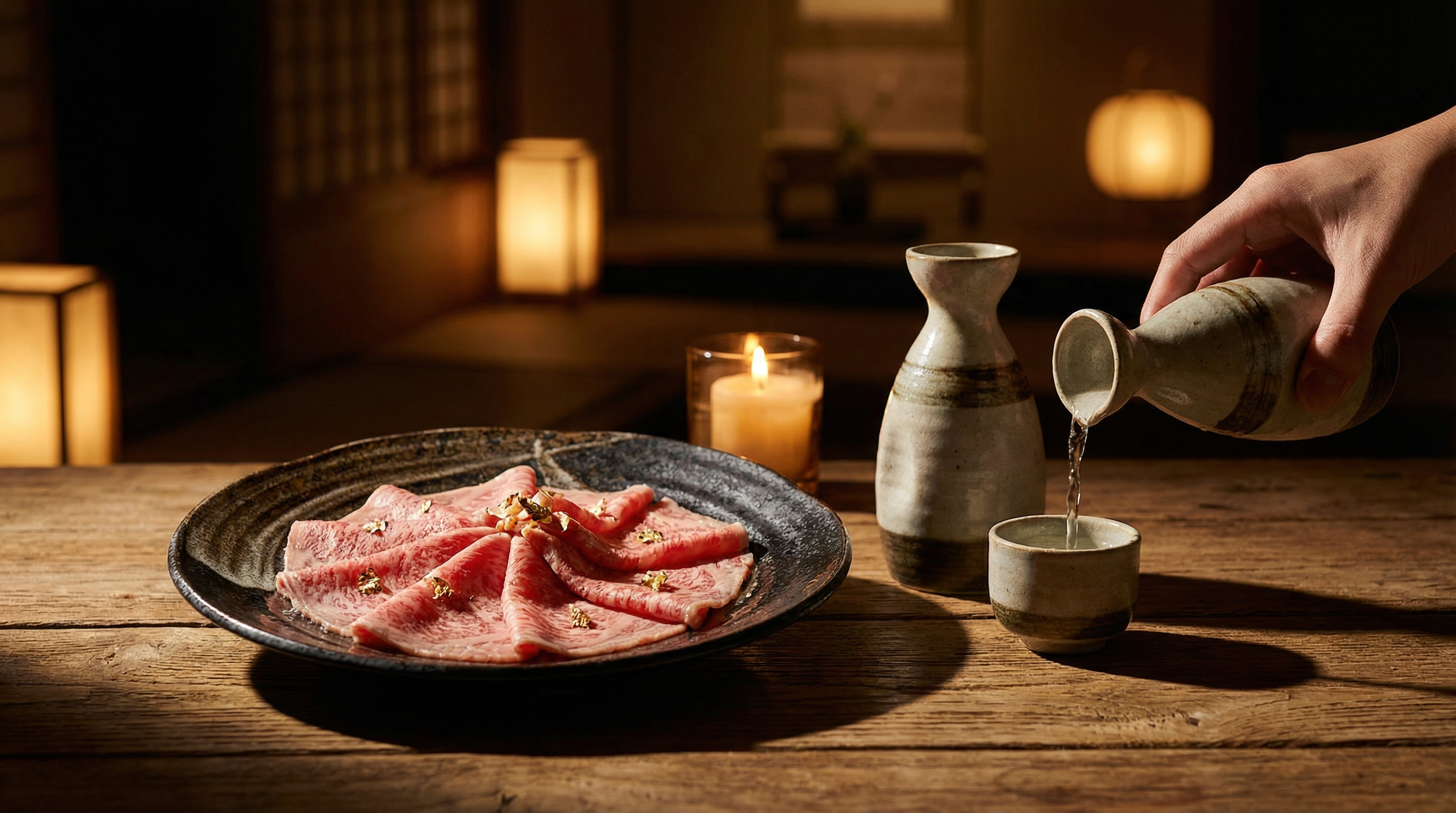
When it comes to pairing beverages with wagyu beef, wine gets all the attention. Sommeliers debate Burgundy versus Barolo, Cabernet versus Syrah — but they're overlooking the drink that has accompanied wagyu for centuries. Sake isn't just an alternative to wine. For many wagyu preparations, it's the superior choice.
The logic is straightforward. Wagyu beef originated in Japan. Sake originated in Japan. They evolved together on the same tables, in the same culinary tradition, shaped by the same philosophy of balance and umami. That shared heritage translates into pairings that feel effortless — where wine sometimes fights wagyu's richness, sake works with it.
This guide breaks down exactly which sake styles work with which wagyu preparations, from a raw A5 sashimi course to a thick-seared American wagyu ribeye. No generic advice — specific bottles, serving temperatures, and the flavor science behind each pairing.
Why Sake Pairs Better With Wagyu Than Wine
The case for sake over wine with wagyu comes down to three structural advantages that are rooted in chemistry, not tradition alone.
Umami amplification. Sake contains high levels of amino acids — particularly glutamic acid and succinic acid — that directly amplify the umami already present in wagyu beef. Wine contains some umami compounds, but sake has roughly 10 times the amino acid concentration of most wines. When you sip junmai sake alongside a bite of A5 wagyu, the umami doesn't just add — it multiplies. Each makes the other taste more intensely savory.
No tannin interference. Red wine's tannins bind with fat, which can create a drying, astringent sensation when paired with heavily marbled beef. Sake contains zero tannins. This means the rendered fat from wagyu glides across your palate without any chemical interference, preserving the silky mouthfeel that makes wagyu special. You taste the beef as it was meant to be tasted.
Flexible serving temperature. Wine is served within a narrow temperature range. Sake can be served anywhere from ice-cold (5°C) to piping hot (55°C), and each temperature creates a fundamentally different pairing experience. Cold sake sharpens and cleanses. Warm sake rounds and envelops. This flexibility lets you match the sake temperature to the wagyu preparation — something wine simply cannot do.
There's also a textural argument. Premium sake has a viscous, almost oily quality that mirrors the mouthfeel of rendered wagyu fat. Where a crisp Sauvignon Blanc creates contrast, sake creates harmony. Both approaches are valid, but harmony is what Japanese cuisine has perfected over centuries.
Understanding Sake Styles for Pairing
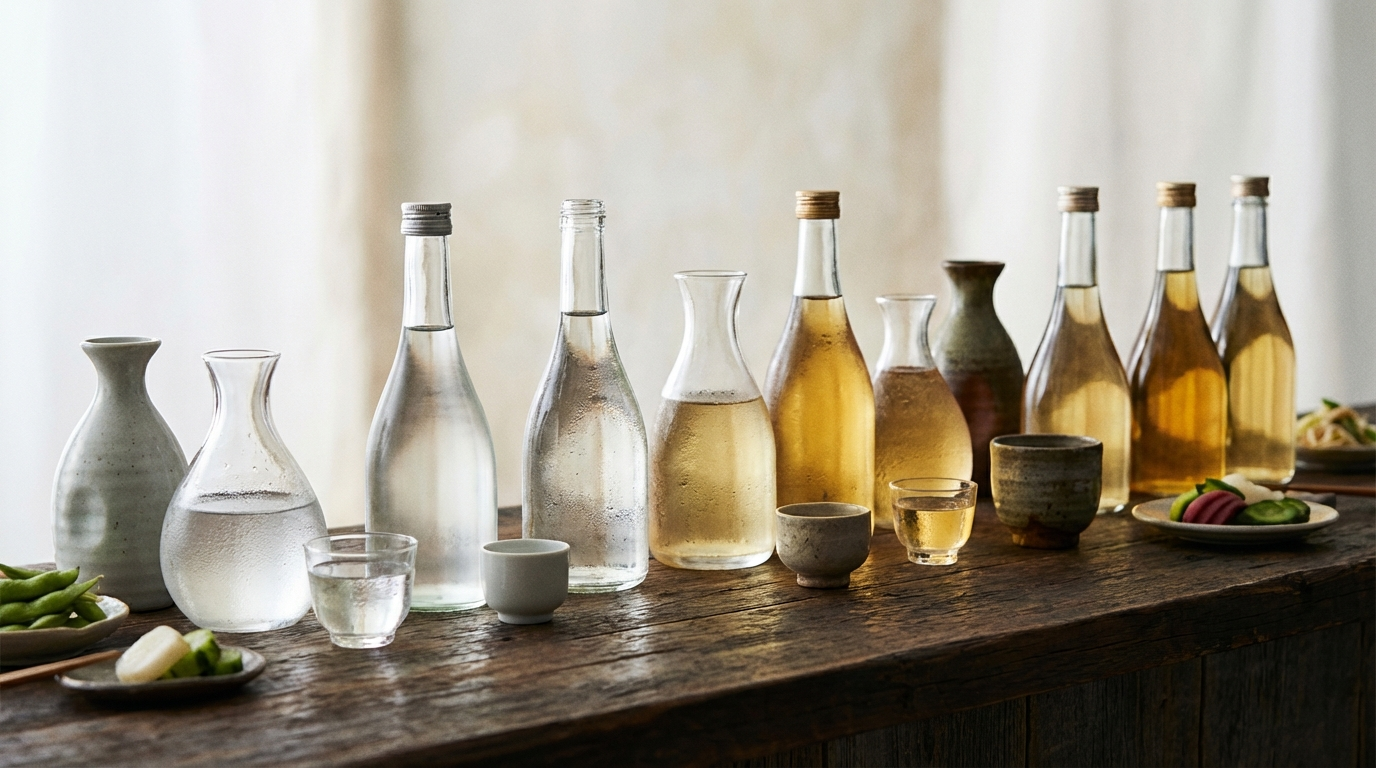
Before matching sake to wagyu, you need to understand the four major sake categories and what makes each one tick in a pairing context.
Junmai Daiginjo is the most refined style. The rice is polished to at least 50% of its original size, removing proteins and fats that create heavier flavors. The result is elegant, aromatic, and fruity — think melon, pear, and white flower notes. Serve it chilled (8–12°C). This is your pairing for delicate wagyu preparations where you want the beef's subtle sweetness to shine.
Junmai Ginjo sits one step below in polishing (at least 40% removed) but one step above in versatility. It retains more rice character than daiginjo while still offering clean aromatics. Slightly fuller body makes it a bridge between delicate and robust preparations. Serve chilled to slightly cool (10–15°C).
Junmai is pure rice sake with no minimum polishing requirement. It tends to be fuller-bodied, earthier, and richer than ginjo styles, with pronounced umami and acidity. This is the workhorse pairing sake — it can handle seared wagyu, grilled preparations, and richer sauces. Serve at room temperature or warm (15–45°C).
Tokubetsu Junmai is a "special" junmai, typically using premium rice or unusual techniques. It often splits the difference between junmai and ginjo — more polished than standard junmai but with more body than ginjo. An excellent all-purpose wagyu sake.
One critical rule: for wagyu pairing, stick to junmai (pure rice) styles. Sake labeled "honjozo" or without the junmai designation has added distilled alcohol, which can create a sharper finish that clashes with wagyu's delicate fat.
Best Sake for A5 Japanese Wagyu
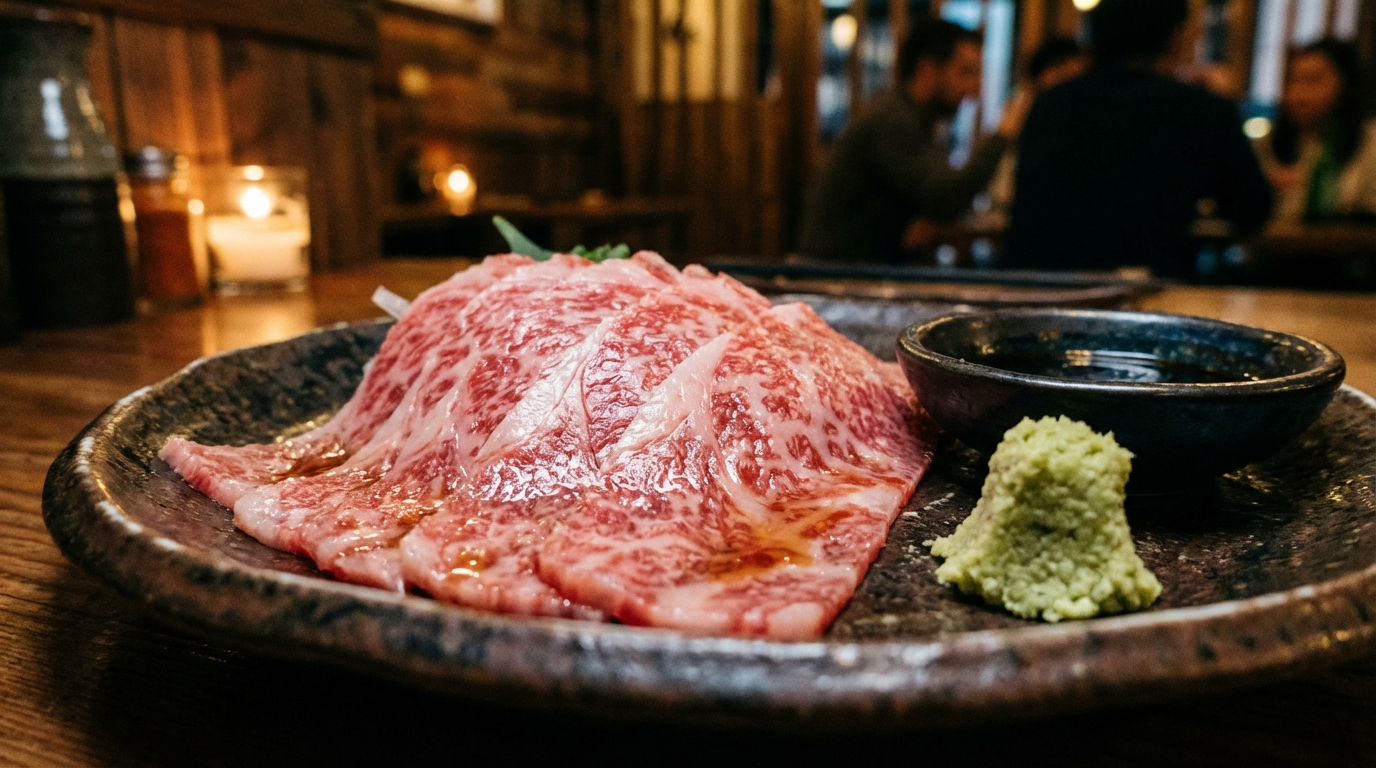
A5 Japanese wagyu is the most marbled, most delicate, and most expensive beef on earth. The wrong beverage can ruin a $200 steak in a single sip. This is where sake pairing becomes critical — and where sake's advantage over wine is most pronounced.
For A5 wagyu sashimi or tataki: Junmai daiginjo, served chilled at 8–10°C. The preparation is barely cooked — sometimes raw — so the sake needs to be equally refined. Look for daiginjo with pronounced fruit aromatics (Dassai 23 is a classic choice) that complement the beef's natural sweetness without adding any weight. The cold temperature provides a clean palate reset between bites of extraordinarily rich beef.
For A5 wagyu yakiniku (thin-grilled slices): Junmai ginjo, served cool at 12–15°C. Yakiniku introduces caramelization and smoky char, which needs slightly more body in the sake. A ginjo with stone fruit notes (peach, apricot) bridges the gap between the raw beef's sweetness and the grilled exterior's savory complexity. Kubota Manju works beautifully here.
For A5 wagyu sukiyaki or shabu-shabu: Tokubetsu junmai, served at room temperature (18–20°C). These hot-pot preparations involve soy sauce, sugar, mirin, and dashi — bold flavors that would flatten a delicate daiginjo. You need sake with enough body and umami to stand alongside these rich broths. The room temperature serving lets the sake's fuller flavors emerge without the sharpness of chilling.
The common thread: as the preparation gets more assertive, the sake gets richer and warmer. This is the fundamental principle of sake-wagyu pairing.
Best Sake for American Wagyu
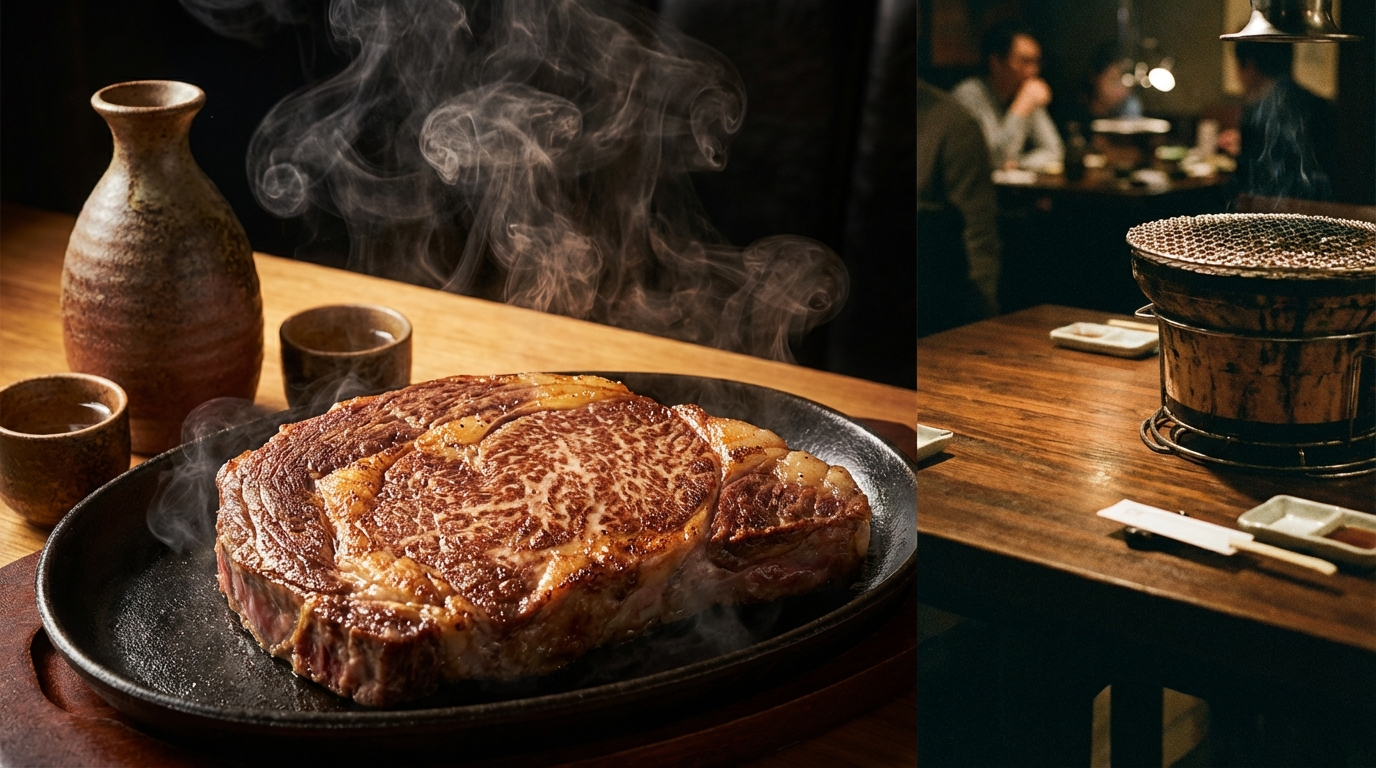
American wagyu is a different animal from its Japanese counterpart — literally. Crossbred from Japanese genetics and American cattle, it produces beef that's more intensely beefy, less delicate, and typically cooked to higher temperatures. The sake pairings shift accordingly.
For seared American wagyu ribeye or strip: Junmai, served warm at 40–45°C. A thick-seared American wagyu steak is bold, beefy, and rich. It needs sake that can match that intensity. Warming junmai sake brings out its earthy, grain-forward character and creates a soothing contrast with the heavily crusted exterior. The warmth also stimulates your palate to perceive more umami — exactly what you want alongside deeply savory beef. Hakkaisan Tokubetsu Junmai is an excellent choice here.
For American wagyu burgers: Junmai served at room temperature or slightly warm. A wagyu burger is casual and rich, so the sake should follow suit. Avoid anything too refined — a straightforward junmai with good acidity cuts through the fat of a well-marbled patty. If you're adding toppings like aged cheddar or caramelized onions, lean toward a slightly warmer serving temperature.
For American wagyu brisket (smoked): Aged junmai (koshu), served at room temperature. Smoked brisket introduces an entirely different flavor dimension — wood smoke, bark spice, rendered collagen. Aged sake develops sherry-like oxidative notes and deeper caramel flavors that complement smoke without competing. This is one of the most surprising and rewarding sake pairings you can try.
Sake Temperature and Wagyu: The Complete Chart
Temperature is the most powerful and most overlooked variable in sake-wagyu pairing. The same bottle of sake creates fundamentally different experiences at different temperatures. Here's a reference chart for matching sake temperature to wagyu preparation:
Ice-cold (5–8°C) — "Reishu": Best for raw or barely seared A5 wagyu. The cold sharpens sake's acidity and suppresses its sweetness, creating maximum palate-cleansing effect. Use with preparations where wagyu fat is unrendered and intensely rich on the tongue.
Chilled (8–12°C) — "Suzuhie": The sweet spot for junmai daiginjo with lightly cooked wagyu. Cool enough to cleanse but warm enough for aromatics to express. Ideal for A5 tataki, carpaccio, or lightly seared preparations.
Room temperature (15–20°C) — "Hiya": The versatile middle ground. Sake's full flavor profile emerges — sweetness, umami, acidity in balance. Best for medium-richness preparations: yakiniku, sukiyaki, or moderately seared wagyu.
Warm (35–40°C) — "Nurukan": Gentle warmth opens up junmai's earthy complexity. Fat from wagyu feels lighter against warm sake. Excellent with seared American wagyu steaks or any preparation with bold seasoning.
Hot (45–55°C) — "Atsukan": Intensifies umami and grain character dramatically. Cuts through the richest preparations — heavily marbled brisket, fatty short ribs, or wagyu in rich sauces. A bold choice that rewards bold beef.
A practical tip: when in doubt, start cooler and let the sake warm in your cup. You'll find the sweet spot naturally as you eat.
Building a Wagyu and Sake Dinner Menu
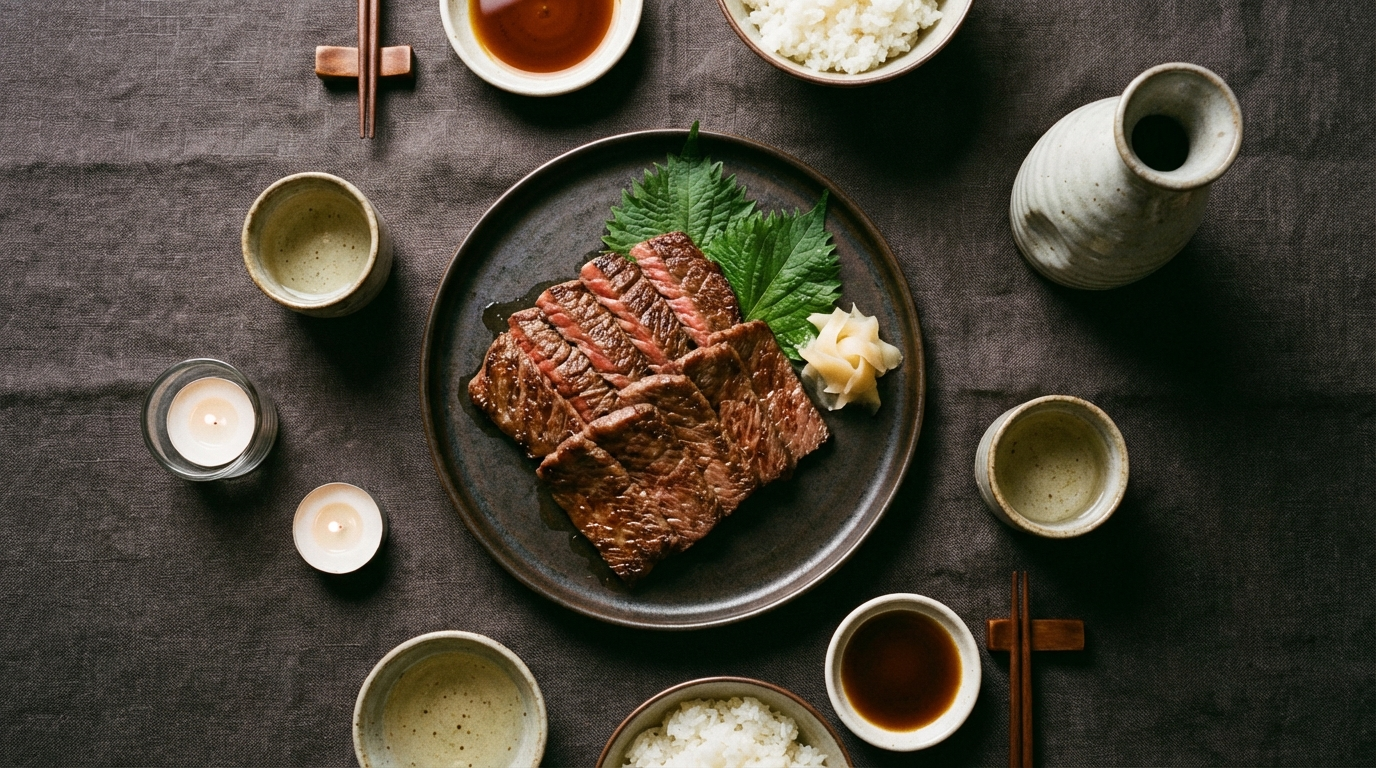
The ultimate wagyu-sake experience is a progressive dinner that moves from light to rich, cold to warm — mirroring the traditional kaiseki philosophy of building intensity throughout a meal.
Course 1: Wagyu tataki with ponzu. Pair with junmai daiginjo, chilled to 10°C. The seared-outside, raw-inside preparation is delicate and bright. Daiginjo's floral aromatics complement the citrus ponzu while the cold temperature cleanses the rich fat.
Course 2: Wagyu yakiniku with sea salt. Pair with junmai ginjo, cool at 15°C. Thin-grilled slices with simple seasoning let the beef speak. The ginjo has enough body to match the caramelized exterior while still being aromatic enough for the barely-cooked interior.
Course 3: Seared wagyu ribeye with wasabi. Pair with tokubetsu junmai, room temperature. The main event — a thick steak with heavy sear. Room-temperature junmai provides full umami impact and enough body to match the richest course. Wasabi's heat bridges the sake and beef beautifully.
Course 4: Wagyu sukiyaki. Pair with junmai, warmed to 40°C. The sweet-savory broth demands warm sake with earthy depth. This closing course wraps the meal in comfort — warm beef, warm broth, warm sake. Every element harmonizes.
This progression — cold and light to warm and rich — keeps each course feeling fresh and exciting. Guests never fatigue from richness because each sake pairing resets and recalibrates their palate. It's how wagyu was meant to be experienced.
Common Mistakes to Avoid
Serving premium daiginjo warm. Heating destroys the delicate aromatics that make daiginjo special. Reserve daiginjo for chilled service only. If you want warm sake with wagyu, use junmai — it's designed to perform at elevated temperatures.
Pairing sparkling sake with heavy wagyu. Sparkling sake (happo-shu) has light carbonation that works with lighter fare, but it lacks the body and umami concentration needed for rich wagyu. Save it for appetizers, not the main course.
Ignoring the sauce. If your wagyu comes with a bold sauce — teriyaki glaze, red wine reduction, miso butter — the sauce drives the pairing, not the beef alone. Rich sauces demand fuller sake at warmer temperatures.
Choosing sake by price alone. A $200 daiginjo is not automatically better with wagyu than a $30 junmai. The right style and temperature matter far more than the price tag. An inexpensive but well-chosen junmai served at the right temperature will outperform a mismatched premium bottle every time.
Serving too much. Sake is typically 15–17% alcohol — higher than wine. Keep pours small (2–3 oz) and pace yourself through a multi-course wagyu meal. The goal is pairing, not quantity. Small sips between bites maximize the flavor interaction.
Where to Start: Three Bottles for Every Budget
If you're new to sake-wagyu pairing, these three bottles will cover every preparation you're likely to encounter:
Entry ($15–25): Hakkaisan Tokubetsu Junmai. Clean, balanced, and versatile. Works with seared American wagyu at room temperature or warmed. This is the bottle that convinces skeptics that sake belongs with steak.
Mid-range ($30–50): Kubota Manju Junmai Daiginjo. Elegant and aromatic with exceptional balance. Serve chilled with A5 wagyu sashimi or tataki. The melon and pear notes create a transcendent pairing with barely-cooked Japanese wagyu.
Special occasion ($60–100): Dassai 23 Junmai Daiginjo. Rice polished to 23% of its original size — among the most refined sake made. The purity and complexity match the occasion of opening A5 wagyu. Serve it at exactly 10°C and let both the sake and the beef do the talking.
Start with the Hakkaisan alongside your next wagyu dinner. Once you experience how sake's umami amplifies wagyu's richness — without the tannin interference of red wine — you may never go back to Cabernet with your best beef.
Frequently Asked Questions
What type of sake goes best with wagyu beef?
Junmai styles pair best with wagyu because they contain no added alcohol and offer higher umami amino acid content. For delicate A5 wagyu, choose junmai daiginjo served chilled. For seared American wagyu steaks, choose junmai served warm at 40–45°C. The preparation dictates the sake style.
Should sake be served warm or cold with wagyu?
It depends on the wagyu preparation. Raw or lightly seared A5 wagyu pairs best with chilled sake (8–12°C) for palate cleansing. Seared steaks and rich preparations pair better with warm sake (35–45°C) that matches the richness. Start cooler and let it warm naturally to find your preference.
Is sake better than wine with wagyu beef?
Sake has structural advantages over wine for wagyu pairing: 10× higher amino acid content amplifies umami, zero tannins preserve wagyu's silky mouthfeel, and flexible serving temperatures let you match any preparation. Wine works too, but sake creates harmony rather than contrast with wagyu's unique fat profile.
What sake pairs with A5 wagyu sashimi?
Junmai daiginjo served chilled at 8–10°C is the ideal pairing for A5 wagyu sashimi. Its refined, fruity aromatics complement the beef's natural sweetness without adding weight. Dassai 23 and Kubota Manju are excellent specific choices for this pairing.
How much sake should you serve per person with wagyu?
Plan for 2–3 oz pours per course, roughly 6–10 oz total per person across a multi-course wagyu dinner. Sake is 15–17% alcohol, higher than wine, so smaller pours allow better flavor interaction and pacing. Quality of the pairing improves with smaller, more frequent sips between bites.
More Pairing Guides
Best Bourbon for Pork Ribs vs Beef Ribs: Complete Pairing Guide
Pork ribs and beef ribs aren't interchangeable when it comes to bourbon pairing. Fat content, smoke intensity, and flavor depth determine which bottle works best. Here's the complete breakdown.
12 min readBest Bourbon for BBQ Ribs: 7 Perfect Pairings (Tasted & Ranked)
Not every bourbon works with every style of ribs. Here are 7 bourbon pairings ranked by rib type, sauce style, and smoke profile — with specific bottles tested against real BBQ.
10 min readBest Wine with Tri-Tip: Expert Pairing Guide
Tri-tip demands wines with enough structure to match its intensity while complementing its smoky, savory profile.