Best Scotch for Steak: A Complete Pairing Guide by Region and Cut
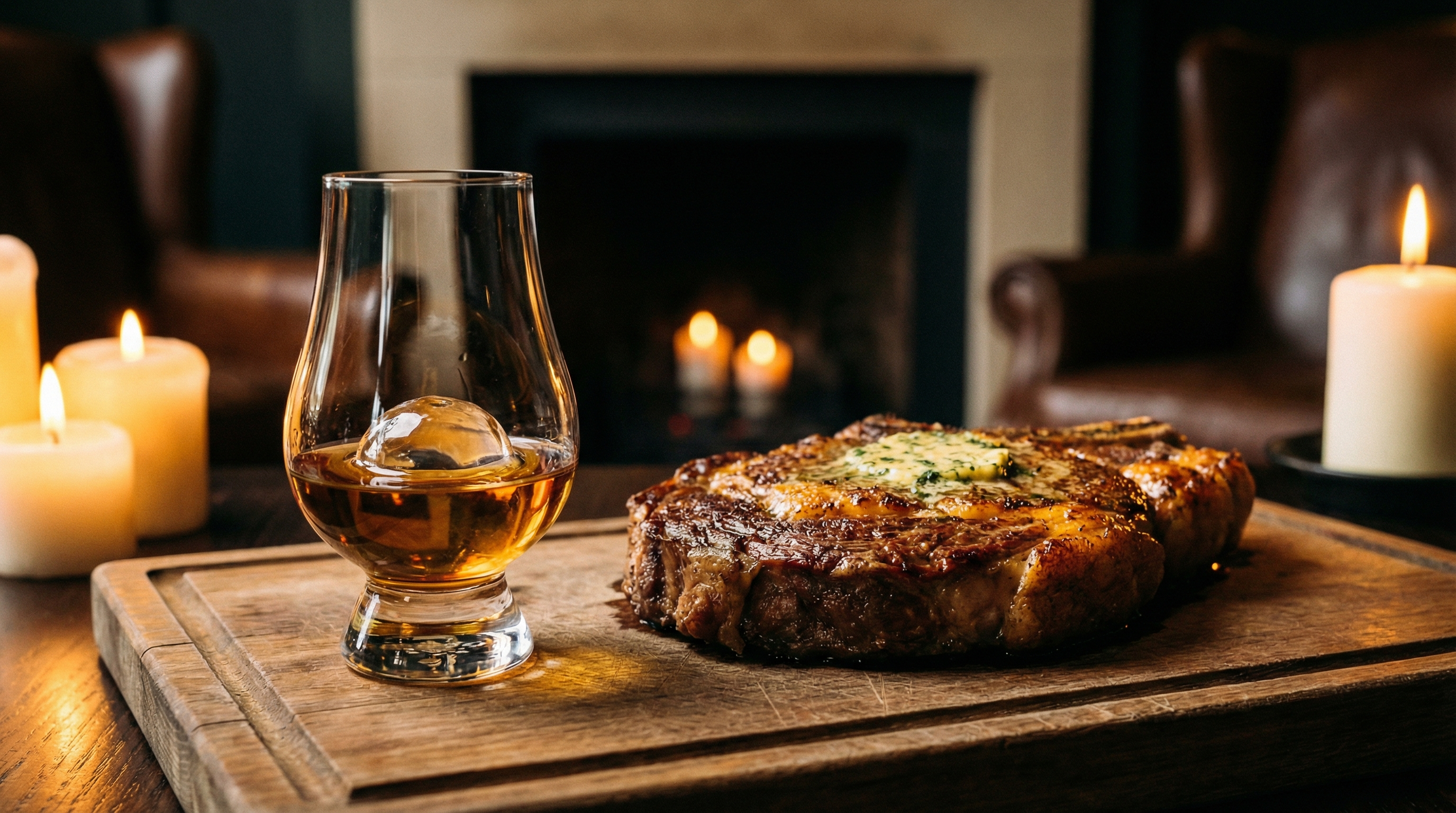
Bourbon gets the American steakhouse spotlight. Wine dominates the fine dining conversation. But scotch whisky — with its centuries of tradition, regional diversity, and extraordinary flavor complexity — might be the most versatile and rewarding spirit you can pour alongside a great steak.
The secret is in the shared chemistry. Scotch ages in oak barrels that impart the same vanilla, caramel, and toffee compounds you find in a properly seared crust. Peated malts carry smoke that mirrors charcoal grilling. And the barley-derived sweetness in every dram creates a bridge to beef's natural umami richness.
This guide breaks down exactly which scotch regions and expressions pair best with which cuts, why the flavor science works, and how to build a steak dinner around Scotland's national spirit.
Why Scotch and Steak Are Natural Partners
Shared Oak Chemistry
Most scotch matures in ex-bourbon or ex-sherry casks. Those barrels impart vanillin, lactones, eugenol, and tannins — the same family of flavor compounds created when beef proteins undergo the Maillard reaction during high-heat searing. When you sip scotch alongside a charred steak, you're layering complementary molecules. The pairing feels natural because the chemistry literally overlaps.
Smoke Bridges to Char
Peated scotch gets its smokiness from phenolic compounds — guaiacol, cresol, and syringol among them. These are the same molecules produced when wood burns during grilling or smoking. A peated Islay malt alongside a charcoal-grilled steak creates a unified smoke experience that wraps around the palate rather than competing.
Malt Sweetness Meets Umami
Malted barley contributes a gentle sweetness and cereal complexity to scotch. This doesn't clash with beef — it complements it. The sweetness acts like a flavor enhancer, the same way a touch of sugar in a marinade amplifies meat's savory depth. Unpeated Highland and Speyside malts excel here, their honeyed profiles bringing out beef's natural richness.
Alcohol as Palate Cleanser
At 40–46% ABV, scotch cuts through beef fat far more effectively than wine or beer. A measured sip between bites dissolves the fatty coating on your tongue, resetting your palate for the next bite. This is especially valuable with heavily marbled cuts like ribeye or wagyu, where fat buildup can dull your taste buds.
Scotch Regions Explained for Steak Lovers
Scotland's whisky regions produce dramatically different flavor profiles. Understanding these is the key to matching scotch with steak:
Speyside: The largest whisky-producing region, known for elegant, fruity, honeyed malts. Think apple, pear, vanilla, toffee, and gentle spice. These are smooth, approachable whiskies that complement rather than dominate. Best for lighter cuts and delicate preparations.
Highland: The most geographically diverse region, producing everything from light and floral to rich and full-bodied. Northern Highlands tend toward heather and spice. Eastern Highlands lean fruity. Western Highlands can carry maritime salt and smoke. This range gives you options for nearly any steak.
Islay: The island famous for intensely peated, smoky whiskies with maritime character — brine, iodine, seaweed alongside campfire smoke. These bold, assertive malts demand equally bold food. Perfect for heavily charred, thick-cut steaks.
Lowland: Gentle, grassy, light-bodied whiskies with citrus and floral notes. The most delicate scotch style. Best as an aperitif or alongside very lightly seasoned preparations.
Campbeltown: A tiny region producing complex malts with brine, fruit, smoke, and funk. Versatile and often underrated for food pairing.
Islands (non-Islay): Malts from Skye, Mull, Jura, and others. Generally carry some maritime character and light smoke, sitting between Highland and Islay in intensity. Excellent middle-ground options for steak pairing.
Best Scotch for Every Steak Cut
Ribeye → Islay or Sherried Highland
The ribeye's abundant marbling and rich, buttery flavor need a scotch with enough body and assertiveness to stand alongside it without being bulldozed. This is where Islay's peat monsters and sherry-bomb Highlands shine.
Why it works: The ribeye's fat content demands a whisky that can cut through richness. Islay's smoky phenols and maritime brine slice through marbling like acid in a vinaigrette. Meanwhile, sherried Highlands bring dried fruit sweetness that mirrors the caramelized fat cap. Both styles have enough weight to match the steak's intensity.
Top Islay picks: Lagavulin 16 (smoke plus sherry sweetness — the classic), Ardbeg Uigeadail (intense peat meets rich sherry), Laphroaig Quarter Cask (aggressive smoke with coconut and vanilla). For a lighter touch, Caol Ila 12 delivers smoke with elegance.
Top Highland picks: GlenDronach 18 Allardice (dark sherry bomb — plums, chocolate, spice), Aberlour A'bunadh (cask strength sherry — massive flavor), Dalmore 15 (orange marmalade, chocolate, gentle spice).
How to serve: Neat, or with 3–5 drops of water to open up the flavors. Cask-strength expressions like A'bunadh benefit from dilution. Serve at room temperature. Sip slowly between bites — let the smoke or sherry linger before your next piece of meat.
Filet Mignon → Speyside
The filet's tender, mild character requires a scotch that enhances without overwhelming. Speyside's elegant, honeyed malts are built for exactly this kind of pairing.
Why it works: Filet mignon is all about subtlety — clean beef flavor, buttery texture, minimal fat. Speyside scotch mirrors these qualities with its smooth, approachable profile. The honeyed sweetness amplifies the filet's delicate flavors, while gentle vanilla and toffee notes add warmth without competing. There's no smoke or peat to mask the meat's nuance.
Top picks: Macallan 12 Double Cask (vanilla, honey, gentle oak — the most classic pairing), Glenfiddich 18 (rich fruit and toffee with remarkable balance), Balvenie 14 Caribbean Cask (rum cask finish adds tropical sweetness that surprises alongside filet), Glenlivet 18 (orange blossom, spice, elegant structure).
How to serve: Neat in a Glencairn glass. These expressions are balanced enough to drink without water. If you prefer a lighter experience, a single large ice cube works — the slow dilution opens up Speyside's fruit notes over the course of the meal.
New York Strip → Highland
The strip steak sits in the sweet spot — bold beefy flavor with moderate fat, enough character to handle assertive scotch but not so rich that it demands peat. Highland malts, with their incredible range, match this versatility perfectly.
Why it works: Highlands produce scotch that balances fruit, spice, malt, and sometimes light smoke — exactly the complexity you want alongside a New York strip's straightforward beefiness. The whisky adds layers without fighting the steak. A well-seasoned strip with a good char develops caramel and pepper notes that Highland malts echo naturally.
Top picks: Oban 14 (maritime salt, honey, gentle smoke — the perfect steak whisky), Highland Park 18 (heather, smoke, dried fruit, sherry — extraordinary complexity), Glenmorangie Quinta Ruban (port cask finish brings dark chocolate and mint), Clynelish 14 (waxy, coastal, honeyed — underrated and outstanding).
How to serve: Neat or with a few drops of water. Highland Park and Oban particularly benefit from a splash — it brings the maritime and honey notes forward. Room temperature, Glencairn glass.
T-Bone or Porterhouse → Island Malt
The T-bone gives you two cuts in one — strip on one side, tenderloin on the other. You need a scotch that can handle both personalities. Island malts from Skye, Jura, or Orkney provide the perfect middle ground between Speyside's gentleness and Islay's intensity.
Why it works: Island scotches carry enough smoke and maritime character to match the strip side's boldness, but enough fruit and malt sweetness to complement the tender filet side. The brine in many island malts also acts as a flavor enhancer for beef, the same way a finishing salt brightens a steak.
Top picks: Talisker 10 (black pepper, smoke, sea spray — made for steak), Highland Park 12 (heather smoke, honey, balance), Jura 18 (dark chocolate, spice, gentle peat), Tobermory 12 (citrus, maritime, unpeated option from Mull).
How to serve: Talisker demands a few drops of water — it opens the pepper and smoke dramatically. Highland Park 12 drinks beautifully neat. Serve at room temperature.
Skirt or Flank Steak → Campbeltown or Lightly Peated
Skirt and flank steaks have intense, concentrated beef flavor from their working-muscle fibers. They're usually grilled hot and fast, developing a deep char. These steaks want a scotch with funk, character, and moderate smoke.
Why it works: Campbeltown malts, especially Springbank, carry a distinctive briny funk alongside fruit, smoke, and malt. This complexity matches the concentrated flavor of thin-cut steaks. The moderate peat doesn't overwhelm the way an Islay might, and the fruit notes complement typical skirt steak marinades (citrus, garlic, herbs).
Top picks: Springbank 10 (brine, honey, light smoke, malt — incredibly versatile), Kilkerran 12 (citrus, vanilla, gentle peat), Glen Scotia 15 (maritime, coconut, fruit). For a non-Campbeltown option, Benromach 10 (Speyside with a kiss of peat) works beautifully here.
How to serve: Neat. These are balanced malts that don't need dilution. Springbank in particular loses character with water. Room temperature, Glencairn or rocks glass.
Wagyu → Sherried Speyside or Islay
Wagyu's extraordinary marbling creates an intense, almost overwhelming richness that few drinks can handle. You need a scotch with enough power to cut through the fat and enough complexity to match the beef's depth.
Why it works: For sherried Speyside, the dried fruit sweetness provides contrast to wagyu's fat-forward profile, like pairing foie gras with Sauternes. For Islay, the aggressive peat smoke and iodine cut through wagyu's richness like a knife, resetting the palate completely between bites. Both approaches work — choose based on your mood.
Top picks (sherried route): Glenfarclas 25 (rich sherry, marzipan, perfect weight for wagyu), Macallan 18 Sherry Oak (dried fruit, ginger, chocolate), Aberlour A'bunadh (cask strength sherry — dilute to taste). Islay route: Ardbeg Corryvreckan (intense peat, dark chocolate, black pepper), Lagavulin Distillers Edition (Pedro Ximénez finish adds sweetness to the smoke).
How to serve: Neat for standard bottlings. Add water to cask-strength expressions until the alcohol heat subsides and the flavors expand. With wagyu, smaller sips work best — the goal is palate cleansing, not drowning out the beef.
Pairing by Cooking Method
How you cook your steak matters as much as which cut you choose. Different cooking methods create different flavor compounds, and your scotch should respond accordingly:
Charcoal grilled → Peated scotch. Charcoal produces the same phenolic smoke compounds found in peated malt. The flavors literally share molecules. Lagavulin, Ardbeg, or Talisker alongside a charcoal-grilled steak creates one of the most harmonious pairings in food and drink.
Cast iron seared → Sherried or bourbon-cask scotch. Cast iron searing emphasizes the Maillard reaction — those brown, caramelized crust flavors. Sherry cask scotch (with its dark fruit and toffee) or bourbon cask scotch (with its vanilla and caramel) both mirror and amplify those crust compounds.
Reverse seared → Complex, multi-cask scotch. Reverse searing creates both a slow-roasted interior and a hard-seared exterior. The resulting flavor complexity deserves a scotch with equal depth. Multi-cask finishes like Highland Park 18, Balvenie Doublewood, or GlenDronach 18 match this layered cooking method.
Sous vide then seared → Elegant Speyside or Lowland. Sous vide produces exceptionally tender, evenly cooked meat with a brief sear for crust. The refined, precise result pairs with refined, precise scotch — think Glenlivet 18, Auchentoshan Three Wood, or Glenkinchie 12.
Smoked → Bold Islay. If you've smoked your steak with wood chips or in a dedicated smoker, lean into the smoke with Islay's biggest expressions. Laphroaig 10 Cask Strength, Ardbeg Uigeadail, or Octomore (if you want extreme) create a smoke-on-smoke experience that's surprisingly harmonious rather than overwhelming.
Building a Scotch and Steak Dinner
The Aperitif
Start with a lighter scotch before the steak arrives. A Lowland malt like Glenkinchie 12 or Auchentoshan 12 wakes up the palate with citrus and grass notes without fatiguing it. Pour a small measure — 1 oz is plenty. This primes your taste buds for the richer pairing to come.
The Main Pairing
Match your scotch to your cut and cooking method using the guide above. Pour 1.5–2 oz in a Glencairn glass. Nosing is half the experience — let the glass sit for a few minutes, then breathe in the aromas before your first sip. Alternate between bites of steak and small sips. Don't rush.
The Digestif
After the steak, shift to something rich and contemplative. A sherried malt like Glenfarclas 25, Macallan 18, or a cask-strength Aberlour A'bunadh provides a satisfying finish. If you had a peated malt with dinner, the sherry switch creates a pleasant contrast. If you had Speyside during the meal, a gentle Islay like Caol Ila 12 adds a different dimension.
Side Pairing Considerations
Your sides affect the scotch pairing too. Creamed spinach and mashed potatoes lean into the richness — stick with your planned pairing. A sharp Caesar salad or vinegar-dressed greens add acidity that can clash with peated scotch — lean toward Speyside or Highland if your sides are acidic. Charred broccolini or grilled asparagus have smoky vegetal notes that Islay and Island malts complement beautifully.
Quick Reference: Scotch and Steak Pairing Chart
Ribeye: Lagavulin 16, GlenDronach 18, Ardbeg Uigeadail
Filet Mignon: Macallan 12, Glenfiddich 18, Balvenie 14 Caribbean Cask
New York Strip: Oban 14, Highland Park 18, Clynelish 14
T-Bone / Porterhouse: Talisker 10, Highland Park 12, Jura 18
Skirt / Flank: Springbank 10, Kilkerran 12, Benromach 10
Wagyu: Glenfarclas 25, Ardbeg Corryvreckan, Macallan 18
Charcoal Grilled (any cut): Lagavulin 16, Talisker 10, Laphroaig QC
Cast Iron Seared (any cut): Balvenie Doublewood, GlenDronach 15, Dalmore 15
Common Mistakes to Avoid
Adding ice to a steak pairing scotch. Ice numbs your palate and suppresses the scotch's aromatics — both of which you need for a successful pairing. A few drops of water is fine. Ice defeats the purpose. The one exception: if you're drinking outdoors in hot weather, a single large cube in a robust Highland or Islay is acceptable.
Choosing scotch that's too delicate for the steak. A light Lowland malt alongside a fatty ribeye disappears completely. The steak's richness will make delicate scotch taste like flavored water. Always match intensity to intensity.
Ignoring your steak seasoning. If your steak has a bold rub (black pepper, coffee, chile), lean toward peated scotch that can match those flavors. A simply seasoned salt-and-pepper steak gives you more flexibility to choose lighter expressions.
Drinking too fast. Scotch and steak is a slow meal. Small sips between deliberate bites. If you're finishing your dram before the steak is half eaten, you're drinking too quickly. A 2 oz pour should last an entire steak.
Skipping the nosing. Before your first sip, nose the scotch for 30 seconds. Before your first bite, smell the steak. Your brain is already building the flavor bridge before food or drink hits your tongue. Skipping this step means missing half the pairing experience.
Final Thoughts
Scotch and steak is one of the great food-and-drink pairings that most people never try. The regional diversity of Scottish whisky means there's a perfect match for every cut, every cooking method, and every occasion — from a casual backyard grill session with Talisker 10 to a formal wagyu dinner with Glenfarclas 25.
Start simple: pick up a bottle of Oban 14 or Highland Park 12, grill a New York strip with salt and pepper, and pour yourself 2 ounces neat. That first sip alongside perfectly seared beef will change how you think about steak night forever.
Frequently Asked Questions
What is the best scotch to drink with steak?
Oban 14, Highland Park 12, and Talisker 10 are excellent all-around steak scotches. For rich, fatty cuts like ribeye, try Lagavulin 16 or GlenDronach 18. For leaner cuts like filet mignon, Macallan 12 Double Cask or Glenfiddich 18 work beautifully.
Should scotch be served neat or on the rocks with steak?
Neat or with a few drops of water is ideal for steak pairing. Ice numbs your palate and suppresses the scotch's aromatics, both of which you need for a successful food pairing. Water opens up the flavors without dulling them.
Is peated scotch good with steak?
Yes — peated scotch is outstanding with charcoal-grilled or heavily charred steaks. The smoky phenols in peated malts like Lagavulin, Ardbeg, and Laphroaig share the same chemical compounds produced during grilling, creating a harmonious smoke experience.
What scotch pairs best with wagyu beef?
Wagyu's intense richness pairs well with two styles: sherried Speyside malts like Glenfarclas 25 or Macallan 18 (dried fruit sweetness contrasts the fat), or bold Islay malts like Ardbeg Corryvreckan (peat smoke cuts through the richness). Both approaches reset the palate between bites.
Is scotch better than bourbon with steak?
Neither is objectively better — they offer different experiences. Bourbon tends to be sweeter with strong vanilla and caramel, making it a crowd-pleaser. Scotch offers more regional diversity, from smoky Islay to honeyed Speyside, giving you more options to fine-tune your pairing to the specific cut and cooking method.
More Pairing Guides
Best Cider with Pork: A Cut-by-Cut Pairing Guide
Cider and pork share centuries of history across English, French, and American tables. This guide matches cider styles to specific pork cuts, cooking methods, and sauces for pairings that actually work.
11 min readBest Porter and Stout for Beef: Complete Dark Beer Pairing Guide
Dark beers and beef share roasted, caramelized flavors that make them natural partners. Porter and stout bring sweetness, body, and complexity that complement everything from char-grilled ribeye to slow-smoked brisket.
10 min readBest Bourbon for Pork Ribs vs Beef Ribs: Complete Pairing Guide
Pork ribs and beef ribs aren't interchangeable when it comes to bourbon pairing. Fat content, smoke intensity, and flavor depth determine which bottle works best. Here's the complete breakdown.