Best Wine for Pork: A Complete Pairing Guide by Cut & Cooking Method
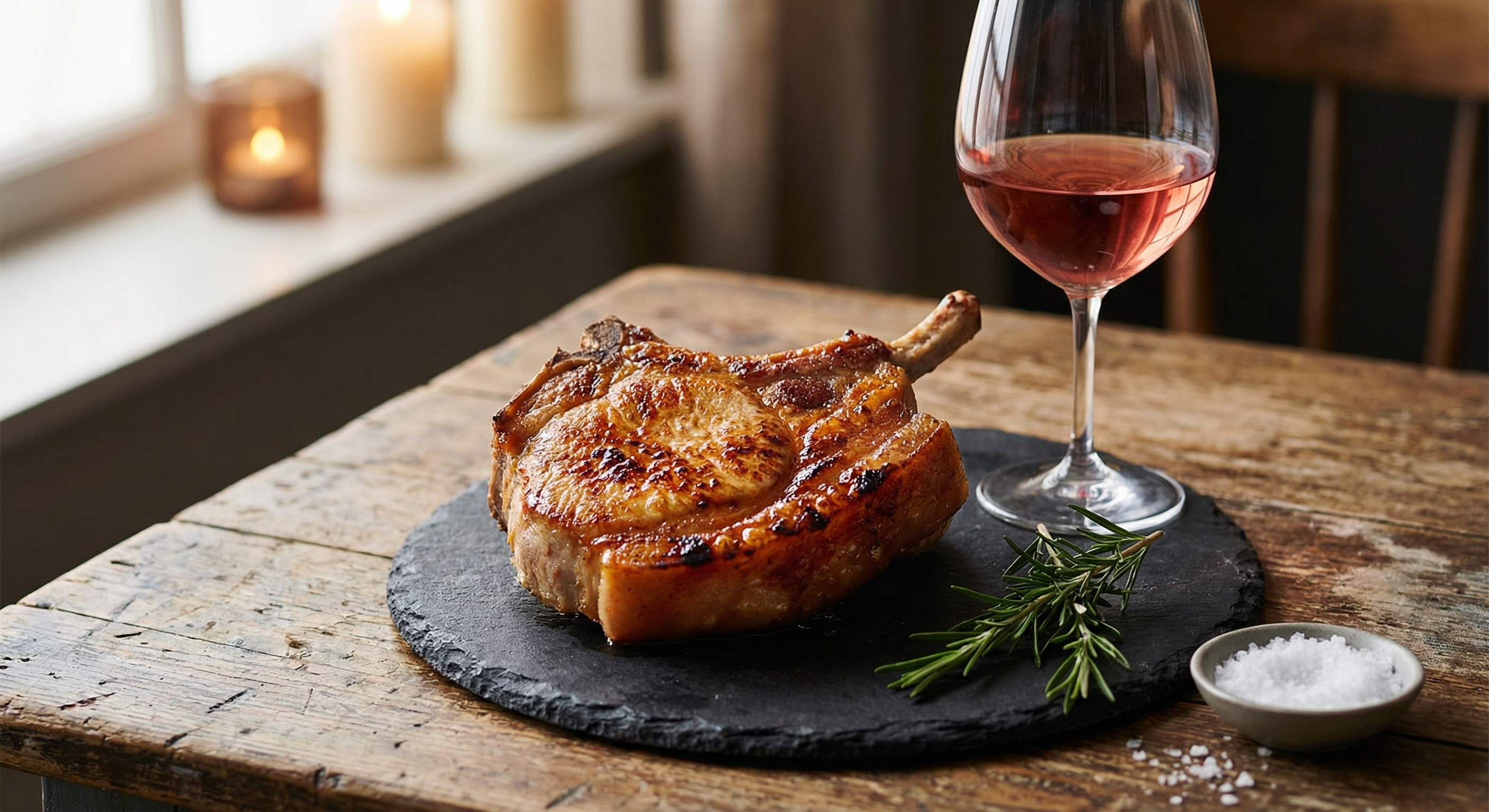
Pork is the sommelier's secret weapon. While steak gets paired with Cabernet and chicken gets Chardonnay, pork sits in a category of its own — versatile enough to work with reds, whites, rosés, and even sparkling wines depending on the cut and preparation.
The reason is simple: pork's flavor profile is mild enough to complement delicate whites but carries enough fat and richness to stand up to medium-bodied reds. No other protein offers this range. A roasted pork tenderloin is nothing like braised pork belly, and the wines you choose should reflect that.
This guide breaks down the best wine for every major pork cut, with specific recommendations based on cooking method and seasoning.
Why Pork Is the Most Wine-Friendly Meat
Three characteristics make pork uniquely versatile for wine pairing:
Moderate fat content with neutral flavor. Pork fat is less assertive than beef fat. It coats the palate without dominating it, which means wine flavors come through clearly. Beef fat demands tannin to cut through; pork fat is gentle enough for whites and lighter reds.
Wide range of textures across cuts. Tenderloin is lean and silky. Belly is rich and unctuous. Shoulder is collagen-heavy and shreds into soft strands. Chops have a firm, steak-like bite. Each texture calls for different wine characteristics — body, acidity, tannin — giving you the full wine spectrum to play with.
Takes on seasoning readily. Pork absorbs marinades, rubs, and sauces more readily than beef or chicken. An Asian-glazed pork belly and an herb-crusted pork loin are completely different dishes that happen to share the same animal. The seasoning often drives the wine choice more than the protein itself.
Best Wine for Pork Tenderloin
Pork tenderloin is lean, tender, and delicately flavored — the filet mignon of pork. It needs wines that complement without overpowering.
Pinot Noir — The Classic Match
Burgundy-style Pinot Noir is the textbook pairing for pork tenderloin. Light to medium body, silky tannins, and bright cherry and earthy notes mirror the tenderloin's delicate character. The wine's acidity cuts through any residual fat without stripping the meat's subtle sweetness. Oregon Willamette Valley and Burgundy Pinot Noir both excel here.
Try: A village-level Burgundy (Gevrey-Chambertin, Volnay), Willamette Valley Pinot Noir, or Central Otago Pinot Noir from New Zealand.
Chardonnay — The White Option
A lightly oaked Chardonnay works beautifully with pork tenderloin, especially when the meat is served with a cream or butter sauce. The wine's richness and vanilla-oak notes complement the sauce while its acidity keeps the palate fresh. Avoid heavily oaked, buttery California Chardonnay — you want elegance, not a butter bomb.
Try: White Burgundy (Mâcon-Villages, Saint-Véran), unoaked or lightly oaked Sonoma Coast Chardonnay.
What to Avoid
Skip full-bodied reds like Cabernet Sauvignon or Barolo. Their heavy tannins and concentrated fruit will bulldoze the tenderloin's delicate flavor. Anything above 14% alcohol is probably too much.
Best Wine for Pork Chops
Pork chops — bone-in, with that beautiful fat cap — are the workhorse cut. They have more flavor and fat than tenderloin, which opens up bolder wine options.
Côtes du Rhône — The Everyday Hero
A southern Rhône blend (Grenache, Syrah, Mourvèdre) at the Côtes du Rhône level is the perfect everyday pork chop wine. Medium body, soft tannins, ripe red fruit, and a hint of herbs that echo common pork seasonings like thyme and rosemary. These wines are built for rustic, satisfying food — exactly what a thick pork chop delivers.
Try: Côtes du Rhône Villages, Gigondas, or an Australian GSM blend from the Barossa Valley.
Dry Riesling — The Underrated Choice
Dry Alsatian or German Riesling (trocken) with pork chops is one of wine's best-kept secrets. The wine's laser-sharp acidity cuts through the fat cap, while its stone fruit and mineral notes bring out pork's natural sweetness. This pairing is especially outstanding when the chop is brined — the salt amplifies both the meat and the wine's minerality.
Try: Alsace Riesling Grand Cru, German Riesling trocken from Pfalz or Rheingau, or Finger Lakes dry Riesling.
Zinfandel — The Bold American
A fruit-forward but balanced Zinfandel is a natural with grilled or barbecued pork chops. The wine's jammy dark fruit and peppery spice complement smoky char and sweet glazes. Keep it under 15% alcohol — you want the fruit, not the heat.
Try: Dry Creek Valley Zinfandel, Ridge Vineyards, or Ravenswood single-vineyard bottlings.
Best Wine for Pork Belly
Pork belly is all about fat — slow-rendered, melt-in-your-mouth richness. The wine needs enough acidity to cut through that fat or enough sweetness to complement the caramelized exterior.
Off-Dry Riesling — The Fat Fighter
A Riesling with a touch of residual sugar (Spätlese or Kabinett level) is the ultimate pork belly wine. The sweetness balances the salt in the crust, the acidity slices through the fat, and the low alcohol (7-10%) means the wine refreshes rather than fatigues the palate. This is the same principle behind the classic Alsatian pairing of Riesling with choucroute garnie (sauerkraut with pork).
Try: German Riesling Spätlese from Mosel, Alsace Vendange Tardive Riesling (for a richer belly preparation), or a Finger Lakes semi-dry Riesling.
Gewürztraminer — The Aromatic Match
Gewürztraminer's exotic lychee, rose petal, and ginger aromatics create a stunning contrast with pork belly's rich, savory character. This pairing shines when the belly has Asian-inspired seasoning — five spice, soy, ginger — because the wine's aromatic profile bridges Eastern and Western flavor traditions.
Try: Alsace Gewürztraminer (dry or off-dry), or a good Oregon Gewürztraminer.
Sparkling Wine — The Surprise Pairing
Champagne or Crémant with pork belly sounds extravagant, but the science is solid. Sparkling wine's carbonation physically scrubs fat from the palate, resetting your mouth between bites. The yeasty, toasty notes complement the Maillard crust on roasted belly. Brut rosé is especially good — the fruit adds dimension without sweetness.
Try: Brut Champagne (especially blanc de noirs for more body), Crémant d'Alsace, or Franciacorta from Italy.
Best Wine for Pulled Pork
Pulled pork is smoked, slow-cooked pork shoulder with barbecue sauce. The sauce — sweet, tangy, smoky — is often the dominant flavor and the main driver of your wine choice.
Rosé — The Versatile Answer
A dry, full-bodied rosé from Provence or Tavel handles pulled pork beautifully. It has enough fruit and body to match the smoky-sweet sauce, enough acidity to cut through the fat, and enough chill (serve at 50-55°F) to refresh between rich bites. Rosé is arguably the single best wine category for barbecue across the board.
Try: Tavel rosé (the most full-bodied style), Bandol rosé, or a dark-hued Grenache rosé from Spain (Navarra).
Malbec — The Red Option
Argentine Malbec brings dark fruit, smoky oak, and soft tannins that harmonize with barbecue sauce's sweet-smoky profile. The wine's natural plummy sweetness won't fight a Kansas City-style sauce, and its moderate tannins handle the fat without astringency. This is the red wine for pulled pork sandwiches.
Try: Mendoza Malbec (mid-range, $15-25), Cahors Malbec from France for a more structured option.
What to Avoid
Skip tannic, austere reds with barbecue sauce. Young Barolo, Bordeaux, or high-tannin Cabernet will clash with the sweetness and create a metallic taste. Also avoid delicate whites — they'll be obliterated by the smoke and sauce.
Best Wine for Roast Pork Loin
Roast pork loin — often herb-crusted with garlic, rosemary, and thyme — is a classic Sunday dinner centerpiece. It's leaner than shoulder but has more fat coverage than tenderloin.
White Burgundy — The Elegant Choice
A Meursault or Puligny-Montrachet-level white Burgundy matches the elegance of a well-roasted pork loin. The wine's richness complements the meat's fat, the minerality echoes herb seasonings, and the acidity keeps everything lifted. This is a pairing that makes people stop mid-bite and pay attention.
Try: Meursault, Puligny-Montrachet, or for value, a Saint-Véran or Pouilly-Fuissé.
Barbera d'Alba — The Italian Pick
Barbera is criminally underrated with pork. High acidity, low tannin, bright cherry fruit, and a food-friendly nature that Italian winemakers have matched with pork for centuries. The wine's acidity handles fat, its fruit complements herb seasonings, and its modest tannins won't dry out your palate between bites.
Try: Barbera d'Alba or Barbera d'Asti from Piedmont. Look for producers like Vietti, Giacomo Conterno, or G.D. Vajra.
Chenin Blanc — The Loire Valley Play
Dry Chenin Blanc from Vouvray or Savennières offers honeyed richness, quince and apple notes, and crisp acidity that mirrors the flavors of roast pork with apple sauce — a classic combination for a reason. The wine essentially replaces the apple sauce on the plate while adding complexity.
Try: Vouvray Sec, Savennières, or South African Chenin Blanc (old vine) for a richer, tropical style.
Best Wine for Pork Ribs
Whether baby back or spare ribs, these are typically rubbed with spices and slow-smoked or roasted until fall-off-the-bone tender. Sweet, smoky, sticky — the wine needs to play at that level.
Shiraz — The Power Match
Australian Shiraz — especially from the Barossa Valley — brings the same smoky, peppery, dark-fruited intensity that ribs deliver. The wine's concentration matches the rub's spice, its oak-derived vanilla echoes sweet glazes, and its moderate tannins handle the collagen-rich meat. This is a pairing where wine and food feel like they were born together.
Try: Barossa Valley Shiraz, McLaren Vale Shiraz, or Penfolds Bin 28 Kalimna Shiraz for a reliably good option.
Primitivo — The Southern Italian Star
Primitivo (Zinfandel's Italian cousin) from Puglia brings jammy dark fruit, baking spice, and a generous, rounded palate that flatters sticky ribs. Often available at outstanding value — $10-15 bottles that drink like $25+ wines with barbecue.
Try: Primitivo di Manduria from Puglia. Look for A Mano, Tormaresca, or Feudi di San Gregorio.
Wine Pairing by Pork Cooking Method
The cooking method affects flavor as much as the cut:
Grilled: Char and smoke from the grill call for wines with smoky or spicy character. Syrah, Grenache blends, or oaked Tempranillo match the grill marks.
Roasted: Oven roasting develops deep caramelization and herb flavors. Pinot Noir, Barbera, or Chardonnay complement the golden crust.
Braised: Long, slow braising creates rich, falling-apart tenderness. Pair with medium-bodied reds that have soft tannins — Merlot, Grenache, or aged Rioja.
Pan-seared: Quick, high-heat searing produces a crispy exterior with a juicy center. Match with wines that have good acidity and moderate weight — dry Riesling, Côtes du Rhône, or Pinot Noir.
Smoked: Low-and-slow smoking adds deep, persistent smoke flavor. Go bold — Shiraz, Malbec, or Zinfandel can stand up to the smoke.
Wine Pairing by Pork Sauce
Often the sauce determines the wine more than the meat:
Apple sauce or chutney → Off-dry Riesling or Chenin Blanc (fruit bridges the sweetness)
Cream or mustard sauce → Chardonnay or Viognier (richness matches richness)
Barbecue sauce → Zinfandel, Malbec, or rosé (fruit and acidity handle sweet-smoky)
Chimichurri or salsa verde → Sauvignon Blanc or Vermentino (herbal notes align)
Asian glaze (soy, hoisami, ginger) → Gewürztraminer or off-dry Riesling (aromatic wines complement aromatics)
Sage and brown butter → Pinot Noir or white Burgundy (earthy, nutty notes harmonize)
Quick Reference: Wine by Pork Cut
Tenderloin → Pinot Noir, lightly oaked Chardonnay
Chops → Côtes du Rhône, dry Riesling, Zinfandel
Belly → Off-dry Riesling, Gewürztraminer, sparkling wine
Pulled Pork → Rosé, Malbec
Loin Roast → White Burgundy, Barbera, Chenin Blanc
Ribs → Shiraz, Primitivo
Sausages → Beaujolais (Gamay), dry Lambrusco
Frequently Asked Questions
What is the best wine to pair with pork?
Pinot Noir is the most versatile wine for pork across cuts and preparations. Its light-to-medium body, silky tannins, and bright acidity complement everything from tenderloin to roast loin. For fattier cuts like pork belly, switch to an off-dry Riesling. For barbecued pork, try a dry rosé or Malbec.
Should you drink red or white wine with pork?
Both work — pork is uniquely versatile. Lean cuts like tenderloin pair well with whites (Chardonnay, Riesling) or light reds (Pinot Noir). Fattier cuts like belly or ribs call for bolder reds (Shiraz, Zinfandel) or high-acidity whites (Riesling, Gewürztraminer). Let the fat content and sauce guide your choice more than a red-or-white rule.
What wine goes with pork chops?
Côtes du Rhône (Grenache-Syrah-Mourvèdre blend) is the best everyday wine for pork chops — medium body, soft tannins, and herbal notes that match common pork seasonings. Dry Riesling is excellent with brined chops, and Zinfandel works well with grilled or barbecued preparations.
What wine pairs with pork belly?
Off-dry Riesling (German Spätlese or Kabinett) is the classic pork belly wine. The touch of sweetness balances the salt, the acidity cuts through the fat, and the low alcohol refreshes the palate. Gewürztraminer works beautifully with Asian-seasoned belly, and sparkling wine (Champagne or Crémant) uses carbonation to scrub fat from the palate.
Does Cabernet Sauvignon go with pork?
Generally, no. Cabernet Sauvignon's heavy tannins and concentrated fruit overpower most pork cuts. The exception is heavily smoked or barbecued pork with a bold, sweet sauce — in that case, a softer, fruit-forward Cabernet can work. For most pork preparations, stick with medium-bodied reds like Pinot Noir, Grenache blends, or Barbera.
More Pairing Guides
Best Bourbon for Pork Ribs vs Beef Ribs: Complete Pairing Guide
Pork ribs and beef ribs aren't interchangeable when it comes to bourbon pairing. Fat content, smoke intensity, and flavor depth determine which bottle works best. Here's the complete breakdown.
12 min readBest Bourbon for BBQ Ribs: 7 Perfect Pairings (Tasted & Ranked)
Not every bourbon works with every style of ribs. Here are 7 bourbon pairings ranked by rib type, sauce style, and smoke profile — with specific bottles tested against real BBQ.
10 min readBest Wine with Tri-Tip: Expert Pairing Guide
Tri-tip demands wines with enough structure to match its intensity while complementing its smoky, savory profile.