Best Wine for Tomahawk Steak: Expert Pairing Guide
Best Wine for Tomahawk Steak: Expert Pairing Guide
In my two decades working wine programs at high-end steakhouses—from Chicago to Las Vegas—I've seen the tomahawk steak transform from a specialty cut into an Instagram phenomenon. But beneath the showmanship is one of the most flavorful, richly marbled steaks you can buy, and it demands wine pairings that match its intensity.
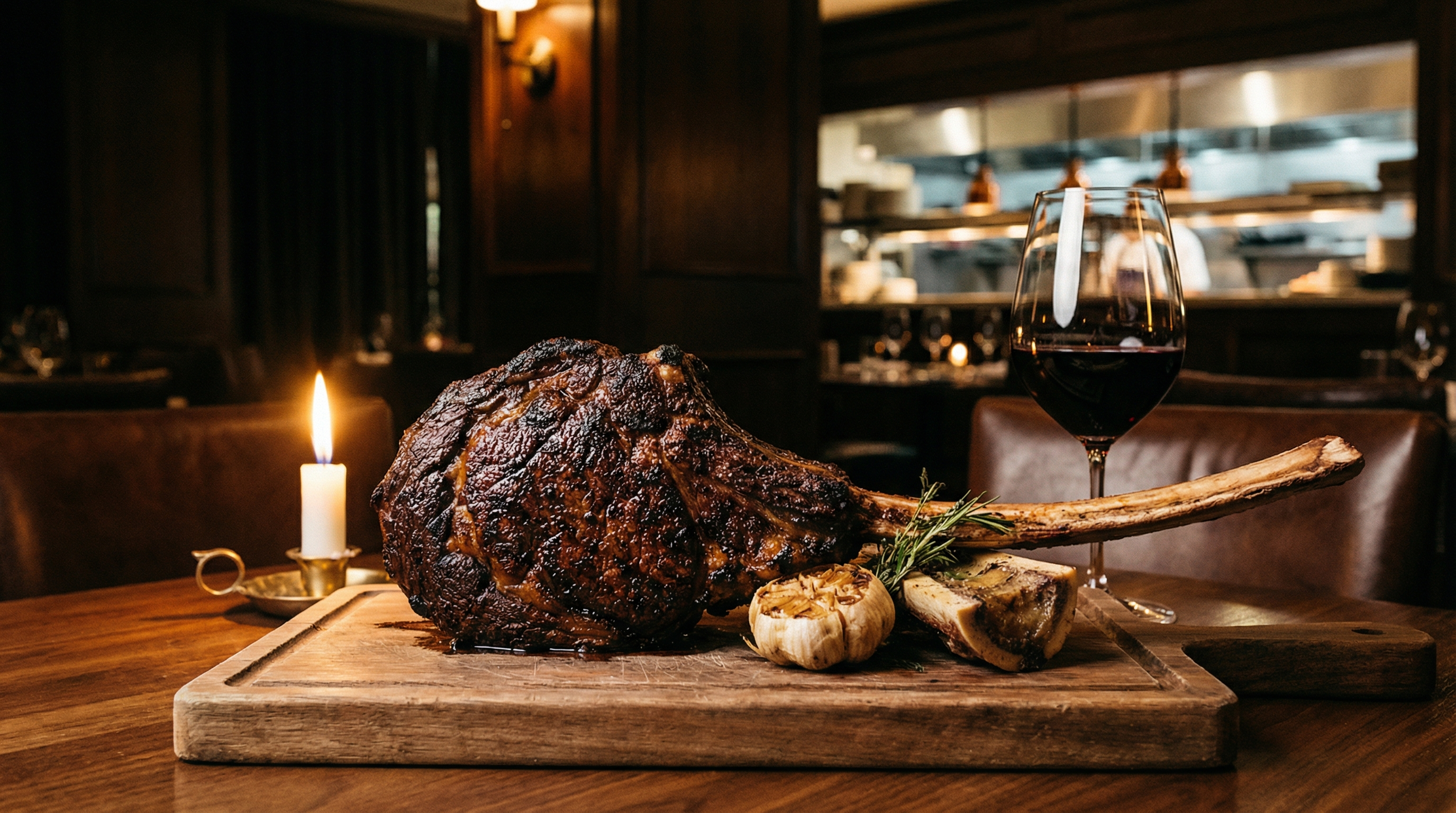
The tomahawk is essentially a bone-in ribeye with an extended rib bone (typically 6-8 inches) left intact for dramatic presentation. That means it has all the marbling and richness of a ribeye—often 30-40% intramuscular fat in prime grade—plus the flavor enhancement from cooking on the bone. When I've paired wines with tomahawks for private dining events, I've learned that the sheer size (32-45 oz typical) and fat content create unique challenges.
You can't serve a delicate Pinot Noir with a 40-ounce tomahawk. You need wines with enough tannin to cut through that extraordinary fat, enough body to match the steak's power, and enough complexity to keep pace with a dining experience that typically lasts an hour or more. Let me show you exactly which wines work, why they work at the molecular level, and how to serve them for maximum impact.
Why Tomahawk Demands Bold, Structured Wines
Before we dive into specific bottles, you need to understand what makes tomahawk steak different from other cuts and why certain wines create magical pairings while others fail completely.
The Extreme Marbling Factor
A tomahawk cut from prime or wagyu grade beef can have marbling scores that exceed standard ribeye. According to research from USDA Agricultural Research Service, intramuscular fat (marbling) is the primary driver of beef flavor intensity and tenderness perception. In tomahawk steaks, this fat content has profound wine pairing implications:
Fat coats your palate: When you eat fatty foods, lipid molecules coat the tongue and inner cheeks, temporarily dulling taste receptor sensitivity by up to 40%. This is why a wine that tastes bold on its own can seem muted when paired with fatty steak. You need wines with aggressive tannin structure, high acidity, and concentrated fruit to penetrate that fat barrier.
Fat requires textural contrast: Rich, fatty foods benefit from wines that provide both flavor and textural opposition. Tannins—polyphenolic compounds derived from grape skins, seeds, and oak aging—bind with proteins and fats through a process called protein precipitation. This creates the cleansing sensation that prevents palate fatigue during a multi-pound steak experience.
Fat softens harsh tannins: Here's the beautiful synergy: while tannins cut through fat, fat simultaneously softens the perception of astringent tannins. A young Cabernet Sauvignon that tastes mouth-puckeringly tannic on its own becomes smooth and balanced when paired with tomahawk's rich fat. This is textbook sensory-specific satiety—the wine and food modulate each other's intensity.

Bone-In Cooking Enhances Flavor Complexity
The extended bone in a tomahawk isn't just for show—it impacts cooking dynamics and final flavor. Bone conducts heat differently than muscle tissue, creating temperature gradients that result in more even cooking and enhanced browning on the exterior. The bone marrow also contributes subtle savory notes as it heats.
When you sear a tomahawk, the Maillard reaction creates hundreds of complex flavor compounds—roasted, nutty, caramelized notes that add umami depth. According to food science research from the Journal of Food Chemistry, these reactions produce flavor-active compounds like pyrazines and furans that need wines with corresponding savory complexity—not just fruit-forward profiles.
The Sheer Size of the Experience
A 40-ounce tomahawk takes 15-20 minutes to cook and another 10 minutes to rest properly. The dining experience often spans 45-60 minutes from first bite to last. This extended timeframe means your wine needs:
- Enough complexity to remain interesting over an hour
- Structure that holds up as the steak cools slightly
- Acidity to refresh the palate between bites
- Enough volume—plan on 2-3 glasses per person for a tomahawk dinner
Light, simple wines become boring. You need wines with layers of flavor that reveal themselves gradually as you work through the steak.
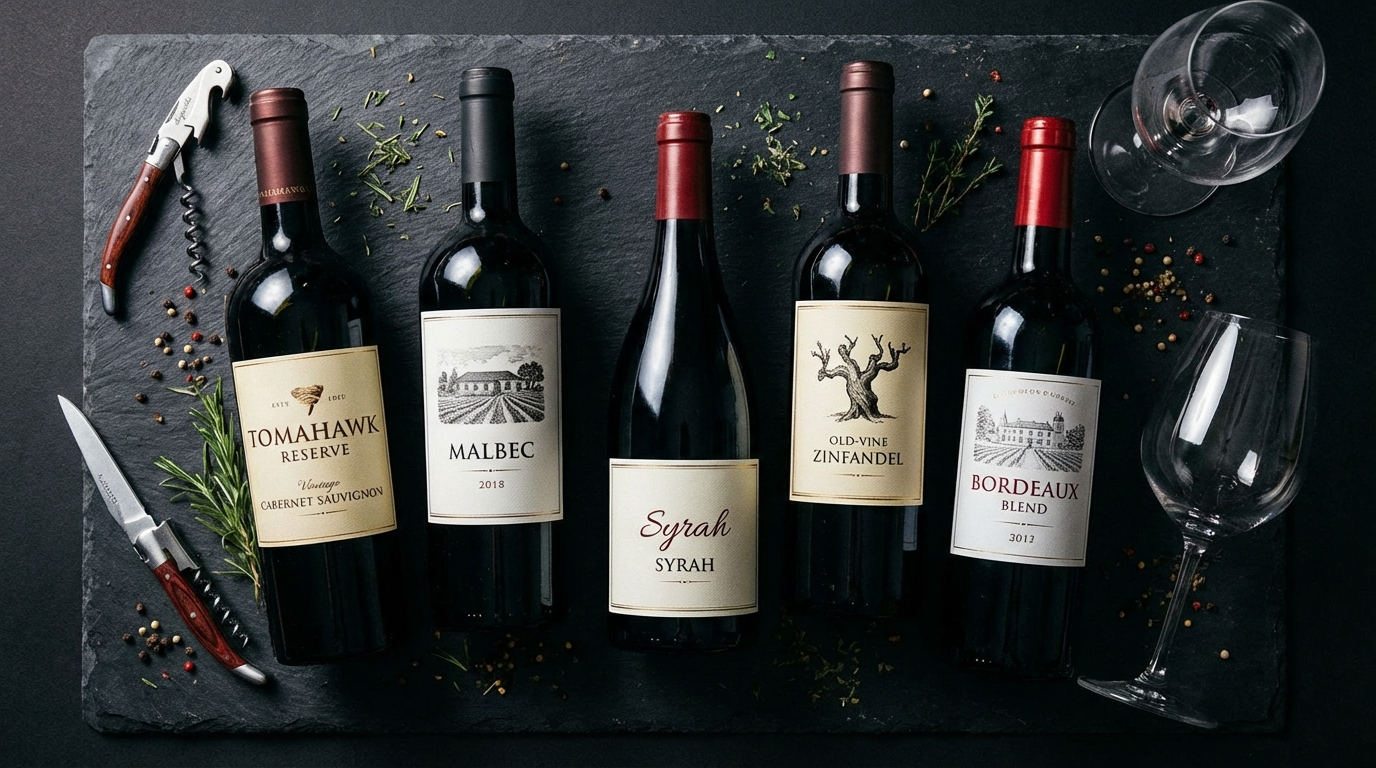
Top 7 Wine Varietals for Tomahawk Steak
These seven wines consistently deliver exceptional pairings with tomahawk steak, tested across hundreds of service experiences and private tastings.
1. Cabernet Sauvignon: The Definitive Choice
Cabernet Sauvignon is the single best wine for tomahawk steak. It's the default at every serious steakhouse worldwide for scientifically sound reasons.
Why it's unbeatable:
- Firm, structured tannins cut through extreme marbling without being overwhelmed
- Full body (14-15% alcohol typical) matches the steak's weight and richness
- Dark fruit concentration (cassis, blackberry, black cherry) complements beef's savory notes
- Cedar, tobacco, and graphite aromas echo the charred crust from searing
- Age-worthy—mature Cabernet (8+ years) develops complexity that elevates the experience
Regional expressions to explore:
- Napa Valley (Oakville, Rutherford, Stags Leap): The classic American steakhouse Cab—rich, ripe, powerful with plush tannins and concentrated dark fruit. These are opulent, modern-style wines. ($50-300+)
- Bordeaux Left Bank (Pauillac, Saint-Julien, Margaux): More restrained and elegant than Napa. Earthy complexity with graphite and cedar notes. Classic structure. ($40-500+)
- Washington State (Columbia Valley, Walla Walla): Serious structure and ripe fruit at significantly better value than Napa. Clean, focused flavors. ($25-80)
- Australia (Coonawarra, Margaret River): Eucalyptus and mint notes add unique character. Often exceptional quality-to-price ratio. ($25-100)
Budget pick: Chateau Ste. Michelle Columbia Valley Cabernet Sauvignon (Washington) — $15-18, consistently delivers solid tannin structure and dark fruit character.
Splurge pick: Caymus Vineyards Cabernet Sauvignon (Napa Valley) — $90-110, the archetypal American steakhouse Cab with velvety texture and concentrated blackberry fruit.
2. Super Tuscan Blends: Italian Power
Super Tuscans (Sangiovese blended with Cabernet, Merlot, or Syrah) offer a distinctly Italian approach—savory, food-centric, with the structure to handle tomahawk's richness.
Why they excel:
- Sangiovese brings high acidity and cherry-leather notes that refresh the palate
- Cabernet/Merlot additions provide tannin structure and international appeal
- Savory, earthy character (dried herbs, tobacco, earth) complements beef beautifully
- Food-centric design—these wines are built for pairing, not solo sipping
Benchmark producers:
- Tignanello (Antinori): The original Super Tuscan. Sangiovese-Cabernet blend with elegance and power. ($80-120)
- Sassicaia (Tenuta San Guido): Bordeaux-style blend from Bolgheri. World-class structure and complexity. ($150-300)
- Ornellaia: Merlot-Cabernet blend with opulence and depth. ($120-200)
Value pick: Banfi Col di Sasso Sangiovese-Cabernet blend — $12-15, everyday Super Tuscan with good structure and bright acidity.
3. Syrah/Shiraz: The Peppery Powerhouse
Syrah (French nomenclature) or Shiraz (Australian style) brings smoke, pepper, and savory complexity that's particularly exceptional with grilled or charcoal-cooked tomahawks.
Why it works:
- Black pepper, smoke, and olive notes complement charred steak crust perfectly
- Full body with substantial, slightly softer tannins than Cabernet
- Savory elements (cured meat, leather, tar) mirror the beef's umami character
- Particularly outstanding with grilled or smoked preparation methods
Regional styles:
- Northern Rhône (Hermitage, Côte-Rôtie, Cornas): Elegant, peppery, firmly structured. Bacon fat and violet aromatics. Age-worthy. ($50-250+)
- Barossa Valley (Australia): Rich, ripe, full-throttle Shiraz with chocolate, espresso, and blackberry jam. Big and bold. ($25-180)
- Washington State (Walla Walla, Red Mountain): Structured Syrah with peppery spice and dark fruit. Excellent value. ($20-60)
Budget pick: Columbia Crest Grand Estates Syrah (Washington) — $13-16, approachable with pepper and dark fruit.
Splurge pick: Penfolds Grange (Barossa Valley) — $500-800, Australia's most iconic wine with extraordinary power and complexity.
4. Malbec: The Value Alternative
Argentine Malbec has become a steakhouse staple for good reason—it offers tomahawk-friendly structure at accessible pricing.
Why it's ideal for tomahawk:
- Softer tannins than Cabernet but still plenty of structure for fat-cutting
- Ripe, jammy fruit (plum, blackberry, blueberry) that matches richness without competing
- Smooth, velvety texture complements rather than contrasts
- Typically less oaked than Cabernet, letting the beef flavor shine
- Outstanding value—serious quality at $15-35
Regions to explore:
- Mendoza (especially Luján de Cuyo and Uco Valley): High-altitude vineyards produce concentrated fruit with good acidity. ($15-80)
- Cahors, France: The original Malbec homeland. More structured, earthy, and savory than Argentina. ($20-60)
Budget pick: Catena Malbec (Mendoza) — $18-22, excellent quality-to-price ratio with depth and structure.
Mid-range pick: Catena Zapata Malbec Argentino — $28-35, serious wine with complexity that rivals Cabernets costing twice as much.
5. Bordeaux Blends: Elegant Complexity
Bordeaux-style blends (combinations of Cabernet Sauvignon, Merlot, Cabernet Franc, Petit Verdot, and Malbec) offer layered complexity no single varietal achieves alone.
Why they're exceptional with tomahawk:
- Blending creates aromatic and flavor complexity
- Structure from Cabernet, plushness from Merlot, floral lift from Cabernet Franc
- Classic savory notes (cedar, cigar box, pencil lead) complement beef perfectly
- Age-worthy—older Bordeaux develops tertiary complexity (truffle, leather, forest floor)
Regions to explore:
- Bordeaux (France): The original. Left Bank (Médoc, Pauillac) for Cabernet-dominant power, Right Bank (Pomerol, Saint-Émilion) for Merlot-based elegance. ($30-1500+)
- Napa Valley "Meritage" blends: Napa ripeness with Bordeaux structure. ($40-250+)
- Washington State: Columbia Valley produces excellent Bordeaux-style blends with value pricing. ($20-75)
Mid-range pick: Château Gloria (Saint-Julien) — $45-60, classic Left Bank Bordeaux with structure and elegance.
Splurge pick: Château Pichon-Longueville Baron (Pauillac) — $150-250, benchmark Bordeaux with power, finesse, and aging potential.
6. Zinfandel: The American Original
California Zinfandel—especially old-vine bottlings—offers a distinctly American pairing that works beautifully with grilled or BBQ-style tomahawks.
Why it complements tomahawk:
- High alcohol (often 15-16%) provides weight to match extreme marbling
- Jammy, concentrated fruit (blackberry, raspberry, cherry preserves)
- Baking spice notes (black pepper, clove, cinnamon) echo seasoning and char
- Often a touch of residual sugar that balances salt and char
- Particularly excellent with BBQ rubs or charcoal grilling
Regions to explore:
- Dry Creek Valley (Sonoma): Classic old-vine Zinfandel with structure and peppery spice. ($22-55)
- Paso Robles: Ripe, powerful, fruit-forward expressions. ($18-60)
- Lodi: Value-driven old-vine character with concentrated fruit. ($15-35)
Budget pick: Seghesio Family Vineyards Sonoma Zinfandel — $20-24, benchmark California Zin with balance and spice.
Splurge pick: Ridge Lytton Springs — $40-50, world-class Zinfandel with structure, complexity, and age-worthiness.
7. Amarone della Valpolicella: The Dried Grape Powerhouse
Amarone is made from partially dried grapes (appassimento method), creating intensely concentrated, full-bodied wines with unique characteristics for tomahawk pairing.
Why it's a special-occasion choice:
- Extremely full body (15-17% alcohol) matches tomahawk's richness
- Concentrated dried fruit flavors (raisin, fig, cherry) with chocolate notes
- Velvety tannins provide texture without harshness
- Slight sweetness (though technically dry) balances char and salt
- Complex, long finish that evolves throughout the meal
Benchmark producers:
- Allegrini Amarone della Valpolicella Classico: $60-80, accessible entry to the style with balance and complexity.
- Tommasi Amarone della Valpolicella Classico: $50-70, rich and approachable with chocolate and cherry notes.
- Giuseppe Quintarelli Amarone: $300-600, the legendary benchmark with extraordinary depth and aging potential.
Serving Temperature: The Critical Detail Most People Get Wrong
You can choose the perfect wine and ruin the pairing by serving it 10 degrees too warm. Temperature dramatically affects how wine tastes and how it interacts with fatty beef.
The "Room Temperature" Myth
The classic advice to serve red wine at "room temperature" originates from 18th-century European wine cellars that naturally stayed cool (55-60°F). Modern room temperature (72-76°F) is far too warm and creates multiple problems:
- Alcohol becomes pronounced and hot-tasting, creating an unpleasant burn
- Fruit flavors become jammy, muddled, and one-dimensional
- Tannins soften excessively, reducing the textural contrast you want with fatty steak
- Acidity perception drops, making wine taste flabby and unrefreshing
Ideal Serving Temperatures for Tomahawk Pairings
- Cabernet Sauvignon, Bordeaux blends, Super Tuscans: 60-64°F (15-18°C)
- Syrah/Shiraz, Malbec, Zinfandel: 58-62°F (14-17°C)
- Amarone: 62-65°F (17-18°C) — slightly warmer to showcase complexity
How to Achieve Proper Temperature
If your wine has been sitting at room temperature, refrigerate for 25-35 minutes before serving. If it's been in a cellar or wine fridge (55°F), let it warm for 10-15 minutes. Use your hand as a guide: the bottle should feel distinctly cool but not cold. If you can comfortably hold the bottle for extended periods, it's close to the right temperature.
For a tomahawk dinner that lasts 45-60 minutes, the wine will naturally warm in the glass—starting slightly cooler ensures optimal temperature throughout the meal.
How to Carve and Serve a Tomahawk for Optimal Pairing
Proper carving technique affects both presentation and how the wine interacts with each bite.
The Bone Separation Method
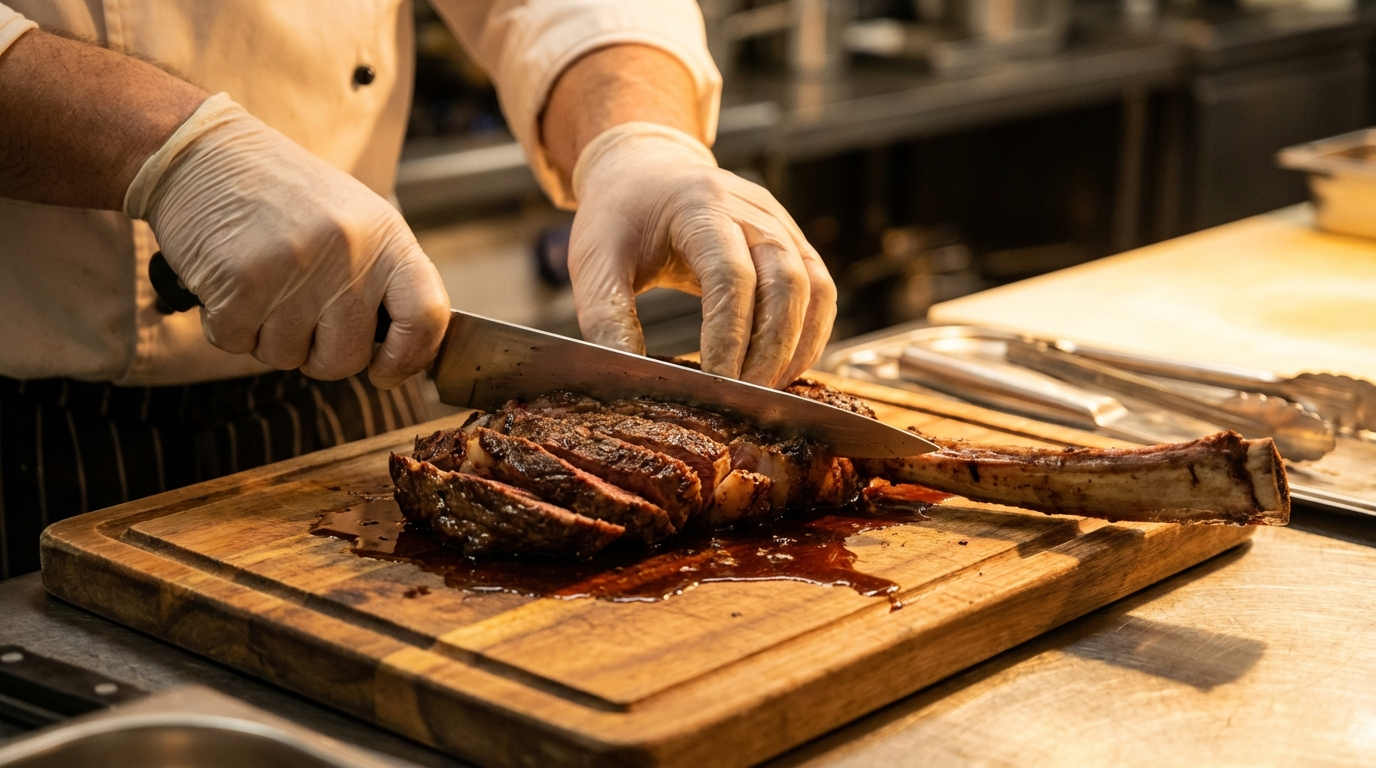
- Rest the steak for 10-12 minutes after cooking: This allows juices to redistribute and temperature to stabilize. Internal temp will rise 5-7°F from carryover heat.
- Position the tomahawk bone-side up: Use a sharp carving or boning knife to carefully cut along the bone, separating it from the ribeye cap and eye.
- Remove the bone completely: This makes slicing dramatically easier and creates a beautiful presentation piece (many steakhouses return the bone to the plate for show).
- Slice the ribeye against the grain into ½-inch strips: This maximizes tenderness and creates ideal bite-sized pieces for pairing with wine.
Why Slicing Matters for Wine Pairing
Individual slices expose more surface area to wine interaction. Each bite of properly sliced tomahawk—with its rendered fat and seared crust—creates the optimal fat-tannin binding that makes bold wines sing. Trying to cut bite-sized pieces off a whole tomahawk at the table results in uneven fat distribution and disrupts the pairing rhythm.
Special Considerations for Different Tomahawk Preparations
Cooking method should influence your wine selection.
Grilled or Charcoal-Cooked Tomahawk
Char and smoke flavors from live-fire cooking call for wines with corresponding smoky, savory character:
- Best choices: Syrah/Shiraz, Zinfandel, Malbec
- Why: Peppery, smoky notes echo grill char; oak-aged wines add complementary toast and vanilla
- Consider Northern Rhône Syrah or Barossa Shiraz for maximum smoke-on-smoke impact
Reverse-Seared Tomahawk
The reverse sear method (low oven until 115°F internal, then high-heat sear) creates exceptional crust development and even doneness:
- Best choices: Cabernet Sauvignon, Bordeaux blends, Super Tuscans
- Why: The perfectly even cook and intense crust showcase wine structure and tannin beautifully
- This preparation highlights wine quality—splurge on an aged Bordeaux or premium Napa Cab
Dry-Aged Tomahawk
Dry-aging (30+ days) concentrates flavor and creates funky, nutty, almost blue-cheese-like complexity:
- Best choices: Aged Bordeaux (8+ years), mature Super Tuscans, aged Napa Cabernet
- Why: Older wines develop tertiary characters (leather, tobacco, truffle, forest floor) that complement dry-aged beef's funk
- Young, fruit-forward wines clash with dry-aged intensity—age in the wine mirrors age in the beef
Wagyu or Prime Tomahawk
Wagyu tomahawk or heavily marbled Prime grade has even more extreme fat content:
- Best choices: High-acid, high-tannin wines—young Cabernet, Barolo, Left Bank Bordeaux
- Why: The extreme fat needs maximum tannin and acidity to prevent palate fatigue
- Avoid softer wines (Merlot, Malbec) which can feel cloying against extreme marbling
Budget-Friendly Bottles That Overdeliver
You don't need $200 bottles to create excellent tomahawk pairings. These wines consistently punch above their price point:
Under $20
- Chateau Ste. Michelle Columbia Valley Cabernet Sauvignon (Washington): $15-18. Reliable structure, dark fruit, widely available.
- Catena Malbec (Mendoza): $18-22. Serious quality with depth and complexity.
- Columbia Crest Grand Estates Syrah (Washington): $13-16. Peppery spice and dark fruit.
- Banfi Col di Sasso Sangiovese-Cabernet (Tuscany): $12-15. Everyday Super Tuscan with bright acidity.
$20-50 (Sweet Spot for Quality/Value)
- Seghesio Family Vineyards Zinfandel (Sonoma): $20-24. Benchmark California Zin.
- Catena Zapata Malbec Argentino (Mendoza): $28-35. Competes with wines twice the price.
- Château Gloria (Saint-Julien, Bordeaux): $45-60. Classic Left Bank structure at accessible pricing.
- Austin Hope Cabernet Sauvignon (Paso Robles): $45-55. Rich, ripe, fruit-forward excellence.
- Columbia Crest Reserve Cabernet Sauvignon (Washington): $22-28. Outstanding value with serious structure.
$50-100 (Special Occasion Territory)
- Caymus Vineyards Cabernet Sauvignon (Napa): $90-110. The iconic American steakhouse Cab.
- Ridge Lytton Springs Zinfandel: $40-50. World-class Zin with complexity.
- Allegrini Amarone della Valpolicella Classico: $60-80. Concentrated, complex, memorable.
- Tignanello (Tuscany): $80-120. The original Super Tuscan with elegance and power.
What NOT to Pair with Tomahawk Steak
Some wines actively clash with tomahawk's extreme richness. Avoid these categories:
Light-Bodied Reds
Pinot Noir, Gamay (Beaujolais), Grenache (unless in a GSM blend): These delicate wines get completely steamrolled by tomahawk's power. Their soft tannins provide zero contrast against the fat, and their subtle flavors disappear. Save them for salmon, duck, or mushroom dishes.
White Wines (With Rare Exceptions)
White wines lack the tannin structure to cut through tomahawk fat effectively. The one exception is high-quality Champagne or sparkling wine, which can work through acidity and bubbles—but it's unconventional and won't create the synergy that bold reds achieve.
Sweet Wines
Dessert wines, sweet Ports, late-harvest wines—sweetness clashes with the umami-rich, savory crust from searing. The result is cloying and unpleasant.
Overly Oaked or Extracted Wines
Some modern wines are so heavily oaked or extracted that they taste like vanilla syrup or bitter espresso. While oak can complement steak, excessive oak creates woody bitterness that clashes rather than complements. Look for balance, not oak-bomb intensity.
Decanting and Aeration: When It Transforms the Pairing
For certain wines, decanting significantly improves the tomahawk pairing experience.
Wines That Benefit from 30-60 Minutes of Decanting
- Young, tannic Cabernet (under 5-6 years old): Softens aggressive tannins and opens aromatics
- Young Bordeaux, Super Tuscans, or Amarone: Exposure to oxygen reveals hidden complexity
- Powerful Syrah or Shiraz: Decanting tames alcohol heat and integrates flavors
Wines That Don't Need Decanting
- Malbec, Zinfandel, and most Merlot-based wines are ready to drink immediately
- Very old wines (20+ years) can fade quickly with air—open just before serving
- Inexpensive wines (under $25) rarely improve with aeration
Quick Aeration Alternative
If you don't have a decanter, pour wine into large-bowled Bordeaux-style glasses 15 minutes before serving and swirl periodically. This provides 60-70% of decanting benefits in a fraction of the time.
Frequently Asked Questions
What is the best wine to pair with tomahawk steak?
Cabernet Sauvignon is the best wine for tomahawk steak. Its firm tannin structure cuts through the tomahawk's extreme marbling (30-40% intramuscular fat in prime grade), its full body matches the steak's intensity, and its dark fruit flavors (cassis, blackberry) complement beef's savory, umami-rich character. For value, try Washington State Cabernet ($15-40). For a splurge, Napa Valley Cabernet ($80-200) delivers the classic steakhouse experience. The tannin-fat interaction creates perfect synergy—the wine cuts richness while the fat softens harsh tannins.
Should I serve red wine at room temperature with tomahawk steak?
No, do not serve red wine at modern room temperature (72-76°F) with tomahawk steak. Serve full-bodied reds at 60-64°F (15-18°C). Wine that's too warm tastes hot from alcohol, jammy in fruit character, and loses the tannin structure needed to cut through fatty beef. If your wine has been at room temperature, refrigerate for 25-35 minutes before serving. The bottle should feel cool to the touch but not cold. Proper temperature preserves tannin structure, acidity, and fruit definition for optimal pairing.
How much wine should I buy for a tomahawk steak dinner?
Plan for 2-3 glasses per person (roughly one 750ml bottle for two people) for a tomahawk dinner. The steak is large (32-45 oz typical), rich, and takes 45-60 minutes to consume from first bite to last. This extended dining experience requires more wine than a standard 8-oz steak dinner. The wine needs to refresh the palate repeatedly against extreme marbling, and you want enough to explore how the pairing evolves as both steak and wine develop in the glass. For four people sharing a 40-oz tomahawk, buy two bottles.
Is Malbec or Cabernet better with tomahawk steak?
Cabernet Sauvignon is generally better with tomahawk steak due to firmer tannin structure that more effectively cuts through extreme marbling. However, Malbec is an excellent alternative if you prefer softer tannins and riper, jammier fruit (plum, blackberry). Malbec offers outstanding value—Argentine Malbec at $18-30 competes with Cabernets costing twice as much. For heavily marbled Prime or wagyu tomahawk, Cabernet's extra structure prevents palate fatigue. For standard Choice tomahawk, Malbec's smooth, approachable profile works beautifully.
What wine pairs with dry-aged tomahawk steak?
Dry-aged tomahawk (30+ days aging) pairs best with aged red wines that have developed tertiary complexity—aged Bordeaux (8+ years old), mature Napa Cabernet (10+ years), or aged Super Tuscans. Dry-aging creates funky, nutty, almost blue-cheese-like flavor compounds that need wines with corresponding complexity: leather, tobacco, truffle, forest floor, and earthy notes. Young, fruit-forward wines taste simple or clash against dry-aged beef's intensity. If you can't source aged wine, choose wines with significant savory character like Northern Rhône Syrah, Super Tuscans, or structured Washington Cabernet over purely fruity styles.
Conclusion: Elevating the Tomahawk Experience
Pairing wine with tomahawk steak isn't pretentious—it's applied food science. The extreme marbling coats your palate and needs tannin to cut through it. The protein binds with tannin to create pleasant texture. The charred, umami-rich crust needs savory wine complexity to complement it. Understanding these principles transforms wine selection from intimidation into confidence.
Start with Cabernet Sauvignon—it's the gold standard for scientifically sound reasons, and quality bottles exist at every price from $15 to $500. Branch out to Malbec for value and approachability, Syrah for grilled tomahawks, Super Tuscans for savory elegance, and Amarone for special occasions when you want to match the tomahawk's drama with equally dramatic wine.
Master the details: serve wine slightly cool (60-64°F), not at room temperature. Decant young, tannic wines for 30-60 minutes. Carve the tomahawk properly—bone off, then slice against the grain—to maximize wine interaction with each bite. Match your wine to your preparation method.
Most importantly, drink what brings you joy. Wine pairing guidelines are tools, not rules. If you prefer Zinfandel over Cabernet, pour Zinfandel. If you love Super Tuscans, drink Super Tuscans. The best wine for your tomahawk steak is the wine that makes the entire experience memorable.
Now grab a bottle of something bold, fire up that grill or oven, and turn dinner into an event. A 40-ounce tomahawk with the right wine isn't just a meal—it's a statement. And that's exactly how it should be.
— Marcus Thompson, sommelier and beverage director with 20+ years pairing wines at Chicago's most acclaimed steakhouses. When I'm not consulting on wine programs, I'm reverse-searing tomahawks at home with bottles from my personal cellar.
Frequently Asked Questions
What wine goes best with tomahawk steak?
Cabernet Sauvignon is the best wine for tomahawk steak due to its firm tannin structure that cuts through extreme marbling (30-40% intramuscular fat), full body that matches the steak's richness, and dark fruit flavors that complement beef's savory character. The tannins bind with fat and protein, creating textural balance, while the steak's fat softens the wine's tannins. For value, try Washington State Cabernet ($15-40). For a splurge, Napa Valley Cabernet ($80-200) delivers classic steakhouse excellence.
Should I serve red wine at room temperature with steak?
No, serve full-bodied reds at 60-64°F (15-18°C) with tomahawk steak, not at modern room temperature (72-76°F). Wine that's too warm tastes hot from alcohol, loses tannin structure, and becomes jammy. If wine has been at room temperature, refrigerate for 25-35 minutes before serving. The bottle should feel cool to the touch. Proper temperature preserves the tannin structure needed to cut through fatty beef and maintains acidity for palate refreshment throughout the meal.
How do you properly carve a tomahawk steak?
Rest the tomahawk for 10-12 minutes after cooking, then position it bone-side up. Use a sharp carving knife to carefully cut along the bone, separating it completely from the ribeye. This creates a boneless ribeye that's easy to slice. Cut the ribeye against the grain into ½-inch strips. This slicing method maximizes tenderness, exposes surface area for wine interaction, and creates ideal bite-sized pieces. The separated bone makes a beautiful presentation piece on the plate.
Is Malbec good with tomahawk steak?
Yes, Malbec is excellent with tomahawk steak and offers outstanding value. Argentine Malbec ($18-30) provides softer tannins than Cabernet but still enough structure to cut through rich marbling, plus ripe jammy fruit (plum, blackberry) that complements beef. While Cabernet has firmer tannins for heavily marbled steaks, Malbec's smooth, approachable profile works beautifully with Choice or Prime tomahawk. It's particularly good for those who find Cabernet too tannic. Try Catena Zapata Malbec Argentino for serious quality at $28-35.
What wine pairs with dry-aged tomahawk steak?
Dry-aged tomahawk (30+ days) pairs best with aged red wines: aged Bordeaux (8+ years), mature Napa Cabernet (10+ years), or aged Super Tuscans. Dry-aging creates funky, nutty, blue-cheese-like complexity that needs wines with tertiary characters—leather, tobacco, truffle, forest floor notes that complement rather than clash. Young, fruit-forward wines taste simple against dry-aged intensity. If aged wine isn't available, choose savory-driven wines like Northern Rhône Syrah, Barolo, or structured Washington Cabernet over purely fruity New World styles.
More Pairing Guides
Best Bourbon for Pork Ribs vs Beef Ribs: Complete Pairing Guide
Pork ribs and beef ribs aren't interchangeable when it comes to bourbon pairing. Fat content, smoke intensity, and flavor depth determine which bottle works best. Here's the complete breakdown.
12 min readBest Bourbon for BBQ Ribs: 7 Perfect Pairings (Tasted & Ranked)
Not every bourbon works with every style of ribs. Here are 7 bourbon pairings ranked by rib type, sauce style, and smoke profile — with specific bottles tested against real BBQ.
10 min readBest Wine with Tri-Tip: Expert Pairing Guide
Tri-tip demands wines with enough structure to match its intensity while complementing its smoky, savory profile.