Best Wine with Duck: A Complete Pairing Guide by Preparation
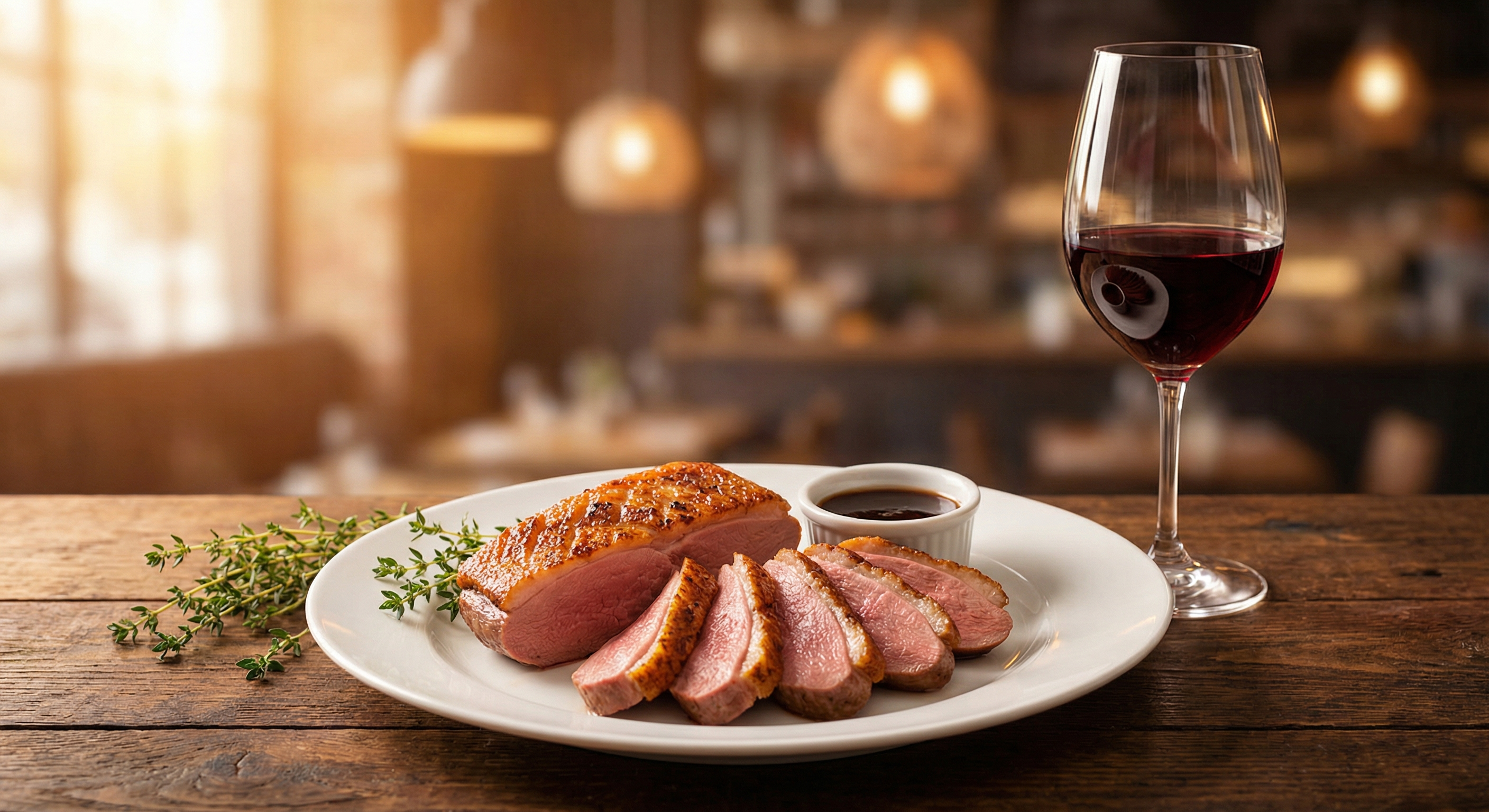
Duck occupies a unique middle ground between poultry and red meat. It's richer than chicken, gamier than turkey, and fattier than both — with a depth of flavor that can stand up to wines most people would never pour alongside bird. That fat content is what makes duck such a spectacular wine pairing partner. The rendered subcutaneous fat and crispy skin create a richness that begs for acidity and tannin, while the lean breast meat (when cooked properly to medium-rare) has an almost beefy minerality that rewards serious reds.
But not all duck preparations are equal. A pink-centered seared duck breast is a completely different eating experience than a slow-braised duck confit, which is different again from a whole roasted bird with lacquered, crackling skin. Each preparation changes the fat-to-meat ratio, the texture, the dominant flavors — and therefore the ideal wine.
Why Duck and Wine Work So Well Together
Duck's wine compatibility comes down to three characteristics that set it apart from other poultry:
High fat content. Duck carries a thick layer of subcutaneous fat between skin and meat. When rendered properly, this fat bastes the meat and creates a luxurious mouthfeel. Wine's tannins and acidity cut through that richness, preventing palate fatigue and keeping each bite as exciting as the first.
Dark, flavorful meat. Duck breast is classified as dark meat — it contains more myoglobin than chicken breast, giving it a deeper, more iron-rich flavor profile. This intensity means duck can handle full-bodied reds that would overwhelm lighter poultry. Where a chicken breast might disappear against a Barolo, duck breast stands its ground.
Crispy skin potential. Properly rendered duck skin is one of cooking's greatest textures — shattering, golden, and intensely savory. That crunch creates a textural contrast that wines with good structure mirror beautifully. A wine with firm tannins and bright acidity provides a liquid version of that same crisp-to-rich interplay.
Gamey depth. Duck has an earthy, slightly gamey quality that chicken completely lacks. This gaminess resonates with the earthy, forest-floor notes found in aged Pinot Noir, Nebbiolo, and Northern Rhône Syrah — creating flavor harmonies that feel almost orchestrated.
Best Wine with Seared Duck Breast
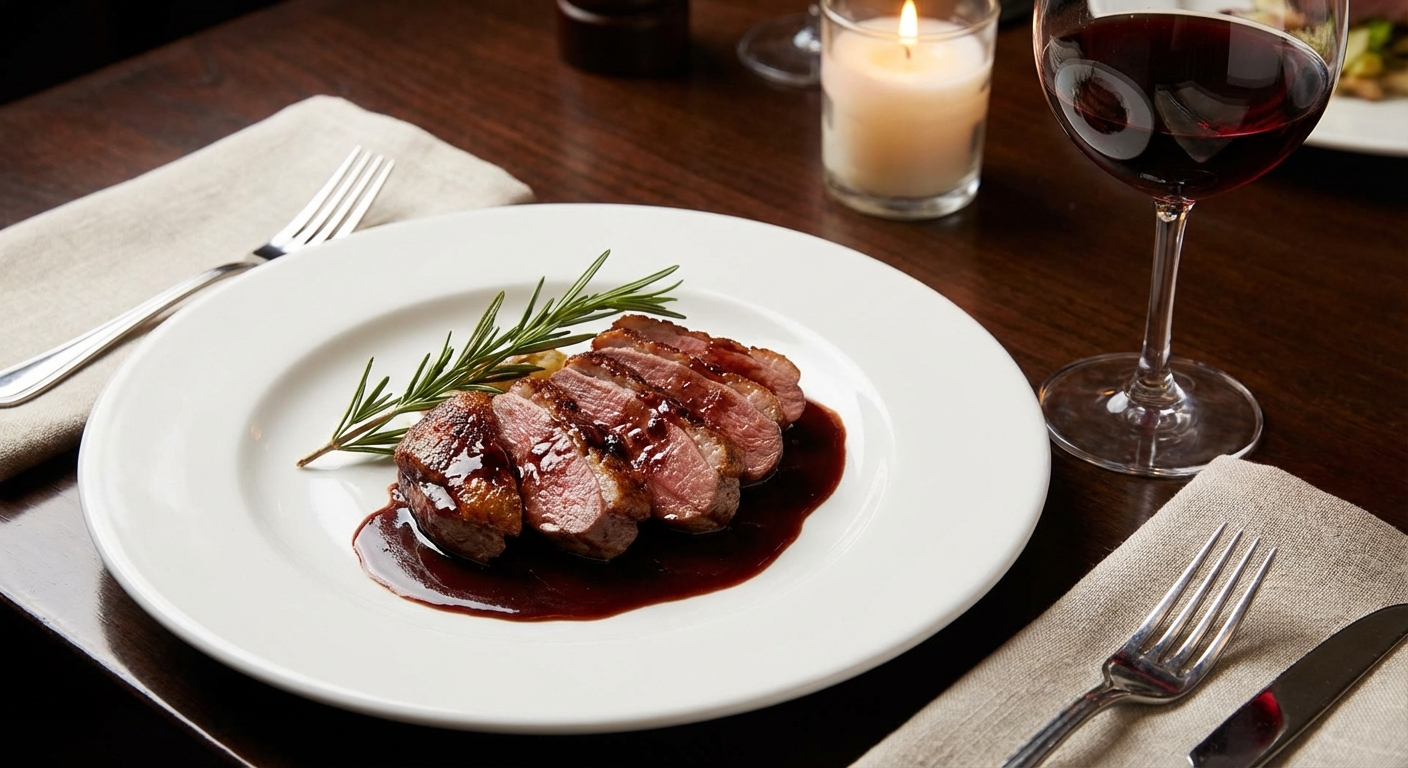
Seared duck breast — scored, started skin-side down in a cold pan, rendered slowly, then finished to medium-rare — is the preparation that most closely resembles a good steak. The meat is lean and rosy at the center, rich and fatty at the edges, with a crust of rendered skin that shatters when you bite through it. This is duck at its most versatile for wine pairing.
Top pick: Pinot Noir (Red Burgundy). This is the classic pairing, and it's classic for a reason. Burgundian Pinot Noir brings bright cherry and raspberry fruit, earthy mushroom undertones, and a silky texture that mirrors the duck's own elegance. The wine's relatively light tannins won't overpower the lean breast meat, while its high acidity cuts through the rendered fat. A village-level Volnay or Chambolle-Musigny is ideal — structured enough to match the duck's intensity without being so powerful that it dominates.
Runner-up: Oregon Pinot Noir. If Burgundy is out of budget, Oregon's Willamette Valley produces Pinot Noir with a similar earthy profile but slightly more generous fruit. The warmer-vintage wines from Dundee Hills or Eola-Amity Hills have enough body to handle duck breast's richness, with the cranberry-pomegranate acidity that keeps the pairing fresh. Look for producers like Domaine Drouhin, Cristom, or Evening Land.
Wildcard: Barbaresco. Nebbiolo from Barbaresco offers rose petal aromatics, bright cherry fruit, and firm tannins that create an unexpectedly stunning pairing with seared duck. The wine's tannin structure matches the crispy skin's intensity, while its haunting floral notes elevate the gamey meat. This pairing works especially well when the duck is served with a tart cherry or lingonberry sauce.
Best Wine with Duck Confit
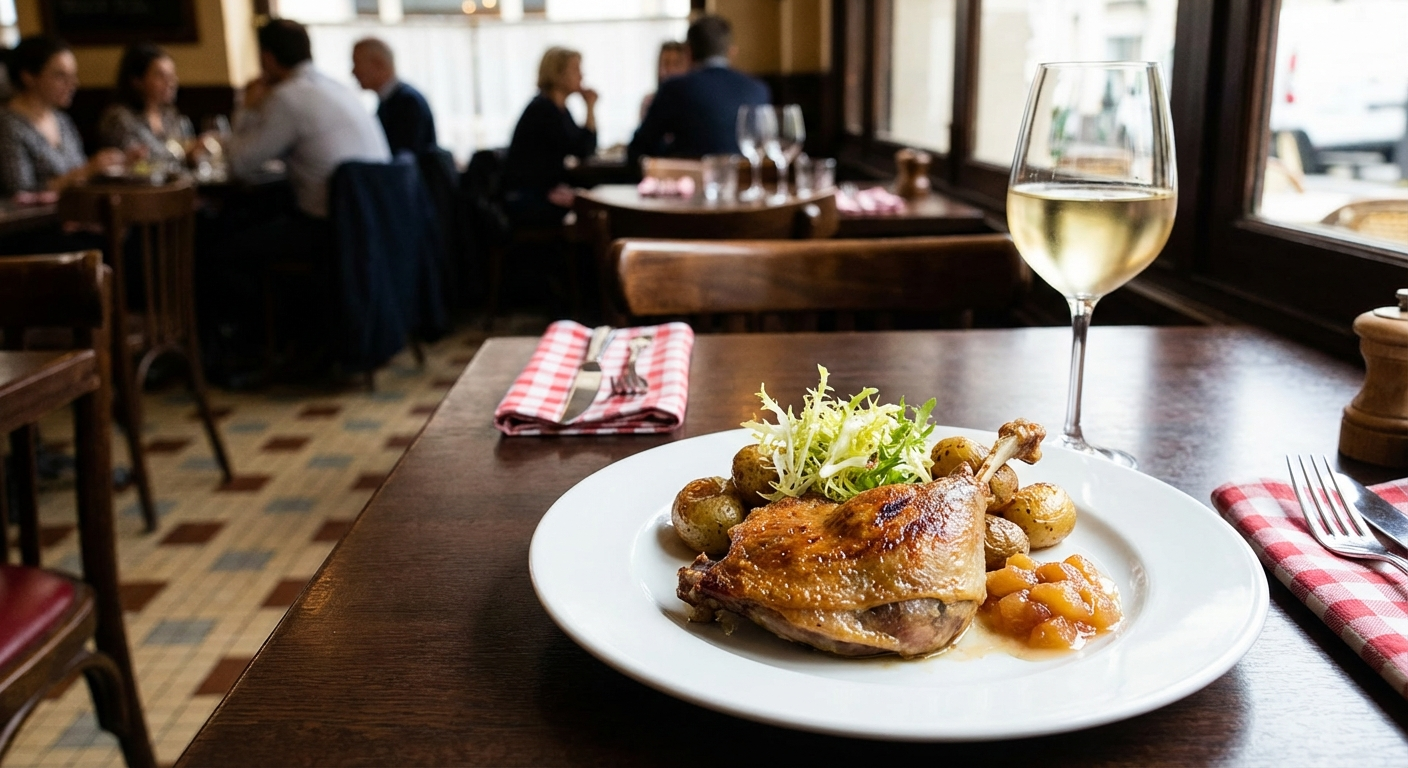
Duck confit — legs slow-cooked in their own fat until the meat falls off the bone, then crisped under high heat — is the richest duck preparation. The meat is deeply savory, almost unctuous, with a concentration of flavor that comes from the long, gentle cooking process. The skin, when crisped properly, provides the textural contrast that keeps this dish from becoming one-note.
Top pick: Madiran. This is the pairing the Southwest French figured out centuries ago, and nobody's improved on it since. Madiran, made primarily from the Tannat grape, has aggressive tannins and dark fruit intensity that can cut through confit's extreme richness without blinking. The wine's rusticity mirrors the dish's peasant-food origins, while its black plum and leather notes complement the concentrated, savory duck. Look for producers like Château Montus or Domaine Labranche Laffont.
Runner-up: Cahors (Malbec). Another Southwest French pairing that works on the same principle — high tannin, dark fruit, enough structure to match confit's richness. Cahors Malbec (locally called Côt) tends to be more austere and tannic than Argentine Malbec, with inky black fruit, tobacco, and a minerality that grounds the dish's richness. The regional logic here is sound: duck confit is the signature dish of this region, and the wines evolved alongside it.
Budget move: Côtes du Rhône Villages. If you want something more approachable, a good Côtes du Rhône Villages (Grenache-Syrah blend) has the warmth and fruit to complement confit's savory depth, with enough tannin to handle the fat. It won't cut through as aggressively as Madiran, but the softer approach works if you prefer a more harmonious pairing over a contrasting one.
Surprise pick: White Burgundy (Meursault). A rich, oak-aged Chardonnay from Meursault can be extraordinary with duck confit. The wine's buttery texture harmonizes with the duck fat rather than cutting through it, while the underlying limestone acidity provides enough freshness to keep the pairing from becoming cloying. The hazelnut and brioche notes from oak aging echo the toasty flavors of the crisped skin. This works best when the confit is served with a simple frisée salad dressed in vinaigrette — the acid from the salad does some of the work the wine doesn't.
Best Wine with Whole Roasted Duck
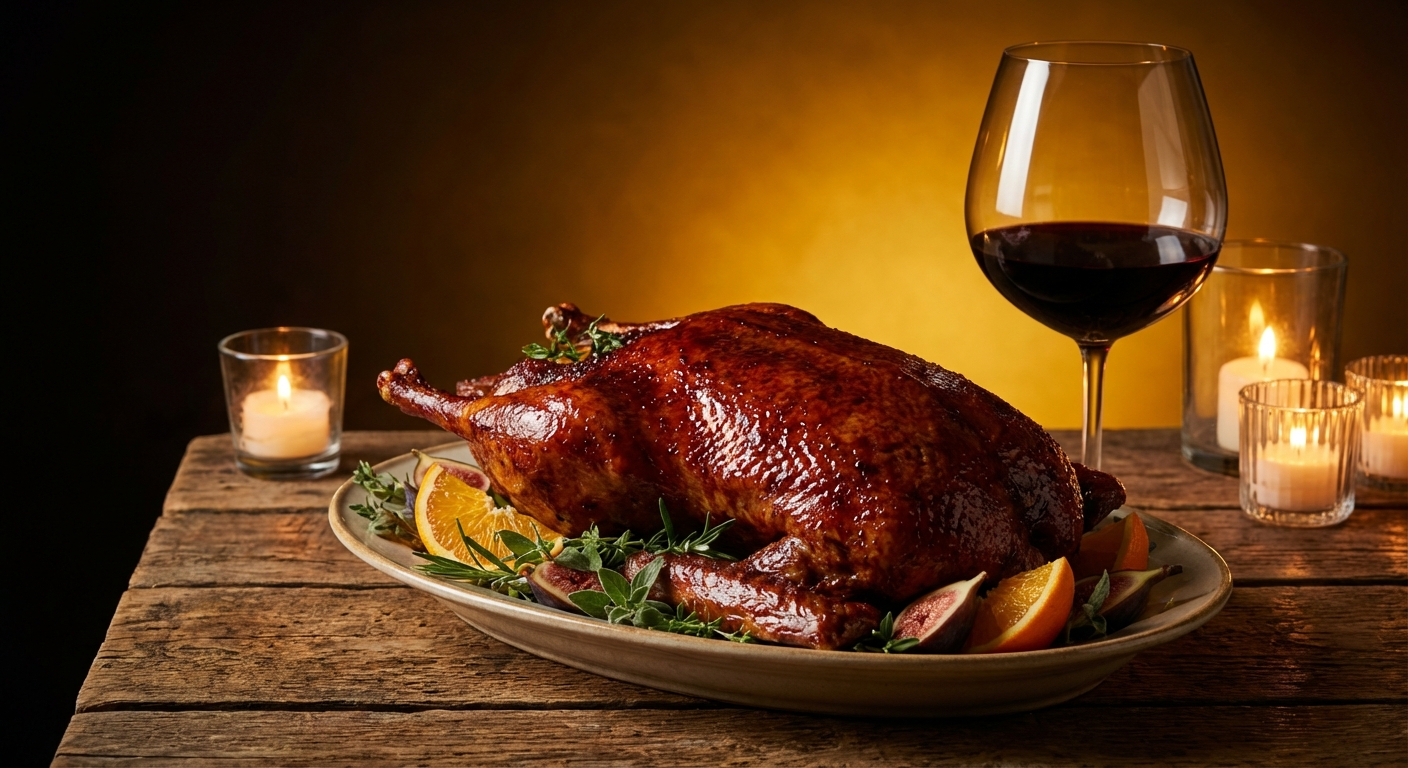
Whole roasted duck splits the difference between breast and confit. You get the leaner breast meat and the fattier leg meat, all wrapped in a shell of rendered, crispy skin. The challenge — and opportunity — is finding a wine that handles both textures. You need something with enough acidity for the breast and enough tannin for the legs.
Top pick: Northern Rhône Syrah (Crozes-Hermitage or Saint-Joseph). Syrah from the Northern Rhône is duck's ideal all-purpose partner. It has the dark fruit and peppery spice to complement the gamey meat, the tannin structure to cut through leg fat, and the freshness to match the leaner breast. A Crozes-Hermitage from Alain Graillot or a Saint-Joseph from Domaine Coursodon hits the sweet spot — serious enough for roasted duck, but not so extracted that it overwhelms the bird. The Syrah's signature black olive and smoked meat notes also create a savory echo with the duck's own roasted flavors.
Runner-up: Châteauneuf-du-Pape. For a special-occasion roasted duck, a Grenache-dominant Châteauneuf-du-Pape brings warmth, complexity, and spice that elevate the whole affair. The wine's garrigue herbal notes (thyme, rosemary, lavender) are essentially the same herbs you'd stuff inside the duck's cavity, creating a natural bridge between food and wine. Choose a producer with restraint — Château Rayas, Clos des Papes, or Domaine de la Janasse — rather than an over-extracted bomb.
Runner-up: Pomerol (Right Bank Bordeaux). Merlot-dominant Pomerol has the plush texture and dark fruit to match roasted duck's richness, with enough structure from the clay soils to keep things grounded. The wine's truffle and cocoa notes pair beautifully with duck's earthy gaminess, especially if the bird has been roasted with root vegetables. A village Pomerol or Lalande-de-Pomerol offers this pairing at a more accessible price point than the grand names.
Best Wine with Peking Duck
Peking duck — air-dried, lacquered with maltose, and roasted until the skin is paper-thin and crackly — requires a different approach. The hoisin sauce, scallions, and thin pancakes introduce sweet, savory, and carb elements that change the equation entirely. You're pairing with a complete dish, not just the protein.
Top pick: Gewürztraminer (Alsace). This might seem counterintuitive, but aromatic Alsatian Gewürztraminer is phenomenal with Peking duck. Its lychee and rose aromatics harmonize with hoisin's sweet-spicy profile, while its rich, almost oily texture matches the duck's unctuousness. The slight residual sugar in many Gewürztraminers (even the "dry" ones) bridges the gap with hoisin sauce in a way that bone-dry wines can't. Look for Grand Cru bottlings from Trimbach or Hugel for the best balance of sweetness and acidity.
Runner-up: Riesling Spätlese (Mosel). A German Riesling with a touch of sweetness and laser-like acidity is another excellent Peking duck partner. The Riesling's petrol and citrus notes cut through the lacquered skin's richness, while its sweetness complements the hoisin sauce. The low alcohol (7-9%) keeps the pairing light and refreshing, which matters when you're eating rich duck wrapped in pancakes.
Red option: Gamay (Beaujolais Cru). If you insist on red, a lightly chilled Morgon or Fleurie brings bright cherry fruit and low tannin that won't clash with hoisin's sweetness. Serve it at 55°F — the slight chill makes it refreshing enough to work with the dish's complexity. Gamay's lack of aggressive tannin is actually an advantage here, since tannins can clash with sweet sauces.
Best Wine with Smoked Duck
Smoked duck breast — whether cold-smoked for charcuterie boards or hot-smoked for slicing — adds a layer of wood-fire flavor that narrows your wine options productively. Smoke compounds interact with wine tannins in specific ways, and getting this right makes the difference between a good pairing and a great one.
Top pick: Côte-Rôtie. Northern Rhône Syrah from the Côte-Rôtie appellation has a natural affinity with smoke. The wine itself often shows smoky, bacon-fat notes from the granite soils and traditional winemaking, creating an echo effect with smoked duck. The co-fermented Viognier (up to 20% is allowed) adds a floral lift that prevents the pairing from becoming too heavy. This is one of those pairings where food and wine seem to merge into a single experience.
Runner-up: Ribera del Duero. Spanish Tempranillo from Ribera del Duero brings smoke-friendly characteristics — dark fruit, leather, tobacco, and toasty oak that complement wood-smoked duck's flavor profile. The wine's firm tannins handle the concentrated, chewy texture of smoked meat, while its earthy undertones match the smokiness note for note.
Budget pick: South African Pinotage. Pinotage's controversial smoky character — often described as "coffee" or "campfire" — makes it a natural partner for smoked duck. It's not the most refined pairing, but it's satisfying in a primal way. The wine's dark fruit and smoky tannins create a bold, straightforward match that works especially well on a charcuterie board with smoked duck, aged cheese, and whole-grain mustard.
Wine Pairing Quick Reference by Duck Preparation
Here's your cheat sheet for matching wine to duck at a glance:
Seared duck breast (medium-rare): Red Burgundy (Pinot Noir), Oregon Pinot Noir, Barbaresco
Duck confit: Madiran (Tannat), Cahors (Malbec), White Burgundy (Meursault)
Whole roasted duck: Crozes-Hermitage (Syrah), Châteauneuf-du-Pape, Pomerol
Peking duck: Gewürztraminer (Alsace), Riesling Spätlese, Beaujolais Cru
Smoked duck: Côte-Rôtie, Ribera del Duero, South African Pinotage
Duck rillettes: Vouvray (Chenin Blanc), Beaujolais Villages, Rosé from Provence
Duck à l'orange: Vendange Tardive Pinot Gris, Viognier, Demi-sec Champagne
Common Duck and Wine Pairing Mistakes
A few pitfalls to avoid when matching wine with duck:
Overpowering lean breast meat. A common mistake is reaching for the biggest, most tannic red you can find because "duck is rich." But duck breast, when properly cooked to medium-rare, is actually quite lean and delicate. A massive Napa Cabernet or Barossa Shiraz will bulldoze the subtle flavors. Save the heavy artillery for confit, where the richness can take it.
Ignoring the sauce. Duck is frequently served with fruit-based sauces (cherry, orange, plum) or savory reductions. The sauce often drives the pairing more than the duck itself. A cherry gastrique calls for Pinot Noir. An orange glaze wants off-dry whites. A black pepper jus demands Syrah. Always consider the complete plate.
Serving reds too warm. Duck's richness means your wine is already fighting an uphill battle against palate fatigue. Serving red wine at true room temperature (72°F+) makes it taste flabby and alcoholic alongside fatty duck. Chill your reds to 60-65°F — the extra freshness makes a significant difference, especially with Pinot Noir and Gamay.
Overlooking white wines entirely. The "red meat = red wine" rule breaks down with duck. Rich whites — particularly oak-aged Chardonnay, Gewürztraminer, and Chenin Blanc — can be extraordinary duck partners. White wines bring acidity without tannin, which can be more pleasant with preparations where the fat is front and center (confit, rillettes). Don't dismiss whites before trying them.
Frequently Asked Questions
What is the best wine to pair with duck?
Pinot Noir (especially Red Burgundy) is the most versatile wine for duck. Its bright acidity cuts through duck fat, its earthy notes complement the gamey meat, and its moderate tannins match without overpowering. For richer preparations like confit, consider Madiran or Cahors.
Can you drink white wine with duck?
Absolutely. Rich, oak-aged white wines like Meursault (Chardonnay) pair beautifully with duck confit, while aromatic whites like Gewürztraminer and Riesling are excellent with Peking duck and duck à l'orange. White wines bring acidity without tannin, which works well with fattier preparations.
What wine goes with duck confit?
Madiran (made from Tannat grapes) is the traditional and best pairing for duck confit. Its aggressive tannins cut through the extreme richness of meat slow-cooked in its own fat. Cahors Malbec and surprisingly Meursault (white Burgundy) are excellent alternatives.
Is Pinot Noir or Cabernet better with duck?
Pinot Noir is almost always the better choice. Duck breast is leaner than most people realize, and Cabernet's heavy tannins can overwhelm the delicate meat. Pinot Noir's lighter body, higher acidity, and earthy complexity complement duck far more gracefully. Save Cabernet for beef.
What wine pairs with Peking duck?
Aromatic whites work best with Peking duck. Alsatian Gewürztraminer's lychee notes harmonize with hoisin sauce, while Mosel Riesling Spätlese's acidity and slight sweetness complement the lacquered skin. For red wine, try a chilled Beaujolais Cru (Gamay), which won't clash with the sweet sauce.
More Pairing Guides
Best Bourbon for Pork Ribs vs Beef Ribs: Complete Pairing Guide
Pork ribs and beef ribs aren't interchangeable when it comes to bourbon pairing. Fat content, smoke intensity, and flavor depth determine which bottle works best. Here's the complete breakdown.
12 min readBest Bourbon for BBQ Ribs: 7 Perfect Pairings (Tasted & Ranked)
Not every bourbon works with every style of ribs. Here are 7 bourbon pairings ranked by rib type, sauce style, and smoke profile — with specific bottles tested against real BBQ.
10 min readBest Wine with Tri-Tip: Expert Pairing Guide
Tri-tip demands wines with enough structure to match its intensity while complementing its smoky, savory profile.