Best Wine with New York Strip: 7 Pairings a Sommelier Actually Recommends
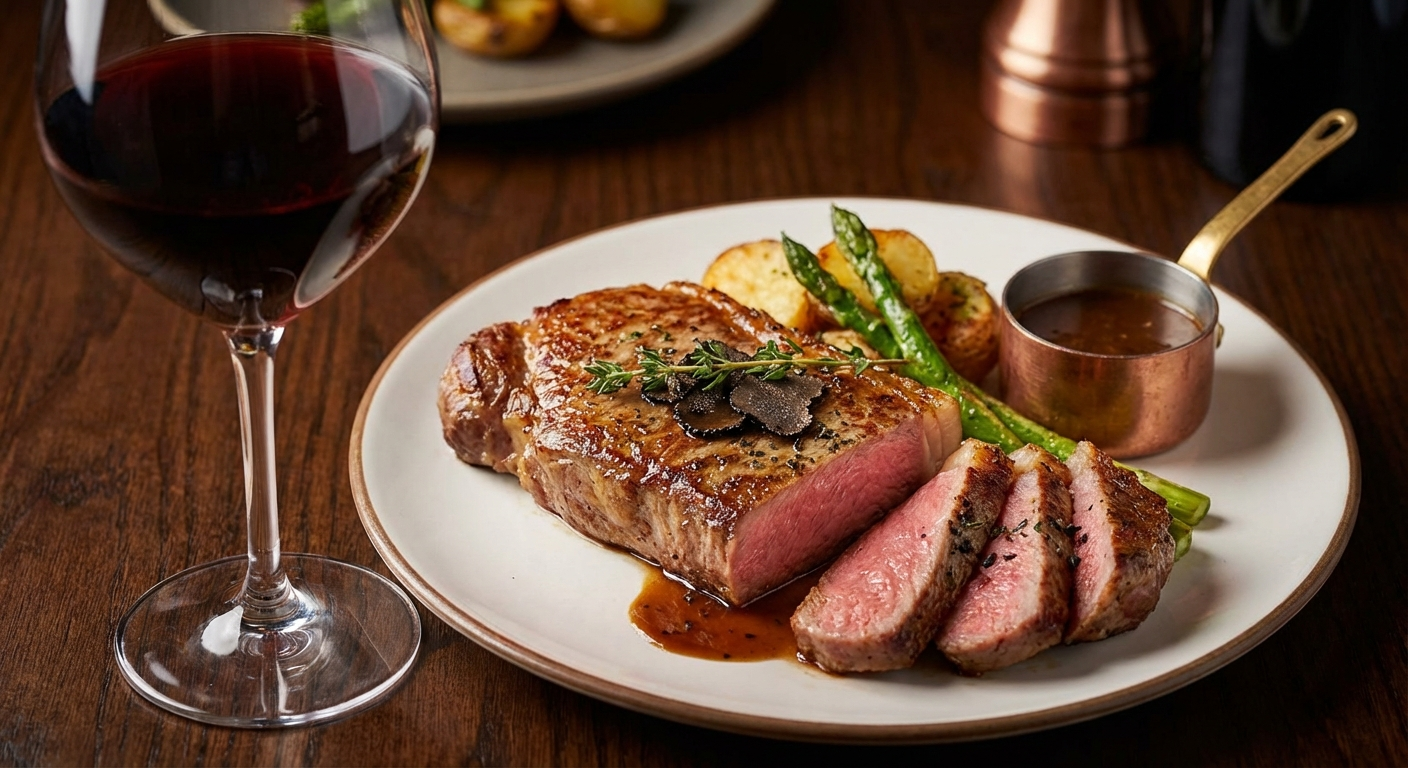
After twenty-plus years of opening wine tableside at steakhouses, I can tell you something most pairing guides get wrong: the New York strip is the most versatile steak on the menu for wine pairing. Not the ribeye. Not the filet. The strip.
Why? Because it lives in the Goldilocks zone. It has enough marbling to soften aggressive tannins, but not so much fat that it demands a blockbuster Cab. It has enough beefy intensity to stand up to powerful wines, yet enough restraint to let subtler bottles shine. That balance means you can pour everything from a structured Bordeaux to a spicy Syrah and come away happy.
Here are the seven wines I actually recommend when someone orders a New York strip — and the science behind why each one works.
Why the New York Strip Is a Sommelier's Favorite Pairing
Before we get to the bottles, let's talk about what makes the strip unique from a pairing perspective.
The New York strip comes from the short loin, a section of the cow that does relatively little work. The result is a steak that's tender but not buttery like filet, with a firm, satisfying chew and a pronounced beefy flavor. The fat cap along one edge and the moderate intramuscular marbling (typically 15-25% in USDA Choice and Prime) provide richness without the overwhelming fattiness of a well-marbled ribeye.
For wine pairing, this translates to three key properties:
Moderate fat content: Enough lipids to soften wine tannins through protein-tannin binding, but not so much that delicate wines get buried.
Strong umami: The glutamate-rich muscle tissue amplifies savory notes in wine, making earthy and herbal wines taste even more complex.
Firm texture: The strip's density creates a longer chewing time, which means more opportunity for wine and meat flavors to integrate on the palate.
This is why sommeliers love this cut — it makes almost any well-structured red wine taste better.
1. Bordeaux Blend (Left Bank) — The Classic Match
If I could only pour one wine with a New York strip for the rest of my career, it would be a Left Bank Bordeaux. Cabernet Sauvignon dominant, blended with Merlot, Cabernet Franc, and sometimes Petit Verdot, these wines were essentially designed for this pairing.
Why it works: The strip's moderate fat softens Bordeaux's firm tannins without drowning them. The wine's cedar and graphite notes echo the steak's mineral depth. The Merlot component adds plushness that mirrors the meat's texture. And the acidity — higher than most New World Cabs — keeps your palate refreshed between bites.
What to look for: Wines from Saint-Julien or Pauillac appellations in the $30-60 range represent outstanding value. Classified growths from strong vintages (2015, 2016, 2018, 2019) with 5-10 years of age are ideal — the tannins have softened just enough.
Budget pick: Château Gloria, Saint-Julien (~$40). Punches way above its price.
Splurge pick: Château Léoville-Las Cases, Saint-Julien (~$150). One of the greatest steak wines ever made.
2. Malbec — The Velvet Glove
Argentine Malbec has become the go-to steakhouse pour for good reason, and the strip is where it truly shines. Where ribeye can sometimes overpower Malbec's softer tannins, the strip's balanced fat content creates a harmonious partnership.
Why it works: Malbec's plush, velvety tannins create a textural match with the strip's firm-yet-yielding bite. The wine's dark plum and violet aromatics provide a fruity counterpoint to the meat's savory depth. And the moderate acidity — a hallmark of high-altitude Mendoza vineyards — provides just enough cut.
What to look for: Single-vineyard Malbecs from Mendoza's Uco Valley (particularly Altamira or Gualtallary) offer concentration and freshness at remarkable prices. Altitude matters — vineyards above 1,000 meters produce wines with natural acidity that pairs better with food.
Budget pick: Catena Malbec (~$16). Reliable, well-structured, widely available.
Splurge pick: Cobos Bramare Luján de Cuyo (~$45). Depth and elegance in equal measure.
3. Rioja Reserva — The Savory Sage
This is my dark-horse recommendation — the wine that surprises guests every time. Tempranillo-based Rioja Reserva, aged in American or French oak for years before release, develops leather, tobacco, and dried cherry notes that create an almost magical synergy with grilled strip steak.
Why it works: Extended oak aging develops savory, umami-like characteristics in the wine that mirror the Maillard reaction flavors on a seared steak. The tannins are already softened from years in barrel and bottle. And Tempranillo's natural earthiness amplifies the strip's beefy character rather than competing with it.
What to look for: Reserva (aged 3+ years) or Gran Reserva (5+ years) from established bodegas. The extra aging means these wines arrive ready to drink — no decanting needed.
Budget pick: CUNE Reserva (~$18). Textbook Rioja with incredible value.
Splurge pick: López de Heredia Viña Tondonia Reserva (~$35). Unlike anything else in wine — haunting and complex.
4. Northern Rhône Syrah — The Pepper Bomb
If you season your strip with cracked black pepper — and you should — Northern Rhône Syrah is its soulmate. These wines from appellations like Crozes-Hermitage, Saint-Joseph, and Cornas bring their own pepper, smoke, and cured-meat aromatics that interweave with the steak's flavors.
Why it works: Syrah contains rotundone, the chemical compound responsible for black pepper aroma. When you pair a peppery wine with a pepper-crusted steak, the flavors harmonize rather than stack — the combined effect is actually more nuanced than either alone. The wine's smoky, meaty secondary notes (think bacon fat and olive tapenade) create a savory bridge to the beef.
What to look for: Crozes-Hermitage offers the best value in the Northern Rhône. For more concentration, Saint-Joseph and Cornas deliver power without losing elegance. Avoid New World Shiraz here — you want the Old World restraint.
Budget pick: M. Chapoutier Crozes-Hermitage "Les Meysonniers" (~$20). Textured and peppery.
Splurge pick: Jean-Louis Chave Saint-Joseph (~$50). Seamless and profound.
5. Napa Valley Cabernet Sauvignon — The Power Play
The quintessential American steakhouse wine. Napa Cabernet brings ripe fruit, generous oak, and muscular tannins — a full-throttle pairing that can overwhelm leaner cuts but meets the strip on equal terms.
Why it works: The strip's fat cap is crucial here. As you alternate bites that include the fat cap with sips of tannic Cab, the fat literally binds with the tannin molecules, softening the wine's grip and releasing its fruit. Without enough fat (as with filet), Napa Cab can taste harsh. With the strip, it's velvet.
What to look for: Mountain-grown Cabs (Howell Mountain, Spring Mountain, Diamond Mountain) tend to have more structure and less overt sweetness than valley-floor wines, making them better food partners. Look for wines with 3-5 years of age so the oak has integrated.
Budget pick: Louis M. Martini Napa Cabernet (~$25). Classic and well-priced.
Splurge pick: Dunn Howell Mountain Cabernet (~$100). Iron fist in a velvet glove.
6. Barolo — The Connoisseur's Choice
Nebbiolo from Italy's Piedmont is one of the most food-friendly red grapes on earth, and Barolo — with its high acidity, firm tannins, and complex aromatics — creates a pairing with strip steak that rewards slow, attentive eating.
Why it works: Nebbiolo's naturally high acidity acts like a palate cleanser between bites, preventing the flavor fatigue that can set in with richer, lower-acid wines. The tannins are substantial but fine-grained, integrating with the beef proteins without creating harshness. And the wine's aromatics — tar, roses, dried herbs, truffle — add layers of complexity that make each bite-and-sip cycle slightly different from the last.
What to look for: Young Barolo (5-8 years) needs decanting for at least an hour. If you want to skip the wait, Langhe Nebbiolo offers the same grape with softer tannins at a fraction of the price and age requirement.
Budget pick: G.D. Vajra Langhe Nebbiolo (~$22). Accessible and pure.
Splurge pick: Giacomo Conterno Barolo Cascina Francia (~$200). Monumental.
7. Zinfandel — The Backyard Hero
When the strip is coming off a charcoal grill rather than a restaurant's broiler, reach for California Zinfandel. Its jammy fruit, warm spice, and moderate tannins match the casual, smoky character of a grilled steak perfectly.
Why it works: Zinfandel's brambly, fruit-forward profile provides a sweet-savory contrast with beef that many tasters instinctively love. The wine's natural warmth (often 14.5-15.5% alcohol) stands up to strong char and seasoning. And its softer tannin structure works well with the strip's moderate fat without requiring hours of decanting.
What to look for: Old-vine bottlings from Dry Creek Valley, Paso Robles, or Lodi offer concentration and complexity. Avoid mass-market Zin — the best producers make wines with structure and balance, not just fruit bombs.
Budget pick: Ridge Three Valleys (~$20). From one of California's greatest producers.
Splurge pick: Ridge Lytton Springs (~$40). Old-vine depth and power.
How Preparation Changes the Pairing
The way you cook your strip steak shifts the ideal wine match:
Pan-seared with butter and herbs: The added richness from butter basting calls for wines with bright acidity. Bordeaux, Barolo, and Rioja excel here.
Charcoal grilled: Smoky char favors wines with their own smoky qualities. Syrah and Zinfandel are ideal.
Reverse-seared: This technique produces a perfectly even cook with a thin, crispy crust. The controlled richness pairs beautifully with elegant wines like Malbec or Rioja.
Au poivre preparation: The cream sauce and peppercorn crust demand a wine that can handle richness and spice. Northern Rhône Syrah is the clear winner.
With chimichurri: The herbaceous, acidic sauce needs a wine with enough fruit to not taste thin. Malbec — the traditional Argentine match — is perfect.
Temperature and Service Tips
Getting the wine temperature right matters more than most people realize:
Serve slightly cool: All of these reds should be served at 60-65°F — cooler than room temperature. Too warm and the alcohol becomes aggressive, flattening the pairing. Fifteen minutes in the refrigerator before pouring works wonders.
Decant young wines: If your bottle is less than 5 years old and tannic (Bordeaux, Barolo, Napa Cab), decant 30-60 minutes before serving. This softens tannins and opens aromatics.
Pour modestly: A third of a glass lets the wine breathe in the glass and keeps the pour fresh. Refill frequently rather than pouring heavy.
Our Recommendation
For the ultimate strip steak and wine evening, start with quality beef. The Meatery's premium New York strip collection — from USDA Prime to American Wagyu — delivers the marbling and flavor that make these wine pairings sing. Season simply with salt and pepper, cook to medium-rare, and let a great bottle do the rest.
Frequently Asked Questions
Can I pair white wine with New York strip?
It's unconventional but not impossible. A full-bodied, oaked Chardonnay (white Burgundy like Meursault) can work, especially with a butter-basted preparation. But red wine will always be the superior match for the strip's beefy intensity and moderate fat content.
What's the best budget wine for New York strip?
Argentine Malbec offers the best quality-to-price ratio for strip steak. Wines like Catena or Altos Las Hormigas deliver excellent structure and fruit for under $20. CUNE Rioja Reserva at around $18 is another outstanding value.
Does the grade of beef affect wine pairing?
Yes. Higher-graded beef (Prime, Wagyu) has more marbling, which softens tannic wines more effectively. With a Prime strip, you can comfortably pour a young, tannic Barolo or Napa Cab. With Choice, lean toward softer wines like Malbec or Rioja.
Should I match the wine price to the steak price?
It's a reasonable guideline. A $50 steak deserves a $30-50 wine. But some of the best pairings happen at accessible price points — a $16 Catena Malbec with a well-seasoned strip is genuinely delicious. Don't let price dictate enjoyment.
How many bottles should I buy for a steak dinner for four?
Plan on one bottle per two people for a standard dinner, plus one extra if you want variety. For four guests and strip steaks, two different bottles — say a Bordeaux and a Malbec — lets everyone discover their preference.
More Pairing Guides
Best Bourbon for Pork Ribs vs Beef Ribs: Complete Pairing Guide
Pork ribs and beef ribs aren't interchangeable when it comes to bourbon pairing. Fat content, smoke intensity, and flavor depth determine which bottle works best. Here's the complete breakdown.
12 min readBest Bourbon for BBQ Ribs: 7 Perfect Pairings (Tasted & Ranked)
Not every bourbon works with every style of ribs. Here are 7 bourbon pairings ranked by rib type, sauce style, and smoke profile — with specific bottles tested against real BBQ.
10 min readBest Wine with Tri-Tip: Expert Pairing Guide
Tri-tip demands wines with enough structure to match its intensity while complementing its smoky, savory profile.