Best Wine With Pork Chops: Pairing Guide by Cut & Cooking Method
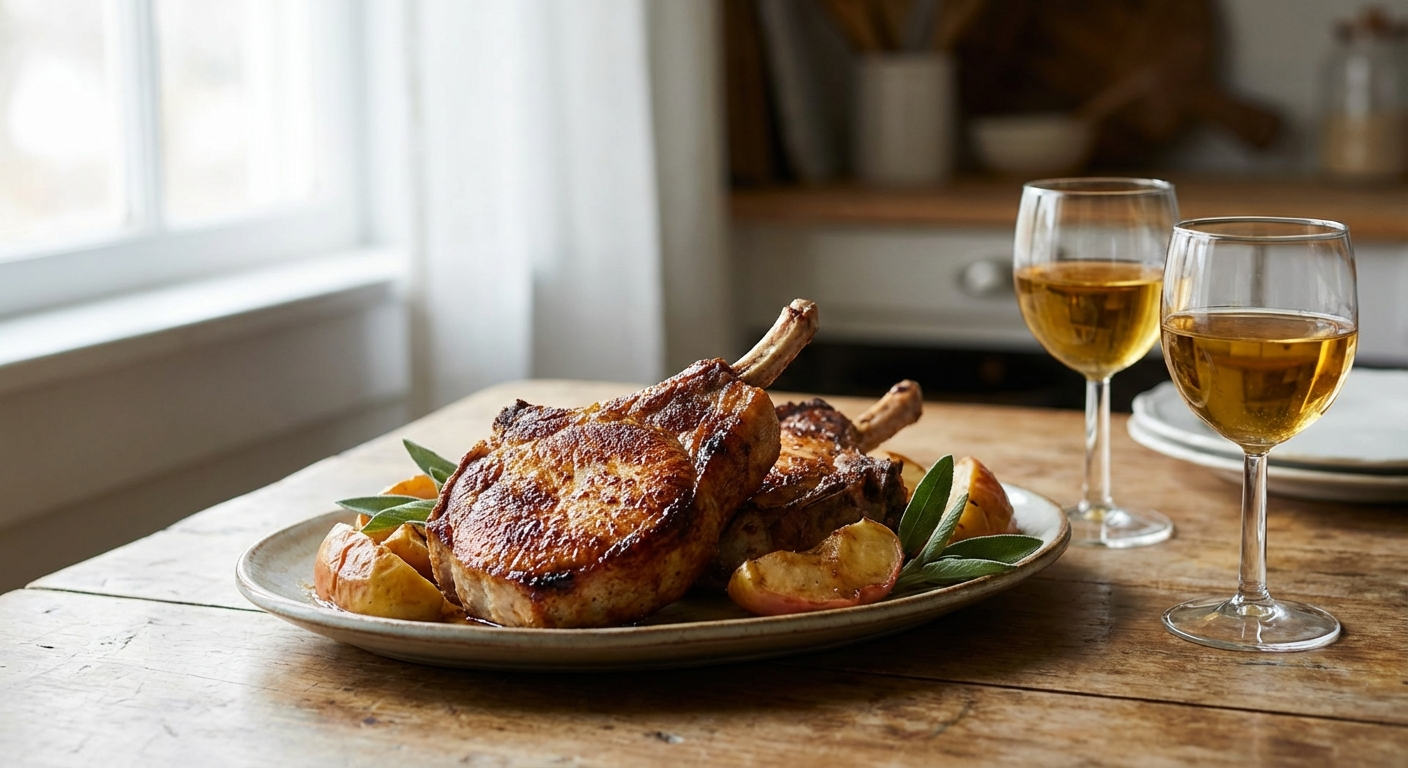
Pork chops are the most versatile wine-pairing protein in the kitchen, and that versatility is exactly what makes choosing a bottle so confusing. Unlike a ribeye that screams for Cabernet or a piece of halibut that begs for Chablis, pork chops occupy the middle ground — rich enough for red wine, lean enough for white, and adaptable enough to shift in either direction depending on how you cook them.
The real answer to "what wine goes with pork chops" is: it depends. A thick, bone-in rib chop brined and seared in cast iron is a fundamentally different pairing target than a thin-cut loin chop pounded flat and breaded for schnitzel. This guide gives you specific, actionable pairings for every scenario you'll actually encounter.
Every recommendation includes grape variety, region, and price range — because "pair with a medium-bodied red" is the kind of advice that helps nobody make an actual decision at the wine shop.
Why Pork Chops Are the Ultimate Wine-Pairing Protein
Pork sits between poultry and beef on every spectrum that matters for wine pairing: fat content, flavor intensity, and texture. This middle position is what gives you so much flexibility, but it also means you need to pay closer attention to the details.
Fat content drives the equation. A well-marbled bone-in rib chop from heritage-breed pork carries enough intramuscular fat to stand up to medium-tannin reds. A center-cut loin chop — lean, mild, and quick-cooking — pairs better with whites that won't bulldoze the delicate flavor. The fat content of your specific chop matters more than any general rule about pork and wine.
Pork has natural sweetness. Unlike beef or lamb, pork carries a subtle sweetness that becomes more pronounced when caramelized during searing or roasting. This sweetness creates a bridge to wines with fruit-forward profiles. It also means bone-dry, austere wines can clash — they emphasize the sweetness in an unflattering way rather than complementing it.
Seasoning is the wildcard. Pork chops absorb marinades, rubs, and brines more readily than almost any other cut. A chop rubbed with sage and garlic is a different pairing target than one glazed with bourbon and brown sugar. The cooking method and seasoning often matter more than the cut itself when choosing wine.
The brining factor. Modern pork is leaner than ever, which means many cooks brine their chops for moisture insurance. Brined pork picks up salt, and salt changes wine perception — it softens tannins and makes acidic wines taste rounder. If you brine your chops, you can push toward slightly more tannic reds than you'd normally choose.
Best Wine for Bone-In Rib Pork Chops
The bone-in rib chop is the king of pork cuts. It comes from the rib section with a generous eye of meat, a fat cap, and the bone itself contributing flavor during cooking. This is the chop you sear hard in cast iron, finish in a hot oven, and let rest like a steak. It has enough richness and structure to handle wines with real body.
Top pick: Côtes du Rhône Blanc (Viognier-Roussanne blend). This might surprise you, but a well-made white Rhône blend is devastating with a thick rib chop. The Viognier brings stone fruit and floral aromatics that complement the pork's natural sweetness, while Roussanne adds enough weight and texture to stand up to the fat. Look for Château de Saint Cosme or Domaine de la Janasse. Expect $18-30 for a bottle that makes this pairing feel like fine dining.
Red alternative: Oregon Pinot Noir. When you want red wine with a rib chop, Oregon Pinot Noir is the sweet spot. It has enough structure to handle the fat cap without the tannin sledgehammer of Cabernet. The red cherry and earth notes mirror the savory-sweet character of well-seared pork. Willamette Valley producers like Adelsheim, Ponzi, and Sokol Blosser consistently deliver at $25-45.
Splurge pick: White Burgundy (Meursault or Puligny-Montrachet). A premier cru Meursault with its buttery richness and hazelnut undertones is one of the most luxurious pairings for a perfectly cooked rib chop. The wine's weight matches the meat's richness, while its acidity keeps each bite feeling fresh. This is a $50-80 bottle that turns a Tuesday pork chop into a Michelin moment.
Best Wine for Center-Cut Loin Chops
Center-cut loin chops are the lean, everyday pork chop — the one most people buy at the supermarket. They cook quickly, dry out easily if overcooked, and have a mild, clean flavor. These chops need wines that complement rather than compete.
Top pick: Alsatian Pinot Gris. Alsatian Pinot Gris has body, subtle sweetness, and enough acidity to make lean pork sing. It's richer than Pinot Grigio but drier than most people expect, with pear, honey, and smoke notes that wrap around a loin chop like they were designed for each other. Trimbach, Hugel, and Domaine Weinbach are reliable producers at $15-30.
Runner-up: Vouvray (Chenin Blanc). A demi-sec Vouvray — off-dry with electrifying acidity — does something magical with lean pork. The touch of residual sugar matches the pork's natural sweetness while the acid cuts through any richness from the cooking fat. Domaine Huet and François Chidaine produce world-class examples. The off-dry style is key — bone-dry Chenin Blanc is less effective here.
Light red option: Beaujolais (Gamay). A cru Beaujolais from Fleurie, Morgon, or Moulin-à-Vent has the right weight for lean loin chops — fruity and fresh without heavy tannins. Serve it slightly chilled (about 55°F) and the juicy red fruit character makes a simple grilled loin chop feel celebratory. Marcel Lapierre, Jean Foillard, and Château du Moulin-à-Vent are outstanding choices under $25.
Best Wine for Thin-Cut and Pounded Pork Chops
Thin-cut chops — including pounded cutlets for schnitzel, milanese, and tonkatsu — are a different animal entirely. They cook in minutes, develop an all-crust exterior, and are usually served with a sauce or condiment that drives the pairing.
Top pick: Austrian Grüner Veltliner. There's a reason schnitzel and Grüner Veltliner is a national pairing in Austria — the wine's white pepper spice and crisp citrus acidity cut through breaded, fried pork like a knife. The match is so clean and refreshing that it makes you want another bite immediately. Look for Smaragd-level Grüner from the Wachau region for the most impressive results, or any well-made Federspiel for everyday use. $15-35 depending on quality tier.
Runner-up: Cava Brut. Sparkling wine with fried food is one of wine pairing's great cheat codes, and Spanish Cava is the best value play. The bubbles physically lift fried coating residue from your palate, the yeasty autolysis notes complement the golden crust, and the price (often $10-15 for excellent Cava) means you can drink it freely. Gramona and Raventós i Blanc make serious Cava that belongs in this conversation.
Italian answer: Verdicchio dei Castelli di Jesi. If you're making pork milanese with an arugula and lemon salad on top, this central Italian white is perfect. It has almond notes, saline minerality, and enough body to stand up to the meat while its acidity harmonizes with the lemon. It's also absurdly underpriced for the quality — $12-20 for wines that compete with bottles twice the price.
How Cooking Method Changes Your Wine Choice
The same pork chop prepared four different ways needs four different wines. Cooking method transforms the flavor profile more dramatically with pork than with almost any other protein, because pork's mild base flavor lets the cooking technique take center stage.
Pan-seared in cast iron: High-heat searing develops a deep Maillard crust that adds nuttiness, caramelization, and concentrated pork flavor. This preparation can handle the most structured wines — Oregon Pinot Noir, Côtes du Rhône rouge, or a rich Chardonnay. The crust creates a flavor anchor that wines can build on.
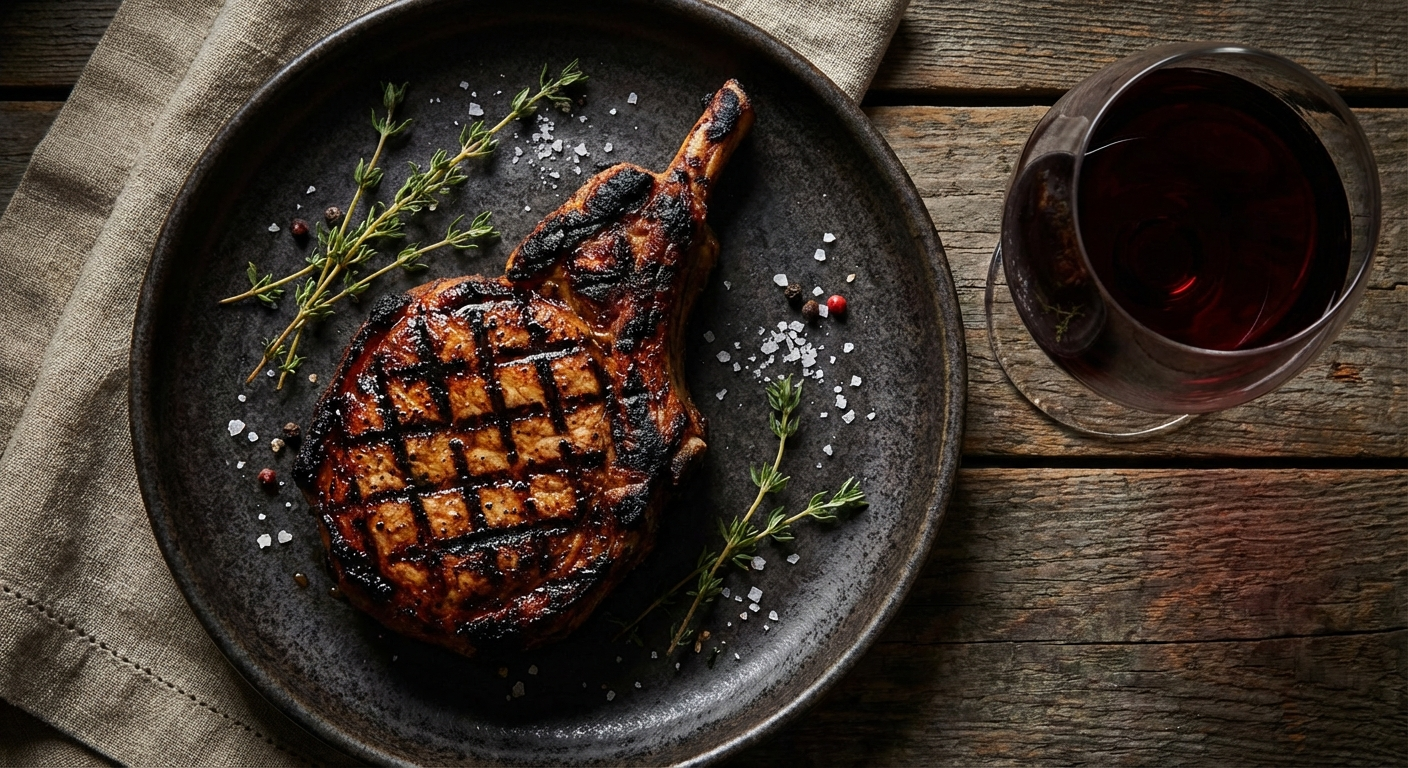
Grilled over charcoal: Smoke and char add a layer that pushes the pairing toward reds. Grenache-based blends, Zinfandel, or Tempranillo bring complementary smoky, spicy notes. Grilled pork chops also develop more exterior sweetness from caramelized sugars, so wines with some fruit generosity work better than austere, mineral-driven bottles.
Brined and roasted: Brining adds salt and moisture, roasting develops gentle caramelization. This method is the most balanced and gives you the widest wine latitude. It's the preparation where white Burgundy, Alsatian Pinot Gris, and lighter Pinot Noir all work equally well. Choose based on the sauce or seasoning rather than the cooking method.
Braised or slow-cooked: Braised pork chops develop rich, falling-apart texture and deep savory flavor. This is the one preparation where full-bodied reds are genuinely the best choice — Southern Rhône blends, Nero d'Avola from Sicily, or an aged Rioja Reserva. The concentrated flavors from long cooking need wines with equal intensity.
Breaded and fried: Fried pork chops are all about the crust. Acid and bubbles are your best friends — Grüner Veltliner, Cava, Champagne, or any crisp white with high acidity. The wine's job is to refresh your palate between bites of rich, crunchy pork.
Wine Pairing by Sauce and Seasoning
With pork chops, the sauce often matters more than the meat for wine selection. The chop is the canvas — the sauce is the painting.
Apple-based (apple cider sauce, applesauce, apple butter glaze): The classic American approach. Match the fruit with an off-dry Riesling from Alsace or Germany (Spätlese level). The wine's apple and stone fruit notes create a flavor echo that makes the whole plate feel cohesive. Alternatively, a dry Norman cider is the historically authentic pairing — Normandy has been serving pork with apple cider for centuries.
Mushroom cream sauce: Rich, earthy, umami-loaded. This sauce demands either a white Burgundy (the cream and butter echo Chardonnay's texture) or a Pinot Noir (the earthy mushroom flavors bridge to the wine's forest floor notes). Either direction works beautifully — choose based on your mood.
Mustard-herb (Dijon, whole grain, herb-crusted): The sharpness of mustard calls for wines with matching acidity and a touch of herbaceousness. Sancerre (Sauvignon Blanc from the Loire) is the textbook match — its grassy, mineral character plays off mustard like salt plays off caramel. Alternatively, a dry rosé from Provence has enough body for the pork and enough freshness for the mustard.
BBQ or sweet glaze: Sugar-heavy glazes shift the pairing dramatically. You need a wine with enough fruit sweetness to keep up without being cloying. Off-dry Riesling works again here, as does a fruity Zinfandel with its own residual sugar impression. Bone-dry wines taste bitter and thin against sweet glazes.
Italian preparation (marsala, piccata, saltimbocca): Stay Italian with the wine. Pork marsala wants a Nero d'Avola or Montepulciano d'Abruzzo. Pork piccata with its lemon-caper sauce wants a crisp Vermentino or Falanghina. Saltimbocca with its sage-prosciutto wrapping is perfect with Frascati or a light Chianti. Regional pairings exist for a reason — centuries of refinement produced these combinations.
Heritage and Specialty Pork: Different Rules Apply
If you're cooking heritage-breed pork — Berkshire (Kurobuta), Duroc, Red Wattle, or Mangalitsa — throw most of the above advice toward the red wine column. Heritage pork has dramatically more intramuscular fat, deeper flavor, and a richness that conventional pork chops simply don't have.
Berkshire/Kurobuta pork chops have enough marbling to pair with wines you'd normally reserve for beef. A Barossa Valley Shiraz, a Priorat Garnacha, or even a young Barolo works with these intensely flavored chops. The fat content can handle the tannins, and the deep pork flavor won't get lost behind a powerful red.
Mangalitsa pork — the "Kobe beef of pork" — is so richly marbled that it's practically a different protein. Treat it like you would wagyu: pair with wines that have structure but elegance. A Brunello di Montalcino or a classified-growth Bordeaux are not overkill for a perfectly seared Mangalitsa chop.
Ibérico pork from acorn-fed Spanish pigs has a distinctive nutty sweetness from the acorn diet. Spanish wines are the natural match — a Rioja Gran Reserva or a top Ribera del Duero Tempranillo. The wine and the pork share terroir in the most literal sense.
Five Bottles Under $20 That Always Work
Not every pork chop dinner needs a sommelier consultation. Here are five bottles that pair well with virtually any pork chop preparation, available at most wine shops, and priced for weeknight cooking:
1. Cru Beaujolais (Fleurie or Morgon), $15-19. The Swiss army knife of pork pairing wines. Light enough for lean chops, fruity enough for sweet glazes, fresh enough for fried preparations. If you buy one wine for pork chop season, make it this.
2. Côtes du Rhône Blanc, $12-18. A Viognier-Marsanne-Roussanne blend with stone fruit richness and enough body to handle thick-cut chops. Guigal and Perrin both make excellent versions available everywhere.
3. Alsatian Pinot Gris, $14-20. The body of Chardonnay with the acidity of Sauvignon Blanc and a smoke-and-pear character that loves pork. Hugel's "Classic" bottling is a reliable starting point.
4. Dry Rosé (Provence or Tavel), $13-18. Rosé's combination of red-fruit flavor and white-wine freshness makes it a pork chop chameleon. Works with grilled, pan-seared, or roasted preparations equally well. In warm weather, this is the default choice.
5. Spanish Garnacha (Campo de Borja or Calatayud), $9-15. Fruity, medium-bodied, low-tannin red that complements pork's sweetness without overwhelming its subtlety. Borsao "Tres Picos" is a benchmark at $12. It's arguably the best value in the entire wine-with-pork category.
Common Mistakes to Avoid
These are the errors I see most often when people pair wine with pork chops, and they're all easily fixed.
Going too heavy with Cabernet Sauvignon. Full-bore Napa Cabernet bulldozes most pork chops. The tannins overwhelm the mild meat, and the oak drowns out the pork's natural sweetness. Save the Cab for ribeye. If you want red, stay in the Pinot Noir to medium Rhône range.
Defaulting to the cheapest Pinot Grigio. Thin, characterless Pinot Grigio washes over pork without contributing anything. If you want a light white, spend the same money on Verdicchio, Albariño, or Grüner Veltliner — wines with personality that actually enhance the meal.
Ignoring the sauce. Repeat after me: the sauce drives the pairing. A mustard-crusted chop and a maple-glazed chop are different pairing targets even though the protein is identical. Always choose your wine based on the dominant flavor on the plate, not just the meat.
Serving white wine too cold. Pork-friendly whites like Viognier, Pinot Gris, and white Burgundy lose their aromatic complexity and textural richness when served straight from the fridge. Pull them out 15-20 minutes before dinner, or pour and wait 5 minutes. You want 50-55°F, not 38°F.
Forgetting about rosé. Somehow rosé gets categorized as a summer-only, salad-only wine. A structured Tavel or Bandol rosé is a year-round pork chop powerhouse. It has the weight for rich preparations and the freshness for light ones. Stop sleeping on rosé with pork.
The Bottom Line
Pork chops give you more wine flexibility than any other protein in the kitchen. The key is paying attention to three things: how thick and fatty is the chop, how are you cooking it, and what sauce or seasoning dominates the plate. Match those three variables to the right wine style and you'll never pour a bad glass with pork again.
When in doubt, reach for a cru Beaujolais or a white Rhône blend. They work with everything. When you want to dial in a perfect pairing, use this guide to match your specific cut, method, and sauce to the wine that makes all three better than they'd be alone. That's what great pairing does — it doesn't just accompany the food, it elevates the entire experience.
Frequently Asked Questions
What is the best wine to pair with pork chops?
Cru Beaujolais (Gamay) is the most versatile single choice — it works with bone-in rib chops, lean loin chops, grilled, and pan-seared preparations. For thick bone-in chops, white Rhône blends or Oregon Pinot Noir excel. For breaded/fried chops, Austrian Grüner Veltliner is ideal.
Should you drink red or white wine with pork chops?
Both work, depending on the cut and preparation. Thick, fatty bone-in chops pair well with medium reds like Pinot Noir or Beaujolais. Lean loin chops and fried cutlets favor whites like Pinot Gris, Grüner Veltliner, or white Burgundy. The sauce matters more than a red-vs-white rule.
Does the sauce on pork chops change the wine pairing?
Absolutely — the sauce often matters more than the meat itself. Apple-based sauces pair with off-dry Riesling, mushroom cream sauces with white Burgundy or Pinot Noir, mustard sauces with Sancerre, and BBQ glazes with off-dry Riesling or fruity Zinfandel.
What wine pairs with fried pork chops or schnitzel?
Austrian Grüner Veltliner is the classic match — its crisp acidity and white pepper spice cut through breaded, fried pork perfectly. Spanish Cava Brut is an excellent alternative, as the bubbles physically clean the palate between bites of rich crust.
Is Cabernet Sauvignon good with pork chops?
Generally no. Full-bodied Cabernet Sauvignon overwhelms most pork chops with heavy tannins and oak. The mild, subtly sweet pork flavor gets buried. Stick with medium-bodied reds like Pinot Noir, Beaujolais, or Grenache blends instead.
More Pairing Guides
Best Bourbon for Pork Ribs vs Beef Ribs: Complete Pairing Guide
Pork ribs and beef ribs aren't interchangeable when it comes to bourbon pairing. Fat content, smoke intensity, and flavor depth determine which bottle works best. Here's the complete breakdown.
12 min readBest Bourbon for BBQ Ribs: 7 Perfect Pairings (Tasted & Ranked)
Not every bourbon works with every style of ribs. Here are 7 bourbon pairings ranked by rib type, sauce style, and smoke profile — with specific bottles tested against real BBQ.
10 min readBest Wine with Tri-Tip: Expert Pairing Guide
Tri-tip demands wines with enough structure to match its intensity while complementing its smoky, savory profile.