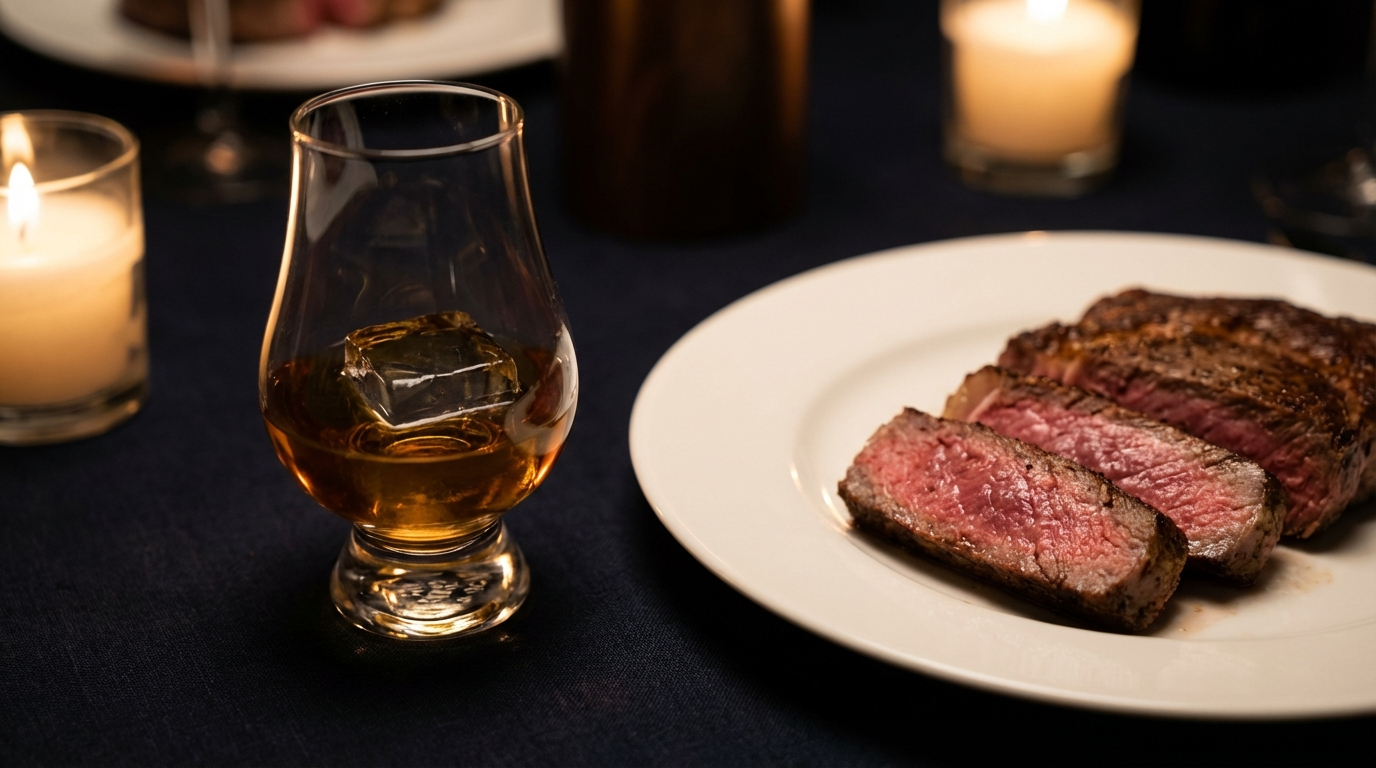
Bourbon and Beef Pairing Guide: Mastering the Match by Cut, Grade & Method (2026)
By Marcus Thompson·10 min read·
# Bourbon and Beef Pairing Guide: Mastering the Match by Cut, Grade & Method
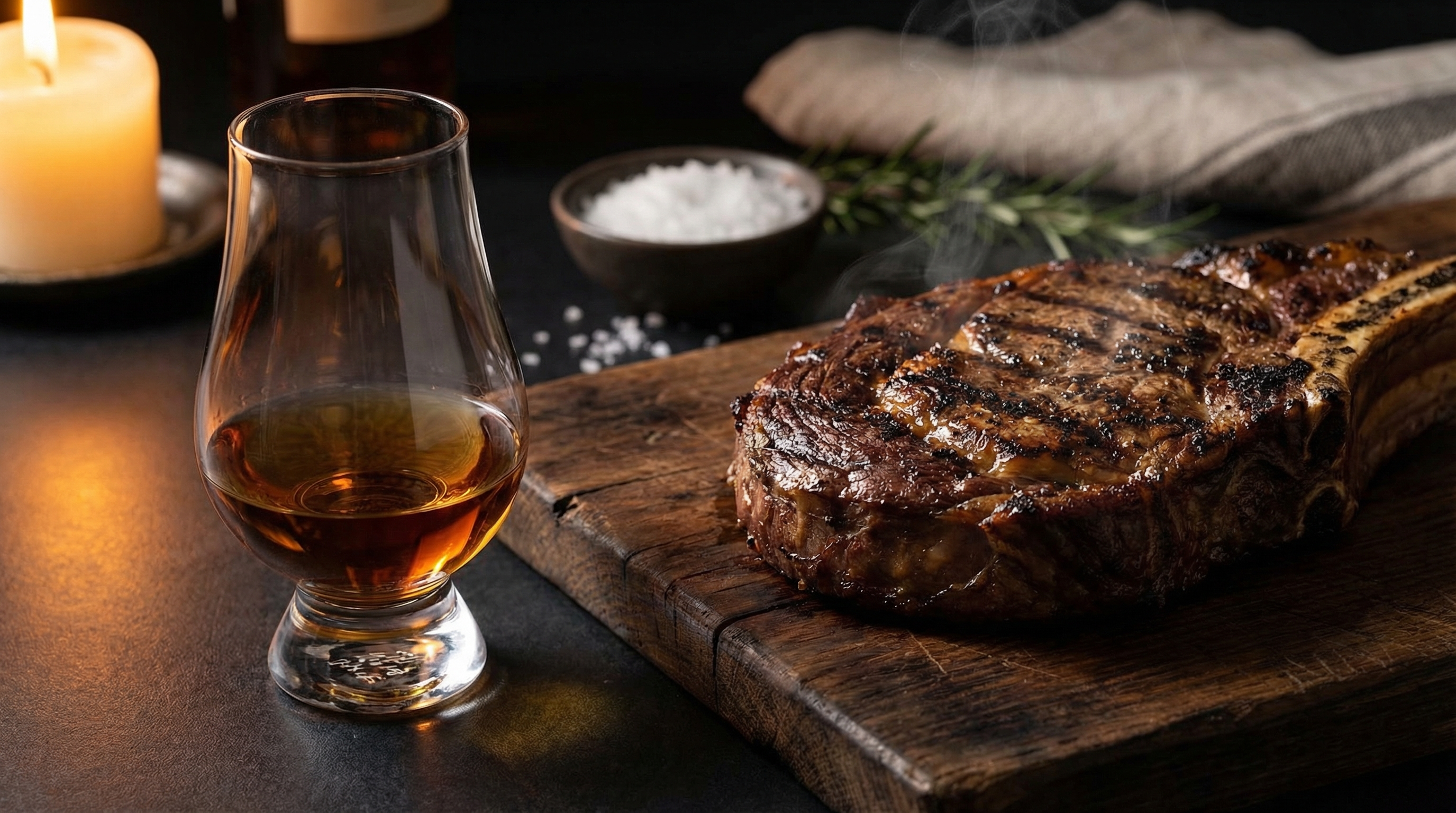
Bourbon and beef represent one of the great American culinary partnerships. Unlike wine pairing, which relies on centuries of European tradition, bourbon-beef pairing is rooted in American terroir, cooking techniques, and flavor chemistry that evolved together on this continent.
After spending fifteen years pairing American whiskeys with everything from backyard burgers to Japanese A5 wagyu, I've learned that successful bourbon-beef pairing isn't about memorizing rigid rules. It's about understanding the **structural elements** of both bourbon and beef, then matching them to create harmony, contrast, or enhancement depending on what you're trying to achieve.
This comprehensive guide will teach you the fundamental principles of bourbon-beef pairing, walk you through how different beef characteristics interact with bourbon profiles, and give you a framework you can apply to any cut, any bourbon, and any preparation method. By the end, you won't need a pairing chart—you'll understand the **why** behind every successful match.
## The Science Behind Bourbon and Beef Chemistry
Before diving into specific pairings, let's understand what makes bourbon and beef work together at a molecular level.
### Fat Solubility and Flavor Release
Bourbon's alcohol content (typically 40-50% ABV) acts as a **solvent for fat-soluble flavor compounds** in beef. When you sip bourbon after a bite of well-marbled ribeye, the alcohol dissolves residual beef fat coating your palate, releasing trapped aroma compounds and resetting your taste receptors for the next bite.
This is why high-proof bourbons (100+ proof) work so effectively with fatty cuts—the higher alcohol concentration provides more solvent action, preventing palate fatigue even when eating richly marbled beef.
### Tannin Structure and Protein Interaction
Oak aging gives bourbon **tannins**—the same astringent compounds found in red wine. These tannins bind to proteins in beef, creating a textural sensation that makes meat feel more tender and less heavy.
Bourbons with higher rye content or longer aging times have more pronounced tannin structures, making them ideal for tough, well-exercised cuts like brisket or flank steak that benefit from perceived tenderization.
### Maillard Reaction Mirror Compounds
When you sear beef at high heat, the **Maillard reaction** creates hundreds of flavor compounds: toasted notes, caramel, roasted meat aromas, and nutty undertones. Bourbon undergoes a similar transformation during barrel charring and aging.
The charred oak barrels produce **vanillins, caramel lactones, and toasted grain compounds** that mirror the Maillard reaction products in seared beef. This creates a flavor bridge where bourbon's oak-derived notes resonate with beef's char and crust, amplifying both.
### Corn Sweetness and Umami Balance
Bourbon's legal requirement of at least 51% corn in the mash bill brings **natural grain sweetness** that balances beef's intense umami and savory character. This sweet-savory interplay is why bourbon works better with beef than scotch (malt-based) or rye whiskey (spice-forward).
The corn sweetness also helps tame the metallic, iron-rich notes in rare or medium-rare beef, making the meat taste cleaner and more approachable.
## Understanding Bourbon Flavor Profiles
To pair bourbon effectively, you need to decode what's in the glass. Three primary factors shape bourbon's flavor: **mash bill**, **proof**, and **age**.
### Mash Bill Types and Their Beef Applications
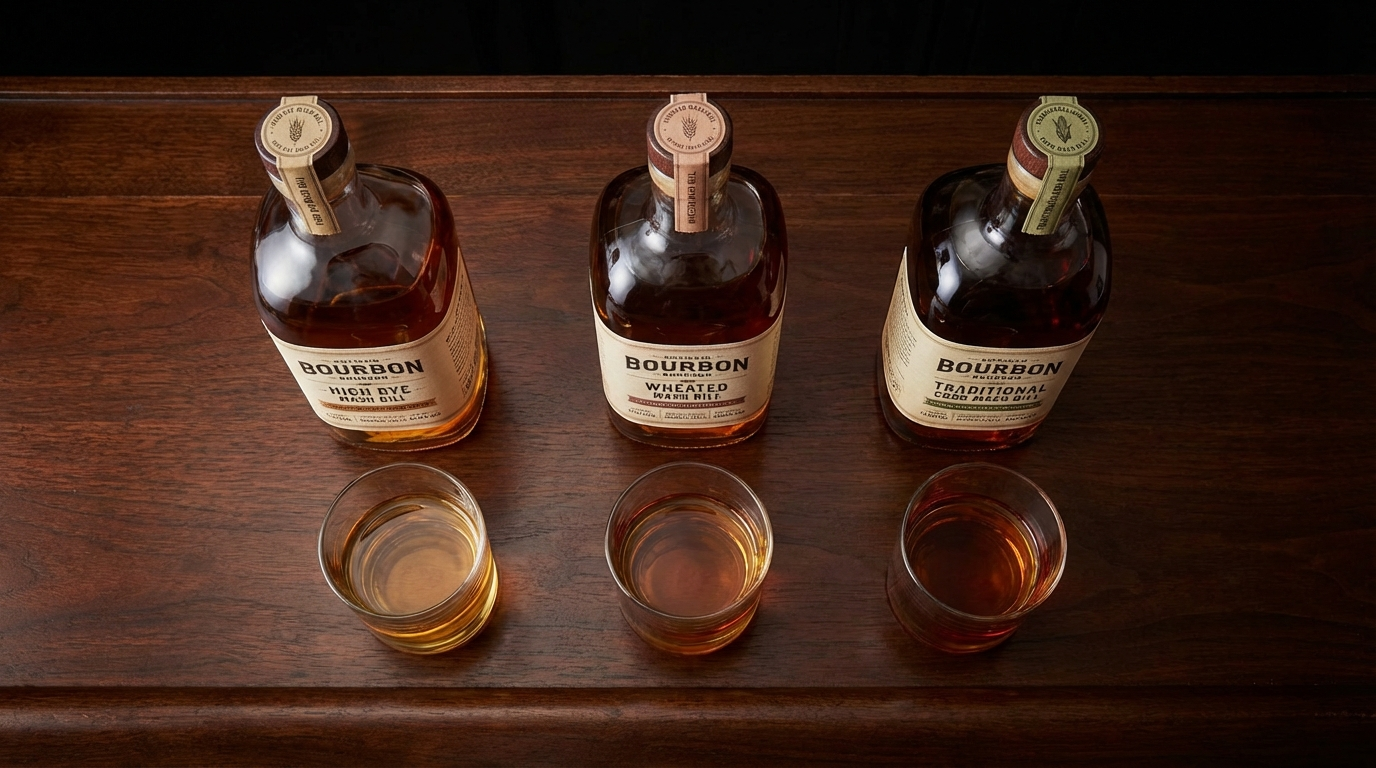
Mash bill composition determines bourbon's base flavor profile—from sweet corn-forward to spicy rye-dominant
**High-Corn Mash Bills (70%+ corn)**
**Examples:** Maker's Mark, Larceny, Old Fitzgerald
**Flavor:** Sweet vanilla, caramel, honey, minimal spice
**Best with:** Lean cuts (filet mignon, tenderloin), butter-basted preparations, delicate beef
High-corn bourbons are **gentle and approachable**. They won't overpower subtle beef flavors, making them ideal when the meat itself is the star—think butter-soft filet mignon or thinly sliced carpaccio. The sweetness complements rather than competes.
**Balanced Mash Bills (60-70% corn, 10-15% rye)**
**Examples:** Buffalo Trace, Woodford Reserve, Four Roses Small Batch
**Flavor:** Balanced caramel, vanilla, moderate spice, oak
**Best with:** Versatile—works with most cuts, especially ribeye, strip, sirloin
This is your **Swiss Army knife category**. Enough corn for sweetness, enough rye for structure, enough oak for complexity. These bourbons pair with weeknight steaks and special occasions alike.
**High-Rye Mash Bills (15-30% rye)**
**Examples:** Bulleit, Four Roses Single Barrel, Old Grand-Dad
**Flavor:** Spice-forward (pepper, cinnamon), herbal, drying tannins
**Best with:** Fatty cuts (ribeye, short rib, brisket), spice-rubbed beef, smoked preparations
High-rye bourbons bring **tannin structure and palate-cleansing spice** that cut through rich fat. If you're serving a 40-day dry-aged ribeye with a 2-inch fat cap, you need this level of intensity. The peppery rye notes also complement black pepper crusts and barbecue rubs.
**Wheated Mash Bills (wheat instead of rye)**
**Examples:** Maker's Mark, W.L. Weller, Pappy Van Winkle
**Flavor:** Soft, round, honey, baked bread, minimal burn
**Best with:** Butter-based preparations, beef wellington, prime rib with au jus
Wheated bourbons are the **luxury sedan** of bourbon—smooth, refined, non-confrontational. They work beautifully with beef preparations that already have built-in richness like beef wellington or prime rib served with creamy horseradish.
### Proof Levels and Fat Content Matching
**80-90 Proof (Low Proof)**
**Characteristics:** Smooth, approachable, subtle flavors
**Best with:** Lean beef, ground beef, burgers, beef served with sauces
Lower-proof bourbons won't overpower delicate preparations. They're excellent for casual meals where bourbon is a supporting character, not the co-star.
**90-100 Proof (Standard Proof)**
**Characteristics:** Balanced warmth, full flavor expression, versatile
**Best with:** Most cuts—this is the sweet spot for steak pairing
This range provides enough alcohol strength to cut through moderate marbling while maintaining flavor balance. Most premium bourbons sit here for good reason.
**100-115 Proof (High Proof)**
**Characteristics:** Intense warmth, concentrated flavors, powerful palate presence
**Best with:** Heavily marbled beef (wagyu, prime ribeye), fatty brisket, slow-cooked cuts
High-proof bourbons are your **heavy artillery** for seriously fatty beef. The alcohol burn might seem aggressive, but it's exactly what you need to prevent palate fatigue when eating richly marbled meat.
**115+ Proof (Barrel Proof/Cask Strength)**
**Characteristics:** Unadulterated intensity, requires dilution or careful sipping
**Best with:** Special occasion beef, A5 wagyu, dry-aged steaks with extreme funk
Barrel-proof bourbons are **enthusiast-only territory**. They're incredible with the most extreme expressions of beef but can overwhelm everyday cuts. Consider adding a few drops of water to tame the heat without losing complexity.
### Age Statement Considerations
**4-6 Years (Young Bourbon)**
**Flavor:** Bright grain sweetness, vanilla, light oak, youthful energy
**Best with:** Quick-cooked steaks, grilled beef, burgers, casual preparations
Young bourbons are **energetic and uncomplicated**—perfect for backyard grilling where you don't want to overthink the pairing.
**6-10 Years (Standard Aged)**
**Flavor:** Balanced oak, caramel, vanilla, developed complexity
**Best with:** Most steakhouse cuts, dry-aged beef under 30 days, special dinners
This is where bourbon hits its **classic profile**. Enough age to develop character, not so much that it overwhelms beef's natural flavor.
**10-15 Years (Well-Aged)**
**Flavor:** Deep oak, leather, tobacco, dried fruit, tertiary complexity
**Best with:** Long dry-aged beef (45+ days), smoked brisket, braised short ribs
Well-aged bourbons develop **savory, earthy notes** that resonate with the funky, concentrated flavors in dry-aged or slow-cooked beef. This is where bourbon transcends sweetness and becomes truly complex.
**15+ Years (Extra-Aged)**
**Flavor:** Oak-dominant, can be over-oaked, tannic, drying
**Best with:** Rich, fatty cuts only—lean beef will be overwhelmed
Extra-aged bourbons are **niche territory**. The intense oak can dominate, so pair them only with beef that has enough richness to stand up to the tannins.
## Decoding Beef Characteristics for Pairing
Just as bourbon varies widely, beef presents different characteristics that demand different bourbon partners.
### Marbling Grades and Bourbon Proof Matching
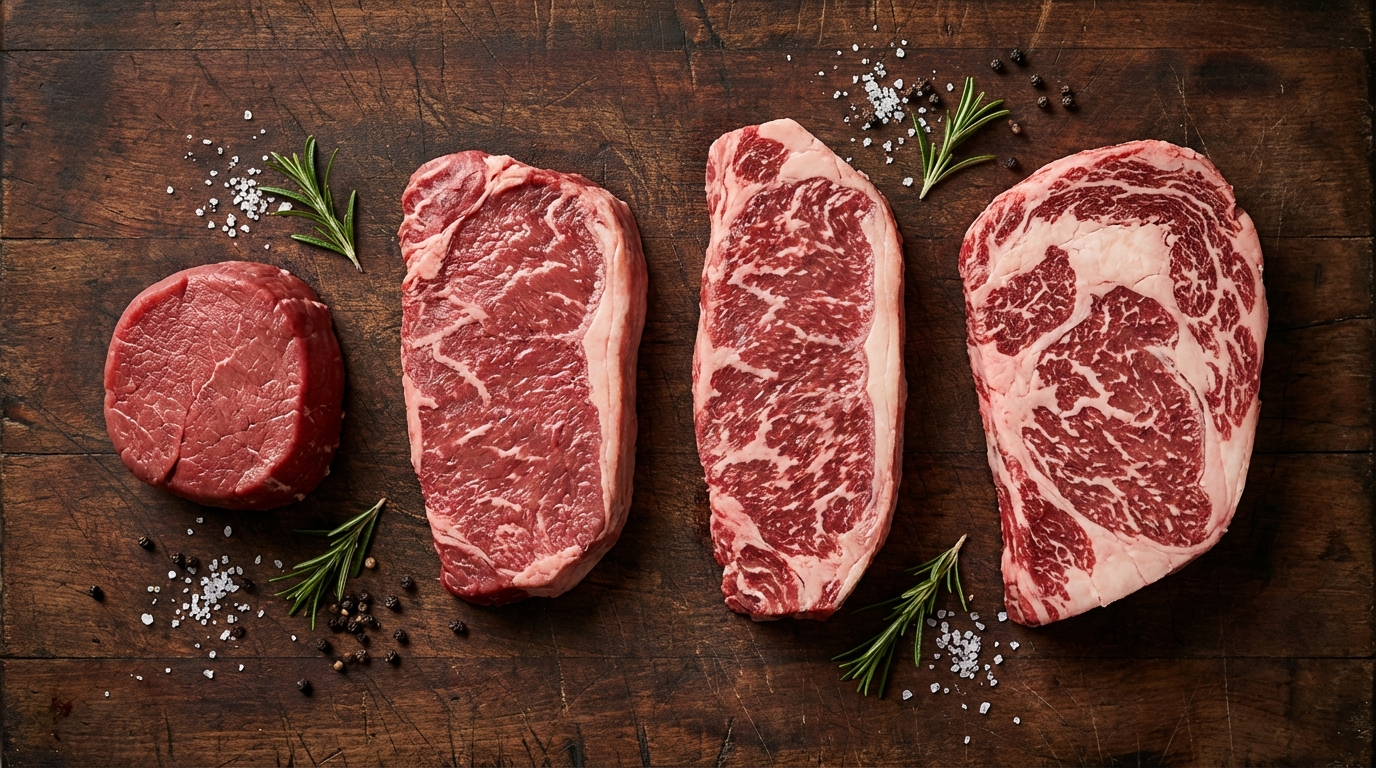
Fat content determines bourbon intensity—lean cuts need gentle bourbons, heavily marbled beef demands high-proof options
**USDA Select (Minimal Marbling)**
**Fat content:** 3-4% intramuscular fat
**Bourbon match:** 80-90 proof, high-corn or wheated mash bills
**Reasoning:** Lean beef needs gentle treatment—aggressive bourbon will overpower
Think of Select-grade beef as a **blank canvas**. You need bourbon that adds flavor without dominating. Maker's Mark (90 proof, wheated) or Buffalo Trace (90 proof, balanced) work beautifully.
**USDA Choice (Moderate Marbling)**
**Fat content:** 5-7% intramuscular fat
**Bourbon match:** 90-100 proof, balanced or slightly high-rye mash bills
**Reasoning:** Enough fat to handle moderate bourbon intensity, enough structure to benefit from rye spice
This is **America's everyday steak grade**. You want bourbon with enough character to complement but not so much intensity that it fights the beef. Four Roses Small Batch (90 proof) or Woodford Reserve (90.4 proof) hit the sweet spot.
**USDA Prime (Heavy Marbling)**
**Fat content:** 8-11% intramuscular fat
**Bourbon match:** 100-110 proof, high-rye or balanced mash bills
**Reasoning:** Significant fat requires bourbon with palate-cleansing power
Prime-grade beef is **rich and luxurious**. You need bourbon that can cut through the fat without getting lost. Wild Turkey 101 (101 proof), Knob Creek (100 proof), or Four Roses Single Barrel (100 proof) provide the necessary intensity.
**American Wagyu (Very Heavy Marbling)**
**Fat content:** 12-18% intramuscular fat
**Bourbon match:** 100-115 proof, high-rye mash bills strongly preferred
**Reasoning:** Extreme richness demands bourbon with serious tannin structure
American wagyu sits **between Prime and Japanese A5**. The fat content can overwhelm your palate if your bourbon isn't up to the task. High-rye bourbons like Bulleit (90 proof but high-rye) or barrel-proof options work best.
**Japanese A5 Wagyu (Extreme Marbling)**
**Fat content:** 25-40%+ intramuscular fat
**Bourbon match:** 100+ proof mandatory, high-rye or barrel-proof
**Reasoning:** This is the ultimate test—only powerful bourbons survive
Japanese A5 is **more fat than meat**. You absolutely need bourbon with enough proof and tannin to cleanse your palate between bites. Stagg Jr. (barrel proof), Booker's (125+ proof), or Old Grand-Dad 114 (114 proof) are minimum requirements.
### Cut-Specific Bourbon Recommendations
**Filet Mignon (Tenderloin)**
**Characteristics:** Lean, buttery texture, mild flavor, tender
**Bourbon match:** Wheated or high-corn bourbons, 80-95 proof
**Top picks:** Maker's Mark (90 proof), Larceny (92 proof), W.L. Weller Special Reserve (90 proof)
Filet is **all about texture**, not intense beefy flavor. Wheated bourbons mirror that buttery quality without adding aggressive notes that would clash.
**Ribeye**
**Characteristics:** Heavy marbling, rich beefy flavor, fat cap, tender
**Bourbon match:** Balanced to high-rye, 95-110 proof
**Top picks:** Woodford Reserve (90.4 proof), Four Roses Single Barrel (100 proof), Knob Creek (100 proof)
Ribeye is the **bourbon-lover's steak**. The marbling can handle intensity, and the rich beef flavor benefits from bourbon's oak and spice notes.
**Strip Steak (New York Strip)**
**Characteristics:** Moderate marbling, firm texture, bold beef flavor, slight chew
**Bourbon match:** Balanced mash bills, 90-100 proof
**Top picks:** Buffalo Trace (90 proof), Eagle Rare 10 Year (90 proof), Four Roses Small Batch (90 proof)
Strip steak has **structure and character** without overwhelming richness. You want bourbon that complements its firmness without overpowering.
**T-Bone / Porterhouse**
**Characteristics:** Combination of strip (firm) and tenderloin (tender), moderate to heavy marbling
**Bourbon match:** Versatile bourbons that work with both textures, 95-100 proof
**Top picks:** Wild Turkey 101 (101 proof), Elijah Craig Small Batch (94 proof), Heaven Hill Bottled-in-Bond (100 proof)
T-bones present a **pairing challenge**—you're eating two different steaks on one plate. Go with bourbons that have enough versatility to work with both the strip's firmness and the filet's tenderness.
**Brisket (Smoked)**
**Characteristics:** Fatty, smoky, tender bark, slow-cooked, deep savory flavor
**Bourbon match:** High-rye, oak-forward, 100+ proof
**Top picks:** Knob Creek (100 proof), Old Grand-Dad Bottled-in-Bond (100 proof), Russell's Reserve 10 Year (90 proof but oak-heavy)
Smoked brisket's **intense smoke and fat** require bourbon that can stand up to both. Oak-forward bourbons echo the smoke, while high rye cuts the fat.
**Short Ribs (Braised)**
**Characteristics:** Fall-apart tender, rich braising liquid, deep umami
**Bourbon match:** Aged bourbons (8+ years), 90-100 proof, complex tertiary notes
**Top picks:** Eagle Rare 10 Year (90 proof), Elijah Craig 12 Year (if available), Russell's Reserve 10 Year (90 proof)
Braised short ribs are **savory and complex** from long cooking. You need bourbon with developed tertiary flavors—leather, tobacco, dried fruit—that won't get lost in the rich sauce.
**Flank Steak / Skirt Steak**
**Characteristics:** Lean, chewy, intense beefy flavor, best served rare/medium-rare
**Bourbon match:** Balanced bourbons, moderate proof (90-95), not too aggressive
**Top picks:** Buffalo Trace (90 proof), Evan Williams Bottled-in-Bond (100 proof), Old Forester 86 (86 proof)
These cuts are **lean and flavorful**. They don't have enough fat to handle high-proof bombs, but they have enough character to work with structured bourbon.
**Ground Beef / Burgers**
**Characteristics:** Variable fat content, heavily seasoned, casual preparation
**Bourbon match:** Everyday bourbons, 80-100 proof, good value
**Top picks:** Wild Turkey 101 (101 proof), Evan Williams Black Label (86 proof), Old Forester 86 (86 proof)
Burgers are **casual and fun**. Save your allocated bottles for steaks and use reliable, affordable bourbons that still deliver good flavor.
## Cooking Method and Bourbon Pairing Strategies
How you cook your beef dramatically affects which bourbon will work best.
### Grilled Over Charcoal or Wood
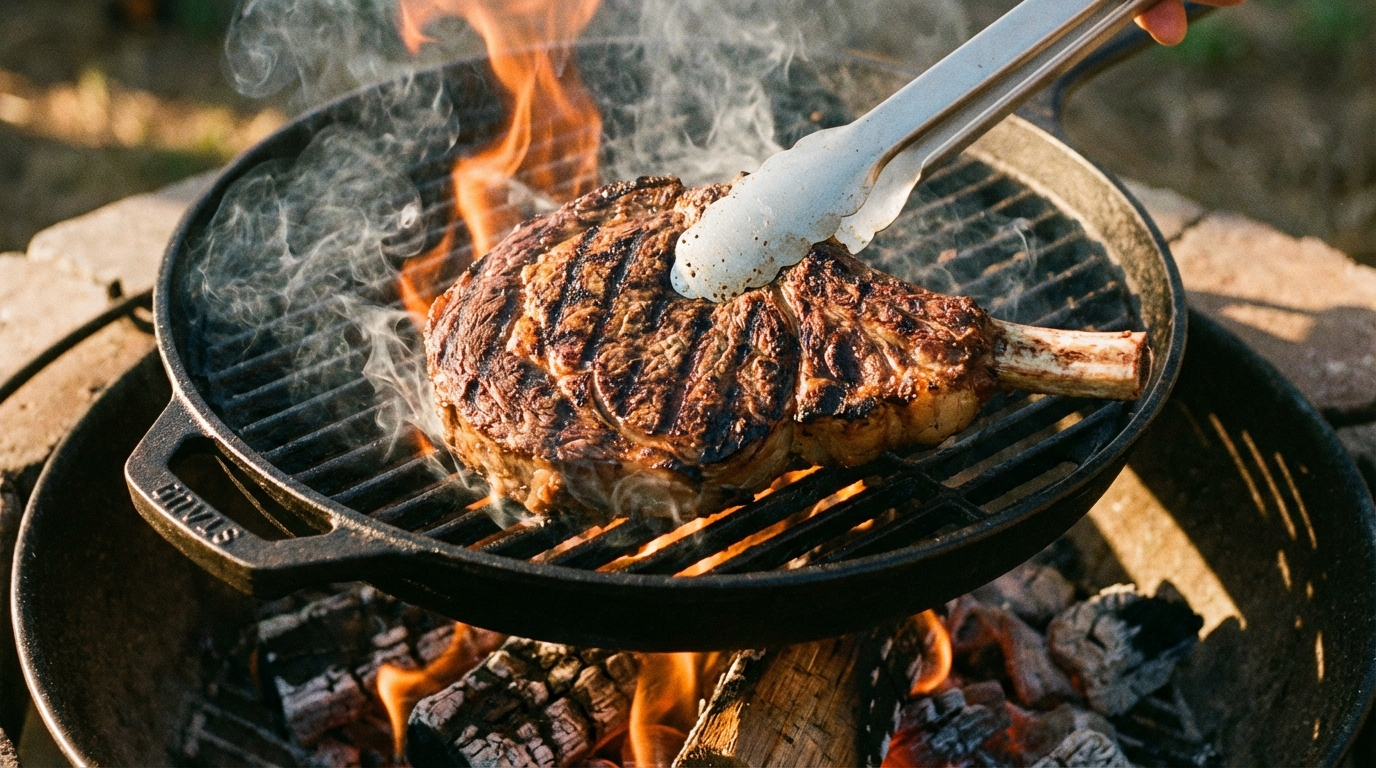
Charcoal grilling adds smoke and char flavors that demand oak-forward bourbon profiles
**Flavor additions:** Smoke, char, caramelized crust, wood aromatics
**Bourbon match:** Oak-forward bourbons that echo smoke and toast
**Top picks:** Knob Creek (9 years oak aging), Woodford Reserve Double Oaked, Old Forester 1920 (115 proof)
Charcoal grilling creates **deep char notes** from direct flame contact. You want bourbon with heavy oak influence to create a flavor bridge with the smoke and char.
**Advanced tip:** Match your wood type to bourbon flavor. **Hickory smoke** → spicy rye bourbons. **Oak/cherry smoke** → balanced bourbons. **Mesquite smoke** → high-proof bourbons to cut the intensity.
### Pan-Seared or Cast Iron
**Flavor additions:** Maillard crust, butter basting, herb infusions
**Bourbon match:** Balanced bourbons that highlight caramelization
**Top picks:** Buffalo Trace, Woodford Reserve, Four Roses Small Batch
Pan-searing is **all about the crust**. You want bourbon with caramel and vanilla notes that mirror the Maillard reaction without adding competing smoke notes.
**Advanced tip:** If you're butter-basting with herbs (thyme, rosemary), wheated bourbons like Maker's Mark complement the herbal notes beautifully.
### Reverse Sear (Low-and-Slow + High Heat Finish)
**Flavor additions:** Even doneness, concentrated beef flavor, crispy crust
**Bourbon match:** Complex bourbons with layered flavors
**Top picks:** Four Roses Single Barrel, Eagle Rare 10 Year, Elijah Craig Small Batch
Reverse searing creates **intense beef concentration** from the low-and-slow phase, plus crust from the sear. You need bourbon with enough complexity to match multiple flavor layers.
### Smoked Low-and-Slow (Brisket, Short Ribs)
**Flavor additions:** Smoke penetration, bark formation, rendered fat, tender texture
**Bourbon match:** Oak-heavy, high-proof, high-rye bourbons
**Top picks:** Knob Creek, Old Grand-Dad Bottled-in-Bond, Russell's Reserve 10 Year
Low-and-slow smoking creates **deep smoke flavor** that can overwhelm subtle bourbons. You need oak-forward, high-proof options to cut through the smoke and fat.
### Sous Vide + Sear
**Flavor additions:** Perfect edge-to-edge doneness, concentrated sear crust
**Bourbon match:** Balanced bourbons that work with precision cooking
**Top picks:** Buffalo Trace, Woodford Reserve, Maker's Mark
Sous vide creates **textural perfection** without adding smoke or char. The bourbon's job is to complement the beef's natural flavor and the post-sear crust without adding unnecessary complexity.
### Broiled or Oven-Finished
**Flavor additions:** Top crust, less char than grilling, even cooking
**Bourbon match:** Medium-proof balanced bourbons
**Top picks:** Buffalo Trace, Evan Williams Bottled-in-Bond, Old Forester 86
Broiling is **straightforward and clean**. You don't need bourbon to compete with smoke or char—just solid, balanced flavors that support the beef.
## Doneness Temperature and Bourbon Proof Matching
The internal temperature of your beef affects how bourbon interacts with it.
**Rare (120-125°F)**
**Characteristics:** Cool center, soft texture, pronounced iron notes, minimal fat rendering
**Bourbon match:** Lower-proof (80-95), sweeter bourbons to balance metallic notes
**Why:** The corn sweetness in bourbon tames the iron-rich flavor of rare beef
**Medium-Rare (130-135°F)**
**Characteristics:** Warm center, optimal texture, balanced beef flavor, moderate fat rendering
**Bourbon match:** Standard proof (90-100), versatile bourbons
**Why:** This is the sweet spot for most cuts—use your favorite balanced bourbon
**Medium (135-145°F)**
**Characteristics:** Fully warm, firmer texture, more rendered fat, reduced juiciness
**Bourbon match:** Higher proof (95-110) to cut through rendered fat
**Why:** More fat rendering means you need more palate-cleansing power
**Medium-Well to Well-Done (150°F+)**
**Characteristics:** Firm texture, dry, concentrated beef flavor, minimal juiciness
**Bourbon match:** Lower-proof, sweeter bourbons to add moisture sensation
**Why:** Well-done beef is dry—bourbon's warmth and sweetness add back perceived moisture
## Serving Bourbon with Beef: Practical Guidelines
### Glassware Selection
Proper glassware and temperature maximize bourbon's aromatic compounds and flavor interaction with beef
**Glencairn Glass**
**Best for:** Neat pours, appreciating aroma, single-barrel or special bottles
**Why:** The tulip shape concentrates aromatics, making it ideal for savoring bourbon alongside steak
**Rocks Glass (Old Fashioned)**
**Best for:** Bourbon with ice, casual meals, higher-proof bourbons
**Why:** Accommodates large ice cubes without spilling, classic steakhouse presentation
**Copita/Snifter**
**Best for:** Aged bourbons, special occasions, showing off your glassware
**Why:** Large bowl allows swirling to release aromatics, elegant presentation
**Avoid:** Wine glasses (wrong shape for spirits), shot glasses (this isn't tequila), tumbler glasses with thick glass (insulates temperature poorly)
### Ice or Neat?
**Neat (No Ice)**
**Best for:** Bourbons under 100 proof, appreciating full complexity, cool environments
**Pros:** Experience bourbon's complete flavor profile, no dilution
**Cons:** Alcohol heat can be aggressive with high-proof bottles, warming beef makes bourbon warm too
**One Large Ice Cube**
**Best for:** Bourbons over 100 proof, hot weather, very fatty cuts
**Pros:** Slight dilution tames alcohol burn, keeps bourbon cool throughout the meal
**Cons:** Over-dilution if the cube melts too fast, mutes some subtle flavors
**A Few Drops of Water**
**Best for:** Barrel-proof bourbons, opening up closed flavors
**Pros:** Releases aromatic compounds without chilling, precise control over dilution
**Cons:** Easy to over-dilute, requires experimentation to find sweet spot
**Multiple Small Ice Cubes**
**Best for:** Never—avoid this
**Cons:** Melts too fast, over-dilutes bourbon, makes it watery before you finish your steak
### Sipping Sequence and Pacing
**Pre-Meal Baseline**
Take your first sip of bourbon **before** your first bite of steak. This establishes the whiskey's flavor profile in your mind and prepares your palate.
**Pairing Rhythm**
**1.** Take a bite of steak, chew thoroughly, swallow
**2.** Wait 3-5 seconds to appreciate the beef's finish
**3.** Sip bourbon, let it coat your palate
**4.** Pause to notice how flavors interact
**5.** Repeat
**Pacing Guidelines**
- **One 2-ounce pour** should last an entire 12-16 oz steak
- **Sip slowly**—bourbon is 40%+ alcohol, not wine
- **Take water breaks**—alternate bourbon sips with water to prevent palate fatigue
- **Don't rush**—the best pairings reveal themselves over time
### Temperature Considerations
**Bourbon Temperature:**
- **Room temperature (65-70°F):** Best for appreciating full complexity
- **Slightly chilled (55-60°F):** Acceptable for high-proof bourbons in warm weather
- **Too cold (< 50°F):** Closes down aromatic compounds, mutes flavor
**Beef Temperature:**
- **Serve beef hot (130-140°F internal after resting):** Warm beef releases more aromatics that interact with bourbon
- **Let steaks rest 5-10 minutes:** Allows juices to redistribute, prevents bourbon from tasting thin next to scalding-hot meat
## Advanced Pairing Principles
Once you've mastered the basics, these advanced strategies will elevate your pairing game.
### Regional Terroir Matching
**Kentucky Bourbon + Grass-Fed Beef**
Kentucky's limestone water and regional climate create distinct bourbon terroir. Pair Kentucky bourbons (Buffalo Trace, Woodford Reserve, Maker's Mark) with grass-fed beef—both showcase **terroir-driven flavor** over sheer richness.
**Tennessee Whiskey + Southern-Style BBQ Beef**
Tennessee whiskey (Jack Daniel's Single Barrel, George Dickel) goes through charcoal filtering (Lincoln County Process). This creates a **smoother, slightly sweeter profile** that works beautifully with Texas-style brisket or Memphis dry-rub ribs.
**High-Altitude Aged Bourbon + High-Altitude Raised Beef**
Bourbons aged at high altitude (Colorado, Wyoming distilleries) experience more extreme temperature swings. Pair them with beef from high-altitude ranches (Colorado, Montana)—both develop **concentrated, intense flavors** from harsher environments.
### Sauce and Condiment Considerations
**Peppercorn Sauce**
**Bourbon match:** High-rye bourbons (Bulleit, Old Grand-Dad) echo the pepper spice
**Béarnaise or Butter-Based Sauces**
**Bourbon match:** Wheated bourbons (Maker's Mark, W.L. Weller) complement rich, creamy textures
**Chimichurri**
**Bourbon match:** Balanced bourbons (Buffalo Trace, Four Roses) work with herb-forward sauces without clashing
**BBQ Sauce (Sweet)**
**Bourbon match:** High-corn bourbons (Maker's Mark, Larceny) double down on sweetness
**BBQ Sauce (Spicy/Vinegar-Based)**
**Bourbon match:** High-rye bourbons (Bulleit, Old Grand-Dad) provide balance
**Horseradish or Mustard**
**Bourbon match:** Higher-proof bourbons (100+) can handle aggressive condiments
### Aging Considerations: Bourbon Age vs. Beef Age
**Fresh Beef (No Dry-Aging) + Young Bourbon (4-6 years)**
Both are **bright and straightforward**—this pairing is about purity, not complexity.
**30-45 Day Dry-Aged Beef + 8-10 Year Bourbon**
Moderate dry-aging creates **concentrated beef flavor and mild funk**. Match it with bourbon that has developed tertiary notes (leather, tobacco) but isn't over-oaked.
**60+ Day Dry-Aged Beef + 10-15 Year Bourbon**
Extreme dry-aging creates **intense funky, cheese-like notes**. You need bourbon with serious complexity—earthy, savory, developed flavors that can stand up to the beef's intensity.
### Proof-Fat Ratio Formula
Here's a **practical formula** for matching bourbon proof to beef fat content:
**Estimated Intramuscular Fat % × 10 = Minimum Bourbon Proof**
Examples:
- **Filet mignon (4% fat):** 4 × 10 = **90 proof minimum**
- **Choice ribeye (8% fat):** 8 × 10 = **95-100 proof**
- **Prime ribeye (10% fat):** 10 × 10 = **100 proof minimum**
- **American wagyu (15% fat):** 15 × 10 = **105-110 proof** (round to available bottles)
- **A5 wagyu (30%+ fat):** 30 × 10 = **barrel proof (110-130)**
This isn't a rigid rule, but it's a reliable starting point when you're unsure.
## Common Bourbon-Beef Pairing Mistakes
**1. Pairing Flavored Bourbon with Steak**
Honey-finished, maple-barrel, or coffee-infused bourbons add **competing flavors** that clash with beef's savory profile. Stick with traditional bourbon.
**2. Using the Same Bourbon for Lean and Fatty Cuts**
A bourbon perfect for filet mignon will get **lost** alongside wagyu. Adjust proof based on marbling.
**3. Over-Icing High-Quality Bourbon**
If you paid $60+ for a bottle, **drink it neat or with a single large cube**. Multiple ice cubes waste the complexity you paid for.
**4. Drinking Bourbon Too Fast**
Bourbon is 40%+ alcohol—**sip slowly** or you'll numb your palate and miss the pairing entirely.
**5. Ignoring Cooking Method**
A bourbon perfect for grilled steak might **overwhelm** sous vide beef. Match bourbon intensity to preparation style.
**6. Pairing Young Bourbon with Dry-Aged Beef**
Dry-aged beef's **funky, complex flavors** need bourbon with developed tertiary notes. Young bourbons taste one-dimensional next to 60-day aged beef.
**7. Choosing Bourbon Based on Label, Not Profile**
Just because a bourbon is expensive or allocated doesn't mean it pairs well. **Pappy 15 Year might overpower a simple grilled ribeye**, while Buffalo Trace ($30) could be perfect.
## Building Your Bourbon-Beef Pairing Collection
If you're starting from scratch, here's a **five-bottle collection** that covers most beef pairing scenarios:
**1. Buffalo Trace (90 proof) — $25-30**
Your versatile workhorse for everyday steaks, balanced profile, widely available.
**2. Maker's Mark (90 proof) — $25-30**
Wheated bourbon for lean cuts and butter-based preparations.
**3. Woodford Reserve (90.4 proof) — $35-40**
Step-up bourbon for special occasion steaks, works with heavy marbling.
**4. Wild Turkey 101 (101 proof) — $25-30**
High-proof option for fatty cuts, smoked beef, and bold preparations.
**5. Four Roses Single Barrel (100 proof) — $40-50**
Complex, age-worthy bourbon for dry-aged beef and celebratory meals.
**Total investment:** ~$150-180 for a collection that handles 95% of beef pairings.
### Expanding to Ten Bottles
Once you've mastered the five-bottle foundation:
**6. Knob Creek (100 proof)** — Oak-forward for charred steaks
**7. Eagle Rare 10 Year (90 proof)** — Aged complexity for special beef
**8. Old Grand-Dad Bottled-in-Bond (100 proof)** — High-rye for fatty cuts
**9. Elijah Craig Small Batch (94 proof)** — Rich caramel for balanced pairings
**10. Booker's or Stagg Jr. (barrel proof)** — Heavy artillery for A5 wagyu
## Where to Buy and What to Pay
**Widely Available (Found Everywhere)**
Buffalo Trace, Maker's Mark, Woodford Reserve, Wild Turkey 101, Jim Beam, Evan Williams
**Fair price:** MSRP or within $5-10
**Moderately Allocated (Call Ahead)**
Four Roses Single Barrel, Eagle Rare 10 Year, Elijah Craig Small Batch, Knob Creek 9 Year
**Fair price:** MSRP to +$10
**Highly Allocated (Hard to Find)**
Booker's, Stagg Jr., W.L. Weller, anything Pappy Van Winkle
**Fair price:** MSRP if you can find it; secondary market prices are often 2-5× MSRP (avoid unless it's a special occasion)
**Bourbon Hunting Tips:**
- **Join store mailing lists** for allocated bottle releases
- **Build relationships** with local liquor store staff
- **Ask about delivery days**—allocated bottles often sell within hours
- **Avoid price gouging**—if Eagle Rare is $80+ (MSRP is $35-40), walk away
## Final Thoughts: Developing Your Own Pairing Instincts
The principles in this guide give you a framework, but the best bourbon-beef pairings are ultimately **personal**. Your palate, your preferred cuts, your cooking methods—all of these shape what works for you.
**Start with the fundamentals:**
- Match bourbon proof to beef fat content
- Consider cooking method (grilled = oak-forward, pan-seared = balanced)
- Let beef quality guide bourbon quality
**Then experiment:**
- Try the same bourbon with different cuts
- Try the same cut with different bourbons
- Take notes on what works and what doesn't
**Most importantly:**
Bourbon and beef pairing should enhance your meal, not complicate it. If you find a combination you love—**even if it breaks every rule in this guide**—that's the right pairing for you.
Now pour yourself two fingers, fire up the grill, and discover your perfect bourbon-beef match.