Caramelization vs Maillard Reaction: Chemistry of Flavor in Meat & Wine
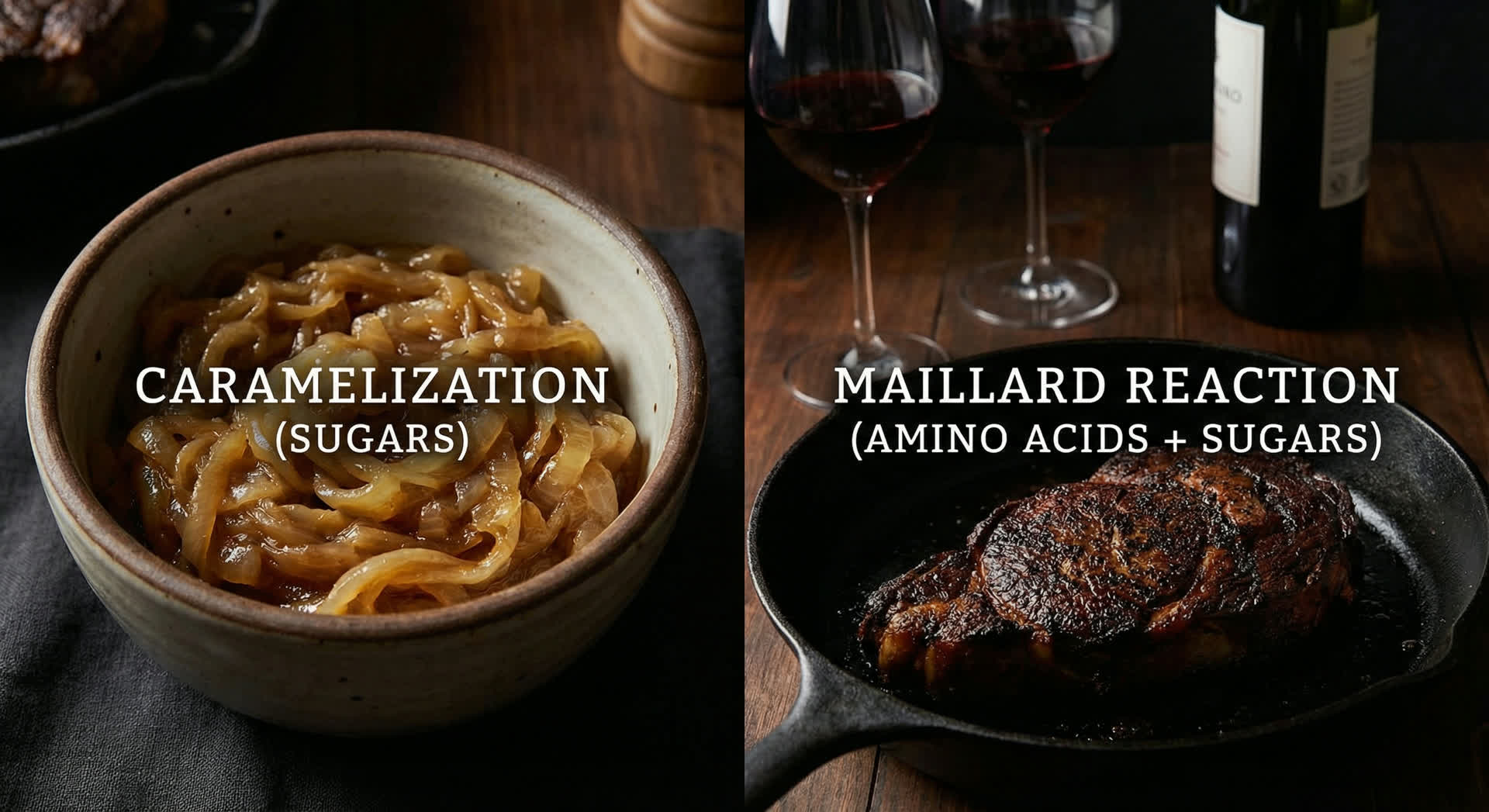
As a sommelier who has spent two decades studying the intersection of food and wine chemistry, I can tell you that understanding caramelization vs Maillard reaction is absolutely transformative for anyone serious about culinary excellence. These two browning processes are often confused, even by experienced cooks, yet they involve fundamentally different chemistry, occur at different temperatures, create different flavor compounds, and demand different wine pairing strategies.
The confusion is understandable. Both processes turn food brown, both create delicious flavors, and both happen during cooking. But conflating these distinct chemical reactions is like confusing fermentation with distillation. This comprehensive guide to caramelization vs Maillard reaction will clarify these processes and demonstrate how this knowledge elevates your cooking and wine pairing to professional levels.
The Fundamental Chemical Differences
The core distinction: caramelization involves sugars alone, while the Maillard reaction requires both sugars (reducing sugars specifically) and amino acids or proteins. This determines which foods can undergo which process, what temperatures are required, and what flavors develop.
Caramelization: Sugar Breakdown
Caramelization is the oxidation and thermal decomposition of sugars in the absence of proteins or amino acids. When you heat pure sugar to temperatures above 320 degrees Fahrenheit, the sugar molecules break apart and recombine into hundreds of new compounds including caramelan, caramelen, caramelin, and various volatile flavor molecules.
The process begins with melting as heat breaks the bonds holding sugar in solid form. As temperature increases further, the melted sugar begins breaking down (pyrolysis), releasing water molecules and creating new carbon-carbon bonds. The result is the complex mixture we recognize as caramel: sweet, bitter, nutty, and toasted all at once.
Maillard Reaction: Sugar-Protein Interaction
The Maillard reaction, named for French chemist Louis-Camille Maillard who described it in 1912, is actually a cascade of hundreds of different chemical reactions between reducing sugars (glucose, fructose, lactose, maltose) and amino acids. This complexity is why the Maillard reaction creates such extraordinary flavor diversity.
The reaction proceeds through multiple stages. First, a reducing sugar and amino acid combine to form a glycosylamine. This unstable compound then rearranges into various intermediates (Amadori products), which further break down and recombine to create melanoidins (brown polymers that create color) and hundreds of volatile flavor and aroma compounds including pyrazines, thiophenes, thiazoles, and furans.
Different amino acids create different flavor profiles. Cysteine (found in meat proteins) creates sulfurous, meaty flavors. Methionine produces potato-like flavors. Proline generates bread-crust aromas. This is why the Maillard reaction in beef creates entirely different flavors than the Maillard reaction in bread, onions, or coffee.
Temperature Ranges: Where Each Process Occurs
Maillard Reaction Temperature Range
The Maillard reaction begins at surprisingly low temperatures, around 285 degrees Fahrenheit, and accelerates as temperature increases up to approximately 330 degrees. Above this temperature, the sugars begin caramelizing independently, and proteins may denature or burn.
This relatively low starting temperature means Maillard reactions occur during most cooking methods: roasting, grilling, pan-searing, deep-frying, and even some braising if surface temperatures reach the threshold. The surface of a steak on a 450 degree grill easily reaches 300-350 degrees, creating ideal Maillard conditions.
Moisture inhibits the Maillard reaction because evaporating water holds surface temperatures at 212 degrees, well below the threshold. This is why patting meat dry before searing is critical.
Caramelization Temperature Requirements
Caramelization requires significantly higher temperatures than the Maillard reaction. Different sugars caramelize at different temperatures: fructose begins at about 230 degrees, glucose at 320 degrees, and sucrose at 340 degrees. For practical cooking purposes, robust caramelization occurs above 320 degrees.
Flavor Compounds: What Each Process Creates
Caramelization Flavor Profile
Caramelization creates predominantly sweet, nutty, and toasted flavors with bitter undertones. The specific flavor compounds include diacetyl (buttery notes), maltol (toasted bread), ethyl acetate (fruity notes), furans (caramel sweetness), and numerous others. As caramelization progresses from light to dark brown, sweetness decreases while bitterness and complexity increase.
In wine pairing, caramelized flavors pair beautifully with wines that have undergone oak aging, oxidative aging (Sherry, Madeira, Tawny Port), or possess natural caramel notes from ripe fruit and extended lees contact.
Maillard Reaction Flavor Complexity
The Maillard reaction creates an extraordinarily diverse flavor palette: meaty, roasted, toasted, nutty, earthy, chocolatey, malty, and dozens of other descriptors. Key flavor compounds include pyrazines (roasted, nutty, earthy), thiazoles (meaty, roasted), furans (caramel, sweet), pyrroles (musty, earthy), and thiophenes (sulfurous, meaty).
For wine pairing, Maillard-rich preparations demand wines with enough structure, tannin, and savory complexity to complement these intense flavors. Wines that have undergone malolactic fermentation, extended lees aging, or possess naturally savory characteristics work exceptionally well.
How Caramelization vs Maillard Reaction Affects Wine Pairing
High-Heat Searing: Maillard-Dominant
When you sear a steak over screaming-hot cast iron, you are creating Maillard-dominant flavors. The high heat drives rapid browning through amino acid-sugar reactions, creating intensely savory, umami-rich crust with roasted, meaty, and slightly bitter notes.
For Maillard-dominant preparations, I recommend wines with substantial tannin structure, enough body to match the intensity, and savory or earthy characteristics. Excellent choices include Cabernet Sauvignon, Syrah or Shiraz, aged Rioja, or Barolo.
Slow Roasting: Balanced Browning
Slow-roasted meats develop browning through both Maillard reactions and caramelization. The longer cooking time at moderate temperatures allows sugars released from tissues to caramelize while proteins undergo Maillard reactions. The result is layered complexity.
This balanced flavor profile pairs beautifully with wines that balance fruit richness with savory complexity. Consider Chateauneuf-du-Pape, Amarone, Ribera del Duero, or Napa Valley Cabernet with significant oak influence.
Glazed Preparations: Caramelization-Forward
When you glaze pork chops with maple syrup, brush ribs with barbecue sauce, or finish duck breast with honey, you are emphasizing caramelization. These preparations demand wines that can handle sweetness and richness without being cloying. Off-dry Riesling, vintage Port, Sauternes with pork or poultry, or Vin Santo work excellently.
Side-by-Side Comparison
Chemical Requirements
Caramelization: Requires only sugars. No proteins or amino acids involved. Occurs through sugar pyrolysis.
Maillard Reaction: Requires both reducing sugars AND amino acids or proteins. Occurs through sugar-amino acid condensation.
Temperature Ranges
Caramelization: Begins at 320-340 degrees Fahrenheit depending on sugar type.
Maillard Reaction: Begins at 285 degrees. Optimal range is 285-330 degrees.
Visual Appearance
Caramelization: Golden to deep brown with glossy, sometimes sticky appearance.
Maillard Reaction: Brown to dark brown with typically drier, crustier appearance.
Flavor Profiles
Caramelization: Sweet, nutty, toasted, toffee-like with increasing bitterness as browning progresses.
Maillard Reaction: Savory, meaty, roasted, nutty, earthy. Creates umami-rich, complex flavors.
Culinary Applications: Maximizing Each Reaction
Maximizing Maillard Reactions
To emphasize Maillard flavors in meat: thoroughly dry surfaces before cooking, use high heat (450-500 degrees for grilling), avoid overcrowding which traps steam, season with salt which draws surface moisture, and allow crust to develop fully before turning.
Enhancing Caramelization
To emphasize caramelization: add sugar-containing ingredients (honey, molasses, maple syrup, fruit glazes), ensure high surface temperatures above 320 degrees, allow time for sugar concentration as moisture must evaporate first, and use dry heat cooking methods.
Wine Pairing Strategies Based on Browning Method
The Tannin-Protein Principle
Maillard-rich meat preparations with substantial protein crust demand wines with structural tannins. Tannins bind to proteins, creating a pleasant astringency that cleanses the palate. This is why big Cabernets pair beautifully with heavily seared steaks but taste astringent with fish.
The Sweetness Balance Principle
Caramelization-dominant preparations with sweet glazes create flavor profiles that make dry wines taste thin and acidic by comparison. The sweetness in the food requires matching sweetness in the wine for balance.
The Complexity Echo Principle
Both processes create complex flavor profiles with multiple layers. Simple, fruit-forward wines often get lost against this complexity. Choose wines with comparable complexity: tertiary development from aging, oak influence, oxidative character, or natural savory characteristics.
Practical Mastery
Understanding caramelization vs Maillard reaction intellectually is valuable, but the real transformation comes from applying this knowledge practically. Cook the same cut of meat using different methods that emphasize different browning processes. Try a pork chop three ways: quickly seared over maximum heat (Maillard-dominant), slowly roasted (balanced browning), and pan-seared then glazed with maple syrup (caramelization-forward). Taste the differences, then experiment with wine pairings for each preparation.
The browning processes that create the most celebrated flavors in cuisine are no longer mysterious magic. They are chemistry you can understand, control, and leverage. Next time you are searing a steak or planning a wine pairing, think about caramelization vs Maillard reaction. With this framework, you will make better decisions, create better meals, and enjoy more harmonious pairings.
Frequently Asked Questions
What is the main difference between caramelization and Maillard reaction?
Caramelization involves only sugars breaking down at high temperatures (320 degrees and above), creating sweet, nutty, toasted flavors. The Maillard reaction requires both reducing sugars AND amino acids or proteins reacting together at lower temperatures (285 degrees and above), creating savory, meaty, roasted flavors.
At what temperature does the Maillard reaction occur?
The Maillard reaction begins around 285 degrees Fahrenheit and accelerates to approximately 330 degrees. Surface moisture prevents Maillard reactions because evaporating water holds temperature at 212 degrees, which is why drying meat surfaces before searing is critical.
Which browning process creates the crust on a seared steak?
The crust on a seared steak is created primarily by the Maillard reaction between proteins and amino acids in the meat and reducing sugars. Some caramelization may also occur at very high temperatures, but Maillard reactions dominate steak crust development.
How does understanding these reactions improve wine pairing?
Maillard-dominant preparations (seared steaks) pair with structured, tannic wines with savory complexity like Cabernet and Syrah. Caramelization-dominant preparations (glazed pork) pair with off-dry wines or wines with ripe fruit character like Riesling and Zinfandel.
Can caramelization and Maillard reaction happen at the same time?
Yes, both processes often occur simultaneously during cooking, especially in the 320-330 degree range. Slow-roasted meats and many baked goods develop flavors from both processes, though one typically dominates depending on food composition and temperature.
More Pairing Guides
Best Bourbon for Pork Ribs vs Beef Ribs: Complete Pairing Guide
Pork ribs and beef ribs aren't interchangeable when it comes to bourbon pairing. Fat content, smoke intensity, and flavor depth determine which bottle works best. Here's the complete breakdown.
12 min readBest Bourbon for BBQ Ribs: 7 Perfect Pairings (Tasted & Ranked)
Not every bourbon works with every style of ribs. Here are 7 bourbon pairings ranked by rib type, sauce style, and smoke profile — with specific bottles tested against real BBQ.
10 min readBest Wine with Tri-Tip: Expert Pairing Guide
Tri-tip demands wines with enough structure to match its intensity while complementing its smoky, savory profile.