Types of BBQ Sauce: A Regional Guide to America's Best Styles
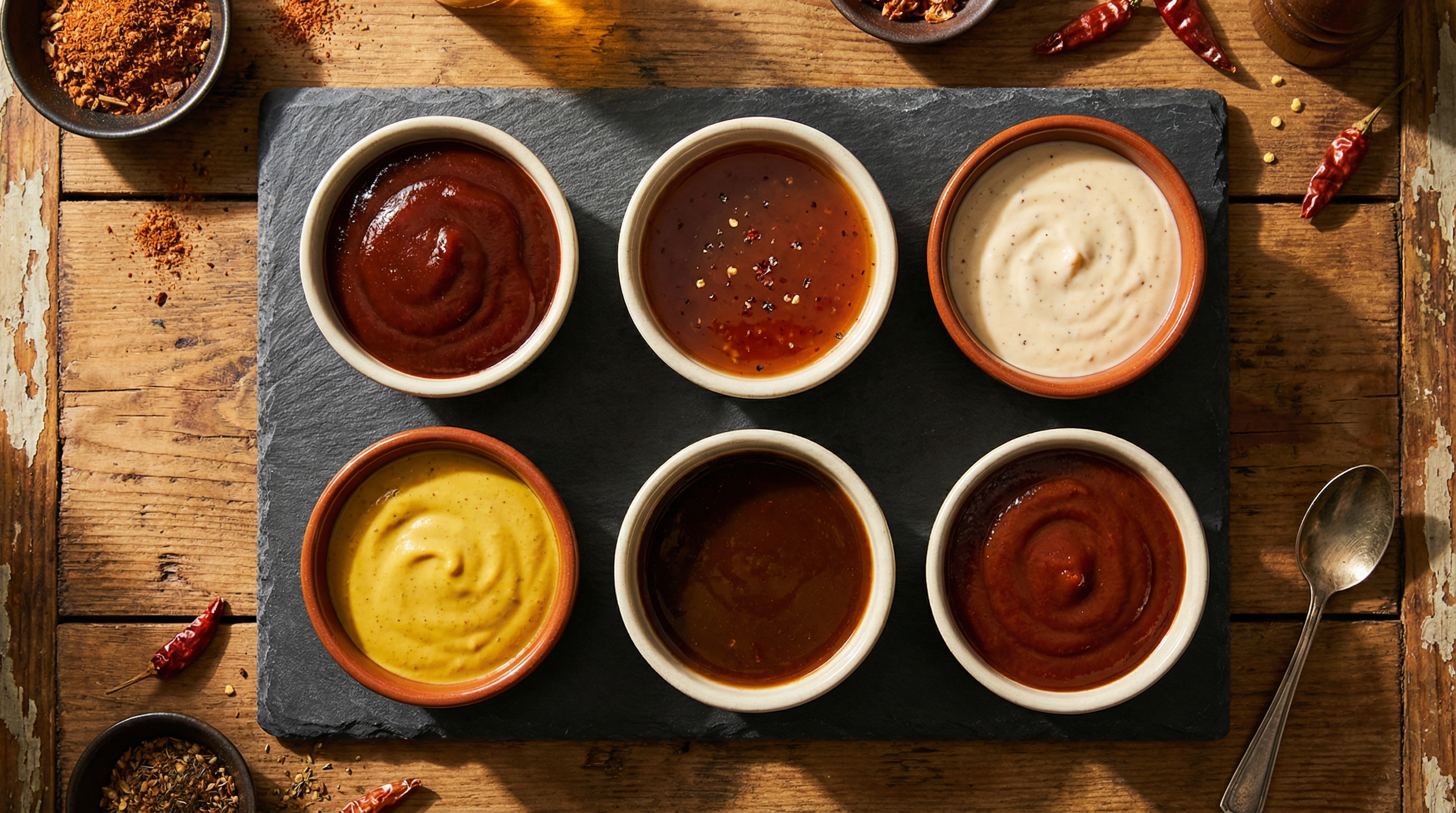
Walk into any barbecue joint in the United States and you'll find sauce. But which sauce — and whether it shows up on the meat, beside it, or not at all — depends entirely on where you are. American BBQ sauce isn't one thing. It's a collection of regional traditions, each developed over generations to complement the local style of cooking meat over fire.
Understanding the types of BBQ sauce means understanding American barbecue itself. Each sauce tells you something about the meat it was designed for, the wood smoke it lives alongside, and the people who perfected it. Here's every major style worth knowing.
Kansas City Style BBQ Sauce
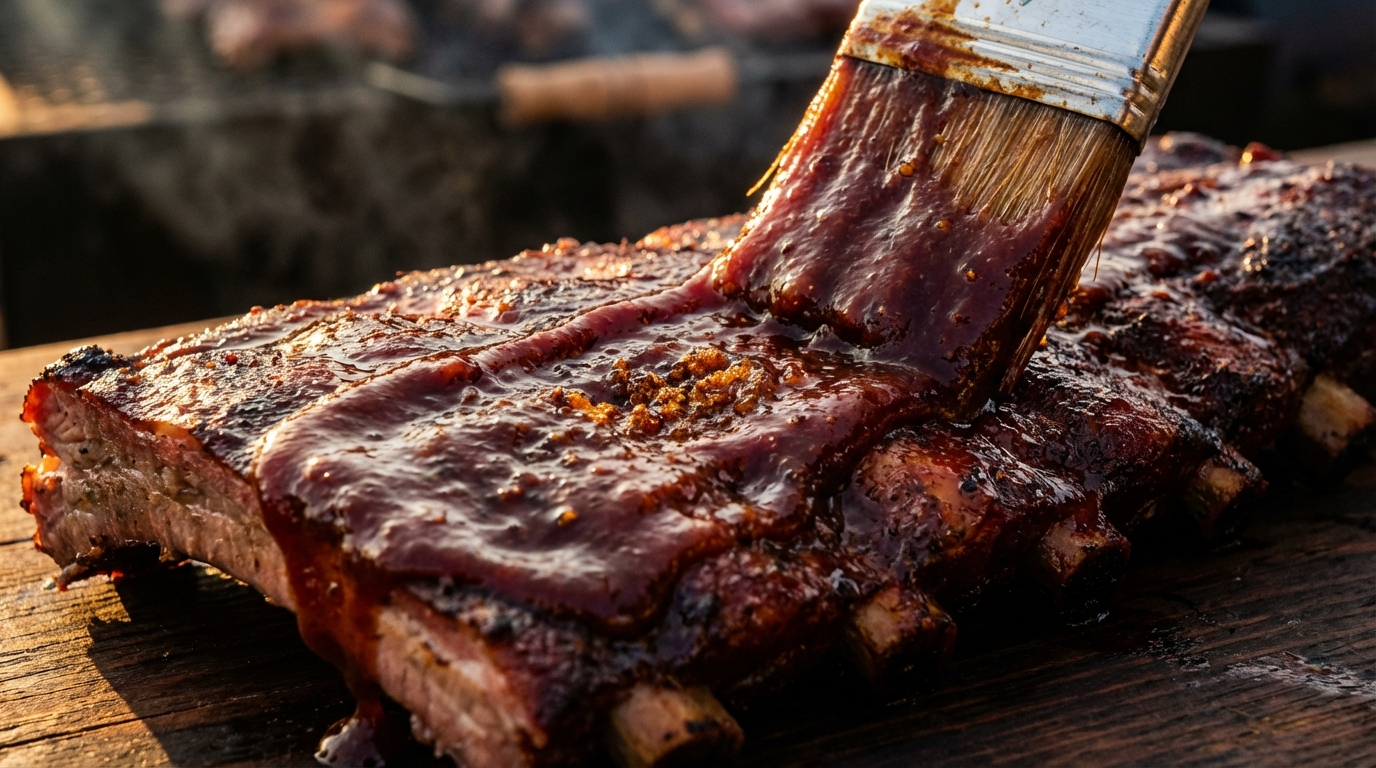
When most Americans picture BBQ sauce, they're picturing Kansas City style. It's the thick, sweet, tomato-based sauce that lines grocery store shelves and gets slathered on everything from ribs to chicken wings. But the real thing — the sauce that built KC's barbecue reputation — is more complex than the bottled versions suggest.
Kansas City sauce starts with a tomato base, usually ketchup or tomato paste, then builds layers with brown sugar or molasses for sweetness, vinegar for tang, and a spice blend that typically includes paprika, garlic powder, onion powder, and black pepper. The result is a thick, pourable sauce with a balance of sweet, tangy, and savory that works on nearly any protein.
What makes KC sauce distinctive is its versatility. Unlike regional sauces designed for one specific meat, Kansas City sauce was born in a city that smokes everything — beef brisket, pork ribs, burnt ends, chicken, sausage, even turkey. The sauce had to be a crowd-pleaser, and it is. It caramelizes beautifully under heat, creating that sticky, lacquered finish that defines competition barbecue.
Best paired with: Pork spare ribs, burnt ends, smoked chicken. The sweetness complements pork's natural sugars, while the thick consistency clings to textured surfaces like bark-heavy burnt ends.
Key ingredients: Tomato paste or ketchup, molasses or brown sugar, apple cider vinegar, Worcestershire sauce, paprika, garlic powder, onion powder, black pepper.
Carolina Vinegar Sauce (Eastern North Carolina)
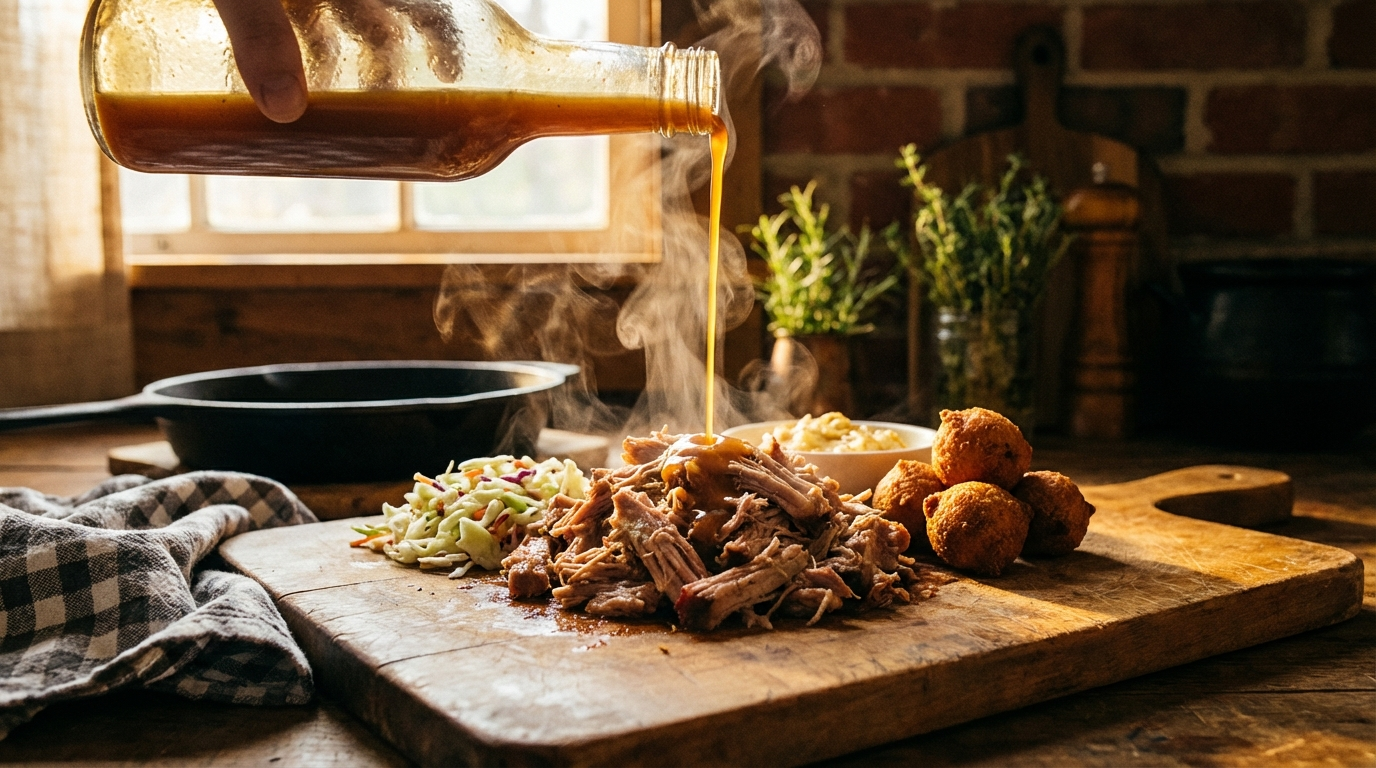
Eastern North Carolina vinegar sauce is the oldest BBQ sauce tradition in America, and it's the one that confuses outsiders the most. It's thin. It's sharp. It has no tomato, no sweetness to speak of, and it looks more like salad dressing than what most people call barbecue sauce. But it is, without question, one of the greatest meat sauces ever devised.
The recipe is almost absurdly simple: distilled white vinegar, red pepper flakes, salt, black pepper, and sometimes a splash of sugar to take the raw edge off. That's it. The genius is in what it does to the meat. Eastern Carolina pitmasters smoke whole hogs — the entire animal, cooked low and slow over hardwood coals. The meat is rich, fatty, and deeply smoky. The vinegar sauce doesn't mask any of that. Instead, it cuts through the fat, brightens the pork, and creates a flavor contrast that makes each bite more interesting than the last.
This is a finishing sauce, not a cooking sauce. It goes on after the meat is pulled, chopped, or sliced. The vinegar penetrates the meat fibers, seasoning from the inside out. If you've only ever had pulled pork with thick tomato-based sauce, a plate of Eastern Carolina chopped pork with vinegar sauce is a revelation.
Best paired with: Whole hog, pulled pork shoulder, chopped pork. The acidity is specifically designed to balance pork fat. It's less effective on leaner meats.
Key ingredients: Distilled white vinegar, crushed red pepper flakes, salt, black pepper, optional pinch of sugar.
Western Carolina (Lexington) Dip
Drive 90 miles west from the Eastern Carolina vinegar belt to Lexington, North Carolina, and the sauce changes. Lexington-style dip — nobody in the Piedmont calls it "sauce" — adds tomato to the vinegar base, creating a thin, red, tangy condiment that bridges the gap between pure vinegar and Kansas City sweetness.
The tomato element is subtle. This isn't a thick sauce. It's still pourable, still vinegar-forward, but with a ketchup or tomato paste addition that rounds out the acidity and adds a faint sweetness. The color shifts from clear amber to translucent red. The flavor profile moves from pure sharpness to something more approachable while retaining the fundamental purpose: cutting through pork fat.
Lexington pitmasters cook pork shoulders rather than whole hogs, and the dip is calibrated for that fattier, more concentrated cut. It's typically served in small pools alongside chopped or sliced shoulder, with coleslaw dressed in the same dip rather than mayonnaise.
Best paired with: Pork shoulder (sliced or chopped), red slaw. The tomato addition makes it slightly more versatile than pure vinegar sauce.
Key ingredients: Apple cider vinegar, ketchup or tomato paste, brown sugar, red pepper flakes, salt, black pepper.
South Carolina Mustard Sauce
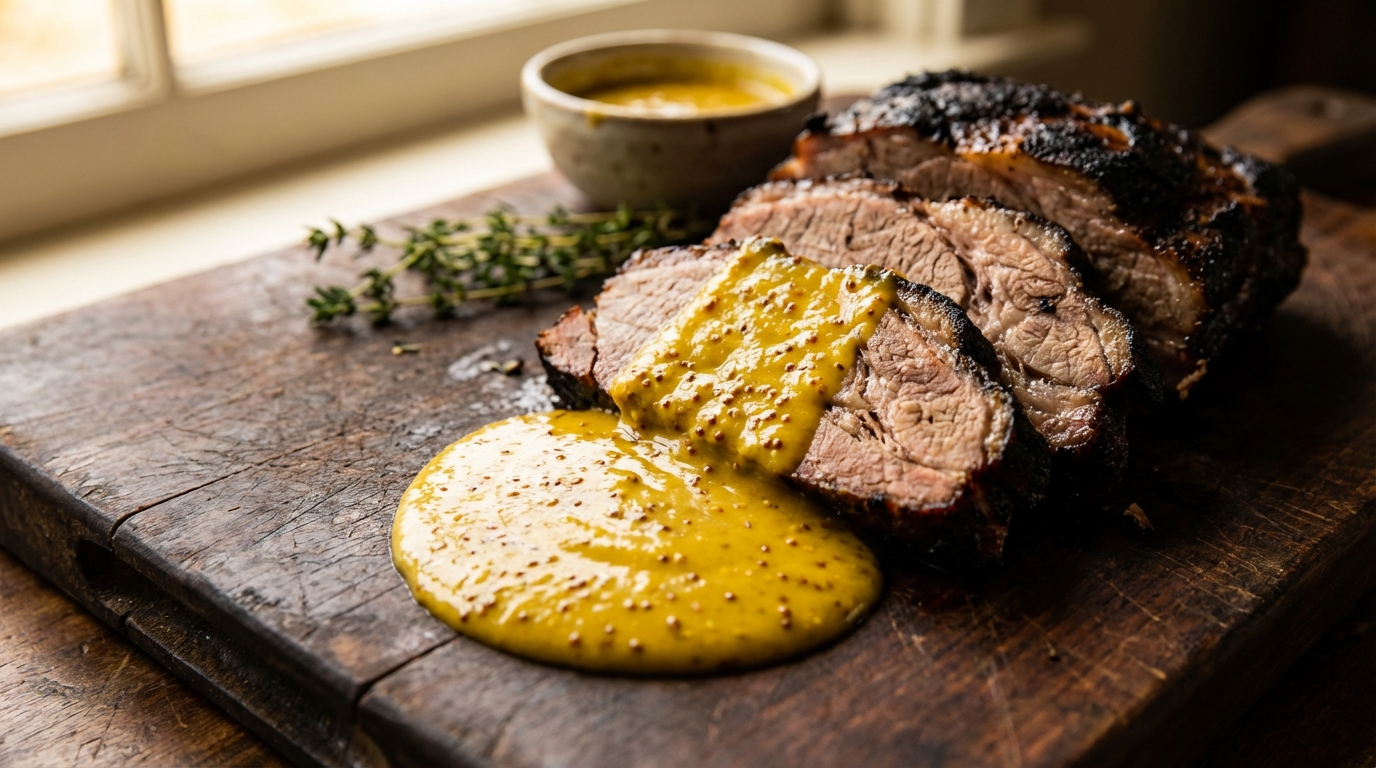
South Carolina's contribution to the BBQ sauce canon is unmistakable: a bright yellow, mustard-based sauce that looks like nothing else on the barbecue map. Often called "Carolina Gold," this sauce is concentrated in the Midlands region around Columbia, and its origins trace directly to German immigrants who settled the area in the 1700s and brought their mustard traditions with them.
The base is yellow mustard — the cheap, ballpark kind — mixed with vinegar, sugar, and sometimes a touch of Worcestershire or hot sauce. The result is tangy, slightly sweet, and absolutely electric on smoked pork. The mustard provides a sharpness that vinegar sauce can't match, while the sugar and vinegar create a condiment that's simultaneously sweet, sour, and spicy.
Maurice Bessinger's family made this style famous through their chain of Piggie Park restaurants, though dozens of joints across the Midlands serve their own versions. The sauce works best on pulled or sliced pork, where the mustard tang plays off the meat's sweetness and the smoke's bitterness in a three-way flavor conversation.
Best paired with: Pulled pork, smoked pork shoulder, smoked sausage. The tanginess also works surprisingly well on smoked chicken thighs.
Key ingredients: Yellow mustard, apple cider vinegar, brown sugar or honey, Worcestershire sauce, cayenne pepper, garlic powder.
Alabama White Sauce
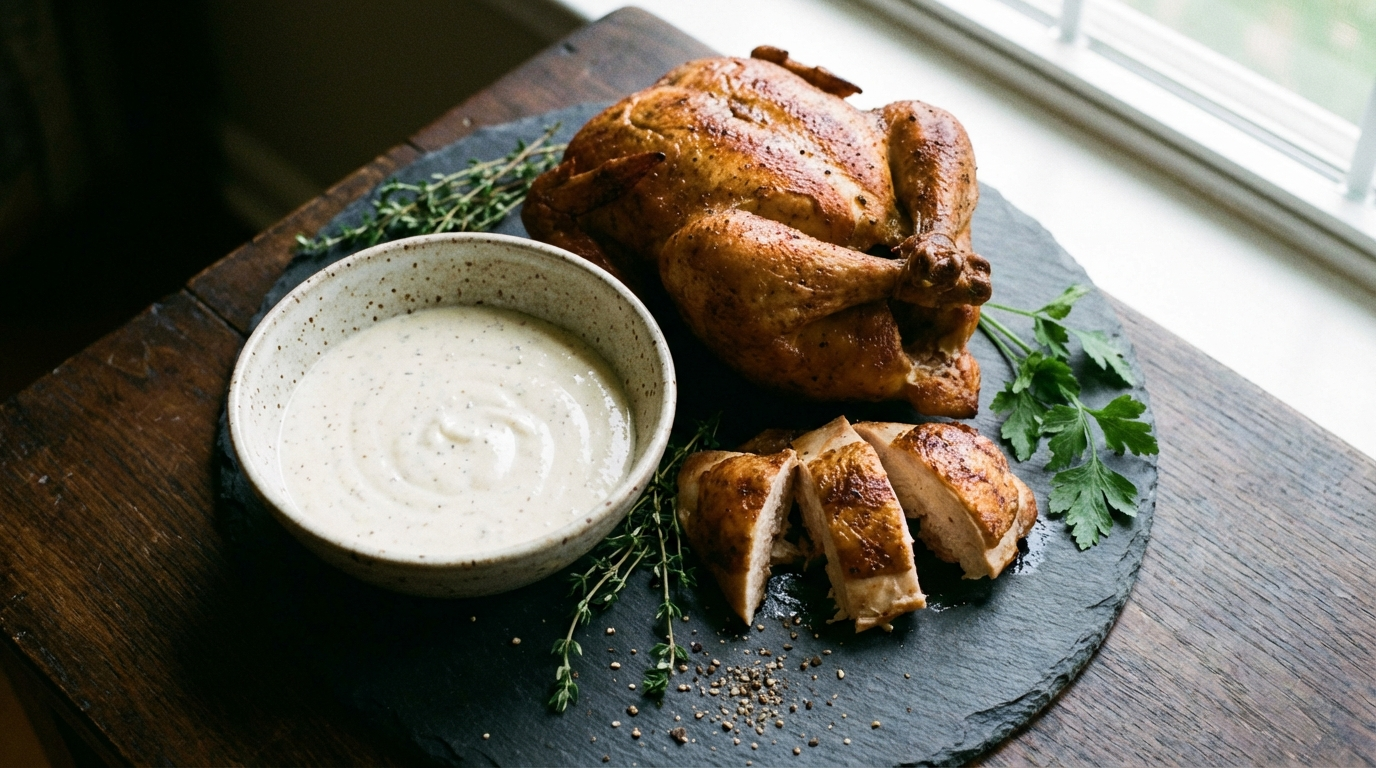
Alabama white sauce is the strangest entry in the American BBQ sauce family, and possibly the most addictive. It's a mayonnaise-based sauce — creamy, tangy, peppery, and totally unlike anything else in the barbecue world. It was invented by Big Bob Gibson in Decatur, Alabama, in 1925, and for decades it barely existed outside northern Alabama. Now it's a nationwide phenomenon.
The base is mayonnaise thinned with apple cider vinegar, then spiked with horseradish, black pepper, lemon juice, and sometimes cayenne. The texture is creamy but pourable — thicker than vinegar sauce but thinner than ranch dressing. The flavor is sharp and tangy with a slow peppery heat that builds.
The traditional serving method is dramatic: whole smoked chickens are pulled from the pit and dunked directly into a vat of white sauce, then returned to the smoker briefly to set the coating. The result is a bird with a tangy, creamy skin that crackles and chars in spots. It's extraordinary, and it's the reason competition BBQ teams across the country now carry white sauce in their arsenal.
While it was born for chicken, white sauce has proven remarkably versatile. It works as a dipping sauce for smoked turkey, a drizzle on pulled pork sandwiches, and even a base for BBQ-inspired coleslaw.
Best paired with: Smoked chicken (the definitive pairing), smoked turkey, pulled pork sandwiches. Also excellent as a slaw dressing.
Key ingredients: Mayonnaise, apple cider vinegar, lemon juice, prepared horseradish, black pepper, cayenne, salt.
Texas Mop Sauce
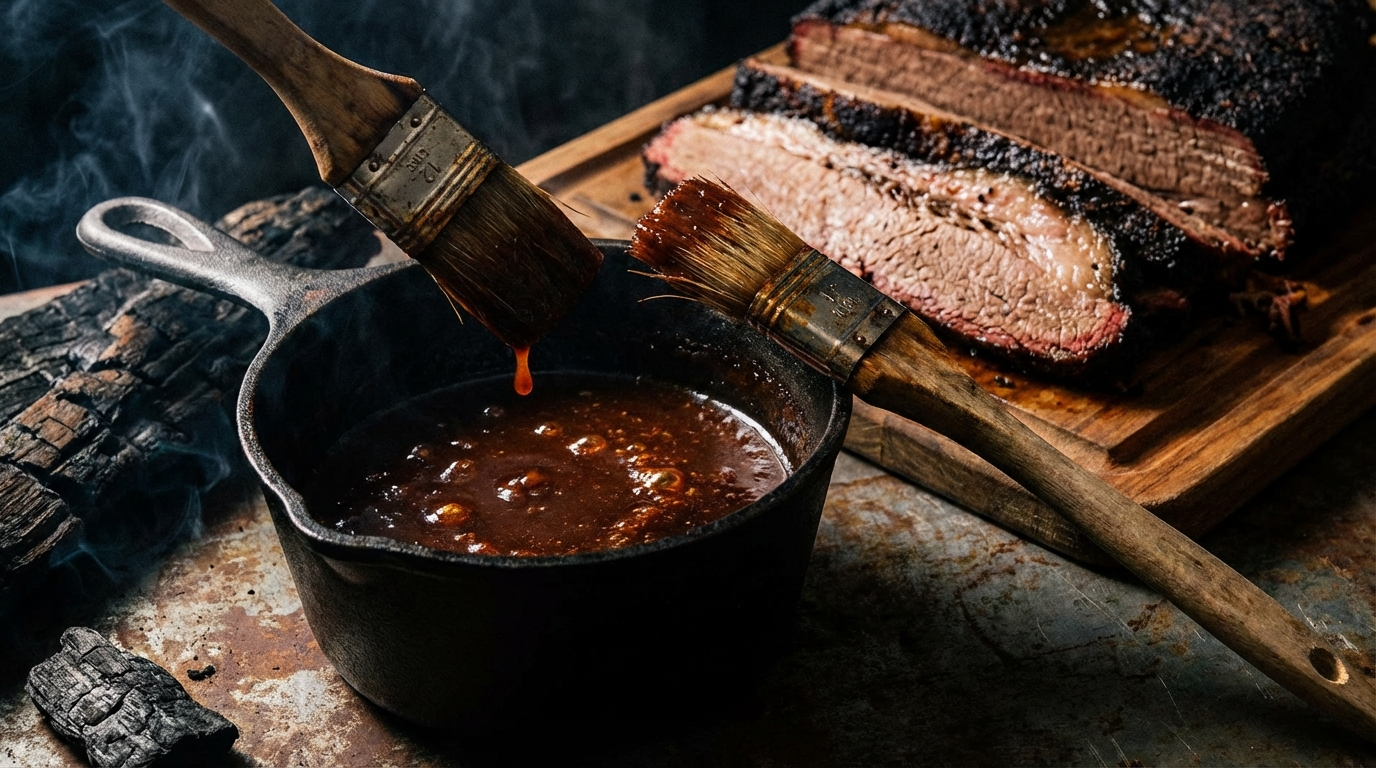
In Central Texas, sauce is controversial. The great brisket temples — Franklin, Kreuz Market, Smitty's — serve meat that needs nothing. But even in Texas, sauce has its place, and the traditional form is the mop sauce: a thin, savory liquid applied during cooking rather than at the table.
Texas mop sauce is built on a base of beef stock, vinegar, and Worcestershire sauce, seasoned with onion, garlic, chili powder, cumin, and black pepper. It's thin enough to apply with a cotton mop or spray bottle during the long smoke, basting the meat every hour or so to keep the surface moist and build a complex bark. It's not sweet. It's savory, slightly acidic, and deeply flavored.
The name is literal — old-school pitmasters use an actual small cotton mop to apply it, dipping the mop into a bucket and swabbing the meat. Modern pitmasters more commonly use spray bottles, but the principle is the same: keep the meat moist during 12-18 hour cooks, add flavor complexity to the bark, and create a surface that attracts and holds smoke.
Some Texas joints also serve a thin, dark table sauce — usually tomato-and-vinegar based with cumin and chili — but it's always offered as a condiment, never applied by the pitmaster. In Texas, the meat speaks first.
Best paired with: Beef brisket (applied during cooking), beef ribs, smoked sausage. This is a cooking sauce, not a table sauce.
Key ingredients: Beef stock, apple cider vinegar, Worcestershire sauce, onion, garlic, chili powder, cumin, black pepper, salt.
Memphis Style BBQ Sauce
Memphis occupies a fascinating middle ground in the sauce wars. The city is famous for both "wet" and "dry" ribs — meaning sauce is simultaneously central to the tradition and entirely optional. Memphis-style sauce, when it appears, is a tomato-and-vinegar base that's thinner and tangier than Kansas City but thicker and sweeter than Carolina.
The signature of Memphis sauce is its balance. It's not aggressively sweet like KC, not sharply acidic like Carolina vinegar, and not as unusual as Alabama white or Carolina mustard. It hits every flavor note — sweet, tangy, savory, slightly spicy — without any one dominating. Think of it as the diplomat of BBQ sauces.
Memphis dry ribs, made famous by Charlie Vergos' Rendezvous, skip the sauce entirely in favor of a dry spice rub applied before and after cooking. But wet ribs at places like Central BBQ get a generous coating of that balanced tomato sauce, often applied in layers during the final phase of cooking. Both approaches are considered authentic Memphis barbecue.
Best paired with: Pork ribs (wet style), pulled pork sandwiches, smoked pork shoulder. The balanced profile works with virtually any pork preparation.
Key ingredients: Tomato paste, apple cider vinegar, brown sugar, yellow mustard, paprika, garlic powder, onion powder, cayenne, black pepper.
St. Louis Style BBQ Sauce
St. Louis flies under the radar in national BBQ conversations, but the city has a distinctive sauce tradition worth knowing. St. Louis sauce is thinner than Kansas City, sweeter than Memphis, and built on a unique combination of tomato and vinegar that incorporates a significant amount of additional sweeteners — sometimes corn syrup or even fruit juice.
The hallmark of St. Louis sauce is a sticky, almost candy-like sweetness balanced by enough vinegar to keep it from becoming cloying. It's designed to pair with the city's signature cut: the St. Louis-style spare rib, which is trimmed into a neat rectangular rack. The sauce caramelizes aggressively under heat, creating a shellacked, glistening finish that defines the St. Louis rib experience.
Maull's is the iconic local brand — a St. Louis institution since 1926 that most residents consider the default BBQ sauce. It's thinner and sweeter than national brands, and it's nearly impossible to find outside the metro area.
Best paired with: St. Louis-cut spare ribs, pork steaks (a regional specialty), grilled bratwurst.
Key ingredients: Tomato sauce, vinegar, corn syrup or sugar, liquid smoke, celery salt, garlic, allspice.
How to Choose the Right BBQ Sauce for Your Meat
Matching sauce to meat isn't random — there's a logic to it. Here are the principles that guide every pairing in this article:
- Fat content determines acidity: Fattier meats (pork shoulder, brisket) need sharper, more acidic sauces to cut through richness. That's why vinegar sauces live alongside whole hog and pork shoulder.
- Smoke intensity determines sweetness: Heavily smoked meats can handle sweeter sauces because the bitterness of smoke balances the sugar. Lightly smoked or grilled meats get overwhelmed by very sweet sauces.
- Lean meats need creamier sauces: Chicken and turkey lack the fat to stand up to vinegar-forward sauces. Cream-based sauces like Alabama white add moisture and richness that lean proteins need.
- Beef prefers savory over sweet: The deep umami of smoked beef brisket clashes with heavy sweetness. That's why Texas keeps its sauces thin and savory, if it uses sauce at all.
- When in doubt, match the region: Each sauce was developed alongside specific meats and cooking methods. The traditional pairing is almost always the best one.
Making Your Own BBQ Sauce
Every sauce in this guide can be made at home with pantry ingredients. The advantage of homemade sauce isn't just freshness — it's calibration. You can adjust sweetness, heat, and acidity to match your specific meat and your personal taste.
Start with the regional style that matches your protein, make a small batch, taste it alongside the meat, and adjust. The best pitmaster sauces aren't recipes followed to the letter — they're recipes tuned over hundreds of cooks to perfectly complement one specific preparation.
Store homemade sauces in glass jars in the refrigerator. Vinegar-based sauces keep for months. Tomato-based sauces last two to three weeks. Mayonnaise-based Alabama white sauce should be used within a week.
Frequently Asked Questions
What are the main types of BBQ sauce?
The main types are Kansas City (thick, sweet, tomato-based), Eastern Carolina vinegar (thin, tangy, no tomato), Western Carolina/Lexington dip (vinegar with tomato), South Carolina mustard (yellow mustard-based), Alabama white (mayonnaise-based), Texas mop (thin, savory, for basting), Memphis (balanced tomato-vinegar), and St. Louis (sweet, thin tomato-based).
What is the most popular type of BBQ sauce?
Kansas City style is the most popular nationally — it's the thick, sweet, tomato-based sauce most Americans picture when they think of BBQ sauce. Most commercial brands like Sweet Baby Ray's and KC Masterpiece are variations of this style.
What BBQ sauce goes best with brisket?
Texas-style mop sauce (thin, savory, beef stock-based) is the traditional choice for brisket during cooking. For a table sauce, a thin tomato-vinegar sauce with cumin and chili works well. Many Texas pitmasters serve brisket with no sauce at all, letting the smoke and seasoning speak for themselves.
What is Alabama white sauce made of?
Alabama white sauce is made from mayonnaise, apple cider vinegar, lemon juice, prepared horseradish, black pepper, and cayenne. It was invented by Big Bob Gibson in Decatur, Alabama, in 1925 and is traditionally served on smoked chicken.
What is the difference between Carolina vinegar and mustard BBQ sauce?
Carolina vinegar sauce (Eastern NC) is a thin, clear sauce made from distilled vinegar and red pepper — no tomato or mustard. South Carolina mustard sauce is yellow mustard-based with vinegar and sugar, originating from German immigrant traditions. Both are designed for pork but deliver completely different flavor profiles.
More Pairing Guides
Best Bourbon for Pork Ribs vs Beef Ribs: Complete Pairing Guide
Pork ribs and beef ribs aren't interchangeable when it comes to bourbon pairing. Fat content, smoke intensity, and flavor depth determine which bottle works best. Here's the complete breakdown.
12 min readBest Bourbon for BBQ Ribs: 7 Perfect Pairings (Tasted & Ranked)
Not every bourbon works with every style of ribs. Here are 7 bourbon pairings ranked by rib type, sauce style, and smoke profile — with specific bottles tested against real BBQ.
10 min readBest Wine with Tri-Tip: Expert Pairing Guide
Tri-tip demands wines with enough structure to match its intensity while complementing its smoky, savory profile.