Best Beer with Lamb: A Cut-by-Cut Pairing Guide
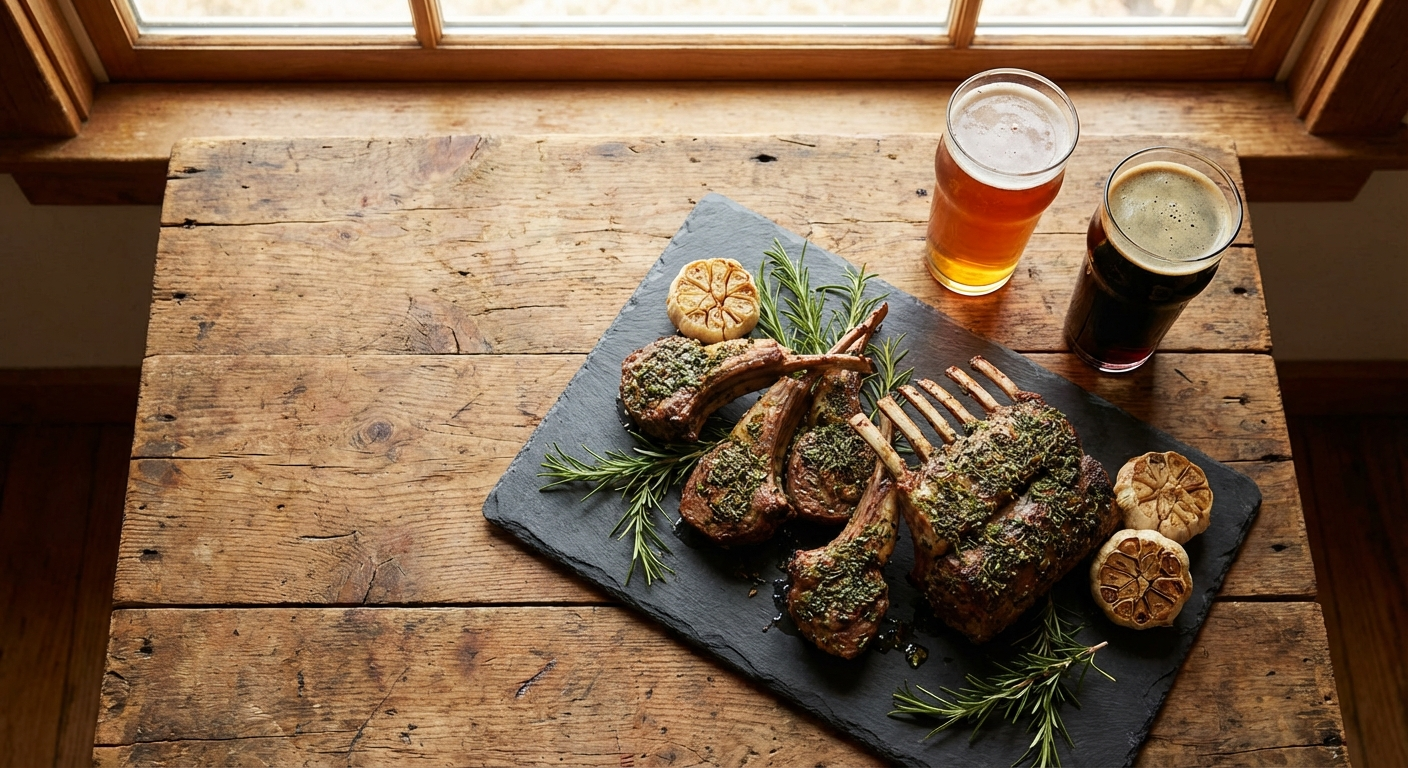
Wine gets all the credit when it comes to lamb. Sommeliers have spent decades telling you that Bordeaux with rack of lamb is the pinnacle of food and drink. They are not wrong — but they are leaving out half the story.
Beer pairs with lamb beautifully, and in some cases, it works better than wine. The carbonation cuts through lamb fat more aggressively than tannins. Roasted malts mirror the Maillard crust on grilled chops. Hop bitterness resets your palate between bites of rich braised shank. And beer is more versatile — there are styles to match every lamb preparation from delicate rack to slow-cooked shoulder.
This guide breaks down the best beer for every major lamb cut, with the flavor logic behind each pairing and specific styles worth seeking out.
Why Beer and Lamb Work Together
Lamb has a distinctive flavor profile that sets it apart from beef and pork. It contains higher concentrations of branched-chain fatty acids — particularly 4-methyloctanoic acid and 4-methylnonanoic acid — that create what most people describe as "gamy" or "earthy." These compounds are more pronounced in older animals and grass-fed lamb, and they change the pairing calculation entirely.
Carbonation scrubs lamb fat. Lamb cuts like shoulder, shank, and leg carry significant fat. Beer's CO₂ physically lifts rendered fat from your palate between bites, preventing the coating effect that makes rich lamb dishes feel heavy by the fourth or fifth bite. This is the same reason sparkling wine works with rich food — but beer does it with more flavor variety and at a fraction of the price.
Malt sweetness bridges lamb's earthiness. Where wine relies on fruit to complement lamb, beer uses malt. Caramel malt, toasted malt, and roasted malt each bring different flavor bridges to lamb's earthy character. Caramel malt echoes the browning on roasted leg. Toasted malt mirrors herb-crusted rack. Roasted malt matches the deep flavors of braised shank. The malt spectrum gives you more precision than grape-based pairings.
Hop bitterness tames richness. Lamb's fat content varies dramatically by cut — a loin chop is lean and delicate, while a shoulder is rich and unctuous. Hop bitterness acts as a dial you can turn up or down. A gently bitter amber ale lets a tender lamb chop speak. An aggressively hopped IPA stands up to a fatty, slow-roasted shoulder. This adjustability is something wine simply cannot offer with the same granularity.
Herbal hops echo lamb seasonings. Lamb is almost always seasoned with herbs — rosemary, thyme, mint, oregano. Many hop varieties contain the same terpene compounds found in these herbs. Cascade hops share floral notes with thyme. Centennial hops echo rosemary's piney character. This creates a subliminal harmony between the beer and the plate that reinforces the pairing rather than competing with it.
Best Beer for Lamb Chops (Grilled or Pan-Seared)
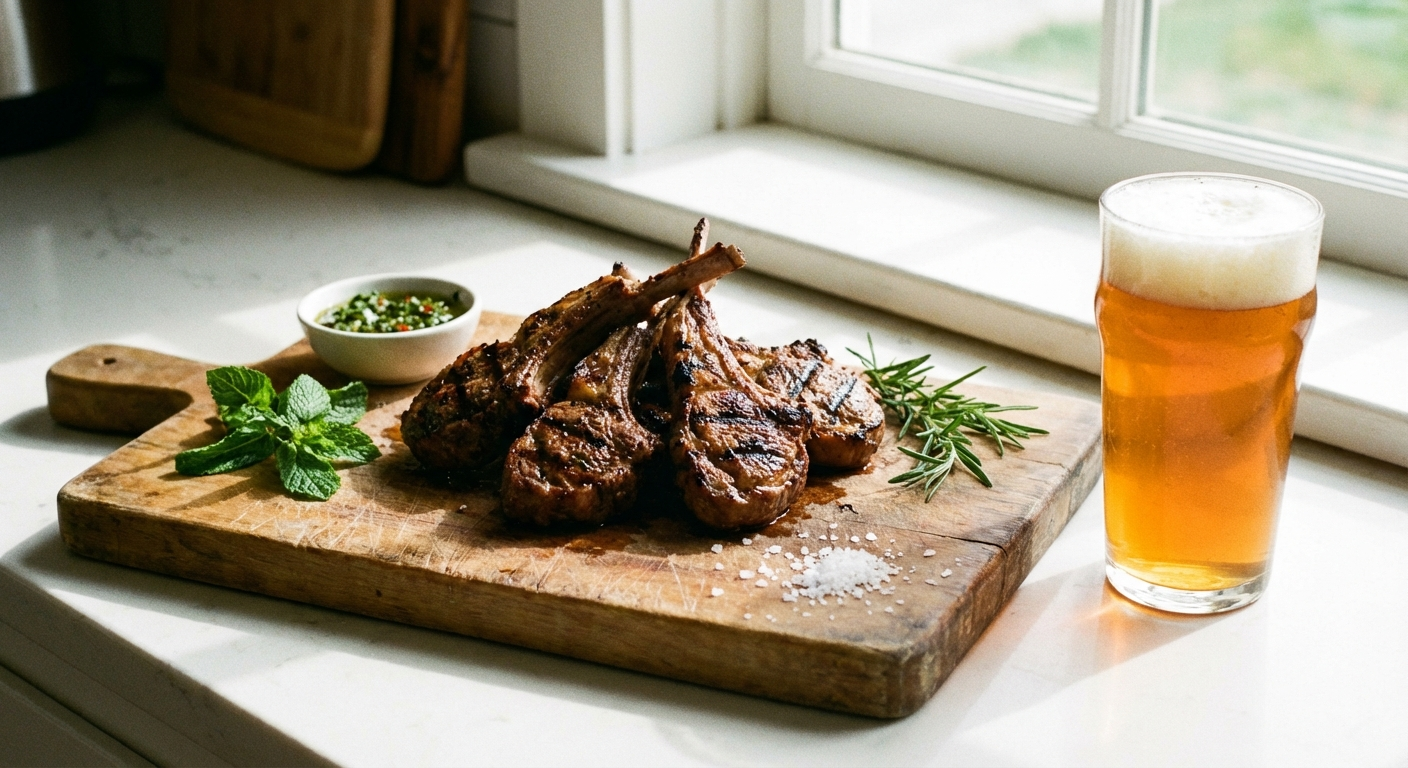
Lamb chops — whether rib chops or loin chops — are the most common lamb cut at home kitchens. They cook fast over high heat, developing beautiful char on the outside while staying pink and tender inside. The pairing needs to match that intensity without overwhelming the lamb's natural delicacy.
Amber ale is the perfect match. An American or English amber ale sits in the sweet spot — enough malt complexity (caramel, toffee, light toast) to complement the charred exterior, enough hop bitterness to cut the fat cap, but not so much flavor that it bulldozes the tender lamb. The amber color is not a coincidence — the same Maillard reactions that brown lamb chops also produce the toasted malts that give amber ales their character.
Why it works: Medium body matches the chop's medium richness. Caramel malt bridges with the charred crust. Moderate bitterness (25-40 IBU) refreshes without stripping flavor. Light carbonation cleanses without overwhelming.
Other styles that work:
- English bitter: Lower carbonation, biscuity malt, earthy hops — a classic British pairing that has existed for centuries for good reason
- Vienna lager: Crisp, toasty, clean — excellent with simply seasoned chops where you want the lamb flavor front and center
- Session IPA: If you want hop character without the alcohol weight, a session IPA (under 5% ABV) adds citrus and pine notes that play well with herb-crusted chops
Avoid: Imperial stouts, barleywines, or anything above 8% ABV. These overpower delicate chops. Save the big beers for bigger lamb cuts.
Best Beer for Rack of Lamb
Rack of lamb is the showpiece cut — elegant, herb-crusted, usually served at dinner parties or special occasions. The pairing needs to match that occasion without being fussy. This is where beer has an unexpected advantage over wine: it is inherently casual, which takes the pressure off a formal dish and makes the meal feel more relaxed.
Belgian dubbel is the dark horse pick. A Belgian dubbel brings dried fruit (raisin, fig, plum), caramel, and a subtle spice from Belgian yeast — all flavors that harmonize with the herb crust and the lamb's natural sweetness. The moderate alcohol (6-7.5%) adds warmth without heaviness. The gentle carbonation cleanses the palate. And the complex yeast character adds a dimension that no hop-forward beer can match.
Why it works: Dried fruit notes bridge with the lamb's natural sweetness. Yeast-driven spice echoes rosemary, thyme, and garlic in the crust. Moderate carbonation handles the fat without being aggressive. The beer's complexity matches the dish's complexity.
Other styles that work:
- Bière de garde: A French farmhouse ale with malty depth and subtle earthiness — the geographical match makes flavor sense too
- Brown ale: Nutty, smooth, understated — lets the lamb be the star while providing a complementary backdrop
- Scottish ale (60/- or 70/-): Malt-forward, low bitterness, with caramel and light smoke notes that were literally designed for pairing with roasted meats in the Scottish tradition
Best Beer for Leg of Lamb (Roasted)
A whole roasted leg of lamb is a centerpiece meal — hours in the oven, studded with garlic and rosemary, served family-style. The meat ranges from well-done on the outside to pink in the center, with a thick layer of rendered fat and crispy skin. This is big food that needs a beer with backbone.
English-style IPA handles the complexity. Not a West Coast hop bomb — an English IPA with balanced malt, moderate bitterness (40-60 IBU), and earthy, floral English hop character. The malt provides enough body to stand alongside a substantial cut of meat. The bitterness cuts through the rendered fat and crispy skin. The earthy hop character — think Fuggle and East Kent Goldings — echoes the herb rub without competing with it.
Why it works: Enough body and alcohol (5.5-7%) to match a heavy, rich roast. Earthy English hops complement herb stuffing and rosemary. Firm bitterness resets the palate after each rich, fatty bite. Medium-high carbonation handles the fat cap and crispy skin.
Other styles that work:
- Märzen/Oktoberfest: Toasty, bready, medium-bodied — the malt backbone mirrors roasted meat's caramelized exterior, and the clean finish prevents palate fatigue
- Red ale: Caramel-forward with moderate bitterness — a crowd-pleaser that offends nobody and complements everything about roasted lamb
- Saison: Peppery, dry, highly carbonated — the effervescence is exceptional at cutting through lamb fat, and the yeast-driven spice adds complexity
Best Beer for Lamb Shanks (Braised)
Braised lamb shanks are the opposite of quick-cooked chops. They spend hours in liquid — wine, stock, aromatics — until the connective tissue melts into gelatin and the meat falls from the bone. The flavors are deep, concentrated, and intensely savory. This demands the biggest beer in your arsenal.
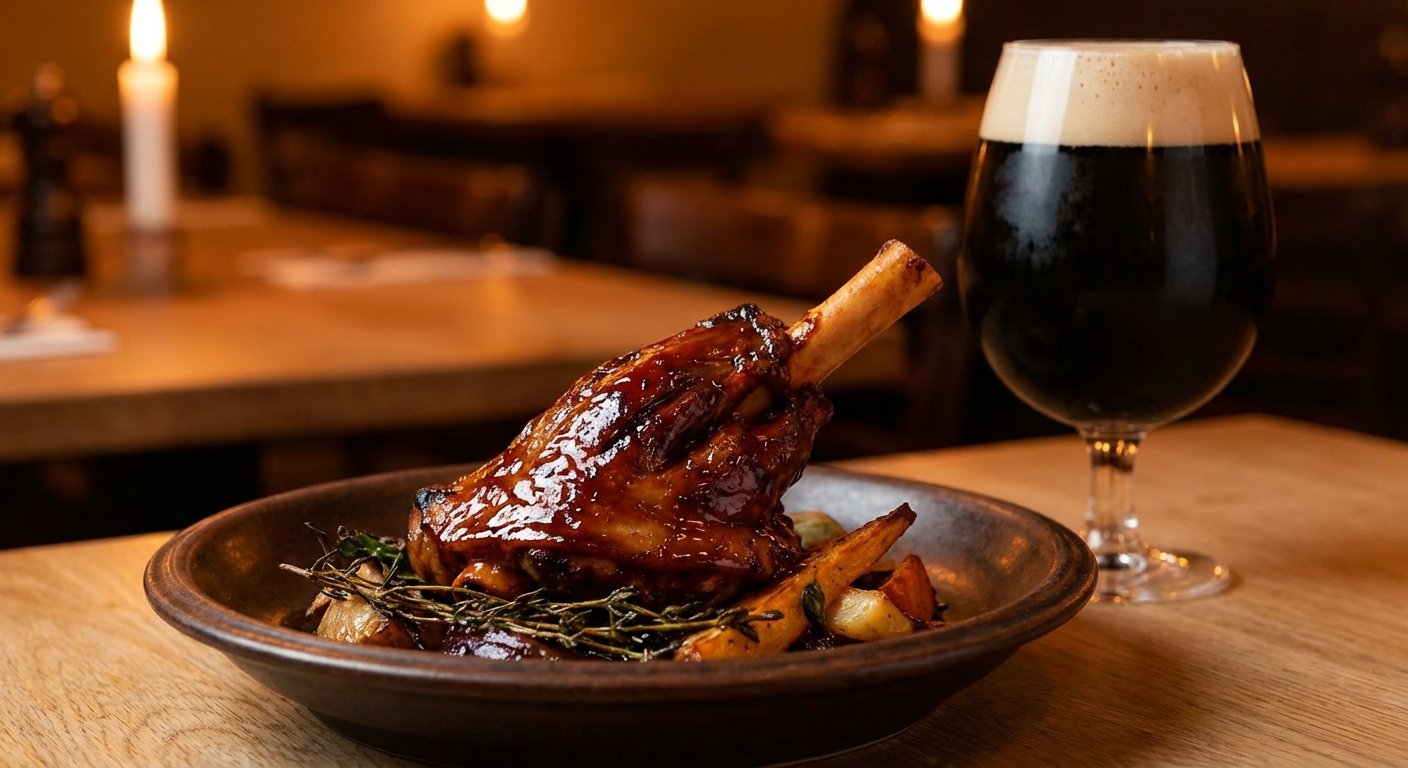
Oatmeal stout is the ideal partner. An oatmeal stout brings roasted malt character (chocolate, coffee, dark toast) that mirrors the deep browning of braised meat. The oats add silky body that matches the gelatinous, unctuous texture of a properly braised shank. And the moderate roast bitterness — different from hop bitterness — complements the concentrated savory flavors without adding competing botanical notes.
Why it works: Roasted malt echoes the deep Maillard flavors in braised meat. Silky oat body matches the gelatinous, melt-in-your-mouth texture. Coffee and chocolate notes complement the rich braising liquid. Low to moderate carbonation does not fight the dense, saucy character of the dish.
Other styles that work:
- Porter: Slightly lighter than stout with more chocolate and caramel — excellent when the braise has sweeter elements like root vegetables or port wine
- Doppelbock: Rich, malty, bread-crusted — a German approach that brings enough sweetness and body to match braised lamb without roasted bitterness
- Belgian quadrupel: Dark fruit, caramel, warming alcohol — for a special occasion braised shank, a quad elevates the entire meal to something extraordinary
Best Beer for Lamb Shoulder (Slow-Roasted or Pulled)
Lamb shoulder is the working muscle — full of connective tissue, fat, and intense flavor. Whether slow-roasted whole until it pulls apart or braised and shredded for sandwiches, shoulder is the richest, most robust lamb cut. It handles bold beer without flinching.
American brown ale balances richness and drinkability. A brown ale has enough nutty, toasty malt character to stand up to pulled lamb shoulder without being so heavy that you can only drink one glass. The moderate body works with the rich meat. The subtle hop bitterness cuts through the fat. And the toasted nut character — hazelnut, walnut, pecan — adds a complementary flavor that makes the lamb taste even more complex.
Why it works: Nutty malt complements the deep, slightly gamy flavor of shoulder. Medium body matches without overwhelming or being overwhelmed. Clean finish prevents palate fatigue over a long, communal meal. Enough structure to hold up to bold seasonings — cumin, coriander, chili — often used on lamb shoulder.
Other styles that work:
- West Coast IPA: If the shoulder is aggressively spiced (North African or Middle Eastern preparations), a piney, resinous IPA provides the bitterness to cut through both fat and spice
- Smoked porter: When the shoulder is actually smoked rather than oven-roasted, a smoked porter creates a smoke-on-smoke synergy that intensifies rather than cancels out the flavor
- Dunkelweizen: Banana and clove yeast notes from the Bavarian wheat beer complement lamb shoulder with Mediterranean seasonings beautifully — an unexpected pairing that works remarkably well
Best Beer for Ground Lamb (Burgers, Kofta, Meatballs)
Ground lamb preparations — whether formed into burgers, seasoned as kofta, or rolled into meatballs — are casual food that calls for easy-drinking beer. But lamb's distinctive flavor means you cannot just grab any lager. You need something with enough character to match the meat's earthiness without turning the meal into a flavor competition.
Pilsner is the unsung hero. A proper Czech or German pilsner — not a mass-market light lager — brings crisp bitterness from Saaz or Hallertau hops, bready malt sweetness, and aggressive carbonation that makes lamb burgers and kofta endlessly drinkable. The bitterness handles the fat in ground lamb (typically 15-20% fat). The malt sweetness bridges with charred burger exterior. And the crisp finish keeps you reaching for both another bite and another sip.
Other styles that work:
- Kölsch: Delicate, clean, slightly fruity — perfect with lamb meatballs in lighter sauces like yogurt or tomato
- Hefeweizen: Banana and clove notes from Bavarian wheat yeast complement spiced lamb kofta beautifully, especially with tzatziki or tahini
- Pale ale: The all-purpose beer — enough hop character to handle bold spicing, enough malt to complement the meat, casual enough for burger night
Regional Lamb and Beer Pairing Traditions
Lamb and beer pairings are not a modern invention. Several culinary traditions have perfected these combinations over centuries.
British pub tradition: Roast lamb with mint sauce and a pint of best bitter is as British as it gets. The low-carbonation, malt-forward, earthy-hopped bitter was literally designed for the Sunday roast table. The mint in the sauce echoes herbal hop notes. The biscuity malt works with roasted meat drippings. This pairing has survived centuries because it simply works.
Belgian monastery tradition: Belgian abbey and Trappist ales — dubbels, tripels, dark strongs — evolved alongside monastery kitchens that served lamb regularly. The complex yeast-driven flavors (fruit, spice, earth) in these beers were refined over centuries to complement exactly this kind of rich, slow-cooked protein.
Middle Eastern and North African influence: While these regions are not traditionally beer cultures, the modern craft beer movement has created styles specifically designed for heavily spiced lamb — Moroccan tagine, Turkish kebabs, Iranian joojeh. Witbiers with coriander and orange peel, saisons with peppery yeast, and IPAs with citrus hops all find natural partners in these lamb preparations.
Australian barbecue culture: Australia produces exceptional lamb and has an increasingly sophisticated craft beer scene. Australian pale ales — less aggressive than American versions, with more tropical fruit character — have become the default pairing for grilled Australian lamb chops and cutlets.
Beer Styles to Avoid with Lamb
Not every beer works with lamb. Some styles create genuine flavor clashes.
- Sour beers (lambics, gose, Berliner Weisse): The acidity fights lamb's earthy fats and creates an unpleasant metallic note. The one exception is a Flanders red ale — its vinegar character can work with a braised preparation that already contains acid.
- Extremely hoppy double/triple IPAs: Above 80 IBU, the bitterness strips flavor from lamb rather than complementing it. Save these for spicy food, not delicate protein.
- Light lagers (mass-market): Too thin and bland to complement lamb's distinctive flavor. You end up tasting lamb and then water. A craft pilsner works — a mass-market light lager does not.
- Fruit beers: Raspberry wheat or cherry lambic with lamb creates a jarring sweet-savory disconnect. Lamb's earthiness clashes with artificial fruit sweetness.
Temperature and Serving Tips
Getting the beer temperature right matters more with lamb than with most foods. Lamb's fat content affects how flavors interact, and temperature changes the equation.
- Amber ales and bitters: Serve at cellar temperature (50-55°F / 10-13°C) — slightly warmer than fridge cold. This opens up the malt character that bridges with lamb's earthiness.
- Stouts and porters: Same cellar temperature range. Cold stout hides the chocolate and coffee notes you need for braised lamb pairings.
- IPAs: Slightly cooler (45-50°F / 7-10°C) to keep the hop bitterness crisp and refreshing. Too warm and IPAs become flabby.
- Pilsners and lagers: Cold (38-45°F / 3-7°C) — the carbonation and crisp bitterness need the cold to do their palate-cleansing work with ground lamb dishes.
- Belgian styles: Warmer than you think (55-60°F / 13-16°C) — these complex beers need warmth to release their yeast-driven aromas. A cold dubbel tastes like malty soda. A cellar-temperature dubbel reveals the dried fruit and spice that make it magical with rack of lamb.
For more pairing ideas, explore our red wine and lamb guide, whiskey and lamb pairings, and cocktail pairings for lamb. If you want to explore lamb's natural partner meats, check our complete sides guide for lamb chops.
Frequently Asked Questions
What is the best beer to drink with lamb?
Amber ale is the most versatile beer for lamb — its caramel malt character complements the meat's earthiness while moderate bitterness cuts through the fat. For specific cuts: stout with braised shanks, pilsner with ground lamb, and Belgian dubbel with rack of lamb.
Does beer pair well with lamb chops?
Yes, beer pairs exceptionally well with lamb chops. Amber ales, English bitters, and session IPAs all complement grilled or pan-seared chops. The carbonation cuts through the fat cap, and toasted malt flavors mirror the charred crust.
What beer goes with lamb shanks?
Oatmeal stout is the best beer for braised lamb shanks. The roasted malt (chocolate, coffee) matches the deep flavors of slow-braised meat, and the silky oat body complements the gelatinous, fall-off-the-bone texture. Porter and doppelbock also work well.
Can you drink IPA with lamb?
English-style IPAs (40-60 IBU) pair well with roasted leg of lamb and heavily spiced lamb shoulder. However, avoid extremely bitter double IPAs (80+ IBU) which can strip flavor from the meat. Session IPAs also work well with grilled lamb chops.
What beer goes with lamb burgers?
Czech or German pilsner is ideal for lamb burgers — crisp bitterness handles the fat, bready malt bridges with the charred exterior, and aggressive carbonation keeps the pairing refreshing. Hefeweizen and pale ales also work well with spiced lamb patties.
More Pairing Guides
Best Bourbon for Pork Ribs vs Beef Ribs: Complete Pairing Guide
Pork ribs and beef ribs aren't interchangeable when it comes to bourbon pairing. Fat content, smoke intensity, and flavor depth determine which bottle works best. Here's the complete breakdown.
12 min readBest Bourbon for BBQ Ribs: 7 Perfect Pairings (Tasted & Ranked)
Not every bourbon works with every style of ribs. Here are 7 bourbon pairings ranked by rib type, sauce style, and smoke profile — with specific bottles tested against real BBQ.
10 min readBest Wine with Tri-Tip: Expert Pairing Guide
Tri-tip demands wines with enough structure to match its intensity while complementing its smoky, savory profile.