Best Bourbon with Brisket: Cut-by-Cut Pairing Guide
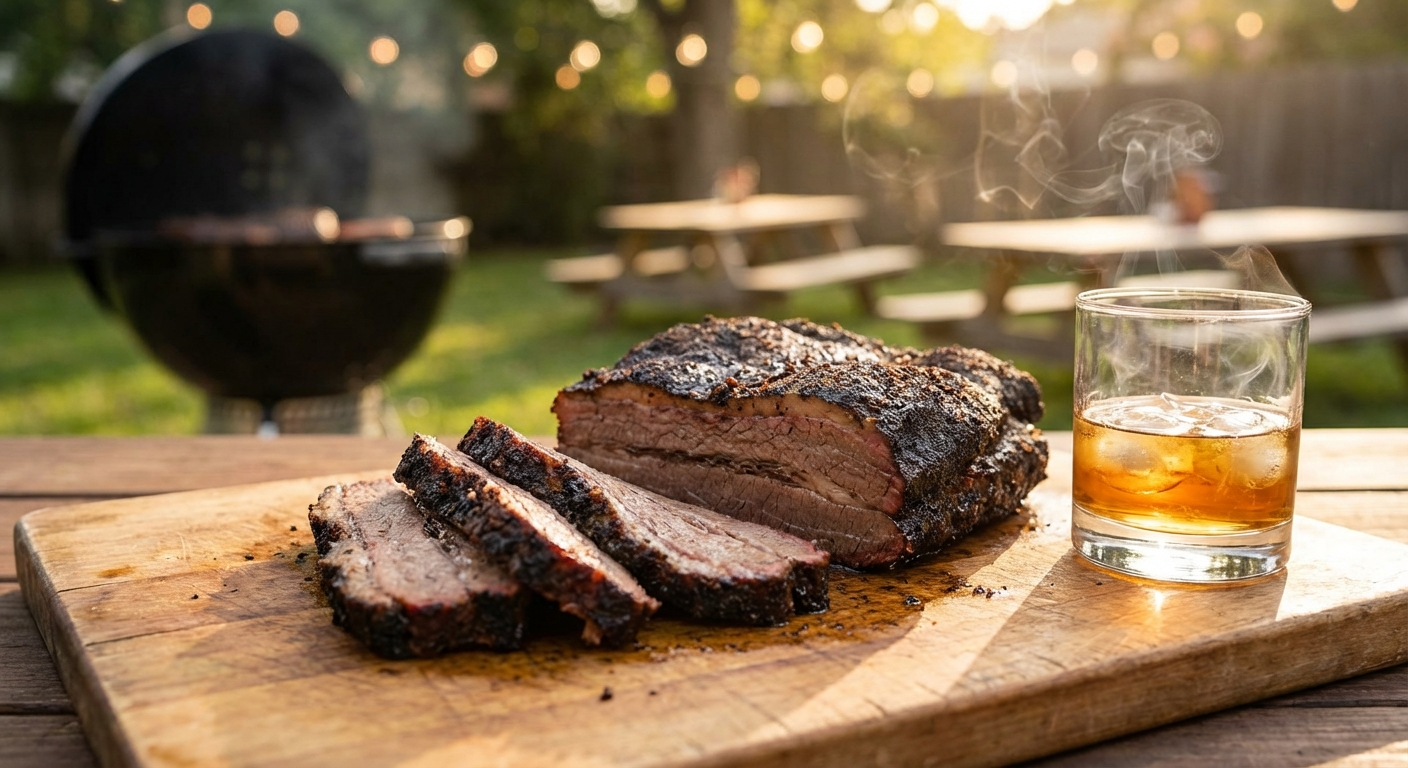
Brisket is the most demanding cut in American barbecue. Twelve to sixteen hours of smoke, a bark built through patience and heat, and a final product that ranges from lean and sliceable to rich and unctuous depending on which part of the brisket you carve. Bourbon matches that intensity pound for pound — both are products of time, oak, and controlled transformation.
But brisket is not one thing. The flat is lean and smoky. The point is fatty and rich. Burnt ends are candy-sweet and caramelized. Each demands a different pour. Picking the wrong bourbon doesn't ruin the meal, but picking the right one turns a great plate of brisket into something you remember.
This guide breaks down the best bourbon pairings for every part of the brisket — with specific bottle recommendations, smoke wood considerations, and the flavor logic behind each match.
Why Bourbon and Brisket Are Natural Partners
The connection between bourbon and brisket runs deeper than "both are American." They share actual chemistry.
Oak is the common thread. Bourbon ages in charred new oak barrels. Brisket is most often smoked over post oak (the Texas standard) or hickory. The same wood family produces overlapping flavor compounds — vanillin, guaiacol, and syringol — in both the spirit and the meat. When you sip bourbon alongside brisket, your palate reads them as relatives.
Caramel bridges the gap. The Maillard reaction on brisket bark produces caramelized sugars and amino acids. Bourbon's charred-barrel aging creates its own caramel through lignin breakdown. These parallel caramel notes link the plate and the glass, making each taste more complete alongside the other.
Smoke reinforces smoke. Phenolic compounds in wood smoke are present in both smoked brisket and barrel-aged bourbon. The guaiacol in your bourbon whispers to the guaiacol in your brisket, creating a layered smoke experience that neither delivers alone.
Time is the shared ingredient. You cannot rush brisket. You cannot rush bourbon. Both reward patience with complexity that shortcuts can never replicate. A 12-year bourbon alongside a 14-hour brisket carries a symmetry that feels right before you even taste it.
The Brisket Flat: Lean, Smoky, and Sliceable
The flat is the leaner, more uniform half of the brisket. When sliced properly — thin, against the grain — it showcases pure smoke flavor and beef character without the richness of the point. The bark-to-meat ratio is high on flat slices, which means more peppery crust in every bite.
Best bourbon style: Medium-bodied, 90-100 proof
The flat's leanness means you don't need a bourbon that cuts through heavy fat. Instead, you want a bourbon that complements the smoke and pepper without overwhelming the beef's natural flavor. Medium-proof, well-balanced bourbons with warm spice notes work best here.
Top picks:
- Woodford Reserve (90.4 proof) — Exceptionally balanced with dried fruit, vanilla, and a silky finish. The refined character mirrors the flat's clean, smoky profile. The subtle cocoa note in Woodford harmonizes with bark spices.
- Buffalo Trace (90 proof) — Caramel, vanilla, and a clean finish that lets brisket smoke take center stage. Widely available and consistently excellent — the "house bourbon" for brisket.
- Eagle Rare 10 Year (90 proof) — Cherry, toffee, and gentle oak. The decade of aging adds complexity that rewards attention alongside well-smoked flat slices. Elegant without being fussy.
Why restraint matters
A common mistake is reaching for the biggest bourbon you own when brisket hits the table. But the flat is the subtler half of the brisket — its pleasure comes from clean smoke flavor and tender beef, not from richness. A barrel-proof bourbon would steamroll those qualities. Match the bourbon's intensity to the meat's character, not to your excitement about the occasion.
The Brisket Point: Rich, Fatty, and Unctuous
The point is the opposite end of the brisket spectrum. Heavily marbled, with thick seams of rendered fat running through the meat, it delivers an unctuous, almost buttery experience. Chopped brisket sandwiches are usually point meat. When you get a slice with that wobbling fat line through the middle, that's the point talking.
Best bourbon style: High-rye, 100-110 proof
The point's richness demands a bourbon with backbone. High-rye bourbons bring spice, structure, and a drying finish that cuts through rendered beef fat. The rye's black pepper and cinnamon notes also complement the dalmatian rub (salt and coarse black pepper) that defines Texas-style brisket.
Top picks:
- Wild Turkey 101 (101 proof) — Bold, spicy, with deep caramel and enough proof to handle the fattiest point meat. If you could only buy one bourbon for brisket day, this is the one. The price-to-performance ratio is unbeatable.
- Four Roses Single Barrel (100 proof) — Floral and spicy with a long, complex finish. The higher rye content provides a peppery bite that mirrors the black pepper bark on brisket. Slightly more refined than Wild Turkey 101, if that matters to you.
- Old Grand-Dad 114 (114 proof) — High rye, high proof, and unapologetically bold. The cinnamon and spice notes are pronounced, and the proof cuts through point fat like a serrated knife. Not subtle, but neither is brisket point.
The fat-cutting principle
Brisket point coats your palate more aggressively than any pork preparation. The rendered beef tallow creates a persistent richness that lingers between bites. Higher-proof bourbon with rye spice acts as a palate cleanser — the ethanol dissolves the fat coating while the spice provides a counterpoint to the meat's richness. This creates a rhythm: bite, sip, reset. The brisket stays exciting from first slice to last.
Burnt Ends: Caramelized, Sweet, and Intense
Burnt ends are the point meat cubed, sauced, and returned to the smoker until each piece develops a sticky, caramelized exterior. They're essentially beef candy — sweet, smoky, rich, and intensely flavored. Originally a Kansas City tradition, they've become the most sought-after item at serious barbecue joints nationwide.
Best bourbon style: Wheated or high-rye depending on sauce
Burnt ends are the one brisket preparation where the sauce matters as much as the meat for bourbon pairing. The caramelized sugar glaze changes the equation significantly.
For sweet-sauced burnt ends (Kansas City style):
- Wild Turkey 101 (101 proof) — The rye spice counterbalances the sweet sauce. Without spice from the bourbon, the pairing becomes a sugar bomb. Wild Turkey's assertive character prevents that.
- Bulleit Bourbon (95 proof) — High rye content (28% of the mash bill) provides the peppery bite needed to balance sweet burnt ends. The vanilla and dried fruit notes complement the caramelization.
For dry-rubbed or lightly sauced burnt ends:
- Maker's Mark (90 proof) — The wheated softness pairs beautifully with unsauced burnt ends, where the caramelization comes from rendered fat and rub sugars rather than added sauce. The bourbon's honey notes echo the meat's natural sweetness.
- Larceny Small Batch (92 proof) — Another wheated option with honeysuckle and butterscotch that complement the caramelized bark without fighting it.
The sweetness trap
The biggest mistake with burnt ends is pairing sweet bourbon with sweet sauce. When both the glass and the plate are sugary, your palate fatigues fast and the nuances in both disappear. If your burnt ends are heavily sauced, go spicy with the bourbon. If they're dry or lightly glazed, wheated softness works. Read the sauce, then pour accordingly.
Smoke Wood and Bourbon: Matching the Invisible Ingredient
The wood you smoke your brisket with changes the bourbon pairing as fundamentally as the cut itself. Different woods produce different phenolic compounds, and some bourbon styles resonate with specific smoke profiles.
Post oak + aged bourbon. Post oak is the Texas standard — clean, medium-intensity smoke that emphasizes the beef rather than the wood. Well-aged bourbons like Eagle Rare or Woodford Reserve mirror this philosophy. The oak in the barrel echoes the oak in the smoker, creating a seamless flavor bridge.
Hickory + high-rye bourbon. Hickory produces a stronger, more assertive smoke with bacon-like notes. High-rye bourbons like Wild Turkey 101 or Four Roses Single Barrel match hickory's intensity with their own spice and structure. Delicate bourbons get buried under hickory smoke.
Mesquite + barrel-proof bourbon. Mesquite is the most aggressive common smoking wood — earthy, sharp, and slightly bitter when overdone. Only barrel-proof bourbons have the concentration to stand alongside mesquite. Booker's or Elijah Craig Barrel Proof pair well here, matching intensity with intensity.
Cherry or apple wood + wheated bourbon. Fruitwoods add subtle sweetness and a gentler smoke character. Wheated bourbons like Maker's Mark or Weller complement this softness without overwhelming it. If someone smokes their brisket with cherry wood, a barrel-proof bourbon would bulldoze the delicate fruit smoke.
Barrel-Proof Bourbon and Competition Brisket
Competition-style brisket — heavily seasoned, aggressively smoked, injected with beef broth and butter — is the most intensely flavored brisket you'll encounter. This is where you bring out the barrel-proof heavy hitters.
Best bourbon style: Barrel-proof, 115+ proof
Top picks:
- Booker's (125-130 proof) — Uncut, unfiltered, massive. Dark caramel, charred oak, and a warming finish that matches competition brisket's intensity blow for blow. This is the bourbon equivalent of a competition brisket — bold, unapologetic, and not for casual encounters.
- Elijah Craig Barrel Proof (120-135 proof) — Rich dark chocolate, cherry, and deep oak char. Each batch varies slightly, but every release has the power needed for heavily seasoned brisket.
- Rare Breed (116.8 proof) — Wild Turkey's barrel-proof expression. Funky, spicy, with pronounced caramel. More approachable than Booker's while still delivering the intensity competition brisket demands.
When barrel proof makes sense
Reserve barrel-proof bourbons for the most intensely flavored brisket. If you're eating simple, Texas-style brisket with just salt and pepper, barrel proof can overwhelm the clean smoke flavor. But when the brisket itself is turned up to eleven — heavy rub, aggressive smoke, rich injection — barrel proof is the only bourbon that won't get lost in the noise.
Bourbon Cocktails That Enhance Brisket
Straight bourbon is the purist's choice, but certain cocktails add dimensions that neat bourbon cannot.
Old Fashioned. Brown sugar and Angostura bitters create layers that mirror brisket rub ingredients. The orange peel garnish lifts the smoke. An Old Fashioned made with Wild Turkey 101 is arguably the single best cocktail-and-brisket pairing possible.
Bourbon and ginger beer (Kentucky Mule). The ginger's spice and effervescence cut through brisket fat aggressively while the bourbon maintains the smoke connection. Ice-cold on a hot day alongside fatty point meat, this is hard to beat.
Smoked Old Fashioned. If your brisket is lightly smoked (electric smoker, pellet grill), a smoked cocktail adds the smoke intensity the meat might lack. Use a smoking gun or torched wood chip on the glass before building the drink. Don't bother if the brisket itself is heavily smoked — it becomes redundant.
Bourbon Lemonade. Fresh lemon juice, simple syrup, bourbon, sparkling water. The acid and effervescence provide aggressive palate cleansing for the fattiest brisket. It's the "all-day BBQ" drink — light enough to enjoy for hours without palate fatigue.
Common Mistakes to Avoid
Same bourbon for flat and point. These are different meats that happen to come from the same cut. The flat needs finesse; the point needs firepower. Pouring the same bourbon for both is like wearing the same shoes to a wedding and a construction site. It works, technically, but you're leaving performance on the table.
Going too sweet with sweet sauce. Kansas City-style brisket with a sweet bourbon on top creates sugar overload that masks the smoke you spent 14 hours developing. Match sweet meat with spicy bourbon.
Barrel proof with simple brisket. A Texas pitmasters who uses only salt, pepper, and post oak is making a delicate statement. Barrel-proof bourbon shouts over that whisper. Save the Booker's for competition-style preparations.
Ignoring the resting period. Brisket must rest after smoking, and bourbon benefits from time in the glass. Open your bourbon while the brisket rests — let both settle before the first pairing bite. The bourbon's aromatics open up as it breathes, and the brisket's juices redistribute. Patience made both great; give them a few more minutes.
The Quick-Reference Pairing Chart
When in doubt, use this simplified matching guide:
- Brisket flat → Balanced bourbon, 90-100 proof (Woodford Reserve, Buffalo Trace, Eagle Rare)
- Brisket point → High-rye bourbon, 100-114 proof (Wild Turkey 101, Four Roses SiB, Old Grand-Dad 114)
- Burnt ends (sweet sauce) → Spicy high-rye bourbon (Wild Turkey 101, Bulleit)
- Burnt ends (dry rub) → Wheated bourbon (Maker's Mark, Larceny)
- Competition brisket → Barrel-proof bourbon, 115+ proof (Booker's, ECBP, Rare Breed)
- Post oak smoke → Aged bourbon (Eagle Rare, Woodford)
- Hickory smoke → High-rye bourbon (Wild Turkey 101, Four Roses)
Final Thoughts
Brisket and bourbon is one of the great American pairings — both born from patience, smoke, and the transformative power of time and heat. The key to getting it right is matching intensity to intensity. Read the brisket first: how fatty, how smoky, how sauced? Then pour a bourbon that meets it where it is, not where you wish it were.
If you keep only one bourbon for brisket day, make it Wild Turkey 101. It handles more brisket styles competently than any other bottle at its price point — the rye spice works with fatty point, the proof handles heavy smoke, and the caramel character bridges to bark and rub. From there, explore the nuances.
For related spirit pairings, check our bourbon and steak guide and the whiskey and BBQ pairing guide. If you want to go in a different direction, our beer and brisket pairings offer excellent alternatives for when the day calls for something cold and carbonated.
For premium brisket worth pairing with your best bourbon, browse The Meatery's beef selection — sourced from heritage breeds and craft producers who take their brisket as seriously as Kentucky takes its bourbon.
Frequently Asked Questions
What is the best bourbon for smoked brisket?
Wild Turkey 101 is the most versatile bourbon for smoked brisket. Its 101 proof and high-rye mash bill cut through rendered beef fat, the spice balances sweet sauces, and the bold caramel-oak character stands up to heavy smoke. It works with brisket flat, point, and burnt ends.
Should I drink different bourbon with brisket flat vs point?
Yes. The flat is lean and smoky — pair it with balanced, medium-proof bourbon like Woodford Reserve or Buffalo Trace (90 proof range). The point is rich and fatty — pair it with high-rye, higher-proof bourbon like Wild Turkey 101 or Four Roses Single Barrel (100+ proof) that cuts through the fat.
What bourbon goes with burnt ends?
It depends on the sauce. Sweet-sauced Kansas City burnt ends pair best with spicy high-rye bourbons like Wild Turkey 101 or Bulleit — the rye spice counterbalances the sugar. Dry-rubbed or lightly glazed burnt ends pair better with softer wheated bourbons like Maker's Mark.
Does the smoke wood affect bourbon pairing?
Significantly. Post oak brisket pairs with aged, balanced bourbons (Eagle Rare, Woodford Reserve). Hickory-smoked brisket needs high-rye bourbons (Wild Turkey 101) to match the stronger smoke. Mesquite-smoked brisket demands barrel-proof bourbon (Booker's, Elijah Craig Barrel Proof) to stand up to the intensity.
Is bourbon or beer better with brisket?
Both work well but serve different roles. Beer's carbonation is a more aggressive palate cleanser, making it ideal for all-day BBQ sessions. Bourbon provides deeper flavor interaction — its shared smoke and caramel compounds create harmony with the meat. For a focused tasting alongside quality brisket, bourbon wins. For a long backyard cookout, beer might be more practical.
More Pairing Guides
Best Bourbon for Pork Ribs vs Beef Ribs: Complete Pairing Guide
Pork ribs and beef ribs aren't interchangeable when it comes to bourbon pairing. Fat content, smoke intensity, and flavor depth determine which bottle works best. Here's the complete breakdown.
12 min readBest Bourbon for BBQ Ribs: 7 Perfect Pairings (Tasted & Ranked)
Not every bourbon works with every style of ribs. Here are 7 bourbon pairings ranked by rib type, sauce style, and smoke profile — with specific bottles tested against real BBQ.
10 min readBest Wine with Tri-Tip: Expert Pairing Guide
Tri-tip demands wines with enough structure to match its intensity while complementing its smoky, savory profile.