Best Wine with Ribeye Steak: A Sommelier's Pairing Guide
Best Wine with Ribeye Steak: A Sommelier's Pairing Guide
Over twenty years of working in fine dining—from Napa Valley steakhouses to Manhattan wine bars—I've poured thousands of bottles for guests eating ribeye. I've seen what works, what fails, and what creates those perfect "aha!" moments when wine and food elevate each other into something transcendent.
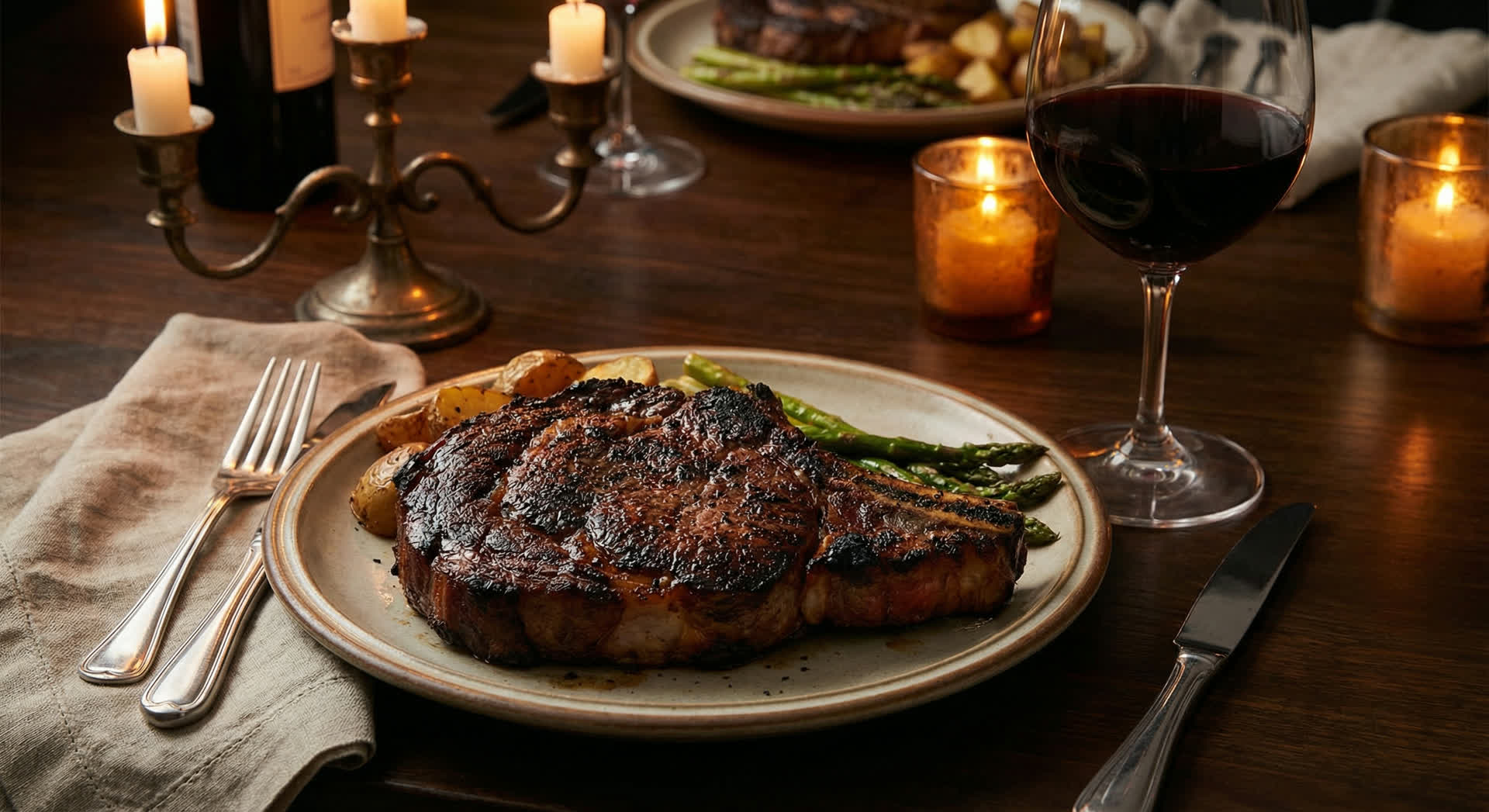
Here's what I know for certain: ribeye is the most forgiving steak to pair with wine, but also the most rewarding when you get it right. Its extraordinary marbling—often 30-40% intramuscular fat in a prime ribeye—creates unique pairing dynamics. That fat needs wines with enough structure to cut through richness, enough tannin to provide textural contrast, and enough fruit intensity to not disappear against the beef's robust flavor.
Let me show you exactly which wines work, why they work, and how to choose the perfect bottle for your next ribeye—whether you're spending $20 or $200.
Why Ribeye Demands Bold Wines: The Food Science
Before we dive into specific varietals, you need to understand what makes ribeye different from other steaks and why certain wines pair better than others.
The Fat Factor
Ribeye's defining characteristic is marbling—those white veins of intramuscular fat that give the cut its incredible flavor and tenderness. This fat has profound implications for wine pairing:
Fat coats your palate: When you eat fatty foods, lipids coat the inside of your mouth, dulling your taste receptors. This is why a sip of wine after a bite of fatty steak can taste different than the same wine on its own. You need wines with enough acidity, tannin, and flavor intensity to penetrate that fat coating.
Fat needs contrast: Rich, fatty foods benefit from wines that provide textural and flavor contrast. Tannins (polyphenolic compounds found in grape skins, seeds, and oak) bind with proteins and fat molecules, creating a cleansing sensation that prevents the palate from becoming overwhelmed.
Fat softens tannin: Here's the beautiful synergy—while tannins cut through fat, fat simultaneously softens the perception of tannin. A wine that tastes aggressively tannic on its own (mouth-puckering, astringent) becomes smooth and balanced when paired with fatty ribeye. This is why big, bold Cabernets that would be too intense alone become perfect with steak.
The Maillard Reaction and Umami
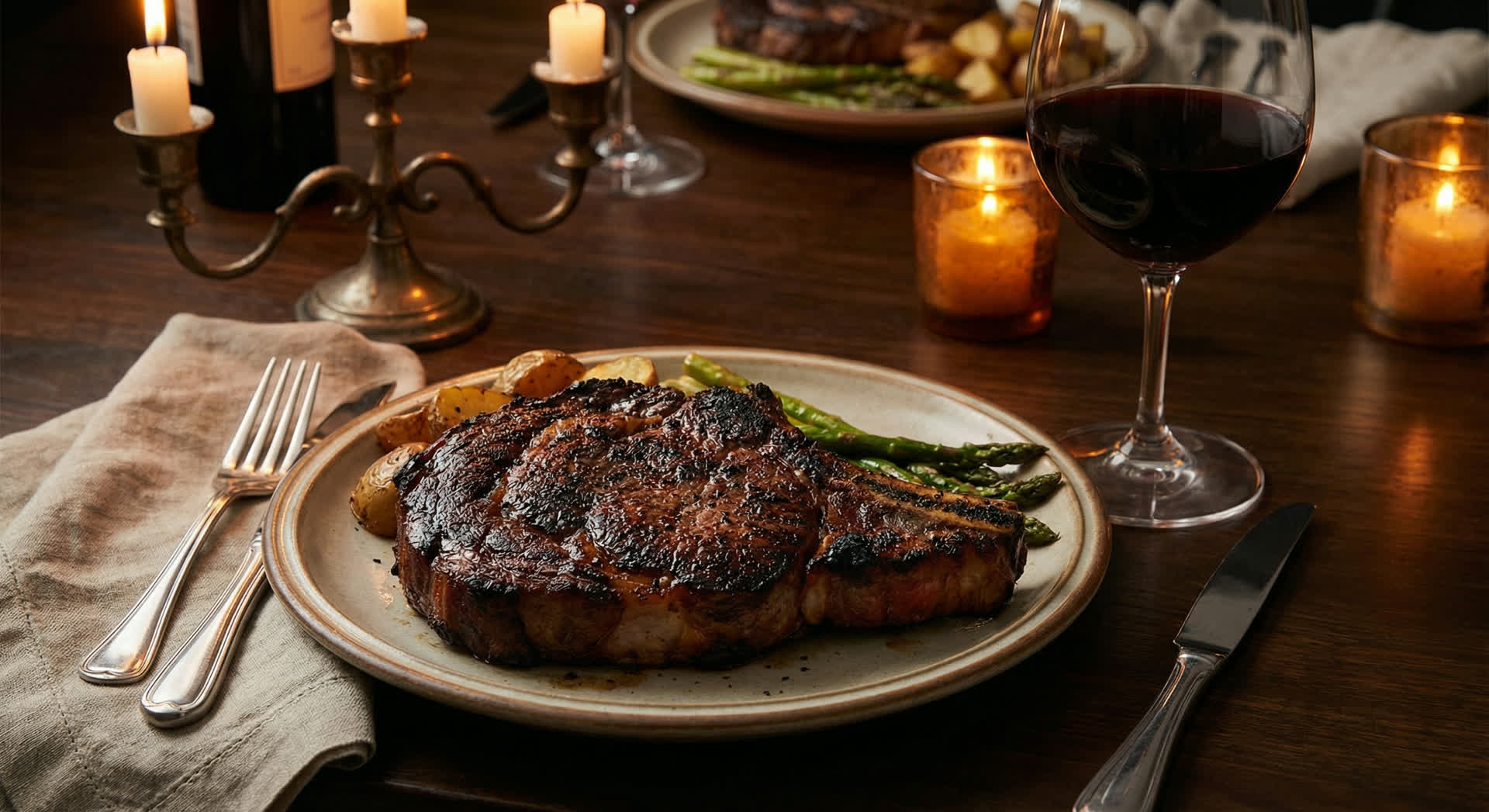
When you sear a ribeye, the Maillard reaction creates hundreds of savory, roasted, nutty flavor compounds on the crust. This concentrated umami character needs wines with corresponding depth and complexity.
Light, fruity wines get lost against these bold flavors. You need wines with savory elements—earth, leather, tobacco, cedar—that complement rather than compete with the beef's umami-rich crust.
The Tannin-Protein Interaction
At the molecular level, tannins bind with proteins, creating a pleasant textural sensation rather than the astringency you'd experience drinking the wine alone. Ribeye is protein-dense, making it an ideal partner for tannic wines.
This is why the classic pairing of Cabernet Sauvignon and steak exists—Cab's firm tannin structure finds its perfect match in beef's protein-rich composition. The pairing literally changes the taste and texture of both the wine and the steak.
Top 7 Wine Varietals for Ribeye
Now let's get specific. These seven varietals consistently deliver exceptional pairings with ribeye, listed from most classic to more adventurous.
1. Cabernet Sauvignon: The Gold Standard
Cabernet Sauvignon is the undisputed champion of ribeye pairings. It's the default choice at steakhouses worldwide for good reason.
Why it works:
- Firm tannin structure that cuts through fat beautifully
- Full body that matches the ribeye's richness
- Dark fruit flavors (cassis, blackberry, plum) that complement beef without overwhelming it
- Savory notes (cedar, tobacco, graphite) that echo the Maillard crust
- Age-worthiness means older Cabs develop complexity that adds another dimension
Regions to explore:
- Napa Valley: Rich, ripe, powerful. Oakville and Rutherford produce the classic steakhouse Cabs with plush texture and concentrated fruit. ($40-200+)
- Bordeaux (Left Bank): More restrained and elegant. Pauillac and Saint-Julien offer classic structure with savory complexity. ($30-500+)
- Washington State: Columbia Valley Cabs provide excellent structure and ripe fruit at better value than Napa. ($20-60)
- Australia (Coonawarra, Margaret River): Eucalyptus and mint notes add unique character. Often excellent value. ($20-80)
Budget pick: Columbia Crest Grand Estates Cabernet Sauvignon (Washington) - $12-15, consistently delivers solid structure and dark fruit.
Splurge pick: Caymus Vineyards Cabernet Sauvignon (Napa) - $80-100, the archetypal steakhouse Cab with opulent fruit and velvety tannins.
2. Malbec: The Value Alternative
Malbec, particularly from Argentina, has become a steakhouse staple for its ribeye-friendly profile and accessible pricing.
Why it works:
- Softer tannins than Cabernet but still plenty of structure
- Ripe, jammy fruit (plum, blackberry, blueberry) that matches the richness
- Smooth texture that complements rather than contrasts
- Often less oaky than Cabernet, letting the beef flavor shine
- Excellent value—you get serious quality for $15-30
Regions to explore:
- Mendoza, Argentina: The world capital of Malbec. High-altitude vineyards produce concentrated fruit with good acidity. ($12-60)
- Cahors, France: The original Malbec region. More structured and savory than Argentina, with earthy complexity. ($18-50)
Budget pick: Alamos Malbec (Mendoza) - $10-12, reliable and widely available with good fruit and structure.
Mid-range pick: Catena Zapata Malbec (Mendoza) - $18-25, serious quality with depth and complexity that rivals wines twice the price.
3. Syrah/Shiraz: The Peppery Powerhouse
Syrah (as the French call it) or Shiraz (Australian style) brings spice, smoke, and savory complexity that works beautifully with grilled ribeye.
Why it works:
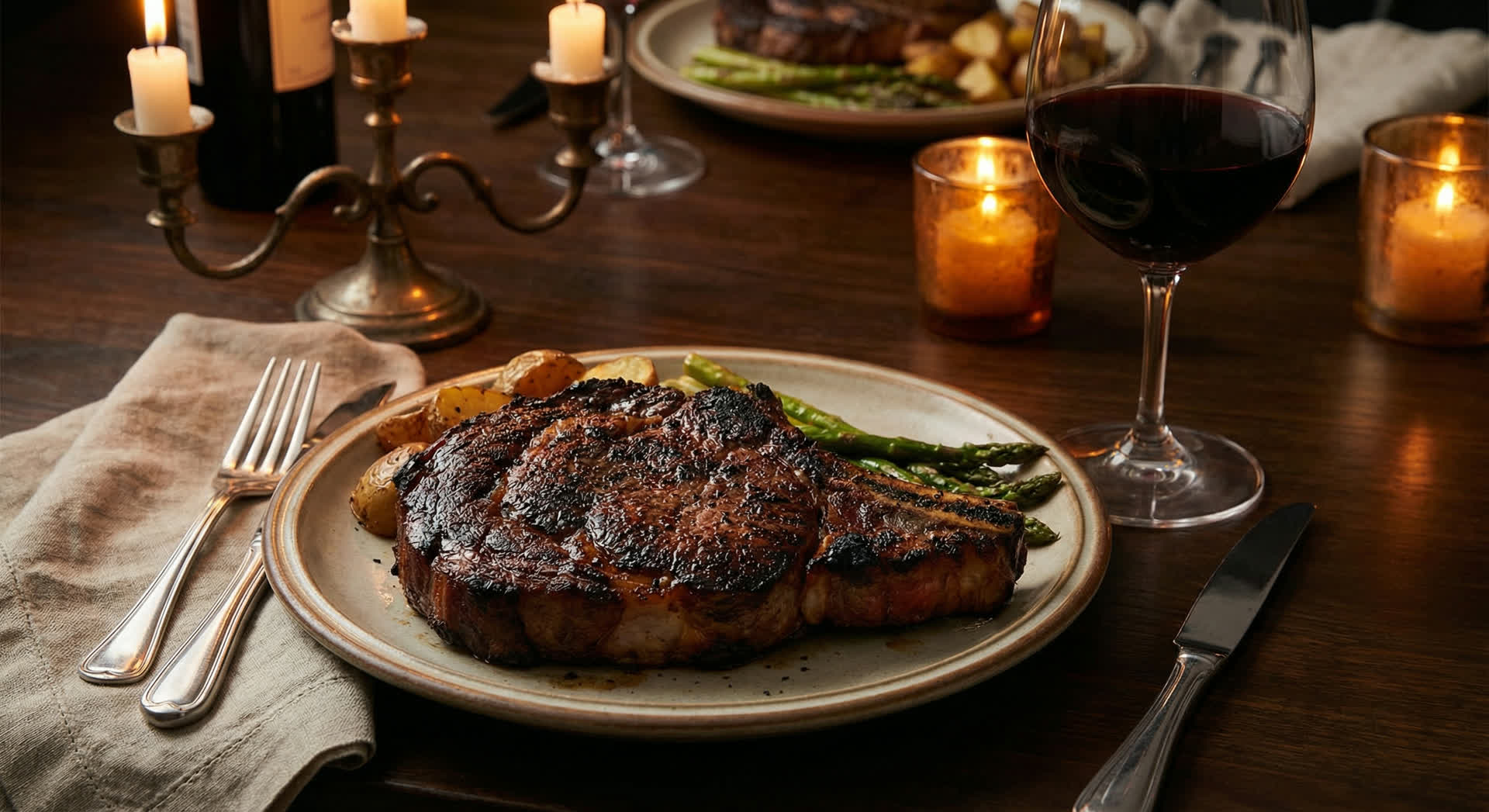
- Peppery, smoky notes that complement charred steak crust
- Full body with substantial tannin
- Dark fruit and savory elements (olive, meat, leather)
- Particularly excellent with grilled or smoked ribeye
Regions to explore:
- Northern Rhône (France): Hermitage and Côte-Rôtie produce elegant, peppery Syrah with firm structure and aging potential. ($35-200+)
- Barossa Valley (Australia): Rich, ripe, full-throttle Shiraz with chocolate and espresso notes. Big and bold. ($20-150)
- Washington State: Walla Walla and Columbia Valley offer structured Syrah with pepper and dark fruit. Great value. ($18-50)
Budget pick: Penfolds Koonunga Hill Shiraz-Cabernet (Australia) - $12-15, approachable and fruit-forward with enough structure for steak.
Splurge pick: E. Guigal Côte-Rôtie (Northern Rhône) - $60-150, elegant complexity with bacon fat, violet, and black pepper notes.
4. Zinfandel: The American Classic
California Zinfandel—particularly from old vines—offers a distinctly American take on the steak-and-wine pairing.
Why it works:
- High alcohol (often 14.5-16%) provides weight to match fatty ribeye
- Jammy, concentrated fruit (raspberry, blackberry, cherry)
- Spice notes (black pepper, clove, cinnamon)
- Often a touch of residual sugar that balances char and salt
- Particularly good with BBQ or grilled ribeye
Regions to explore:
- Dry Creek Valley (Sonoma): Classic old-vine Zins with structure and spice. ($18-45)
- Paso Robles: Ripe, powerful, fruit-forward style. ($15-50)
- Lodi: Value-driven with concentrated old-vine character. ($12-30)
Budget pick: Seghesio Family Vineyards Sonoma Zinfandel - $18-22, excellent example of balanced Zin with structure and spice.
Mid-range pick: Ridge Lytton Springs (Dry Creek Valley) - $35-45, benchmark California Zinfandel with complexity and age-worthiness.
5. Bordeaux Blends: Elegant Complexity
Bordeaux blends (combinations of Cabernet Sauvignon, Merlot, Cabernet Franc, and sometimes Petit Verdot and Malbec) offer complexity and balance.
Why it works:
- Blending creates complexity no single varietal achieves alone
- Structure from Cabernet, plushness from Merlot, aromatics from Cabernet Franc
- Classic savory notes (cedar, tobacco, graphite) complement beef
- Age-worthy—older Bordeaux develops tertiary complexity (leather, earth, truffle)
Regions to explore:
- Bordeaux (France): The original and still the benchmark. Left Bank (Pauillac, Margaux) for Cab-dominant, Right Bank (Pomerol, Saint-Émilion) for Merlot-based. ($25-1000+)
- Napa Valley: "Meritage" blends offer Napa ripeness with Bordeaux structure. ($30-200+)
- Washington State: Excellent value Bordeaux-style blends from Columbia Valley. ($18-60)
Budget pick: Château Tour de Mirambeau Bordeaux Supérieur - $18-22, classic Bordeaux structure at accessible pricing.
Splurge pick: Château Lynch-Bages (Pauillac) - $100-200, benchmark Left Bank Bordeaux with power and elegance.
6. Merlot: The Smooth Operator
Don't dismiss Merlot—quality examples (particularly from Bordeaux's Right Bank and Washington State) pair beautifully with ribeye.
Why it works:
- Softer tannins provide smoother texture
- Plush, velvety mouthfeel matches ribeye's richness
- Plum and cherry fruit with chocolate notes
- Less aggressive than Cabernet—lets the beef shine
Regions to explore:
- Pomerol/Saint-Émilion (Bordeaux): World-class Merlot with structure and complexity. ($30-500+)
- Washington State: Columbia Valley produces excellent Merlot with good structure and value. ($15-50)
- Napa Valley: Ripe, plush style with chocolate and coffee notes. ($25-100+)
Budget pick: Columbia Crest H3 Merlot (Washington) - $12-15, solid structure and dark fruit at everyday pricing.
Mid-range pick: Duckhorn Vineyards Merlot (Napa) - $45-55, the wine that rehabilitated Merlot's reputation in America.
7. Barolo/Barbaresco: The Italian Contender
Nebbiolo-based wines from Piedmont offer a more European, savory approach to the ribeye pairing.
Why it works:
- High tannin and high acidity cut through fat beautifully
- Savory, earthy character (tar, roses, leather, truffle) complements beef
- More food-centric than fruit-centric—designed for pairing
- Age-worthy—older Barolo is transcendent with steak
Regions:
- Barolo: More powerful and structured. Requires aging (minimum 5 years recommended). ($40-200+)
- Barbaresco: More elegant and approachable young. Still plenty of structure. ($35-150+)
Mid-range pick: Pio Cesare Barolo - $55-70, classic Barolo from a historic producer with good aging but approachable in youth.
Splurge pick: Bruno Giacosa Barbaresco - $100-200, benchmark Nebbiolo with elegance and complexity.
Serving Temperature: The Often-Overlooked Detail
You can choose the perfect varietal and still ruin the pairing by serving at the wrong temperature.
The Problem with "Room Temperature"
The classic advice to serve red wine at "room temperature" dates from European cellars that were naturally cool (55-65°F). Modern room temperature (70-75°F) is too warm and creates several problems:
- Alcohol becomes prominent and hot-tasting
- Fruit flavors become jammy and muddled
- Tannins feel softer, reducing the structural contrast you want with fatty ribeye
- Acidity seems lower, making the wine taste flabby
Ideal Serving Temperatures for Ribeye Pairings
- Full-bodied reds (Cabernet, Syrah, Zinfandel, Malbec): 60-65°F (15-18°C)
- Medium to full-bodied reds (Merlot, Bordeaux blends): 58-62°F (14-17°C)
- High-acid, high-tannin reds (Barolo, Barbaresco): 62-66°F (17-19°C)
How to Achieve This
If your wine has been sitting at room temperature (70-75°F), refrigerate it for 20-30 minutes before serving. If it's been in a cellar or wine fridge (55°F), let it warm slightly for 10-15 minutes.
Use your hand as a guide: the bottle should feel cool to the touch but not cold. If you can comfortably hold the bottle for extended periods, it's probably at a good temperature.
Budget-Friendly Options That Punch Above Their Weight
You don't need to spend $100+ per bottle to get an excellent ribeye pairing. These wines consistently over-deliver for their price:
Under $15
- Columbia Crest Grand Estates Cabernet Sauvignon (Washington): $12-15. Reliable structure and dark fruit year after year.
- Alamos Malbec (Argentina): $10-12. Approachable, fruit-forward, widely available.
- Bogle Petite Sirah (California): $10-13. Dense, tannic, big—needs fatty ribeye to balance it.
$15-30
- Seghesio Family Vineyards Zinfandel (Sonoma): $18-22. Excellent value from a historic producer.
- Catena Zapata Malbec (Mendoza): $18-25. Serious wine at affordable pricing.
- Château Tour de Mirambeau Bordeaux Supérieur: $18-22. Classic French structure without the markup.
- 14 Hands Cabernet Sauvignon (Washington): $12-15. Surprisingly good for the price point.
- Apothic Crush (California red blend): $10-13. Sweet side but works with BBQ ribeye.
$30-50 (Sweet Spot for Quality/Value)
- Ridge Lytton Springs Zinfandel: $35-45. Benchmark California Zin.
- Duckhorn Vineyards Merlot: $45-55. Restored faith in Merlot for a generation.
- Austin Hope Cabernet Sauvignon (Paso Robles): $40-50. Rich, ripe, fruit-forward in the best way.
- Château Greysac Médoc (Bordeaux): $20-25. Classic Left Bank structure at affordable pricing.
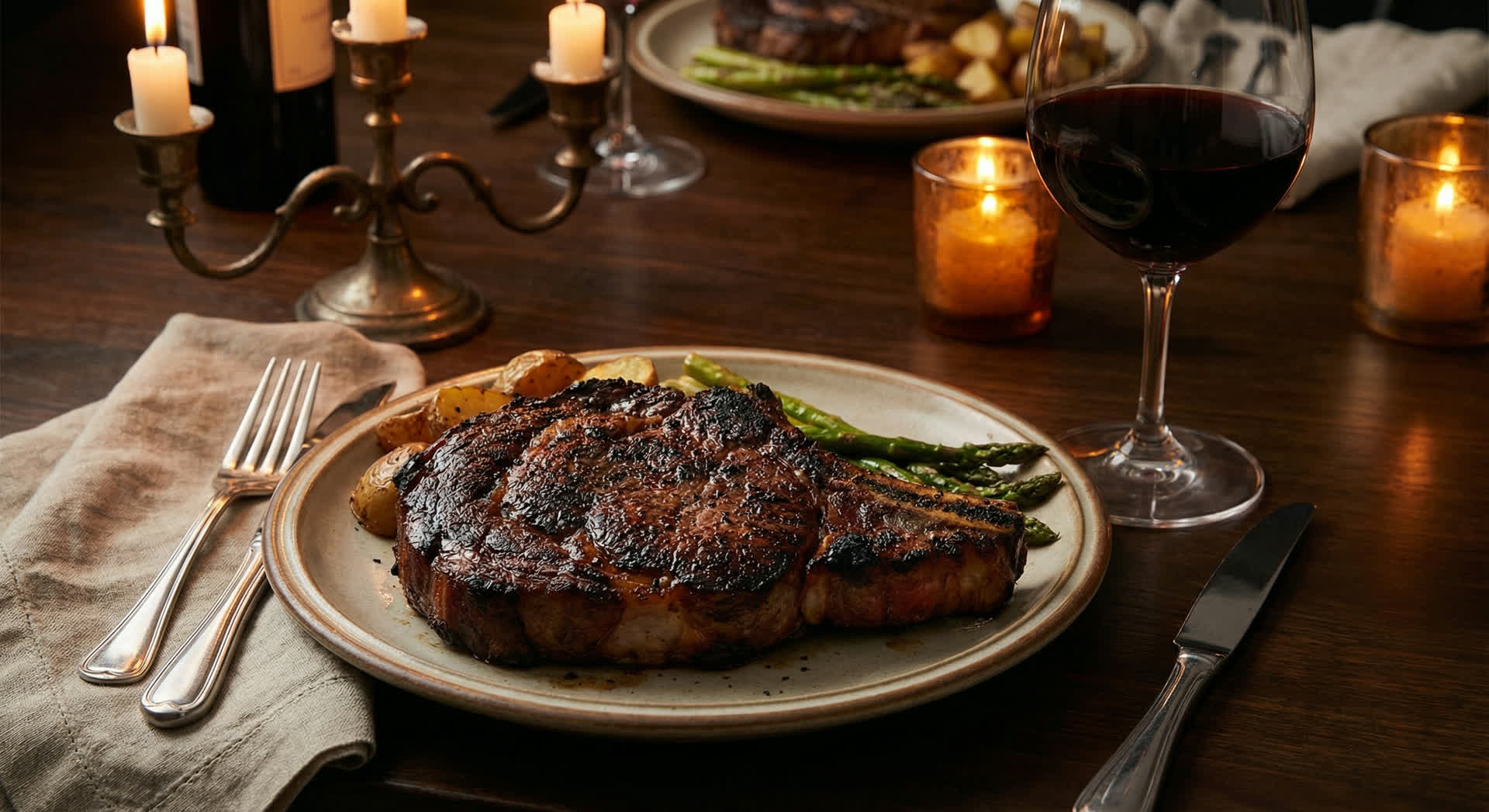
Special Considerations for Different Ribeye Preparations
How you cook your ribeye should influence your wine choice.
Grilled or Charcoal-Cooked Ribeye
The char and smoke flavors from grilling call for wines with corresponding smoky, savory character:
- Best choices: Syrah/Shiraz, Zinfandel, Malbec
- Why: Peppery, smoky notes in these wines complement grill char
- Consider wines with some oak aging—vanilla and toast notes echo the char
Pan-Seared Ribeye with Pan Sauce
If you're making a wine-based pan sauce, coordinate your drinking wine:
- Red wine pan sauce: Serve the same wine (or similar varietal) that you used for the sauce
- Cream-based sauce: Choose wines with good acidity (Bordeaux, Barolo) to cut richness
- Butter-mounted sauce: Fuller-bodied wines (Napa Cab, Barossa Shiraz) to match richness
Dry-Aged Ribeye
Dry-aging concentrates flavor and creates funky, nutty, almost blue-cheese-like notes that need special consideration:
- Best choices: Aged Bordeaux, Barolo, mature Cabernet (8+ years old)
- Why: Aged wines develop tertiary characters (leather, earth, truffle, tobacco) that complement the funky complexity of dry-aged beef
- Younger, fruit-forward wines can clash with dry-aged beef's intensity
Wagyu or Prime Grade Ribeye
Wagyu ribeye or heavily marbled Prime grade has even more fat than standard ribeye:
- Best choices: High-acid, high-tannin wines—Cabernet, Barolo, young Bordeaux
- Why: The extra fat needs extra tannin and acidity to cut through richness
- Avoid softer wines (Merlot, Malbec) which can feel flabby against extreme marbling
What NOT to Pair with Ribeye
Some wines actively clash with ribeye. Avoid these:
Light-Bodied Reds
Pinot Noir, Gamay (Beaujolais), lighter Grenache: These delicate wines get completely overwhelmed by ribeye's richness and bold flavor. They're better suited to salmon, duck, or mushroom dishes. The tannin is too soft to provide contrast, and the flavors are too subtle to compete.
White Wines (Generally)
While some full-bodied whites (aged white Burgundy, rich Viognier) can theoretically work, they're fighting an uphill battle. White wines lack the tannin structure to cut through fat effectively, and ribeye's robust flavor overwhelms most white wine flavors. Save the whites for fish and poultry.
Exception: Champagne or high-quality sparkling wine can work through sheer acidity and bubbles, but it's an unconventional choice.
Sweet Wines
Dessert wines, Port (except vintage Port with aged steak), late-harvest wines—these create cloying sweetness against savory beef. The sweetness clashes with the umami-rich Maillard crust.
Overly Oaked Wines
Some modern wines are so heavily oaked that they taste more like vanilla extract than wine. While oak can complement steak, too much creates a bitter, woody flavor that clashes with beef. Look for balanced oak integration, not oak dominance.
Decanting and Aeration: When It Matters
For certain wines, decanting or aeration significantly improves the pairing.
Wines That Benefit from Decanting
- Young, tannic wines: Cabernet under 5 years, young Barolo, powerful Syrah—30-60 minutes in a decanter softens tannins and opens aromatics
- Older wines with sediment: Aged Bordeaux, Barolo over 10 years—decanting removes sediment (do it gently and shortly before serving)
- Closed or tight wines: Some wines smell muted when first opened—30 minutes of air exposure reveals hidden complexity
Wines That Don't Need Decanting
- Malbec, Zinfandel, and Merlot are generally ready to drink immediately
- Very old wines (20+ years) can fade quickly with air exposure—serve soon after opening
- Inexpensive wines (under $20) rarely improve with aeration
Quick Aeration Alternative
If you don't have time to decant, pour the wine into large-bowled glasses and swirl aggressively. This introduces oxygen and provides 70% of the benefit of decanting in seconds.
Frequently Asked Questions
What is the single best wine to pair with ribeye steak?
Cabernet Sauvignon is the gold standard for ribeye pairing. Its firm tannin structure cuts through the ribeye's rich fat, its full body matches the steak's intensity, and its dark fruit flavors (cassis, blackberry) complement beef without overwhelming it. For best value, try Washington State Cabernet ($20-40). For a splurge, Napa Valley Cabernet ($60-150) delivers the classic steakhouse experience. The tannin-protein and tannin-fat interactions create perfect synergy—the wine softens the richness of the steak while the steak smooths the wine's tannins.
Can you drink white wine with ribeye steak?
While technically possible, white wine is generally not recommended with ribeye. White wines lack the tannin structure needed to cut through ribeye's substantial marbling, and their delicate flavors get overwhelmed by the beef's robust, umami-rich character. The one exception is high-quality Champagne or sparkling wine, which can work through sheer acidity and effervescence to cleanse the palate between bites. However, for optimal pairing, stick with full-bodied red wines that have the structure and intensity to match ribeye's richness.
What temperature should I serve red wine with steak?
Serve full-bodied reds at 60-65°F (15-18°C), not at room temperature (70-75°F). Modern room temperature is too warm and causes alcohol to become prominent, fruit to taste jammy, and tannins to feel soft—eliminating the structural contrast you want with fatty ribeye. If your wine has been at room temperature, refrigerate for 20-30 minutes before serving. The bottle should feel cool to the touch but not cold. Proper temperature enhances tannin structure, preserves acidity, and keeps fruit flavors bright and defined.
Is Malbec or Cabernet Sauvignon better with ribeye?
Cabernet Sauvignon is generally better with ribeye due to its firmer tannin structure and higher acidity, which cut through the ribeye's substantial fat more effectively. However, Malbec is an excellent alternative if you prefer softer tannins and riper, jammier fruit (plum, blackberry). Malbec also offers significantly better value—quality Argentine Malbec at $15-25 competes with Cabernets costing twice as much. For heavily marbled Prime or wagyu ribeye, Cabernet's extra structure is advantageous. For standard Choice grade ribeye, Malbec's smoother profile works beautifully.
What wine pairs with dry-aged ribeye?
Dry-aged ribeye pairs best with aged red wines that have developed tertiary complexity—aged Bordeaux (8+ years), mature Barolo (10+ years), or older Napa Cabernet. The funky, nutty, almost blue-cheese-like character from dry-aging needs wines with corresponding complexity: leather, earth, tobacco, truffle notes that complement rather than clash. Young, fruit-forward wines can taste simple or even clumsy against dry-aged beef's intensity. If you can't source aged wine, choose wines with significant savory character like Northern Rhône Syrah or Bordeaux blends over purely fruity New World styles.
Conclusion: The Perfect Pour for Your Perfect Steak
Wine and ribeye pairing isn't mysterious or pretentious—it's applied chemistry. The fat in ribeye coats your palate and needs tannin to cut through it. The protein in ribeye binds with tannin to create pleasant texture. The umami-rich Maillard crust needs savory wine complexity to complement it. Understanding these principles transforms wine selection from guesswork into confidence.
Start with the classics: Cabernet Sauvignon is classic for a reason, and quality bottles exist at every price point from $15 to $500. Explore Malbec for value, Syrah for smoky grilled steaks, Zinfandel for American BBQ-style preparations, and Barolo when you're ready for a more European, savory approach.
Pay attention to serving temperature—it's the detail that separates good pairings from great ones. Decant young, tannic wines to soften them. Match your wine to your preparation—smoky wines for grilled steak, aged wines for dry-aged beef, higher-acid wines for heavily marbled cuts.
Most importantly, drink what you enjoy. Wine pairing guidelines are exactly that—guidelines, not rules. If you prefer Merlot over Cabernet, drink Merlot. If you love Zinfandel, pour Zinfandel. The best wine for your ribeye is the wine that makes you happy.
Now pour yourself something bold, fire up that grill, and enjoy one of life's great pleasures: exceptional beef with exceptional wine. That's not pretension. That's just good living.
— Marcus Thompson
Frequently Asked Questions
What wine goes best with ribeye steak?
Cabernet Sauvignon is the best wine for ribeye steak due to its firm tannin structure that cuts through the ribeye's rich marbling, full body that matches the steak's intensity, and dark fruit flavors that complement beef. The tannins in Cabernet bind with fat and protein molecules, creating a cleansing sensation while the ribeye's fat softens the wine's tannins. For excellent value, try Washington State Cabernet ($20-40) or Argentine Malbec ($15-25). For a splurge, Napa Valley Cabernet ($60-150) delivers the classic steakhouse experience.
Why do you need bold wines with ribeye steak?
Ribeye's extraordinary marbling (30-40% intramuscular fat in prime grade) coats your palate and dulls taste receptors, requiring wines with enough tannin, acidity, and flavor intensity to penetrate that fat coating. Bold wines provide essential contrast—tannins cut through fat and bind with proteins, creating textural balance. Light wines get completely overwhelmed by ribeye's richness. The food science principle: fat softens tannin perception while tannin cleanses fat from the palate, creating perfect synergy with big Cabernets, Syrahs, and Malbecs.
What temperature should red wine be served with steak?
Serve full-bodied red wines at 60-65°F (15-18°C) with ribeye, not at room temperature. Modern "room temperature" (70-75°F) is too warm and causes alcohol to taste hot, fruit to become jammy, and tannins to feel soft—eliminating the structural contrast needed with fatty steak. If wine has been at room temperature, refrigerate for 20-30 minutes before serving. The bottle should feel cool to the touch. Proper temperature preserves tannin structure, maintains acidity, and keeps fruit flavors bright and defined for optimal pairing.
Is Malbec good with ribeye steak?
Yes, Malbec is excellent with ribeye and offers outstanding value. Argentine Malbec ($15-25) provides softer tannins than Cabernet but still plenty of structure, ripe jammy fruit (plum, blackberry) that matches ribeye's richness, and smooth texture that complements the steak. While Cabernet has firmer tannins for heavily marbled steaks, Malbec's approachable style works beautifully with standard Choice or Prime ribeye. It's particularly good for those who find Cabernet too tannic or prefer fruitier wine styles. Try Catena Zapata Malbec for serious quality at $18-25.
Can you drink white wine with ribeye steak?
White wine is generally not recommended with ribeye because whites lack the tannin structure needed to cut through the ribeye's substantial fat, and their delicate flavors get overwhelmed by the beef's robust, umami-rich character from the Maillard reaction crust. The one exception is high-quality Champagne or sparkling wine, which can work through intense acidity and effervescence to cleanse the palate. However, for optimal pairing that enhances both the wine and steak, stick with full-bodied red wines like Cabernet, Malbec, or Syrah.
More Pairing Guides
Best Bourbon for Pork Ribs vs Beef Ribs: Complete Pairing Guide
Pork ribs and beef ribs aren't interchangeable when it comes to bourbon pairing. Fat content, smoke intensity, and flavor depth determine which bottle works best. Here's the complete breakdown.
12 min readBest Bourbon for BBQ Ribs: 7 Perfect Pairings (Tasted & Ranked)
Not every bourbon works with every style of ribs. Here are 7 bourbon pairings ranked by rib type, sauce style, and smoke profile — with specific bottles tested against real BBQ.
10 min readBest Wine with Tri-Tip: Expert Pairing Guide
Tri-tip demands wines with enough structure to match its intensity while complementing its smoky, savory profile.