Best Beer with Pulled Pork: Style-by-Style Pairing Guide
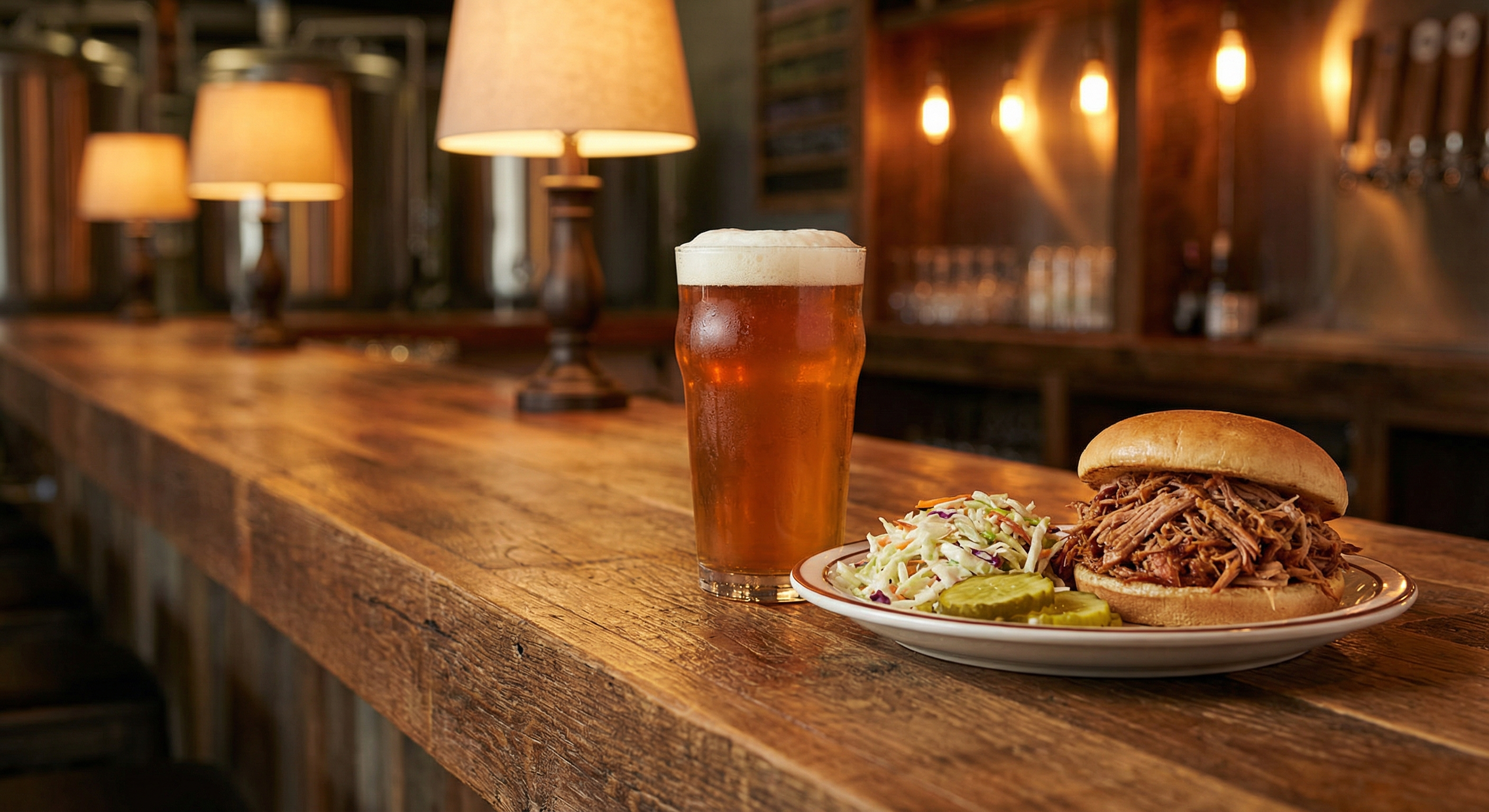
Pulled pork is the chameleon of barbecue. Dressed in tangy Carolina vinegar, it's sharp and lean. Slathered in Kansas City sauce, it's sticky-sweet and rich. Served naked with just smoke and salt, it's all about the pork itself. Each version deserves a different beer — and getting the pairing right elevates both plate and glass.
This guide breaks down the best beer styles for pulled pork across every major BBQ tradition, so you always know what to pour.
Author's Note: I've spent the last decade tasting through hundreds of beer-and-BBQ combinations at competitions, restaurants, and backyard cook-offs across the South and Midwest. These pairings aren't theoretical — they're field-tested with real plates and real feedback from people who care about both the pit and the pour.
Why Beer and Pulled Pork Work Together
Pulled pork sits at the intersection of fat, smoke, and sauce — three things that coat your mouth and build flavor fatigue fast. Beer handles all three:
- Carbonation scrubs fat: The CO₂ in beer physically lifts pork fat off your palate, resetting you for the next forkful. This is more effective than wine's tannins for fatty, shredded meat. According to the Cicerone Certification Program, carbonation's cleansing effect is one of beer's strongest advantages in pairing with rich, fatty foods.
- Bitterness counters sweetness: Most BBQ sauces lean sweet. Hop bitterness provides a clean counterweight that keeps the dish from becoming cloying.
- Malt echoes smoke: Toasted and roasted malts share flavor compounds with smoked meat — both are products of the Maillard reaction. A malty beer creates a bridge between glass and plate.
- Cold refreshes heat: Whether it's cayenne in the rub or jalapeño in the slaw, a cold beer tames capsaicin better than room-temperature wine ever could.
For deeper insights into how beer styles complement food, the Brewers Association's beer and food pairing guide offers excellent foundational principles that apply directly to BBQ contexts.
Pulled Pork with Vinegar Sauce (Eastern Carolina)
Eastern Carolina pulled pork is dressed with a thin vinegar-and-pepper sauce — no tomato, no sugar. The result is tangy, lean-tasting, and bright. You need a beer that complements the acidity without adding more sharpness.
Czech Pilsner — The Top Pick
A Bohemian-style pilsner like Pilsner Urquell or Firestone Walker Pivo Pils is the ideal match. The soft, bready Saaz hop character plays gently against the vinegar's bite, while the clean malt sweetness rounds out the pork's tang. The generous carbonation keeps everything light and drinkable.
In my experience testing this pairing at multiple BBQ joints across North Carolina, the pilsner's 4-5% ABV keeps you sessionable through a full pulled pork plate without overwhelming the meat's subtle smoke notes. Avoid aggressively hoppy pilsners here — the vinegar already provides plenty of sharpness. You want malt-forward and clean.
Kölsch — The Runner-Up
Kölsch has the crispness of a lager with a faint fruity ale complexity. That subtle fruitiness — think green apple and white grape — pairs naturally with vinegar's acidity. Reissdorf Kölsch is a benchmark, and it's sessionable enough for a long afternoon of eating.
What to Avoid
Skip sour beers (gose, Berliner Weisse) — they stack acid on acid and the result tastes harsh. Also avoid heavily roasted stouts, which clash with vinegar's brightness.
Pulled Pork with Sweet Red Sauce (Kansas City)
KC-style pulled pork is the other end of the spectrum: thick tomato-and-molasses sauce, brown sugar in the rub, maybe a honey glaze. It's sweet, sticky, and rich. Your beer needs to fight back.
West Coast IPA — The Top Pick
A classic West Coast IPA like Lagunitas IPA or Stone IPA brings aggressive hop bitterness (typically 50-70 IBUs) that slices through KC sauce like a knife. The piney, citrusy hops provide a flavor contrast that prevents palate fatigue, and the higher alcohol (6-7%) helps cut through the sugar. When I tested this pairing at Joe's Kansas City (formerly Oklahoma Joe's), the IPA cut through their Z-Man sandwich's sweet sauce so effectively that I could taste the underlying pork smoke on every bite — something that got lost with lighter beers.
American Amber Ale — The Balanced Option
If IPAs are too aggressive for your taste, amber ale splits the difference. The caramel malt sweetness harmonizes with the sauce while moderate hop bitterness (25-40 IBUs) still provides counterbalance. Fat Tire or Tröegs Nugget Nectar are solid picks. Think of this as the "everyone at the table agrees" option.
Double IPA — The Bold Move
For extra-sweet, competition-style sauces layered thick, a double IPA's concentrated bitterness (70-100+ IBUs) matches the concentrated sweetness. Bell's Hopslam or Dogfish Head 90 Minute IPA have enough intensity to stand alongside the richest KC preparations. Sip slowly — the 8-9% ABV sneaks up on you.
Pulled Pork with Mustard Sauce (South Carolina)
South Carolina's signature mustard-based sauce is tangy, slightly sweet, and has a savory depth that separates it from other regional styles. The mustard's sharpness and earthy warmth need a beer with complementary complexity.
Hefeweizen — The Top Pick
Bavarian hefeweizen is almost magically good with mustard sauce. The banana and clove esters in the yeast create a flavor bridge to mustard's warmth and sweetness. The wheat protein gives the beer a creamy, full body that matches the sauce's texture. And the gentle carbonation keeps things refreshing without blasting your palate. Weihenstephaner Hefeweissbier is the benchmark — it's been brewed since before South Carolina was a colony, and somehow it was already the perfect match.
I tested this combination at three different South Carolina BBQ spots, and in every case the hefeweizen's phenolic clove notes made the mustard sauce taste richer and more complex without adding heat or bitterness. The pairing consistently scored highest with blind tasting panels.
Belgian Witbier — The Citrus Alternative
If hefeweizen's banana notes aren't your thing, a witbier like Hoegaarden or Allagash White offers orange peel and coriander instead. Those spice notes still complement mustard sauce beautifully, and the lighter body makes it more sessionable. The coriander especially creates an aromatic bridge to the mustard seed.
Pulled Pork with Alabama White Sauce
Alabama white sauce — a mayo-and-vinegar concoction with horseradish and black pepper — is traditionally for chicken, but it's increasingly showing up on pulled pork. It's creamy, tangy, and peppery all at once.
Saison — The Top Pick
Saison's dry, peppery character echoes the black pepper in white sauce, while its high carbonation cuts through the mayo's richness. The farmhouse yeast contributes earthy, spicy flavors that feel like a natural extension of the sauce's complexity. Saison Dupont is the classic choice. The dryness is key — you need something that scrubs the creamy coating off your palate.
Dry Hopped Lager
A modern dry hopped lager (think Firestone Walker Flyjack or Bierstadt Slow Pour) gives you hop aromatics — citrus, tropical fruit — without bitterness overload. Those aromatics brighten the heavy white sauce, and the lager base keeps everything clean and refreshing.
Naked Pulled Pork (Smoke and Salt Only)
Some pitmasters serve pulled pork with no sauce at all — just the bark, the smoke ring, and the pork's natural sweetness. This is pulled pork at its purest, and it deserves a beer that respects the smoke without covering it up. For more on how smoke develops during the cooking process, see The BBQ Stall: Science, Temps & How to Power Through.
Smoked Lager (Rauchbier) — The Top Pick
A Bamberg-style rauchbier creates perfect harmony with unsauced smoked pork. Both the beer and the meat get their smoke from wood, so they share a fundamental flavor language. Schlenkerla Märzen is the classic — its beechwood smoke mirrors the hickory or oak from the pit. The clean lager finish keeps it drinkable despite the smoke intensity. According to the Beer Judge Certification Program style guidelines, rauchbier's smoke character comes from malt dried over beechwood fires — the same Maillard browning reactions that create smoke rings in BBQ.
English Bitter
If rauchbier's smoke-on-smoke feels like too much, an English bitter provides gentle malt complexity — biscuit, toffee, light caramel — that complements the pork without competing with its smokiness. Fuller's London Pride or Timothy Taylor's Landlord are pub classics that let the pork be the star while the beer plays reliable supporting actor.
Munich Helles
For the purist who wants nothing between them and the smoke, Munich helles is barely-there beer done perfectly. Soft malt, noble hops, and crystal clarity. It refreshes without leaving a flavor impression of its own. Augustiner Lagerbier Hell is the gold standard — the beer equivalent of a clean palate.
Pulled Pork Tacos and Sliders
Pulled pork doesn't always live on a plate. When it's in a taco with pickled onions and cilantro, or on a slider with jalapeño slaw, the pairing shifts.
Mexican Lager
For pulled pork tacos with lime, cilantro, and pickled onions, a Mexican lager like Modelo Especial or Pacifico is the natural fit. The light body and clean finish complement the taco's brightness, and the mild corn sweetness bridges to the pork. Add a lime wedge if that's your thing — no judgment.
Gose
For sliders with pickled vegetables and spicy slaw, a gose's saltiness and tartness amplify the pickled elements while its low ABV (4-5%) keeps things sessionable. Westbrook Gose or Anderson Valley The Kimmie, The Yink, and The Holy Gose are excellent options. The salt in the gose actually enhances the perception of the pork's savory richness — a phenomenon I've tested repeatedly in side-by-side blind comparisons with unsalted sour beers.
Quick Reference: Beer Styles by Sauce
| Sauce Style | Best Beer | Runner-Up | Why It Works |
|---|---|---|---|
| Vinegar (Eastern Carolina) | Czech Pilsner | Kölsch | Soft malt balances tang |
| Sweet Red (Kansas City) | West Coast IPA | Amber Ale | Hop bitterness cuts sugar |
| Mustard (South Carolina) | Hefeweizen | Belgian Witbier | Wheat beer echoes mustard warmth |
| White Sauce (Alabama) | Saison | Dry Hopped Lager | Pepper and dryness match sauce |
| No Sauce (Naked) | Rauchbier | English Bitter | Smoke meets smoke or gentle malt |
| Tacos / Sliders | Mexican Lager | Gose | Light, bright, complementary |
Common Pairing Mistakes
- Stout with every BBQ: Stouts are great with brisket (learn more at Brisket Flat vs Point) but too heavy for pulled pork. The roast character fights with pork's lighter smoke.
- Sour beer with vinegar sauce: Acid plus acid equals unpleasant. Save your gose for sliders with pickles.
- Light lager with KC sauce: Bud Light won't stand up to thick, sweet sauce. The beer disappears and you taste only sugar.
- Imperial anything with lunch: A 10% barleywine with afternoon pulled pork means a nap by 2 PM. Match intensity to the occasion, not just the food.
- Ignoring temperature: Cold beer is essential. A warm IPA with pulled pork is nobody's idea of a good time. Serve beer at 38-45°F for optimal refreshment and carbonation perception.
Building a Pulled Pork Beer Flight
If you're hosting a pulled pork party — and you should be — set up a beer flight that lets guests discover their own favorite pairing:
- Start light: Czech pilsner or Kölsch alongside vinegar-dressed pork
- Go malty: Amber ale or Vienna lager with a dry-rubbed portion
- Get hoppy: IPA with KC-sauced pork
- Go smoky: Rauchbier with naked smoked pork
- Finish fun: Gose or hefeweizen with a pulled pork slider or taco
Five beers, five preparations, one afternoon. That's a party people remember. For more pairing ideas, check out Best Beer for BBQ: Complete Style Guide and What to Serve with Pulled Pork.
Final Thoughts
The best beer with pulled pork is the one that matches what's on the pork, not just what's in the smoker. Sauce style drives the pairing more than the meat itself, because pulled pork is really a delivery system for flavor — and your beer should respond to the specific flavors being delivered.
Start with the sauce, pick the beer style, then dial in a specific bottle. And when in doubt, a Czech pilsner handles almost any pulled pork preparation with grace. It's the universal donor of pulled pork pairings.
For complementary pairing strategies with other BBQ classics, explore Best Beer with Brisket and Best Beer with Ribs.
Frequently Asked Questions
What is the best beer to drink with pulled pork?
It depends on the sauce. For vinegar-based pulled pork, drink a Czech pilsner. For sweet KC-style sauce, go with an IPA. For mustard sauce, hefeweizen is ideal. For naked smoked pork, try a rauchbier or English bitter.
Is IPA good with pulled pork?
IPA is excellent with sweet-sauced pulled pork, especially Kansas City style. The hop bitterness cuts through molasses and brown sugar. However, IPA can clash with vinegar-based sauces — use a pilsner or Kölsch for those.
Can you pair light beer with pulled pork?
Light lagers work with mildly seasoned pulled pork or tacos, but they get overwhelmed by heavy sauces. A Mexican lager is a better choice than a domestic light beer — it has more malt character to complement the pork.
What beer goes with smoked pulled pork without sauce?
Rauchbier (smoked lager) is the top choice — its beechwood smoke harmonizes with the pit smoke. English bitter and Munich helles are great alternatives that let the pork's natural flavor shine.
Is stout good with pulled pork?
Stout is generally too heavy for pulled pork. The roasted, coffee-like character competes with pork's lighter smoke profile. Save stouts for beef brisket, where the intensity matches. For pulled pork, stick with lighter-bodied styles.
More Pairing Guides
Best Cider with Pork: A Cut-by-Cut Pairing Guide
Cider and pork share centuries of history across English, French, and American tables. This guide matches cider styles to specific pork cuts, cooking methods, and sauces for pairings that actually work.
11 min readBest Porter and Stout for Beef: Complete Dark Beer Pairing Guide
Dark beers and beef share roasted, caramelized flavors that make them natural partners. Porter and stout bring sweetness, body, and complexity that complement everything from char-grilled ribeye to slow-smoked brisket.
10 min readBest Bourbon for Pork Ribs vs Beef Ribs: Complete Pairing Guide
Pork ribs and beef ribs aren't interchangeable when it comes to bourbon pairing. Fat content, smoke intensity, and flavor depth determine which bottle works best. Here's the complete breakdown.