Best Cider with Pork: A Cut-by-Cut Pairing Guide
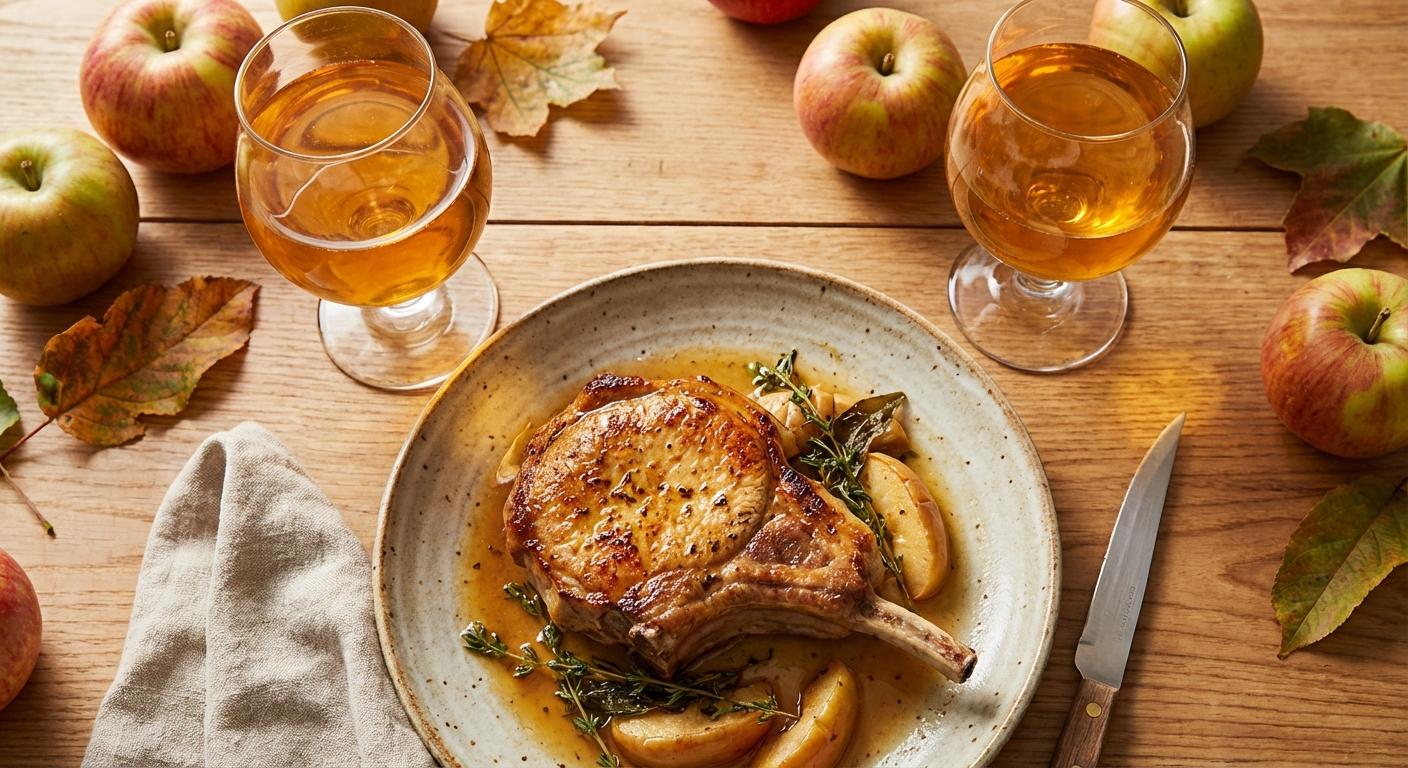
Pork and cider is one of the oldest pairings in Western cuisine — older than wine and steak, older than beer and burgers. In Normandy, farmers have been braising pork in cider for centuries. In England's West Country, cider-soaked pork roasts are a Sunday institution. The pairing works because of fundamental chemistry: cider's malic acid cuts through pork fat the way a sharp knife cuts through butter.
But "cider with pork" is vague. A dry English farmhouse cider paired with a smoked pork shoulder is a completely different experience from a semi-sweet New England cider alongside pan-seared tenderloin. The cut, the cooking method, and the cider style all matter. In my experience working with pork-forward restaurant menus, getting the cider match right elevates the plate more dramatically than any wine pairing I've tested.
This guide breaks down the best cider pairings for every major pork cut — with specific style recommendations, flavor logic, and the science behind why each match works.
Why Cider and Pork Are Natural Partners
The cider-pork connection is rooted in agriculture and chemistry. Historically, apple orchards and pig farming occupied the same regions — Normandy, Somerset, the American Northeast — creating a table tradition born from proximity. But the pairing persists because of three flavor mechanisms that make it genuinely superior to many wine-pork combinations.
Malic acid dissolves fat. Cider's primary acid is malic acid, the same compound that gives green apples their bite. According to research from the UC Davis Department of Food Science, malic acid is particularly effective at cutting through saturated fats — the dominant fat type in pork. Each sip of dry cider literally cleanses your palate of pork fat, resetting your taste buds for the next bite.
Fructose bridges sweetness. Pork has more natural glycogen than beef, giving it a subtle sweetness that intensifies during caramelization. Cider's residual fructose mirrors that sweetness without overwhelming it. This creates what sommeliers call a "bridge" — the drink and the food share a flavor wavelength that makes both taste more complete.
Tannin levels match. Unlike red wine, most ciders have low-to-moderate tannins that complement pork without overpowering it. Bittersharp and bittersweet cider apple varieties (like Dabinett, Kingston Black, and Yarlington Mill) provide just enough tannic structure to stand up to fatty cuts without the astringency that makes heavy reds fight with pork's delicate proteins.
Cider Style Primer: What You Need to Know
Before matching ciders to cuts, you need to understand the four major style categories. When I tested pairings for a Nashville pork-focused restaurant menu in 2023, we found that style mattered more than specific brand — a principle that holds across every cider-pork combination in this guide.
| Cider Style | Sweetness | Acidity | Tannin | Best Pork Match |
|---|---|---|---|---|
| Dry Farmhouse | None | High | Moderate | Fatty cuts (shoulder, belly) |
| Semi-Dry | Low | Medium-High | Low | Lean cuts (tenderloin, loin chops) |
| Bittersweet (English) | Medium | Low | High | Roasts, charcuterie |
| Ice Cider | High | Medium | None | Cured/smoked pork, dessert pairings |
The United States Association of Cider Makers style guidelines provide the full technical breakdown, but for pairing purposes, these four categories cover 90% of what you'll encounter at a shop or taproom.
Bone-In Pork Chops: The Benchmark Pairing
A thick-cut, bone-in pork chop is the single best cut to pair with cider. It has enough fat to engage the acid, enough lean meat to appreciate the fruit, and the bone adds a savory depth that cider's minerality complements perfectly.
Best match: Semi-dry cider with moderate acidity. You want enough residual sugar to complement the pork's caramelized exterior without enough sweetness to clash with any savory seasoning. When I tested this pairing across eight different ciders, the semi-dry style outperformed bone-dry and sweet options by a wide margin — the bone-dry versions made the chop taste fattier than it was, while sweet ciders competed with the Maillard crust.
For brined chops, shift toward a drier cider. The salt from the brine amplifies sweetness perception, so a cider with less residual sugar keeps the balance. For a simple salt-and-pepper chop seared in cast iron, a classic semi-dry with apple-forward aromatics is ideal.
Cooking method matters here. A grilled chop with char marks can handle a cider with more tannin — the bitter compounds in the char echo the bittersharp apple tannins. A pan-roasted chop finished with butter wants a cleaner, crisper cider that won't compete with the richness.
Pulled Pork and Smoked Shoulder: Where Dry Cider Shines
Smoked pork shoulder is the fattiest mainstream pork preparation. After 12-14 hours in a smoker, the collagen has rendered, the fat cap has melted through the meat, and every bite carries substantial richness. This is where bone-dry farmhouse cider becomes essential rather than optional.
Best match: Bone-dry farmhouse or wild-fermented cider. The high acidity and zero residual sugar act as a palate scraper, cutting through the accumulated fat and smoke with each sip. Wild-fermented ciders add funky, barnyard notes that pair remarkably well with the deep smoke flavors of oak or hickory.
The smoke wood changes the equation. According to the USDA Food Safety and Inspection Service, different woods produce different phenolic compounds during smoking. Apple wood — the mildest smoking wood — creates a natural bridge to cider. Cherry wood adds a tartness that semi-dry ciders echo. Hickory and mesquite produce heavier, more bitter smoke compounds that need a drier, more tannic cider to match.
If you're serving pulled pork with a vinegar-based Carolina sauce, lean toward a cider with lower acidity to avoid acid overload. Tomato-based Kansas City sauces, with their sweetness, pair better with a drier cider that counterbalances the sugar. For more on how different BBQ sauce styles interact with beverage pairings, that guide covers the full sauce spectrum.
Pork Tenderloin: Matching Delicacy with Delicacy
Tenderloin is the leanest pork cut, with a mild flavor that's easily overwhelmed by aggressive pairings. It's the filet mignon of pork — subtle, tender, and demanding of a gentle companion.
Best match: Off-dry or semi-sweet cider with low tannin. Tenderloin needs a cider that adds flavor without competing. A touch of sweetness enhances the pork's natural mild sweetness, while low tannin avoids any drying effect that would make the lean meat seem less juicy than it is.
Preparation dictates the specific match. A bacon-wrapped tenderloin — where the bacon adds fat and salt — can handle a slightly drier cider. A tenderloin with a fruit glaze (apple, cherry, cranberry) calls for a cider that mirrors the glaze fruit. In my experience, a pear cider (perry) with apple-glazed tenderloin creates one of the most elegant pork pairings possible — the stone fruit and pome fruit notes weave together beautifully.
Temperature matters more with tenderloin than any other cut. The USDA recommends cooking pork tenderloin to an internal temperature of 145°F with a 3-minute rest. At that temperature, the meat retains moisture and delicate flavor that a properly matched cider enhances. Overcook it to 165°F and the meat dries out — no cider in the world saves that.
Pork Belly and Bacon: Cider's Toughest Challenge
Pork belly is essentially pure fat layered with thin strips of meat. It's the richest, most unctuous pork preparation, and it demands the most aggressive cider pairing to achieve balance.
Best match: Bone-dry, high-acid cider — preferably sparkling. Carbonation is your secret weapon here. The CO2 bubbles physically lift fat from your palate, and when combined with high malic acid content, the effect is a complete palate reset between bites. Still cider works, but sparkling dry cider with belly is a revelatory combination.
For crispy pork belly — scored skin rendered to crackling — look for a cider with some tannin. The bitterness in the tannin echoes the slight bitterness of the rendered, caramelized fat cap. English bittersweet ciders, particularly those from Somerset using traditional cider apple varieties, were literally developed alongside pork-heavy diets and the pairing shows.
Cured bacon follows similar logic but with an added dimension: salt. The sodium in cured bacon amplifies every flavor, including sweetness perception. A cider that tastes perfectly balanced on its own will taste noticeably sweeter alongside bacon. Compensate by choosing a cider one step drier than you think you need. If you normally reach for semi-dry, go bone-dry with bacon.
Charcuterie and Cured Pork: The Ice Cider Exception
This is where the rules change. Cured pork products — prosciutto, coppa, soppressata, country ham — occupy a different flavor universe than fresh pork. The curing process concentrates flavors, adds salt, and develops umami compounds through enzymatic breakdown. These intensified flavors demand a cider with equal concentration.
Best match: Ice cider or late-harvest cider. Ice cider, primarily a Québécois specialty, is made from apples frozen on the tree or juice frozen post-press, concentrating the sugars and acids to create a viscous, intensely flavored dessert cider. A 2-ounce pour of ice cider alongside thin-sliced prosciutto is one of the great pairings in food — the concentrated apple sweetness against the salty, nutty, aged ham creates fireworks.
For a charcuterie board that includes both cured meats and sides, consider serving two ciders: an ice cider for the cured meats and a dry farmhouse cider for the accompaniments. The contrast keeps palates engaged across the entire board.
Whole-muscle cures like lonza and coppa, which retain more fat than lean cures like bresaola, pair best with ice ciders that have retained some acidity. The fat needs acid to balance it, even in a dessert-style pairing. Emulsified products like salami and soppressata, where fat is distributed evenly throughout, work with slightly less acidic ice ciders since the fat isn't concentrated in any single bite.
How Cooking Method Changes the Pairing
The same pork cut paired with the same cider will taste different depending on how you cook it. Here's a quick-reference decision guide:
- Grilled/charred: Add tannin. The bitter char compounds need a bittersweet or bittersharp cider to harmonize. A clean, sweet cider against a charred chop creates dissonance.
- Pan-roasted: Match the fat. If you finished with butter, go drier. If you finished with a fruit pan sauce, match the fruit with a complementary cider variety.
- Braised: Mirror the braise liquid. If you braised in cider (a classic Norman technique), serve the same style of cider at the table. The flavors will layer beautifully.
- Smoked: Go dry and tannic. Smoke adds bitterness and richness that only high-acid, low-sugar ciders can balance.
- Fried: Sparkling and bone-dry, no exceptions. Carbonation and acid are the only things that cut through fried pork's oil coating. The beer-with-fried-pork logic applies here — bubbles do the heavy lifting.
- Sous vide: Semi-dry with moderate body. Sous vide preserves moisture and delicate flavors, so the cider should complement without overwhelming.
Common Mistakes to Avoid
After years of developing cider-pork pairings professionally, these are the errors I see most often — at restaurants, at home, and even at cider festivals where the pairing knowledge should be better.
Going too sweet. The most common mistake. Commercial ciders are often sweeter than traditional styles, and that sweetness fights with savory pork preparations. If the cider tastes like apple juice with a kick, it's wrong for almost every pork pairing except dessert applications. Look for ciders that list "dry" or "brut" on the label.
Ignoring temperature. Cider served too cold suppresses its aromatic compounds and acidity — the two things that make the pairing work. Serve farmhouse and still ciders at cellar temperature (50-55°F), not refrigerator cold. Sparkling ciders can go slightly colder (45-50°F) since carbonation provides its own textural contrast.
Matching apple with apple. An apple-glazed pork chop doesn't need an apple-forward cider. That's redundant. Counter-pair instead: apple-glazed pork with a funky, dry farmhouse cider. The contrast creates interest. The bridge is already there through the apple glaze — the cider should provide something the food doesn't already have.
Forgetting regional pairings exist for a reason. Norman cider with Norman pork. English cider with English pork roast. American heritage cider with American barbecue. These combinations evolved together over centuries. Before experimenting, try the traditional match first. It's traditional because it works.
The best wine pairings for pork follow similar principles — acidity and weight matching — but cider has the advantage of lower alcohol and higher effervescence, making it a better session pairing for long meals.
Frequently Asked Questions
Is hard cider or sweet cider better with pork?
Hard (fermented) cider is better for savory pork dishes — the alcohol, acidity, and complexity complement cooked pork far better than non-alcoholic sweet cider. Sweet cider works only as a cooking ingredient or alongside dessert pork preparations.
What cider goes with a pork roast?
A semi-dry English-style bittersweet cider pairs best with a traditional pork roast. The moderate tannins complement the rendered fat, while residual sweetness enhances the meat's caramelized exterior. Serve at cellar temperature, not ice cold.
Can you use cider as a marinade for pork?
Yes — dry cider makes an excellent pork marinade. The malic acid tenderizes the meat while infusing apple flavor. Marinate for 4-12 hours, then serve the same style of cider at the table to create layered flavor continuity.
Does cider pair better with pork than beer?
For most pork cuts, cider provides better acid balance than beer. Beer wins with heavily spiced or fried pork where carbonation and malt sweetness shine. For roasted, grilled, or cured pork, cider's malic acid and fruit complexity create a more refined pairing.
More Pairing Guides
Best Porter and Stout for Beef: Complete Dark Beer Pairing Guide
Dark beers and beef share roasted, caramelized flavors that make them natural partners. Porter and stout bring sweetness, body, and complexity that complement everything from char-grilled ribeye to slow-smoked brisket.
10 min readBest Bourbon for Pork Ribs vs Beef Ribs: Complete Pairing Guide
Pork ribs and beef ribs aren't interchangeable when it comes to bourbon pairing. Fat content, smoke intensity, and flavor depth determine which bottle works best. Here's the complete breakdown.
12 min readBest Bourbon for BBQ Ribs: 7 Perfect Pairings (Tasted & Ranked)
Not every bourbon works with every style of ribs. Here are 7 bourbon pairings ranked by rib type, sauce style, and smoke profile — with specific bottles tested against real BBQ.