Meat Pairing: The Complete Guide to Matching Drinks, Sides, and Sauces With Every Cut
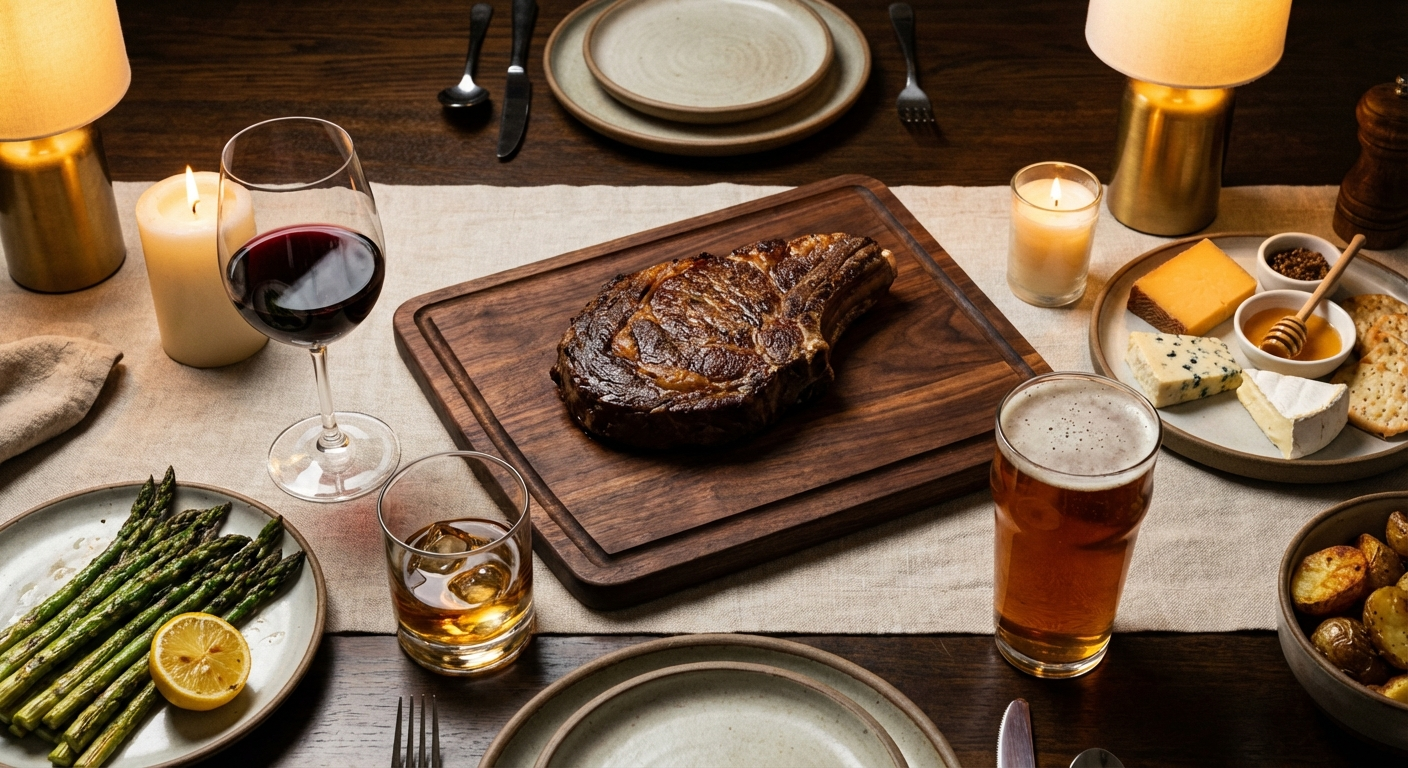
Meat pairing is both science and instinct. The science tells you that tannins bind to fat, that acid cuts through richness, and that shared flavor compounds create harmony between food and drink. The instinct tells you that a cold beer just works after a bite of smoky brisket. Great meat pairing honors both.
This guide covers everything — wine, beer, spirits, sides, and sauces — organized by the principle that matters most: what you're eating. Because the cut determines the pairing, not the other way around.
The Four Rules of Meat Pairing
Before diving into specific matches, internalize these principles. They'll guide you when no guide is handy.
Rule 1: Match intensity to intensity. A delicate filet mignon needs a delicate partner — Pinot Noir, not barrel-proof bourbon. A fatty, smoky brisket can stand up to the boldest Cabernet or an Imperial stout. When the flavors on the plate are big, the pairing needs to be big. When they're subtle, dial it back.
Rule 2: Fat demands contrast. Rich, heavily marbled cuts need something that resets your palate — acid (wine, vinegar-based sauces), bitterness (hoppy beer, arugula), or carbonation (sparkling wine, lager). Without contrast, richness becomes heaviness.
Rule 3: Shared flavors create harmony. Bourbon and seared steak both contain caramel and char compounds from the Maillard reaction. Red wine's tannins and beef's proteins are chemically complementary. Smoke on brisket echoes smoke in Scotch. When the pairing shares DNA with the meat, both taste better.
Rule 4: Cooking method changes the pairing. A grilled steak with char wants a different drink than a pan-seared steak with butter. Smoked meat calls for different sides than braised meat. Always consider how the protein was cooked, not just what it is.
Wine and Meat Pairing
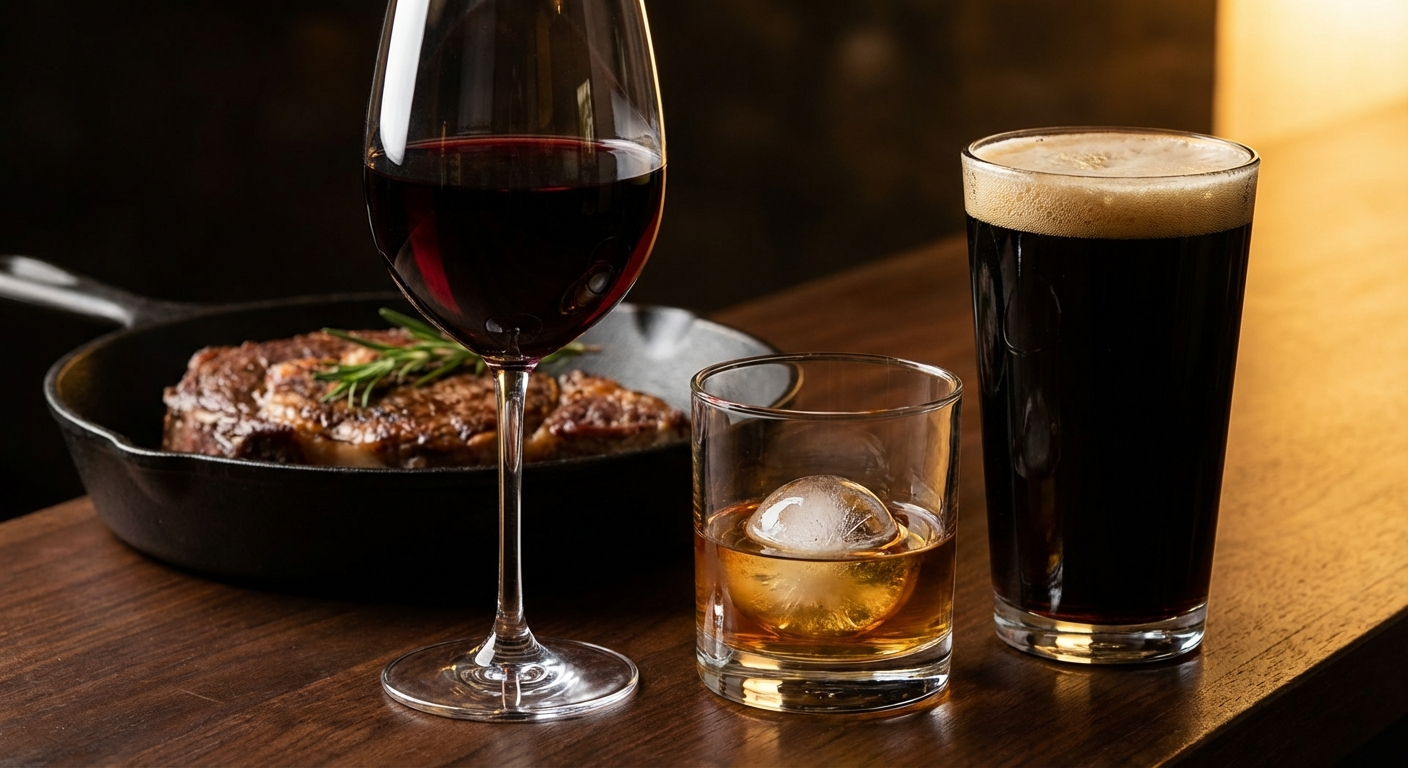
Wine is the oldest and most studied meat pairing category. The interaction between tannins and fat is well-documented: tannins bind to fat molecules and proteins, softening the wine's astringency while cutting through the meat's richness. Your palate resets, and both the wine and meat taste better.
Ribeye → Bold, Tannic Reds
Ribeye's heavy marbling (15-25% intramuscular fat in USDA Prime) demands wines with backbone. Cabernet Sauvignon from Napa Valley or Paso Robles is the benchmark — dark fruit, firm tannins, and oak-driven vanilla all complement the seared, caramelized flavors of a hot-grilled ribeye. Malbec from Mendoza offers a velvet-textured alternative with plum and blackberry notes that mirror the cut's richness. Barolo (Nebbiolo) adds high acidity and complex aromatics for special occasions.
Avoid light-bodied reds with ribeye. Pinot Noir gets steamrolled. Beaujolais disappears. You need a wine that fights back against all that fat.
Filet Mignon → Elegant, Medium-Bodied Reds
Filet is the leanest premium cut — tender and mild, it needs a wine that complements without competing. Burgundy Pinot Noir is the classic: silky texture, bright acidity, and earthy complexity that enhances the beef's subtle flavor. Oregon Pinot Noir (Willamette Valley) works beautifully with mushroom-topped filet. Right Bank Bordeaux (Merlot-dominant) provides plush fruit with softer tannins.
Brisket → Earthy, Full-Bodied Reds
Smoked brisket's intense, smoky, deeply beefy flavor needs wines with their own depth. Syrah from the Northern Rhône brings pepper, smoke, and dark fruit that echo the barbecue pit. Zinfandel from Sonoma or Paso Robles adds jammy fruit and spice that complement sweet-savory bark. Tempranillo (Rioja Reserva) offers leather and tobacco notes that bridge the gap between smoke and meat.
Lamb → Herbal, Savory Reds
Lamb's gamey, herbal character calls for wines with similar aromatic profiles. Cabernet Franc from the Loire Valley adds green pepper and herb notes that harmonize with lamb's natural flavor. Châteauneuf-du-Pape (Grenache-based) provides warmth and garrigue herbaceousness. Rioja contributes earthy, savory complexity.
Pork → Versatile, Fruit-Forward Wines
Pork's mild sweetness and moderate fat content make it the most wine-versatile protein. Pinot Noir works with pork tenderloin and chops. Riesling (dry or off-dry) complements pork's sweetness while cutting through fat. Rosé is outstanding with grilled pork, especially Provençal styles with enough body to handle the meat's richness.
For deeper wine pairing breakdowns by cut, see our best wine for steak guide and wagyu wine pairing guide.
Beer and Meat Pairing
Beer offers something wine cannot: carbonation. Those bubbles physically scrub fat from your palate, making beer an exceptional partner for rich, fatty meats. Beer also brings a wider range of flavor profiles — from hoppy and bitter to malty and sweet to sour and funky.
Steak → Stout, Porter, or Amber Ale
Dark malt flavors (chocolate, coffee, roasted grain) share Maillard compounds with seared beef. A dry stout with a grilled ribeye creates a flavor loop where each enhances the other. Porters add sweetness that complements caramelized crust. Amber ales offer a lighter option with enough malt backbone to match the meat.
BBQ and Smoked Meats → IPA, Rauchbier, or Brown Ale
The hop bitterness in an IPA cuts through barbecue's fat and sweetness like a knife. West Coast IPAs (piney, resinous) work with brisket; hazy New England IPAs (juicy, tropical) complement pulled pork's sweetness. Rauchbier (German smoked beer) adds smoke-on-smoke harmony. Brown ales offer nutty, caramel notes that bridge the gap between meat and sauce.
Burgers → Pale Ale, Pilsner, or Lager
Burgers are casual, and the beer should be too. A crisp pilsner or lager cleanses the palate between bites of juicy burger. Pale ales add enough hop character to stand up to toppings without overshadowing the beef. Keep it refreshing, keep it cold.
Pork → Wheat Beer, Saison, or Kolsch
Wheat beers (Hefeweizen) bring banana and clove notes that complement pork's natural sweetness. Saisons add peppery, fruity complexity that works with grilled or smoked pork. Kölsch offers clean, crisp refreshment alongside fatty pork belly or ribs.
Explore cut-specific recommendations in our best beer for BBQ guide and beer and pulled pork pairing guide.
Spirits and Meat Pairing
Sipping spirits alongside meat is a distinctly American tradition, and bourbon leads the charge. The chemistry is straightforward: alcohol dissolves fat-soluble flavor compounds that water and wine cannot reach, literally unlocking flavors trapped in the meat's fat.
Bourbon and Steak
Bourbon is aged in new charred American oak barrels, producing caramel, vanilla, and smoky char — the exact same compounds created when you sear a steak. This shared flavor DNA makes bourbon the most natural spirit partner for beef.
Fatty cuts (ribeye, strip): Reach for high-proof, rye-forward bourbons (100-130 proof). The alcohol and spice cut through fat aggressively. Wild Turkey Rare Breed and Booker's are benchmarks.
Lean cuts (filet, tenderloin): Wheated bourbons at 80-92 proof (Maker's Mark, Weller) won't overpower delicate beef flavors. The softer, sweeter profile complements rather than competes.
Full bottle recommendations in our bourbon and steak pairing guide.
Bourbon and BBQ Ribs
Ribs' combination of smoky bark, sweet glaze, and rich pork fat is a bourbon playground. Small batch bourbons at 90-100 proof (Knob Creek, 1792) balance the smoke and sweetness. Barrel-proof options work when the ribs are heavily glazed — the extra proof cuts through sugar and fat. Avoid overly sweet bourbons that compete with the sauce.
See our dedicated bourbon and ribs pairing guide.
Scotch and Red Meat
Peated Scotch (Islay single malts like Lagavulin or Laphroaig) adds a layer of smoke that harmonizes with grilled or smoked meats. Unpeated Highland or Speyside malts (Macallan, Glenlivet) offer sherry-cask sweetness that complements pan-seared preparations. See our Scotch and steak pairing guide for specifics.
Tequila and Grilled Meats
Añejo tequila, aged in oak, develops caramel and vanilla notes similar to bourbon — making it a surprisingly excellent steak companion. Reposado tequila's lighter oak character works with grilled chicken and pork. Blanco tequila's bright agave character pairs with carne asada and fajitas. Details in our tequila and steak guide.
Side Dish Pairing by Cut
The right sides provide what the meat doesn't have. Fat-heavy cuts need fresh, acidic sides. Lean cuts welcome richer accompaniments. Every plate needs textural contrast.
Rich Cuts (Ribeye, Wagyu, Pork Belly)
These cuts coat your mouth with fat. Counter with:
- Arugula salad with lemon vinaigrette — peppery bite and acid
- Grilled asparagus — slight bitterness and firm texture
- Roasted cherry tomatoes — bright acidity and natural sweetness
- Charred broccolini — bitter notes and textural crunch
Lean Cuts (Filet, Sirloin, Pork Tenderloin)
These cuts benefit from added richness and bold flavor companions:
- Truffle mashed potatoes — creamy luxury that lean meat welcomes
- Creamed spinach — velvety richness with earthy depth
- Sautéed mushrooms in butter — umami amplification
- Hasselback potatoes — crispy edges, creamy center, herb butter
BBQ and Smoked Meats (Brisket, Ribs, Pulled Pork)
Barbecue is its own ecosystem. Sides need to balance smoke and sweetness:
- Coleslaw — the acid and crunch reset your palate
- Cornbread — sweet starch that soaks up drippings
- Pickles and pickled onions — vinegar cuts through fat and smoke
- Baked beans — sweet, savory, and smoky complement
Full side dish breakdowns in our steak side dishes guide and brisket sides guide.
Sauce Pairing by Protein
Sauces serve the same purpose as beverages — they provide contrast, enhancement, or bridge flavors. The key is matching sauce weight to meat weight.
Beef
- Chimichurri → Ribeye, skirt steak (acid cuts fat)
- Béarnaise → Filet mignon (adds richness to lean cut)
- Au poivre → NY strip (pepper and cream amplify beef)
- Red wine reduction → Any premium steak (universal elegance)
- Compound butter → Any cut (instant, customizable richness)
Pork
- Apple cider glaze → Pork chops (fruit + acid complement pork sweetness)
- Carolina vinegar sauce → Pulled pork (acid balance for fat)
- Mustard sauce → Smoked pork (pungent sharpness enhances flavor)
- Mole → Pork shoulder (complex spice layers)
Lamb
- Mint chimichurri → Lamb chops (herbal harmony)
- Tzatziki → Grilled lamb (cool, creamy acid contrast)
- Harissa → Lamb shoulder (spicy, smoky heat)
- Red currant jelly → Roast lamb (British classic, sweet-tart bridge)
Explore detailed recipes and techniques in our sauce pairing guide and pan sauce techniques guide.
The Quick Reference Chart
| Protein | Best Wine | Best Beer | Best Spirit | Best Sauce |
|---|---|---|---|---|
| Ribeye | Cabernet Sauvignon | Dry Stout | Barrel-Proof Bourbon | Chimichurri |
| Filet Mignon | Pinot Noir | Amber Ale | Wheated Bourbon | Béarnaise |
| NY Strip | Malbec | Porter | Classic Bourbon (90-100 proof) | Au Poivre |
| Brisket | Syrah | IPA | Peated Scotch | Texas-style thin sauce |
| Ribs | Zinfandel | Brown Ale | Small Batch Bourbon | KC-style sweet |
| Pulled Pork | Rosé | Wheat Beer | Rye Whiskey | Carolina vinegar |
| Lamb Chops | Cabernet Franc | Saison | Añejo Tequila | Mint chimichurri |
| Wagyu (A5) | Châteauneuf-du-Pape | Pilsner | Japanese Whisky | Salt only |
Building a Complete Pairing Menu
When planning a steak dinner, think in layers:
Layer 1: The protein. Choose your cut based on the occasion. Ribeye for bold flavor, filet for elegance, wagyu for celebration.
Layer 2: The beverage. Match intensity and fat content. One drink per course is plenty — don't overwhelm the palate with variety.
Layer 3: The side. One starch (substance) plus one vegetable (balance). Less is more — the steak is the star.
Layer 4: The sauce. Optional, and depends on the cut. Premium cuts often need nothing. Lean cuts welcome added richness. BBQ has its own sauce traditions.
Example Menus
The Steakhouse Classic: NY Strip + Napa Cabernet + baked potato + creamed spinach + no sauce needed.
The BBQ Spread: Smoked brisket + West Coast IPA + coleslaw + cornbread + thin Texas-style sauce on the side.
The Celebration: Japanese A5 Wagyu + vintage Champagne + simple arugula salad + flaky sea salt only.
The Casual Grill Night: Skirt steak + cold Modelo or pale ale + grilled corn + chimichurri.
Common Pairing Mistakes
Over-saucing premium cuts. If you spent money on an A5 wagyu ribeye or a dry-aged Prime strip, let the meat speak. These cuts have extraordinary flavor that sauces can mask. Salt, heat, and maybe a compound butter — that's it.
Matching sweet with sweet. A sweet BBQ sauce with a sweet bourbon creates a cloying, one-note experience. If the sauce is sweet, choose a dry, bitter, or acidic beverage. Create contrast, not echo.
Ignoring temperature. Wine served too warm (above 65°F) tastes soupy and alcoholic next to steak. Beer served too cold kills flavor nuance. Bourbon neat at room temperature maximizes aroma. Temperature matters more than most people realize.
Forgetting the palate reset. Between courses or between drinks, water is essential. Plain bread or crackers work. Your palate fatigues quickly when processing rich food and alcohol — give it breaks.
Where to Start
If you're new to intentional meat pairing, start simple. Buy a quality steak — American wagyu from The Meatery is an outstanding starting point — and try it with three different wines side by side. You'll immediately taste how different pairings change the experience. That moment of discovery is what makes meat pairing endlessly interesting.
Then explore. Try bourbon with your next steak night. Put an IPA next to smoked ribs. Make chimichurri from scratch and taste how it transforms a fatty ribeye. Each experiment teaches you something about flavor, and over time, instinct replaces rules.
Related Guides
Frequently Asked Questions
What is the best drink to pair with steak?
It depends on the cut. For fatty cuts like ribeye, bold Cabernet Sauvignon or barrel-proof bourbon cut through the richness. For lean cuts like filet mignon, elegant Pinot Noir or wheated bourbon complement without overpowering. For smoked meats, IPA or peated Scotch harmonize with the smoke flavor.
What sides go best with steak?
Match the side to the cut's fat content. Rich cuts (ribeye, wagyu) need acidic or fresh sides like arugula salad and grilled asparagus. Lean cuts (filet, sirloin) welcome richer sides like truffle mashed potatoes and creamed spinach. Every plate should include one starch for substance and one vegetable for balance.
Does cooking method affect meat pairing?
Absolutely. Grilled meats develop char compounds that pair well with smoky wines (Syrah), smoky spirits (bourbon, peated Scotch), and smoky beers (rauchbier). Pan-seared meats with butter basting work better with elegant wines (Burgundy) and refined spirits. Smoked meats demand bold, bitter, or acidic partners to cut through the fat and smoke.
Can you pair white wine with red meat?
While unconventional, certain white wines work. Champagne pairs exceptionally well with Japanese A5 wagyu — the high acidity and bubbles cut through the extreme fat. Off-dry Riesling complements pork and Asian-style beef preparations. Full-bodied oaked Chardonnay can work with lighter preparations like filet with cream sauce.
What is the number one rule of meat pairing?
Match intensity to intensity. A bold, fatty cut needs a bold beverage and acidic sides to provide contrast. A delicate, lean cut needs refined, lighter pairings that complement without overwhelming. When in doubt, ask: is this pairing as strong as the meat, or will one dominate the other?
More Pairing Guides
Best Bourbon for Pork Ribs vs Beef Ribs: Complete Pairing Guide
Pork ribs and beef ribs aren't interchangeable when it comes to bourbon pairing. Fat content, smoke intensity, and flavor depth determine which bottle works best. Here's the complete breakdown.
12 min readBest Bourbon for BBQ Ribs: 7 Perfect Pairings (Tasted & Ranked)
Not every bourbon works with every style of ribs. Here are 7 bourbon pairings ranked by rib type, sauce style, and smoke profile — with specific bottles tested against real BBQ.
10 min readBest Wine with Tri-Tip: Expert Pairing Guide
Tri-tip demands wines with enough structure to match its intensity while complementing its smoky, savory profile.