Best Sauces for Steak: 12 Classic and Modern Pairings by Cut
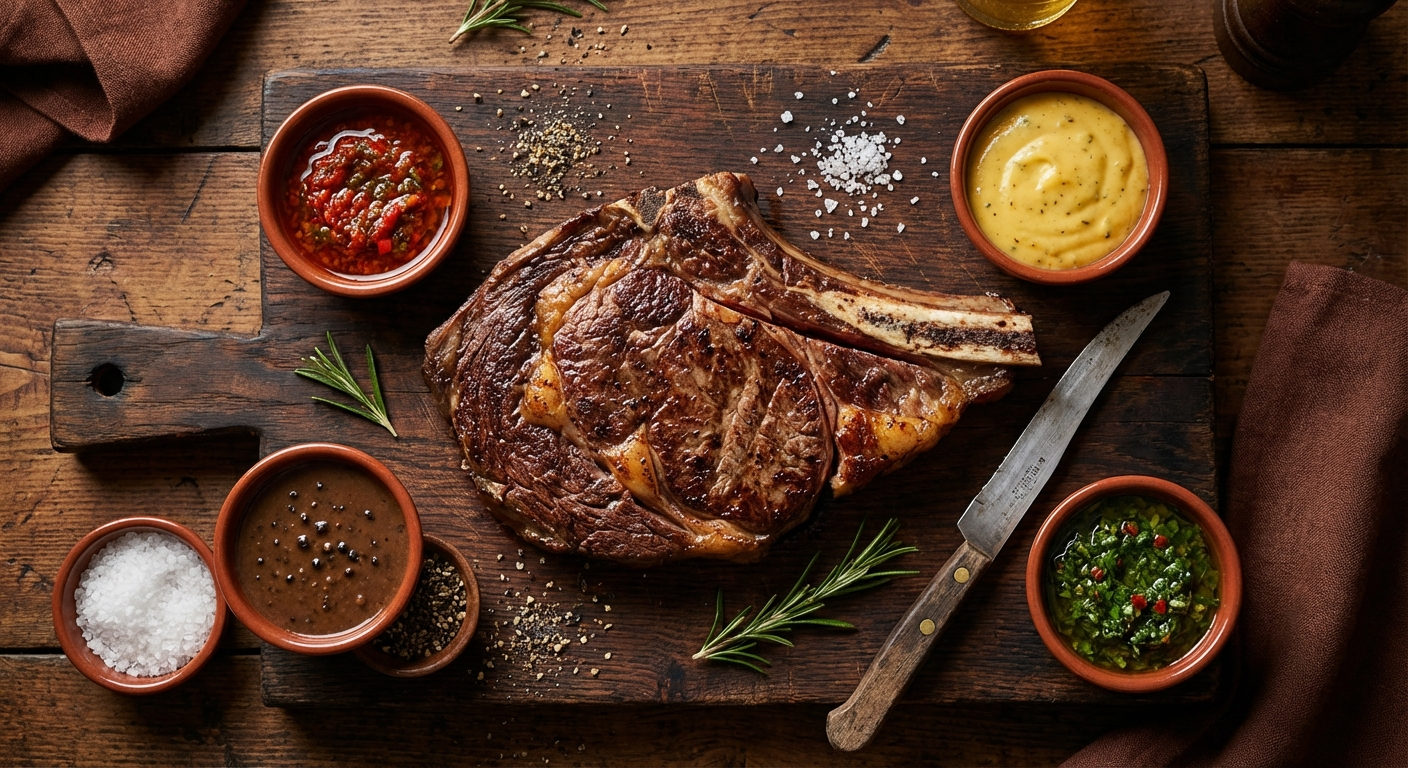
A perfectly cooked steak doesn't need sauce — until the right sauce makes it taste even better. That's the paradox great chefs understand. You're not covering up the beef; you're building on it. The best steak sauces amplify what's already there: the seared crust, the beefy richness, the clean mineral notes of quality meat.
But not every sauce works with every cut. A delicate filet mignon vanishes under aggressive chimichurri. A fatty ribeye needs something with enough acid or heat to cut through the richness. Get the match right and both the steak and the sauce become more than the sum of their parts.
This guide covers 12 essential steak sauces — what they taste like, what cuts they work best with, and how to think about pairing them. No recipes (there are thousands online). Just the pairing logic that makes each combination work.
The Pairing Principle: Match Sauce Intensity to Cut Richness
Before diving into specific sauces, understand the single rule that governs all steak sauce pairings: the sauce's intensity should match the cut's richness. It's the same principle behind wine pairing — you wouldn't pour a massive Cabernet with delicate white fish, and you shouldn't drown a lean tenderloin in aggressive horseradish cream.
Think of steak cuts on a spectrum:
- Lean and mild: Filet mignon, tenderloin medallions, eye of round
- Moderate and balanced: New York strip, flat iron, sirloin
- Rich and bold: Ribeye, bone-in ribeye, heavily marbled wagyu
- Thin and intensely beefy: Skirt steak, flank steak, hanger steak
Lean cuts benefit from richer, fattier sauces that add what the meat lacks. Bold, fatty cuts need acid, heat, or brightness to cut through the richness. Middle-of-the-road cuts are the most versatile — they can go either direction. Keep this framework in mind as we work through each sauce.
Béarnaise: The French Steakhouse King
Béarnaise is butter sauce at its most refined — an emulsion of clarified butter, egg yolks, white wine vinegar, and tarragon. It's rich, herbaceous, and slightly tannic from the tarragon and vinegar reduction. In French steakhouses, it's the default. There's a reason for that.
Best cuts: Filet mignon (the classic pairing), New York strip, flat iron
Béarnaise works best on leaner cuts where it adds the richness the meat doesn't have on its own. A filet mignon — tender but relatively lean — transforms with béarnaise. The butter adds fat, the tarragon adds herbal complexity, and the vinegar provides just enough acidity to keep each bite fresh. Pair it with a fat-heavy ribeye and you'll feel like you're eating butter on butter — pleasant for two bites, exhausting by the fifth.
Why it works: The emulsified butter coats your palate with fat-soluble flavor compounds, extending the steak's taste across your entire mouth. Tarragon's anise-like quality bridges beef's savory depth with something floral and unexpected. The vinegar reduction prevents the sauce from becoming cloying.
Peppercorn Sauce (Au Poivre): Heat Meets Cream
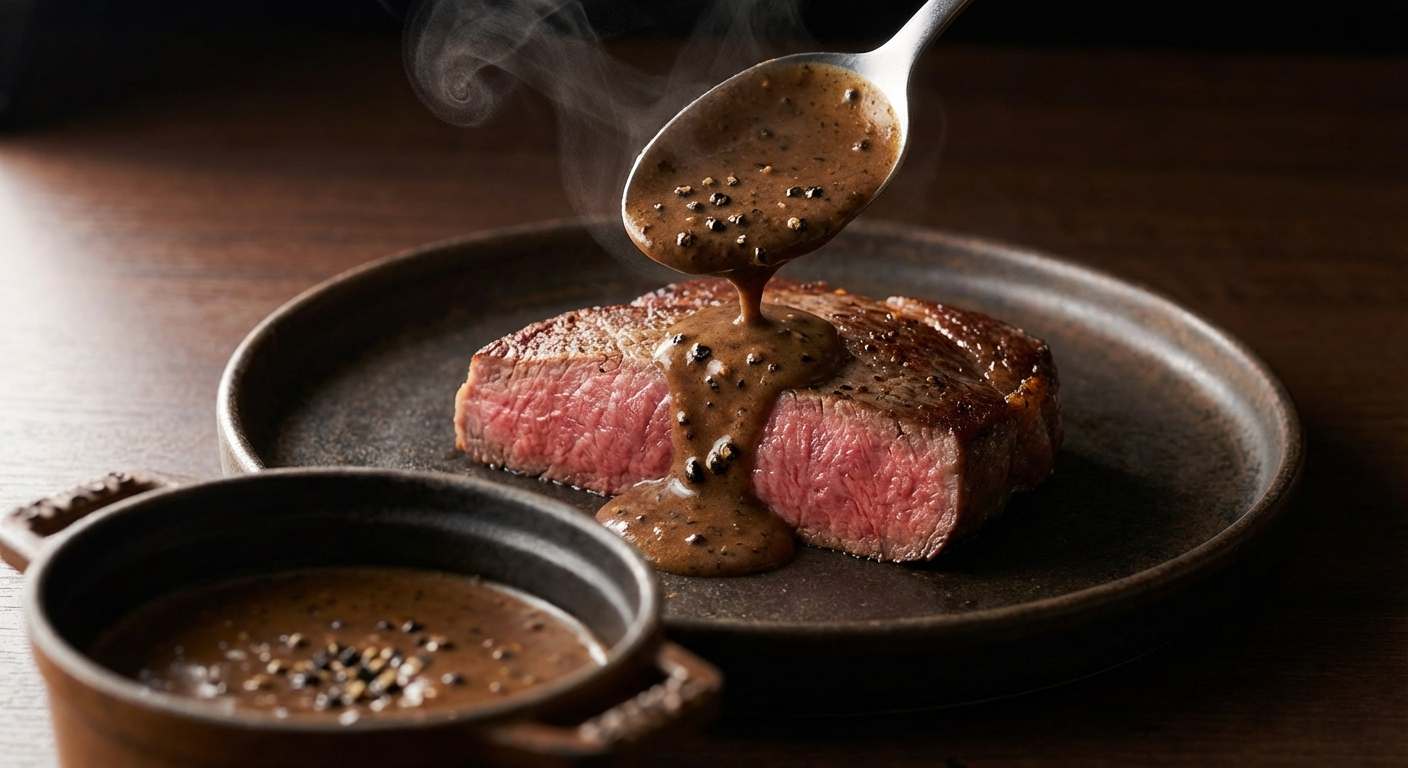
Classic peppercorn sauce — cognac, cream, cracked black peppercorns, and fond from the steak pan — is one of the most satisfying things you can put on beef. The heat from the pepper, the richness of cream, and the boozy depth from cognac create a sauce that's simultaneously bold and elegant.
Best cuts: New York strip (the classic steak au poivre), filet mignon, flat iron
Steak au poivre exists because the combination of seared beef crust and cracked pepper triggers the same Maillard reaction compounds — the pepper's piperine actually enhances your perception of the seared flavors. The cream rounds everything out, and the cognac deglaze captures every bit of fond from the pan.
Avoid with: Heavily marbled cuts. Ribeye plus cream sauce is too much richness without enough contrast. If you must, use a lighter version with less cream and more cognac.
Chimichurri: The Argentinian Essential
Chimichurri is the anti-béarnaise — raw, bright, herbaceous, and acidic. Parsley, oregano, garlic, red wine vinegar, olive oil, and red pepper flakes. No cooking required. It's the sauce that makes you wonder why you ever ate steak without it.
Best cuts: Skirt steak (the traditional pairing), flank steak, hanger steak, ribeye
Chimichurri excels on bold, fatty, or intensely beefy cuts. The raw garlic and vinegar cut through fat like a knife. The fresh herbs add a green, alive quality that contrasts beautifully with charred meat. In Argentina, chimichurri and skirt steak over a wood fire is considered the perfect meal — and they're right.
It also works brilliantly on ribeye, where the acid and herbs provide the contrast that such a rich cut desperately needs. This is one of the few sauces where more is more — don't be shy with the portion.
Pro tip: Make chimichurri at least 30 minutes before serving. The flavors need time to marry. Fresh chimichurri tastes like a salad; rested chimichurri tastes like a sauce. Pair it with a bold Malbec for the full Argentine experience.
Red Wine Reduction (Bordelaise): Depth and Elegance
A proper bordelaise — red wine reduced with shallots, bone marrow, and demi-glace — is liquid umami. It's dark, deeply savory, and subtly sweet from the wine reduction. This is the sauce for when you want the steak to feel like a special occasion.
Best cuts: Bone-in ribeye, prime rib, New York strip, porterhouse
Bordelaise amplifies beef flavor rather than contrasting it. The wine's tannins mirror the seared crust. The bone marrow adds silky richness. The shallots provide sweetness. It's a sauce that says "more steak" rather than "something different" — which is exactly what you want with premium cuts that already taste incredible.
Wine choice matters: Use a wine you'd actually drink — a decent Cabernet or Merlot. Cooking concentrates flavors, so a bad wine makes a terrible sauce. You don't need to pour a $50 bottle, but skip the $4 cooking wine.
Compound Butter: The Lazy Genius Option
Compound butter isn't technically a sauce — it's cold butter mixed with herbs, garlic, or other flavorings, sliced into rounds, and placed on a hot steak where it melts into an instant pan sauce. It's the easiest "sauce" that exists, and it's devastatingly effective.
Best cuts: Everything. Compound butter is the most versatile steak topping.
Classic variations:
- Maître d'hôtel butter: Parsley, lemon juice, salt. The all-purpose classic.
- Blue cheese butter: Crumbled Roquefort or Gorgonzola folded into softened butter. Incredible on ribeye.
- Garlic herb butter: Roasted garlic, thyme, rosemary. Works with any cut.
- Truffle butter: Truffle oil or shaved truffle mixed with butter. Luxurious on filet mignon.
The beauty of compound butter is that it creates a custom sauce in the 5-minute rest period. As the butter melts, it mixes with the steak's juices on the plate — instant pan sauce without ever making one.
Horseradish Cream: The Prime Rib Standard
Fresh horseradish root, grated and folded into sour cream or crème fraîche with a pinch of salt and white pepper. The heat is sharp and nasal — completely different from pepper or chili heat — and it clears your palate between bites of rich beef.
Best cuts: Prime rib (the classic), roast beef, roast beef tenderloin, well-marbled ribeye
Horseradish cream's magic is in its nasal heat. While pepper hits your tongue, horseradish hits your sinuses — literally clearing the palate and resetting your taste buds. With rich, fatty cuts, this reset effect means every bite of steak tastes as good as the first. It's why prime rib and horseradish is a pairing that has survived centuries unchanged.
Fresh vs. jarred: Fresh horseradish root is significantly more complex than jarred. If you can find it, grate it yourself — the heat is brighter and the flavor has floral notes that jarred versions lose in preservation.
Salsa Verde: Mediterranean Brightness
Not Mexican salsa verde (tomatillo-based), but Italian salsa verde — a pounded sauce of parsley, capers, anchovies, garlic, olive oil, and lemon juice. It's briny, herbaceous, and punchy. Think chimichurri's Mediterranean cousin with more depth.
Best cuts: Bistecca alla fiorentina (T-bone), skirt steak, flank steak, grilled hanger steak
The anchovies add umami without fishiness (they dissolve into pure savory depth). The capers bring briny acidity. The parsley keeps it fresh. This is the sauce for people who love chimichurri but want something with more complexity.
Italian salsa verde particularly shines on thick-cut, simply grilled steaks where you want the sauce to provide all the complexity while the beef provides the foundation. Pair it with a glass of Chianti or Sangiovese for the complete Tuscan experience.
Mushroom Sauce: Umami on Umami
Sautéed mushrooms deglazed with wine or brandy, finished with cream or stock. The fungal umami of mushrooms stacked on top of beef umami creates a savory intensity that's almost addictive. Use mixed wild mushrooms if you can — the variety of flavors creates a more complex sauce than a single variety.
Best cuts: Filet mignon, New York strip, sirloin, flat iron
Mushroom sauce follows the same logic as béarnaise — it works best on leaner cuts where it adds richness and complexity. The difference is that mushroom sauce adds savory depth rather than herbal elegance. It's a heartier, more rustic pairing.
Mushroom choice matters: Cremini are fine for everyday. Porcini (fresh or reconstituted dried) add extraordinary depth. Chanterelles bring a peppery, apricot-like quality. A mix of all three makes the best mushroom sauce you'll ever taste.
Diane Sauce: The Retro Comeback
Steak Diane was a 1950s tableside-flambe showpiece that fell out of fashion. The sauce — cognac, Worcestershire, Dijon mustard, cream, and shallots — deserves a comeback. It's like peppercorn sauce's more complex older sibling.
Best cuts: Filet mignon (the traditional cut for Steak Diane), New York strip
The Worcestershire adds a funky, fermented depth. The Dijon brings heat and acidity. The cognac adds warm sweetness. Together they create a sauce with more layers than peppercorn or béarnaise while maintaining the same creamy French elegance. If you're tired of the same three steakhouse sauces, try Diane.
Gochujang Butter: The Modern Fusion Pick
Korean fermented chili paste folded into softened butter with a touch of honey and sesame oil. It's sweet, spicy, funky, and rich — hitting flavor notes that no European sauce can reach. This is the compound butter for people who think compound butter is boring.
Best cuts: Ribeye, New York strip, skirt steak, hanger steak
Gochujang's fermented funk pairs with seared beef the same way aged cheese does — fermented flavors have natural affinity for browned-meat compounds. The chili heat cuts through fat. The honey bridges sweet and savory. It's become a modern steakhouse staple for good reason.
Classic A.1. and Worcestershire: The Honest Truth
Let's address the elephant in the room. Commercial steak sauces — A.1., HP, Worcestershire — are excellent products built on tamarind, vinegar, anchovies, and molasses. They hit sweet, sour, salty, umami, and bitter all at once. Is it "fine dining"? No. Does it taste good on steak? Absolutely.
Best cuts: Everyday steaks — sirloin, chuck eye, round steak, any budget cut
These sauces were literally designed to improve cheaper steaks, and they're remarkably good at it. The acidity and umami boost from Worcestershire can make a mediocre sirloin taste twice as expensive. There's no shame in it. Where the controversy starts is putting A.1. on a dry-aged Prime ribeye — at that point, you're covering up flavors you paid good money for. Use these sauces where they belong: on weeknight steaks that need a flavor boost.
How to Build a Steak Sauce Board
For dinner parties, serve two or three sauces alongside your steak rather than committing to one. Let guests experiment. A great combination:
- One rich: Béarnaise or compound butter (adds fat and richness)
- One bright: Chimichurri or salsa verde (adds acid and herbs)
- One bold: Peppercorn or horseradish cream (adds heat and contrast)
This covers every flavor angle. Guests who want richness have it. Guests who want brightness have it. And guests who want heat have it. All three sauces can be made ahead — chimichurri and salsa verde actually improve overnight, béarnaise needs to be held warm, and compound butter just needs to come to cool room temp.
For the complete dinner, explore our guides to side dishes, wine pairings, and bourbon pairings that round out the meal. When you start with exceptional beef — whether it's American wagyu or a perfectly aged Prime cut from The Meatery — the right sauce doesn't mask the quality. It celebrates it.
Frequently Asked Questions
What is the best sauce for steak?
The best sauce depends on the cut. Béarnaise is the classic choice for filet mignon, chimichurri excels on skirt steak and ribeye, peppercorn sauce is perfect on New York strip (steak au poivre), and compound butter works with every cut. Match sauce intensity to the cut's richness.
What sauce goes best with ribeye steak?
Ribeye's heavy marbling needs sauces with acid or brightness to cut through the fat. Chimichurri, salsa verde, horseradish cream, and gochujang butter all work beautifully. Avoid heavy cream-based sauces like béarnaise — the combination is too rich.
What sauce pairs best with filet mignon?
Filet mignon is lean and mild, so it benefits from richer sauces: béarnaise (the classic French pairing), peppercorn cream sauce, mushroom sauce, or truffle compound butter. These add the fat and complexity the lean cut lacks on its own.
Should you put sauce on a good steak?
Yes — a well-chosen sauce enhances rather than masks quality beef. The key is matching the sauce to the cut. Even Michelin-starred steakhouses serve sauces alongside premium steaks. Think of it as amplification, not a cover-up.
What is chimichurri sauce and what steak is it best with?
Chimichurri is an Argentine sauce made from fresh parsley, oregano, garlic, red wine vinegar, olive oil, and red pepper flakes. It's traditionally paired with skirt steak but works excellently on any fatty or intensely beefy cut including ribeye, flank, and hanger steak.
More Pairing Guides
Best Bourbon for Pork Ribs vs Beef Ribs: Complete Pairing Guide
Pork ribs and beef ribs aren't interchangeable when it comes to bourbon pairing. Fat content, smoke intensity, and flavor depth determine which bottle works best. Here's the complete breakdown.
12 min readBest Bourbon for BBQ Ribs: 7 Perfect Pairings (Tasted & Ranked)
Not every bourbon works with every style of ribs. Here are 7 bourbon pairings ranked by rib type, sauce style, and smoke profile — with specific bottles tested against real BBQ.
10 min readBest Wine with Tri-Tip: Expert Pairing Guide
Tri-tip demands wines with enough structure to match its intensity while complementing its smoky, savory profile.