Best Mushrooms for Steak: A Cut-by-Cut Pairing Guide
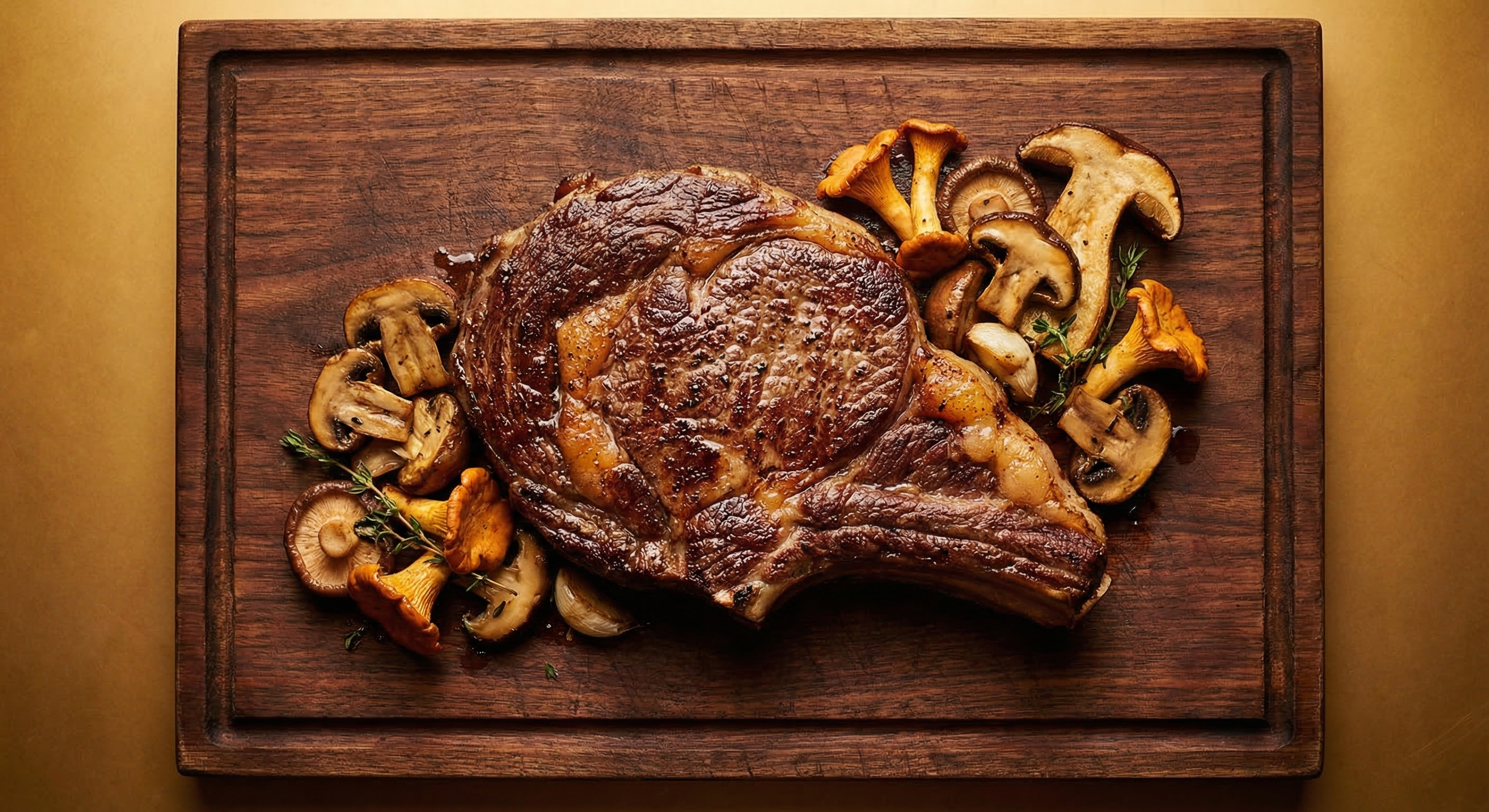
Mushrooms and steak is one of the oldest pairings in cooking — older than wine and steak, older than steak and potatoes. Wild mushrooms foraged from the same pastures where cattle grazed ended up in the same pan. It wasn't sophistication. It was geography. But it turns out the chemistry behind the pairing is genuinely remarkable.
Both steak and mushrooms are umami powerhouses. Beef gets its savory depth from glutamate and inosinate. Mushrooms deliver their own glutamate plus guanylate — a different umami nucleotide. When you combine glutamate with guanylate, the umami effect doesn't just add up. It multiplies. Food scientists call this umami synergy, and it's why mushrooms make steak taste more like steak.
But not every mushroom works with every cut. A delicate enoki disappears next to a fatty ribeye. A bold porcini can overpower a tender filet. Match them correctly, and you get something neither ingredient achieves alone. This guide breaks it down variety by variety, cut by cut.
Why Mushrooms and Steak Work: The Science
Three mechanisms explain why this pairing is almost impossible to get wrong:
Umami synergy. Beef contains high levels of inosinate (IMP), while mushrooms are loaded with guanylate (GMP). When IMP and GMP combine with free glutamate — which both ingredients contain — the perceived umami intensity increases by up to eight times compared to any single source. This isn't marketing. It's measured in controlled taste studies. The steak-mushroom combination triggers more umami receptors than either ingredient alone.
Shared Maillard reaction compounds. When you sear both steak and mushrooms at high heat, they develop overlapping sets of pyrazines and furanones — the molecules responsible for roasty, nutty, caramelized flavors. These shared compounds create harmony on the palate. Your brain reads them as belonging together.
Textural contrast. Mushrooms offer something steak doesn't: a yielding, almost meaty chew that's fundamentally different from muscle fiber. The best mushroom-steak plates exploit this contrast — crispy seared exterior on the steak, tender and silky mushrooms alongside. Every bite feels complete.
Cremini and Button Mushrooms: The Reliable Workhorse
Cremini mushrooms (baby bellas) and their younger siblings, white button mushrooms, are the most accessible option — and far more useful than their reputation suggests. The key is cooking them properly.
Raw or lightly cooked, cremini mushrooms taste like nothing. But seared hard in a single layer with butter and thyme until deeply golden, they develop a concentrated, nutty richness that stands up to any steak cut. The transformation is dramatic.
Best cuts for cremini:
- New York strip: The strip's clean, straightforward beef flavor pairs perfectly with cremini's mild earthiness. Neither ingredient overwhelms the other.
- Flat iron: This underrated cut has rich beefy flavor that sautéed cremini enhances without competing.
- Sirloin: Leaner cuts benefit from the butter used to sauté cremini, adding richness the steak itself lacks.
How to cook them: Slice cremini in half (not too thin — they'll steam). Heat a cast iron skillet screaming hot with a tablespoon of neutral oil. Add mushrooms cut-side down in a single layer. Don't touch them for 3-4 minutes until deeply browned. Flip, add butter and fresh thyme, baste for another 2 minutes. Season with salt only at the end — salting early draws out moisture and prevents browning.
Porcini: The King of Steak Mushrooms
If you could only pair one mushroom with steak for the rest of your life, porcini would be the correct answer. Fresh porcini have an intense, almost meaty flavor — woodsy, nutty, with a depth that matches even the most aggressively flavored ribeye.
The problem: fresh porcini are seasonal, expensive, and hard to find outside specialty markets. The solution: dried porcini. Dried porcini concentrate the flavor to almost absurd levels. A quarter ounce of dried porcini, rehydrated and seared, delivers more punch than a full pound of fresh cremini.
Best cuts for porcini:
- Ribeye: The boldest cut meets the boldest mushroom. Porcini's intensity matches ribeye's heavy marbling and deep flavor. This is the steakhouse pairing.
- Dry-aged steak: The funky, concentrated flavors of dry-aged beef need a mushroom that can keep up. Porcini is one of the few that can.
- T-bone / Porterhouse: Seared porcini scattered around a massive T-bone is a presentation that looks as impressive as it tastes.
How to use dried porcini: Soak in hot (not boiling) water for 20 minutes. Squeeze dry and chop roughly. Strain the soaking liquid through a coffee filter — it's liquid gold. Sear the rehydrated mushrooms in butter until crispy at the edges, then deglaze with a splash of the soaking liquid to create an instant pan sauce with extraordinary depth.
Chanterelles: Elegant and Delicate
Chanterelles are the filet mignon of mushrooms — delicate, slightly fruity, with a peppery finish that no other variety replicates. Their golden color and trumpet shape make them beautiful on a plate, but their real value is flavor: subtle apricot notes that create an unexpected brightness alongside rich beef.
Best cuts for chanterelles:
- Filet mignon: The most tender cut paired with the most delicate mushroom. Chanterelles won't overpower filet's subtle flavor — they complement it.
- Tenderloin: Whether roasted whole or sliced into medallions, tenderloin and chanterelles are the classic fine-dining combination for a reason.
- Veal chop: Chanterelles' delicacy matches veal's mild, sweet flavor beautifully.
How to cook them: Chanterelles have more moisture than most mushrooms. Dry-sauté them first — no oil, no butter — in a hot pan until they release and reabsorb their liquid. Only then add butter, a pinch of salt, and cook until golden. This concentrates their flavor instead of diluting it. Finish with a squeeze of lemon.
Shiitake: Smoky and Versatile
Shiitake mushrooms bring something different to the table: a naturally smoky, almost bacon-like quality that intensifies when cooked at high heat. They're also more robust than most mushrooms, holding their texture even under aggressive searing. That makes them ideal for the grill — the one cooking method where most mushrooms fall apart.
Best cuts for shiitake:
- Skirt steak: The bold, beefy flavor of skirt steak pairs with shiitake's smokiness for a combination that tastes like it came off a wood-fired grill — even when cooked on a stovetop.
- Hanger steak: Another intensely flavored cut that benefits from shiitake's depth. Slice both thin against the grain and serve together.
- Flank steak: Grilled flank with charred shiitake caps makes one of the best weeknight steak dinners you can assemble in 20 minutes.
Pro tip: Remove and discard shiitake stems — they're woody and tough. Score an X in each cap before searing. This creates more surface area for browning and helps them cook evenly. For maximum smokiness, cook in a dry cast iron pan until the edges are almost black.
Oyster Mushrooms: The Texture Play
Oyster mushrooms don't have the deepest flavor in the mushroom kingdom, but they have something arguably more valuable: extraordinary texture. When seared until crispy, the thin edges shatter while the thick centers stay tender and meaty. It's the same textural contrast you get from a perfect steak crust — and doubling that contrast on a plate is powerful.
Best cuts for oyster mushrooms:
- Ribeye: Crispy oyster mushrooms add textural variety to ribeye's rich, fatty profile. The crunch cuts through the richness.
- New York strip: The combination of a well-crusted strip and shatteringly crispy oyster mushrooms is a textural masterpiece.
- Wagyu: Ultra-rich wagyu benefits enormously from crispy, slightly bitter oyster mushrooms as a counterpoint.
How to cook them: Tear (don't cut) oyster mushrooms into large pieces along their natural grain. Heat oil in a pan until smoking. Add mushrooms in a single layer and press flat with a spatula. Don't move them for 4-5 minutes — you want serious color. Flip, add butter and garlic, cook another 2 minutes. The result should be crispy enough to shatter when you bite down.
Morels: The Luxury Pairing
Morels are the wagyu of mushrooms — rare, expensive, seasonal, and absolutely worth it. Their honeycomb texture traps butter and sauce in every crevice, delivering concentrated flavor in every bite. The taste is deeply earthy and nutty, with an almost smoky sweetness that makes them the ultimate special-occasion mushroom for steak.
Best cuts for morels:
- Filet mignon: Morels and filet is the classic French fine-dining combination. The mushroom's complexity compensates for filet's relatively mild flavor.
- Prime rib: Halved morels seared in the prime rib's rendered fat is an indulgence that justifies the price of both ingredients.
- Rack of lamb: While not steak, this pairing is too good to omit. Morels and lamb are a spring combination that has no equal.
Critical note: Always soak morels in salted water for 30 minutes before cooking. Their honeycomb structure harbors grit, sand, and occasionally small insects. Rinse thoroughly, pat completely dry, then halve lengthwise before searing. The interior surface browns beautifully and the hollow center fills with melted butter.
Maitake (Hen of the Woods): The Showstopper
Maitake mushrooms look like they belong in a forest painting, but their real magic is what happens when you sear them. The layered, petal-like fronds crisp up at the edges while staying tender at the base, creating a single mushroom that offers three different textures in one bite. The flavor is rich, slightly woodsy, and complex enough to stand alone as a course.
Best cuts for maitake:
- Bone-in ribeye: A large, seared maitake cluster placed next to a thick bone-in ribeye makes a restaurant-quality plate with minimal effort.
- Tomahawk steak: The visual drama of a tomahawk demands an equally dramatic mushroom. Maitake delivers.
- Prime rib: Roasted maitake alongside prime rib is an underused combination that deserves more attention.
How to cook them: Don't break maitake into small pieces. Keep clusters large — at least 3 inches across. Sear cut-side down in a mix of butter and oil over medium-high heat for 5-6 minutes without moving. The slow sear develops a deep golden crust. Flip gently, baste with pan butter, and finish with flaky salt and a drizzle of good olive oil.
Enoki and King Trumpet: Supporting Roles
Two more mushrooms deserve mention, though they work best as part of a mushroom medley rather than solo pairings:
Enoki mushrooms are too delicate to stand up to a seared steak on their own, but their crunchy, noodle-like texture adds interest to a mixed mushroom accompaniment. Quickly sear a bundle until the bottoms are crispy and the tops are still raw — the contrast is addictive. They work especially well with Japanese-style wagyu preparations where smaller portions make the mushroom's subtlety appropriate.
King trumpet (king oyster) mushrooms are the opposite — all texture, minimal flavor. Their thick, meaty stems can be sliced into thick coins and seared exactly like scallops. The result is a mushroom "steak" that holds its own next to the real thing. Cross-hatch the flat surfaces with a knife before searing to maximize crust development and visual appeal.
The Complete Cut-by-Mushroom Pairing Chart
Here's the quick-reference version of everything above:
Ribeye and bone-in cuts: Porcini (intensity match), oyster mushrooms (textural contrast), maitake (visual drama)
Filet mignon and tenderloin: Chanterelles (delicate complement), morels (luxury pairing), cremini with butter (classic simplicity)
New York strip: Cremini (clean pairing), oyster mushrooms (crispy contrast), king trumpet coins (modern steakhouse style)
Skirt, hanger, and flank: Shiitake (smoky boldness), mixed wild mushrooms (rustic style), cremini (weeknight ease)
Wagyu: Chanterelles or enoki (delicacy to match small portions), sake-glazed shiitake (Japanese style)
Prime rib: Morels (luxury), maitake (roasted alongside), porcini (pan sauce base)
Three Rules for Any Mushroom-Steak Pairing
Regardless of which variety you choose, three principles make the difference between good and exceptional:
1. Cook mushrooms and steak separately. Mushrooms release moisture. Steak needs a dry, screaming-hot surface to develop a crust. Cooking them in the same pan guarantees a steamed steak with rubbery mushrooms. Sear your steak, rest it, then use the same pan (with all those fond bits) to cook the mushrooms. They'll pick up the beef flavor from the pan while developing their own crust.
2. Don't crowd the pan. This is the single most common mistake. Mushrooms piled on top of each other steam instead of searing. Cook in batches if needed. Every mushroom surface should touch hot metal. The difference between steamed and seared mushrooms is the difference between a disappointing side and something that steals the show.
3. Season at the end. Salt draws moisture from mushrooms. Adding salt before they're browned means they'll release water, pool in liquid, and never develop color. Sear first, season last. The exception: finishing salts like flaky Maldon, which add both flavor and crunch right before serving.
Mushrooms are the most natural partner steak has. Not wine, not cheese, not potatoes — mushrooms. They share the same umami language, they thrive under the same cooking methods, and they make each other better. Pick the right variety for your cut, cook them with respect, and the combination will outperform anything else on the plate.
Frequently Asked Questions
What is the best mushroom to pair with steak?
Porcini mushrooms are widely considered the best overall mushroom for steak. Their intense, earthy flavor matches the boldness of beef, and they create powerful umami synergy when combined with seared steak. Dried porcini are an excellent substitute when fresh are unavailable.
Should I cook mushrooms in the same pan as my steak?
No — cook them separately. Mushrooms release moisture, which prevents the steak from developing a proper crust. Instead, sear your steak first, rest it, then use the same pan with its flavorful fond to cook the mushrooms. They will absorb the beef flavor while developing their own sear.
What mushrooms go best with filet mignon?
Chanterelles and morels are the best mushrooms for filet mignon. Both are delicate enough not to overpower the tenderloin's subtle flavor. Chanterelles add a fruity, peppery note, while morels bring earthy depth and a luxurious honeycomb texture that traps butter.
Can I use dried mushrooms instead of fresh for steak?
Yes, dried mushrooms — especially dried porcini — work exceptionally well with steak. Rehydrate them in hot water for 20 minutes, squeeze dry, and sear in butter. Save the strained soaking liquid to deglaze the pan for an incredibly flavorful sauce.
Why do mushrooms make steak taste better?
Mushrooms and steak both contain umami compounds, but different types. Beef has inosinate (IMP) while mushrooms have guanylate (GMP). When these nucleotides combine with free glutamate — present in both ingredients — the perceived umami intensity multiplies by up to eight times. This is called umami synergy.
More Pairing Guides
Best Cider with Pork: A Cut-by-Cut Pairing Guide
Cider and pork share centuries of history across English, French, and American tables. This guide matches cider styles to specific pork cuts, cooking methods, and sauces for pairings that actually work.
11 min readBest Porter and Stout for Beef: Complete Dark Beer Pairing Guide
Dark beers and beef share roasted, caramelized flavors that make them natural partners. Porter and stout bring sweetness, body, and complexity that complement everything from char-grilled ribeye to slow-smoked brisket.
10 min readBest Bourbon for Pork Ribs vs Beef Ribs: Complete Pairing Guide
Pork ribs and beef ribs aren't interchangeable when it comes to bourbon pairing. Fat content, smoke intensity, and flavor depth determine which bottle works best. Here's the complete breakdown.